
Secondary School
Artificial Intelligence, Learning, and the Value of Human Creativity
Though it is a relatively new development, Artificial Intelligence (AI) as we know it has firmly established itself as a fixture of modern life. Whether we realise it or not, many of us use AI-powered tools when searching the internet, organising our calendars, checking spelling and grammar, navigating traffic, or even drafting emails. In schools, universities, and workplaces, AI is increasingly being used to improve efficiency, support research, and help manage growing workloads.
I'll admit that I use AI myself. In fact, AI has assisted with formatting corrections and refining the structure of this article—and I admit that as an English teacher. It is an immensely powerful tool that can help us organise information, generate ideas, and complete routine tasks more efficiently. We would be unwise to ignore the potential benefits that these technologies offer.
However, as with any powerful tool, the question is not simply what AI can do, but what should we allow it to do for us.
AI can be incredibly tempting. When students are faced with an assignment, a looming deadline, or the challenge of finding the right words, it can seem much easier to delegate the thinking, writing, and problem-solving to a machine. I have often said that a blank sheet of paper staring back at you can be one of the most intimidating things a person can encounter at times. The work of AI may look polished; it may even earn praise. Yet we must ask ourselves an important question: What are we missing when we allow AI to do the work that we should be doing ourselves?
Learning is not simply about producing a submission; the real value lies in the process. When students struggle to find the right words, wrestle with a difficult mathematical problem, revise a paragraph for the fifth time, or work through different ideas before arriving at a conclusion, they are developing skills that extend far beyond the assignment itself. They are building resilience, critical thinking, creativity, perseverance, and confidence. If AI does all the heavy lifting, students may submit a stellar piece of work, but they miss the opportunity to develop the knowledge and understanding that comes from creating it themselves.
Many years ago, when I taught English in the Middle Years, my class was allocated Sir Thursday, one of Garth Nix's novels in The Keys to the Kingdom series, as one of their weekly reading options. In the story, Sir Thursday possesses an extraordinary ability. He can create magnificent works of art, useful tools, grand structures, and remarkable technologies literally from nothing. Yet there is an important limitation to his gift: he cannot create anything truly new. He can reproduce, combine, copy, and refine existing things, but genuine originality remains beyond his reach. I am often reminded of Sir Thursday whenever I reflect on or speak about the influence of AI.
Artificial intelligence can gather information from vast collections of existing human knowledge. It can identify patterns, mimic writing styles, and instantaneously assemble impressive responses. It can remix, reorganise, and refine faster than any human could hope to do. Developers even sometimes slow down AI's response time to make it seem more human, creating the impression that it is “thinking”.
What AI cannot do is possess genuine human experience. It cannot understand the joy of overcoming a challenge, the excitement of discovery, the lessons learned through failure, or the unique perspective that each individual brings to the world. Those things belong to us.
As Christians, we believe that human creativity reflects something deeper than intelligence or skill. In the opening chapter of Genesis, we read:
So God created mankind in His own image, in the image of God He created them...
Genesis 1:27
Part of being made in God's image is our capacity to create, imagine, innovate, and bring something uniquely our own into the world. Every piece of writing, every work of art, every scientific discovery, every solution to a problem carries with it something that originates from an individual person. It carries their experiences, their character, their perspective, and their God-given gifts. AI may assist students, but it cannot replace that God-given spark.
This is why Oxley’s expectations regarding artificial intelligence are not merely about rules or compliance. They are about preserving the integrity of learning itself. We encourage students to engage responsibly with emerging technologies while ensuring that the work they submit genuinely reflects their own understanding, effort, and growth.
AI can be a valuable resource. It can help clarify concepts, support research, suggest approaches, and even assist with editing and proofreading. Yet students should always ask themselves whether they are using AI to support their learning or to replace it.
When we rely too heavily on AI, we risk missing the very experiences that help us grow. We miss opportunities to think deeply, to struggle productively, to learn from mistakes, and to contribute something uniquely our own. Most importantly, we miss opportunities to develop the gifts and talents that God has entrusted to us.
As we continue to navigate a world increasingly shaped by artificial intelligence, we hope our students will learn to use these tools wisely, ethically, and responsibly. Let AI be an assistant, not the author. Let it be a tool, not a substitute for thought. And let us remember that while technology continues to evolve, the uniquely human capacity to create, learn, and grow remains one of God's greatest gifts to us.
By doing so, we uphold not only academic honesty and personal integrity, but also the deeper purpose of education itself: becoming the people God created us to be.
Mr James Avram
Deputy Principal and Head of Secondary School
Student Leadership/Voice Forum
On Wednesday 2 September, all the student leaders within the Secondary School were invited to take part in the latest edition of the Student Leadership/Student Voice Forum. This brought leaders from all year levels together, to talk about what leadership is and how leadership skills can be used, while also giving a voice to some of the concerns students have about their school. Mr Michael Bond started off the session with a short talk to the students, followed by Mrs Madison Adams, both speaking on how to develop and demonstrate leadership within a school context.
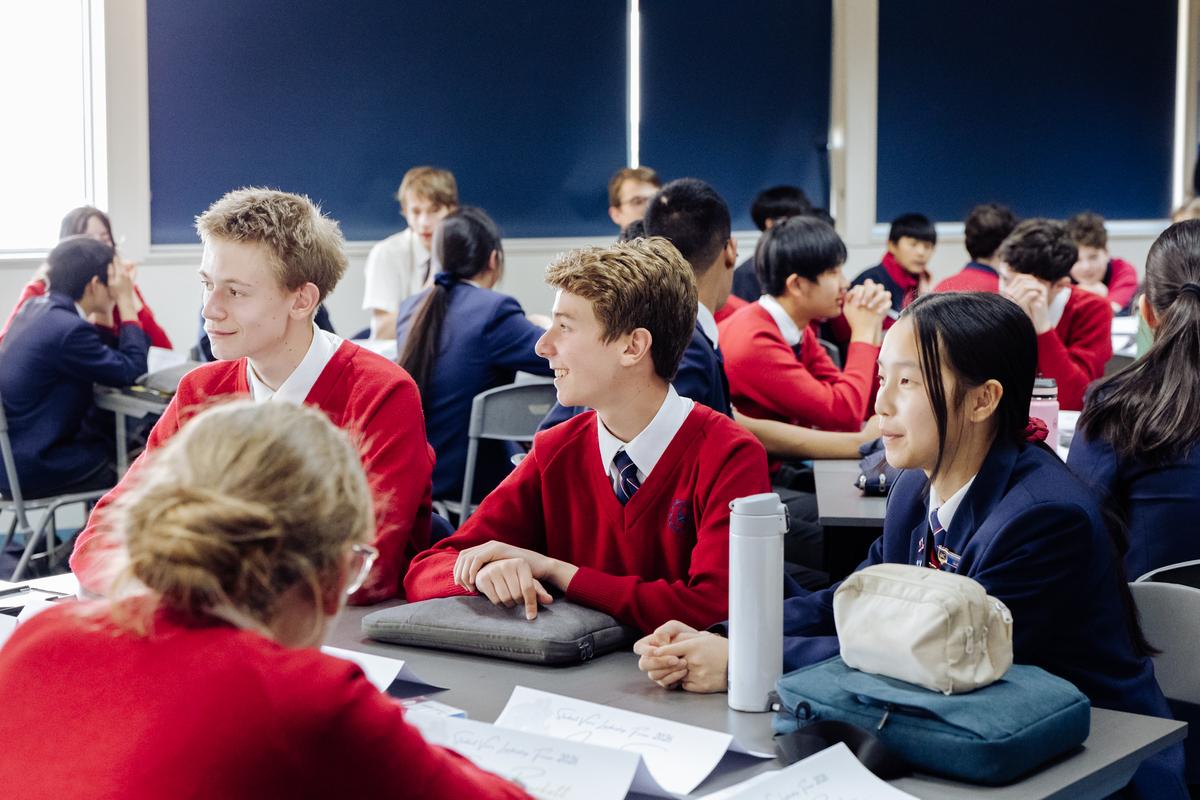
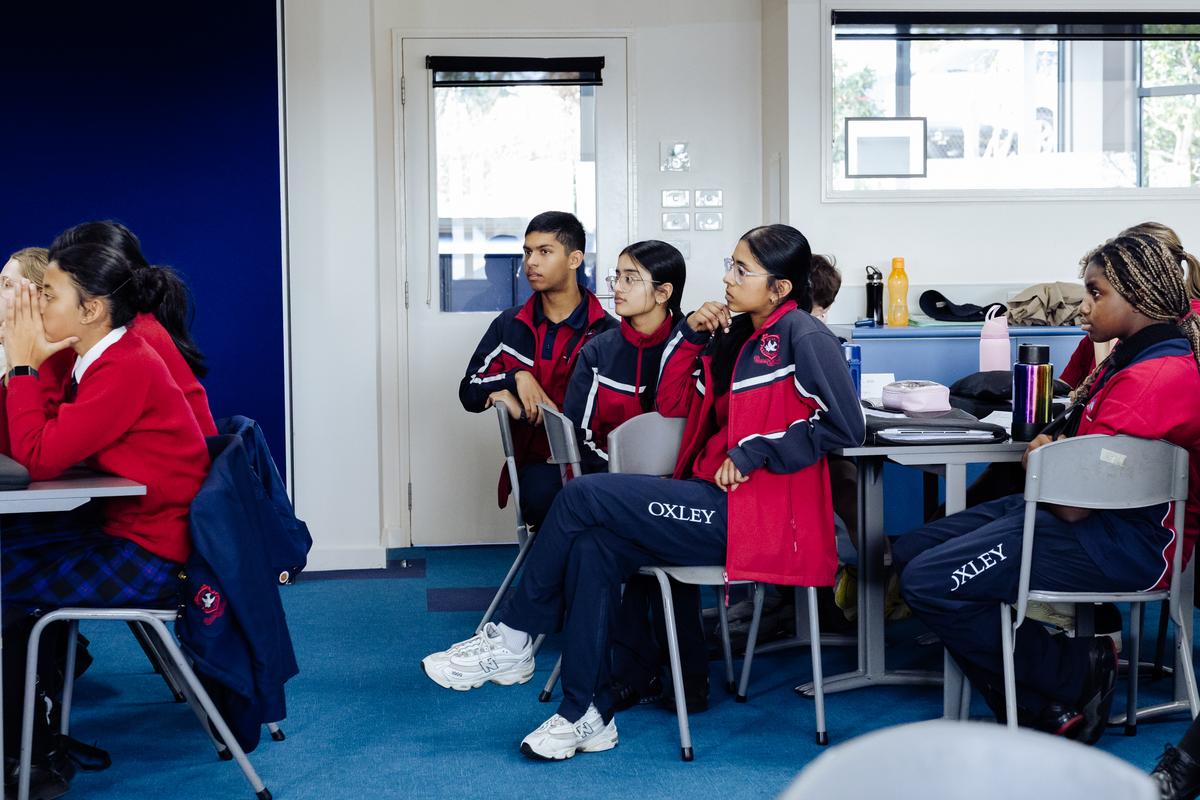
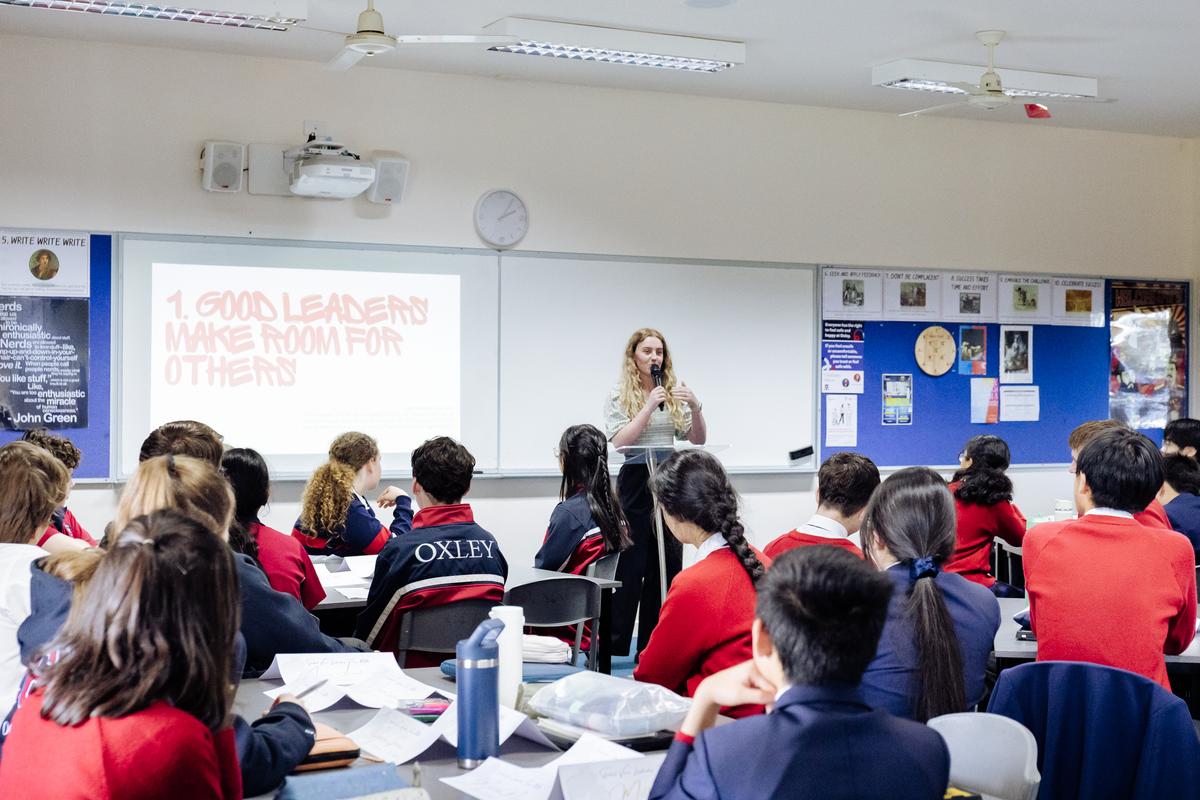
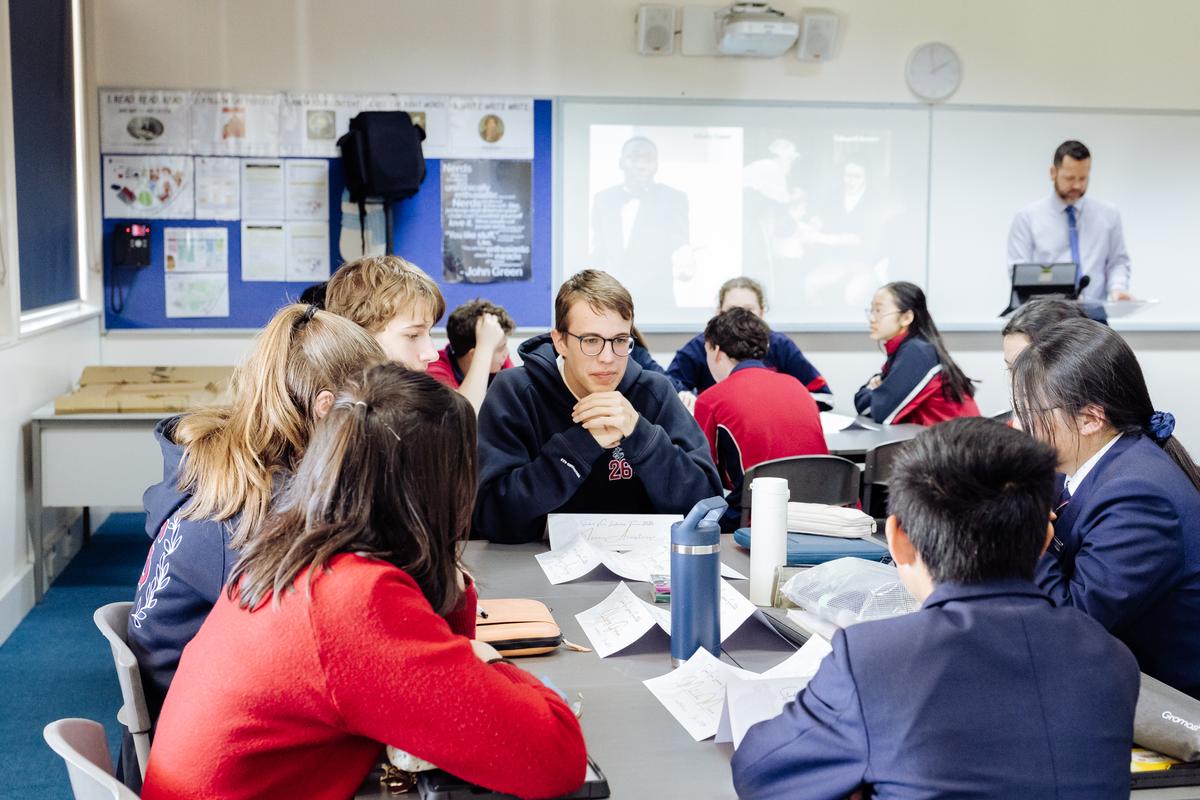
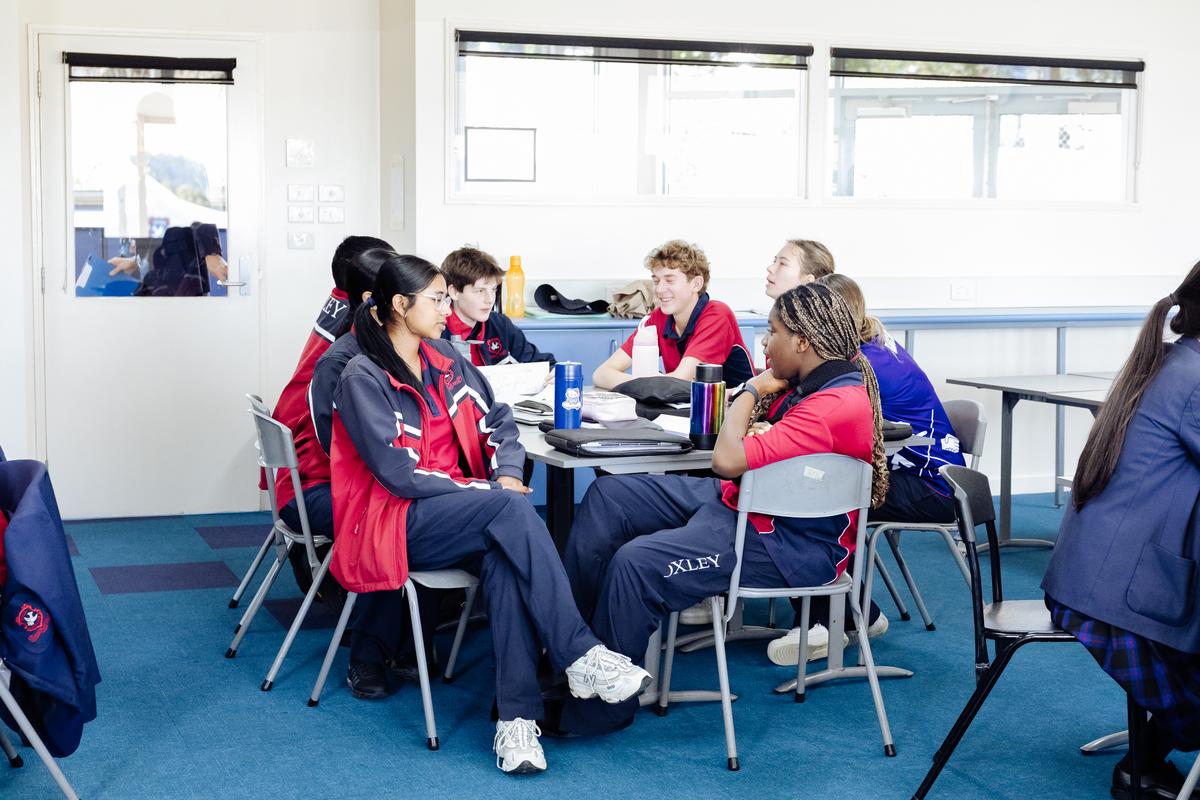
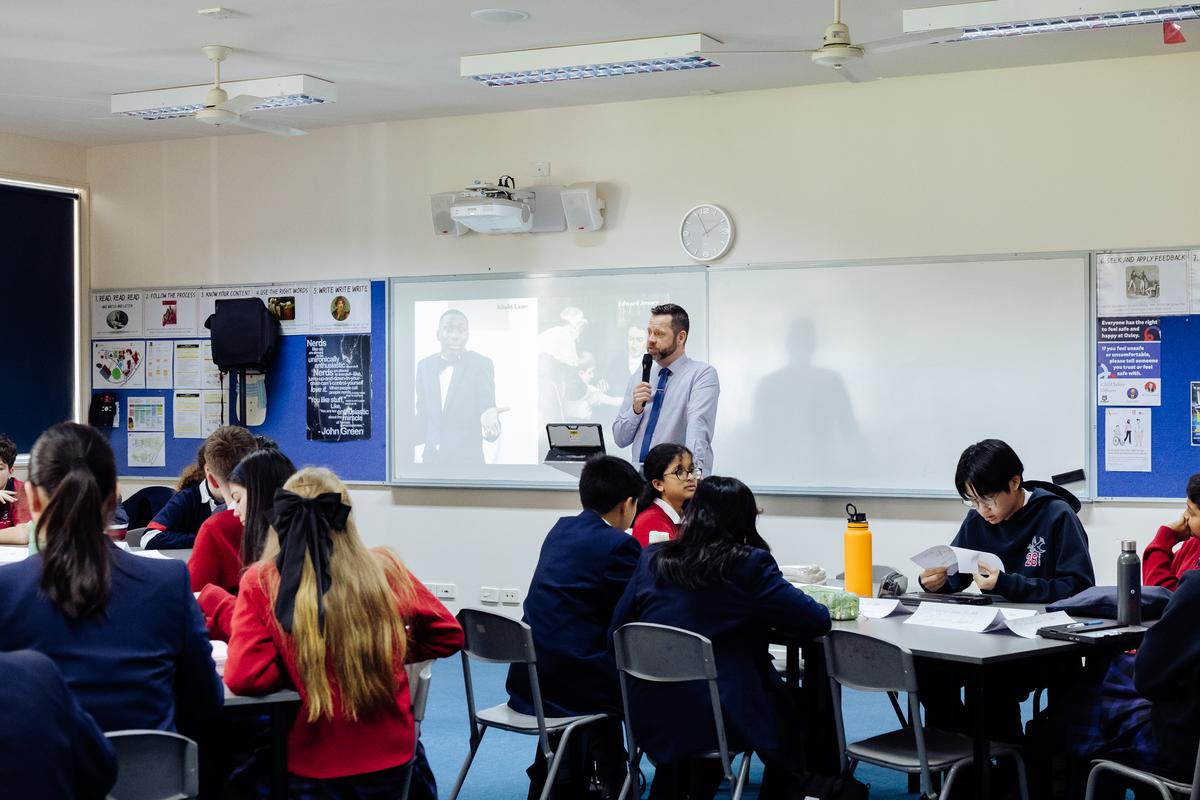
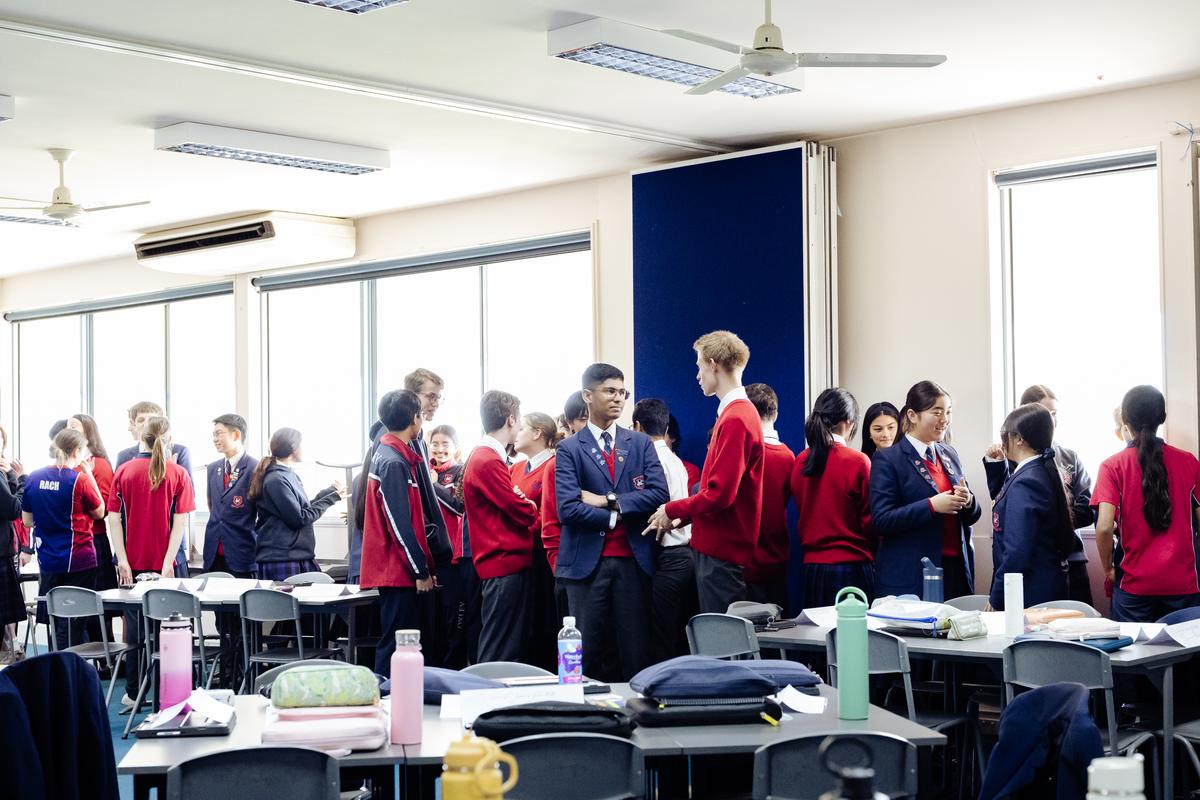
Students then came up with some ideas on how they can integrate and work with other year levels, as well as suggesting ways to improve the school and their learning opportunities. These will form part of a discussion that Senior School Leadership will meet about and see where these ideas can be followed through to implementation within the College. In previous years, students have come up with some great ideas, most of which we have been able to put into practice.
The following are just a few of those ideas:
- Introduction of the Pulse survey for wellbeing feedback/check ins
- Warmer uniform – introduction of new rugby tops / outdoor rain jacket
- Reintroduction of Institute of Sport
- SOPHOS screening has been improved so students can access more
- Fixed the printing preferences so students can now print double-sided and ability to print in A3
- Letting students inside the buildings earlier on colder/rainy mornings
- More subject options / More practical hands-on work — Introduction of the STEM Lab!
- Teachers trying to communicate better to avoid having too many capstones in one week
- Gluten-free options in canteen and more options are being investigated
- EFTPOS now available in canteen
- Senior School basketball ring and backboard have been replaced
- Past students now assist in coaching EISM sports to bring extra expertise and opportunities
- More lunchtime clubs have added and others continued — STEM / Minecraft / Food Tech / Empower, etc.
- Battle of the Bands coming back this term for Wellbeing Week
- Home Group competitions
- Some more seating / communal spaces added to the school grounds
- Girls now permitted to wear headbands as part of the school uniform
Mr David Cutler
Head of Middle Years Students
From the students:
This past week I had the privilege to attend the Student Leadership Forum. Something that I really enjoyed about this experience was being able to hear from Mr Bond, Pastor Matt and Mrs Adams about different ways to develop and demonstrate leadership. They shared insightful, God-honouring ways that we can show our leadership at school, but also in everyday life. My key takeaway from their presentations were that real leadership doesn’t come from popularity or everyone seeing what you do, it’s in the quiet moments, the moment where you make a difference even if it’s just in one person’s life. Overall, the forum was an enriching and enjoyable experience that provided me with a valuable opportunity to further develop my leadership skills.
Rachel J (10.4)
Home Group Captain & English Captain
The Student Leadership/Voice Forum focused on developing our leadership skills, providing us with the opportunity to share ideas and perspectives with other like-minded student leaders. One thing I found particularly helpful was learning that effective leadership is not only about oneself, but about listening and encouraging to others in order to bring out the best in them. The forum has helped me become a better leader by giving me greater confidence in sharing my ideas and encouraging me to learn from others.
Mahi J (10.3)
Home Group Captain & Debating Captain
A major part of the forum was discussing improvements the school could make to enhance our experience at Oxley. I found it very helpful to know that Oxley genuinely wants to hear our voices and make positive changes that improve our lives and learning. It was also valuable to learn about leadership and how I can become a better and more impactful leader to those around me, both formally and informally. This forum has made me a better leader by teaching me how to be more effective when supporting and representing my peers. It has also encouraged me to become a better person overall: someone who is positive, approachable, and able to make a meaningful impact on the people around me.
Josh L (10.3)