Library
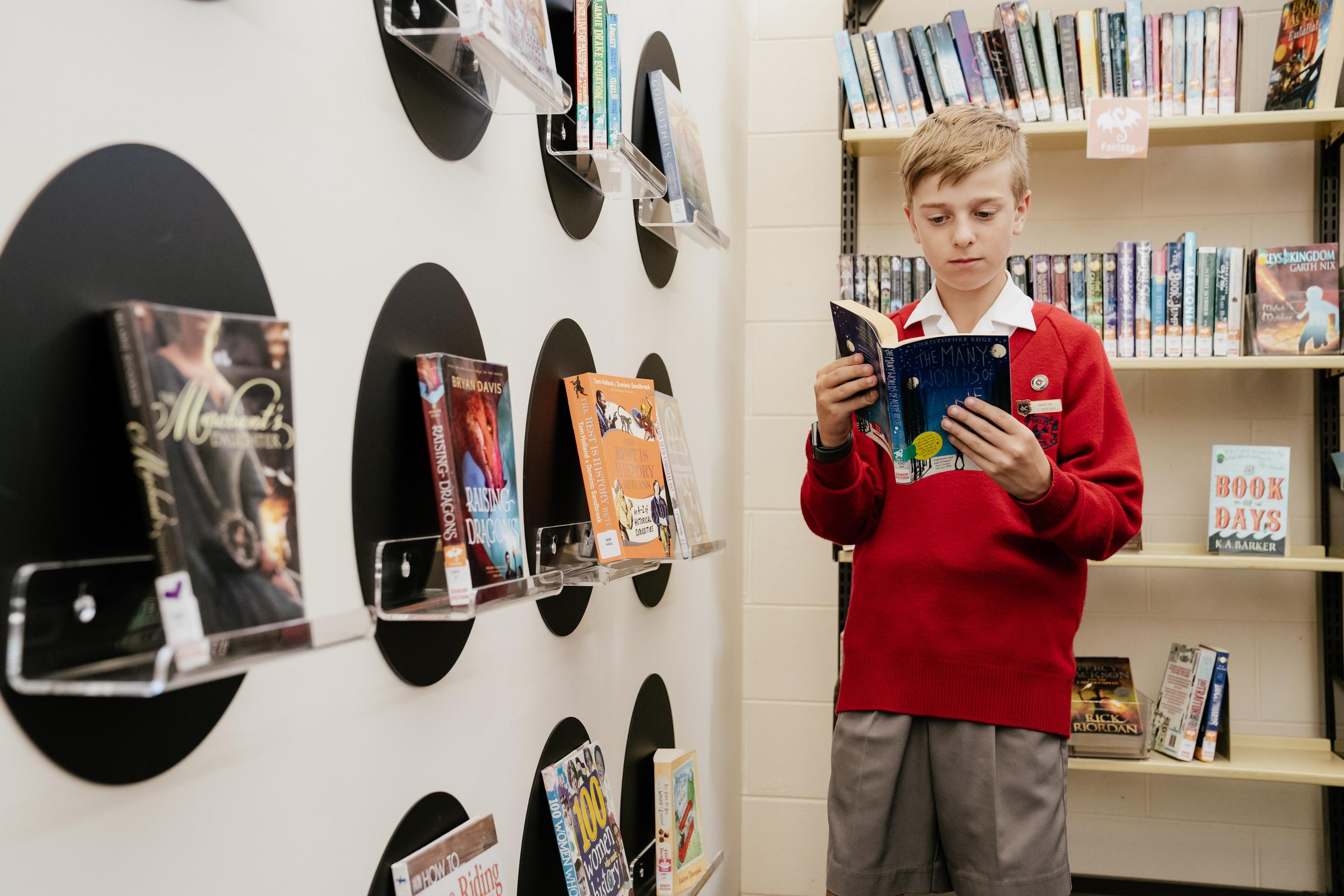
Book Week
Another busy term has come to an end in the Library, and what an exciting term it has been!
We celebrated Book Week over 2 weeks in many ways. Prep to Year 2 watched a Perform Education production centred around the CBCA theme of Symphony of Stories. This production, entitled Something Special, focused on creativity, perseverance, kindness, and the importance of not ‘judging a book by its cover’. It featured the CBCA shortlisted books Dawn, The Colours of Home and Dear Broccoli. Our students enjoyed these books, especially Dear Broccoli, the story of a young boy writing to Broccoli, asking it not to appear on his plate.
The Book Week performance was very creative because they used book characters to show they could work together. Avreen A (2M)
They were combining rhyming words and they were learning to work together. Bawitha S (2M)
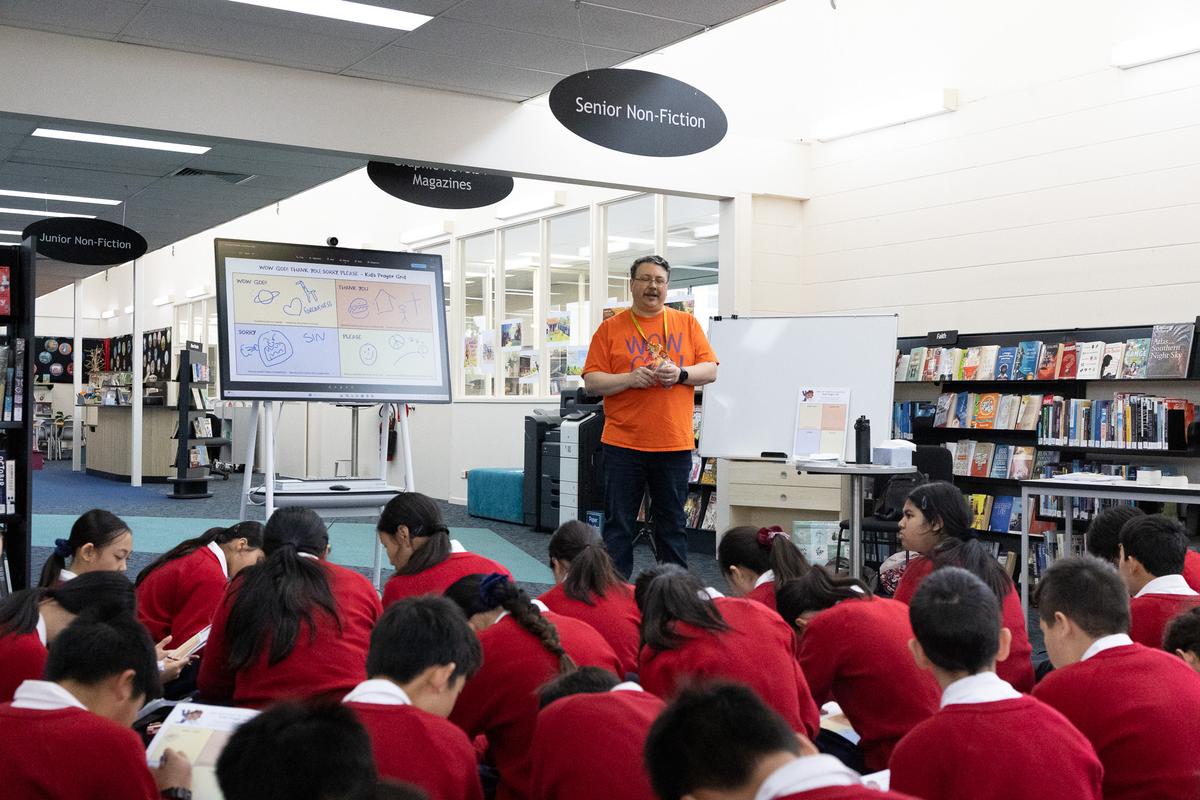
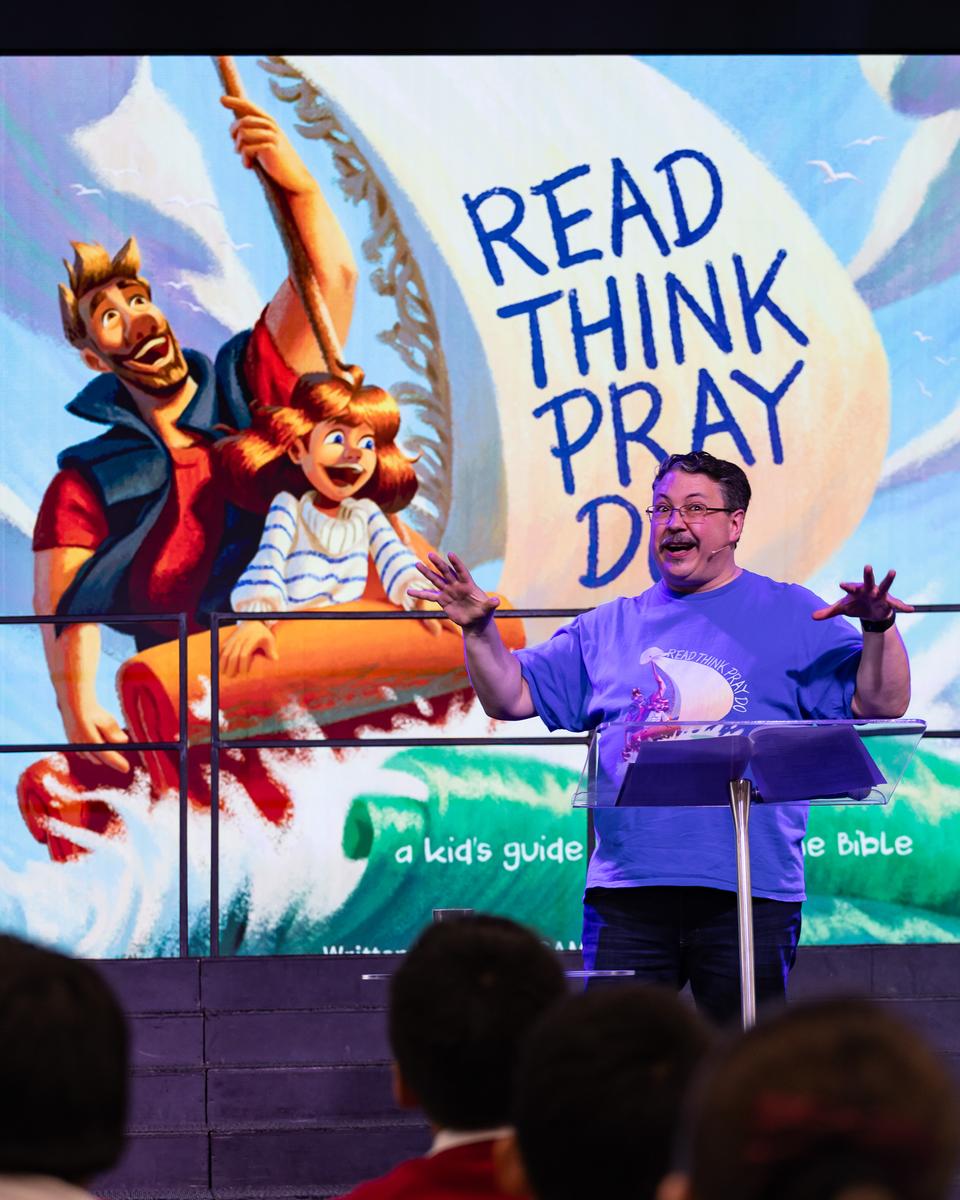
Our Years 3-6 classes were blessed to have author Simon Camilleri come and lead interactive sessions in the library. Simon is a Christian author who has published several children's books on how to pray and how to read the Bible. He entranced the students with his slight of hand tricks and then spoke about how he came to write his books, how he worked with an illustrator and how they came to be published across the globe. He then worked with the students to explore how to structure a prayer, focusing on:
- Wow God (Praise),
- Thank you,
- Sorry, and
Please.
Students thought about including all those attributes in their prayers and wrote their own using the helpful format.
From the amazing author Simon Camilleri to the memorable applause that followed, I revelled and was immersed in this splendid event; Simon read with his heart, soul and mind. His words spread into every corner of the room. I truly enjoyed his book Read, Think, Pray, Do, for it educated me on how to read the Bible and how we can carry that into our lives as Christians, children of God. Farrah F (5M)
Simon (being a Christian author) inspired me, and hopefully others, and opened me up to sharing God’s word. He also explained how his books get written, published and spread across the world. All in all, it was a memorable experience, and I learnt a lot from the author. Raphael P (5M)
English Captains
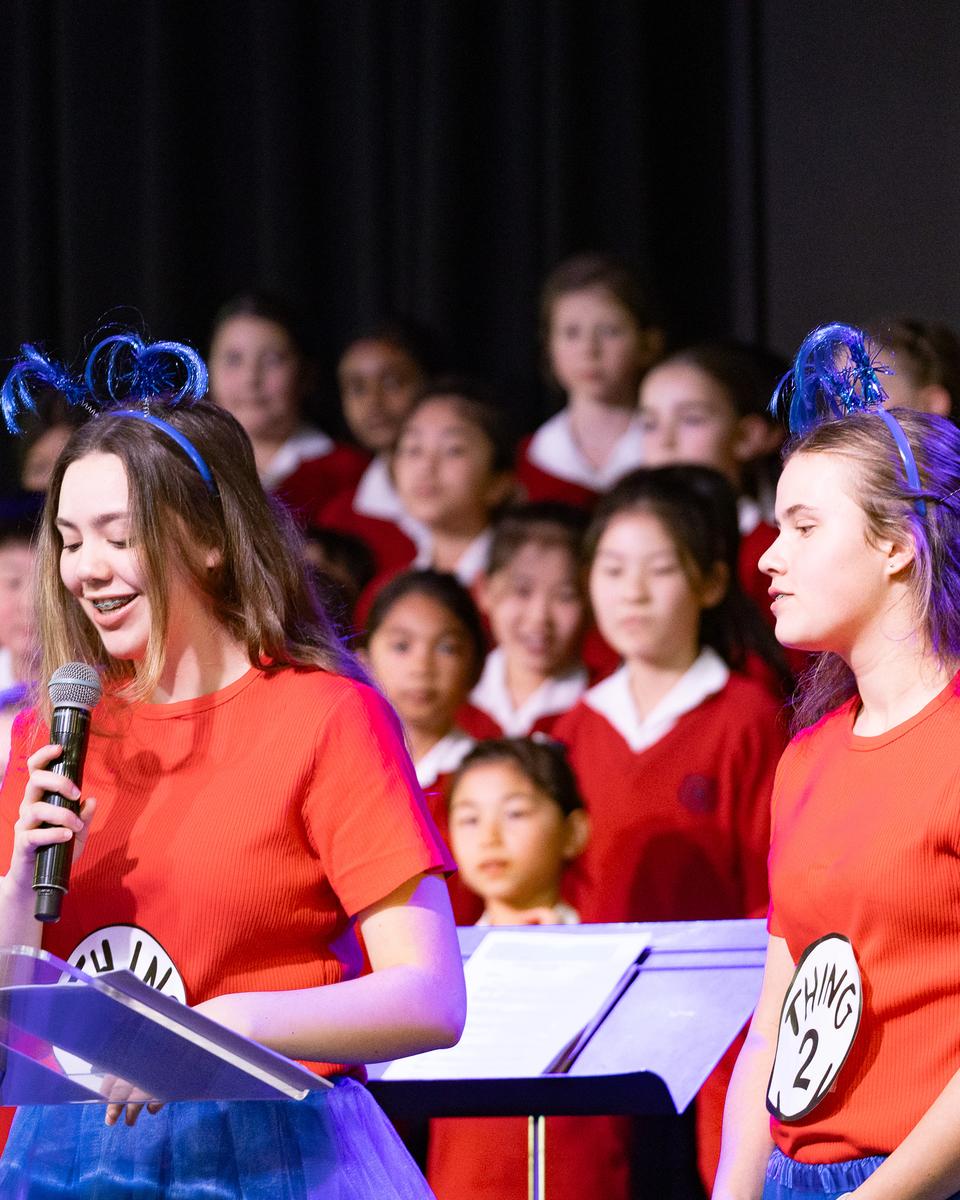
English Captains
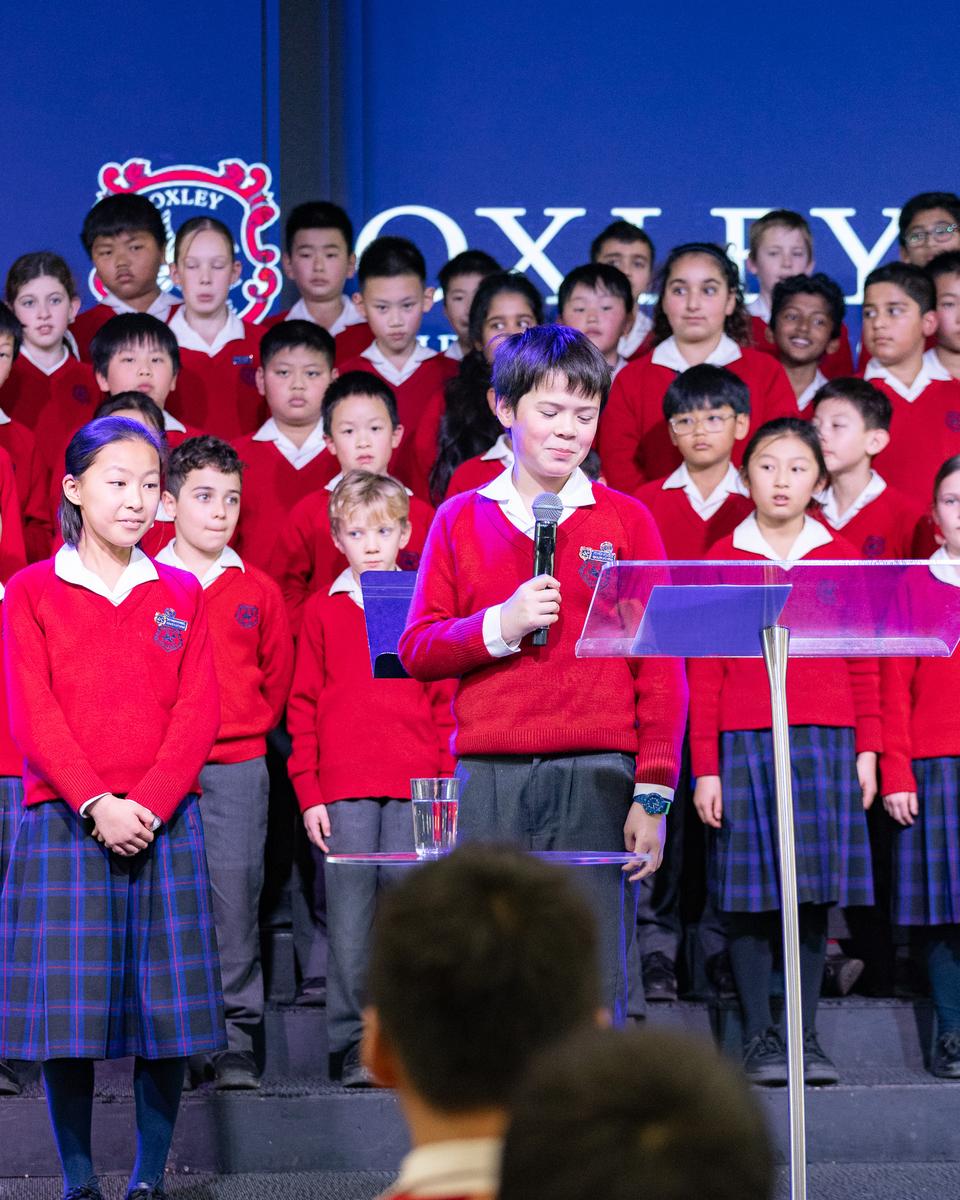
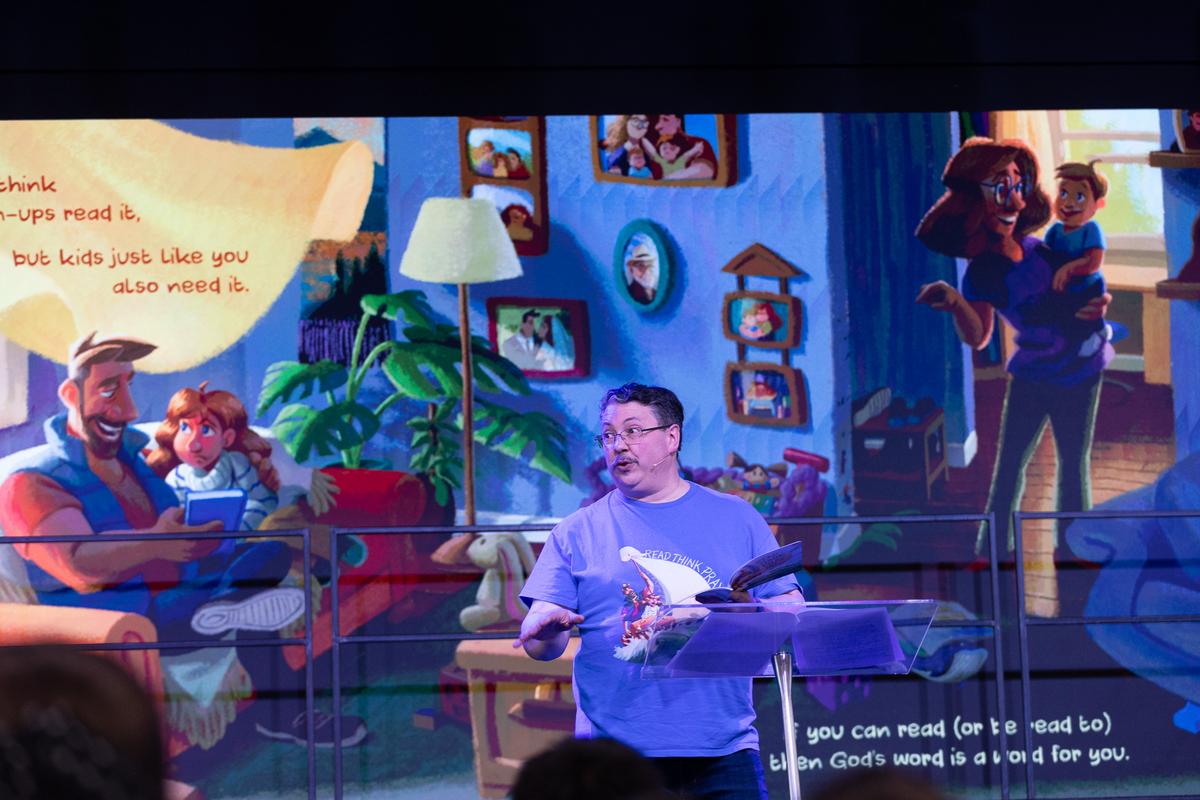
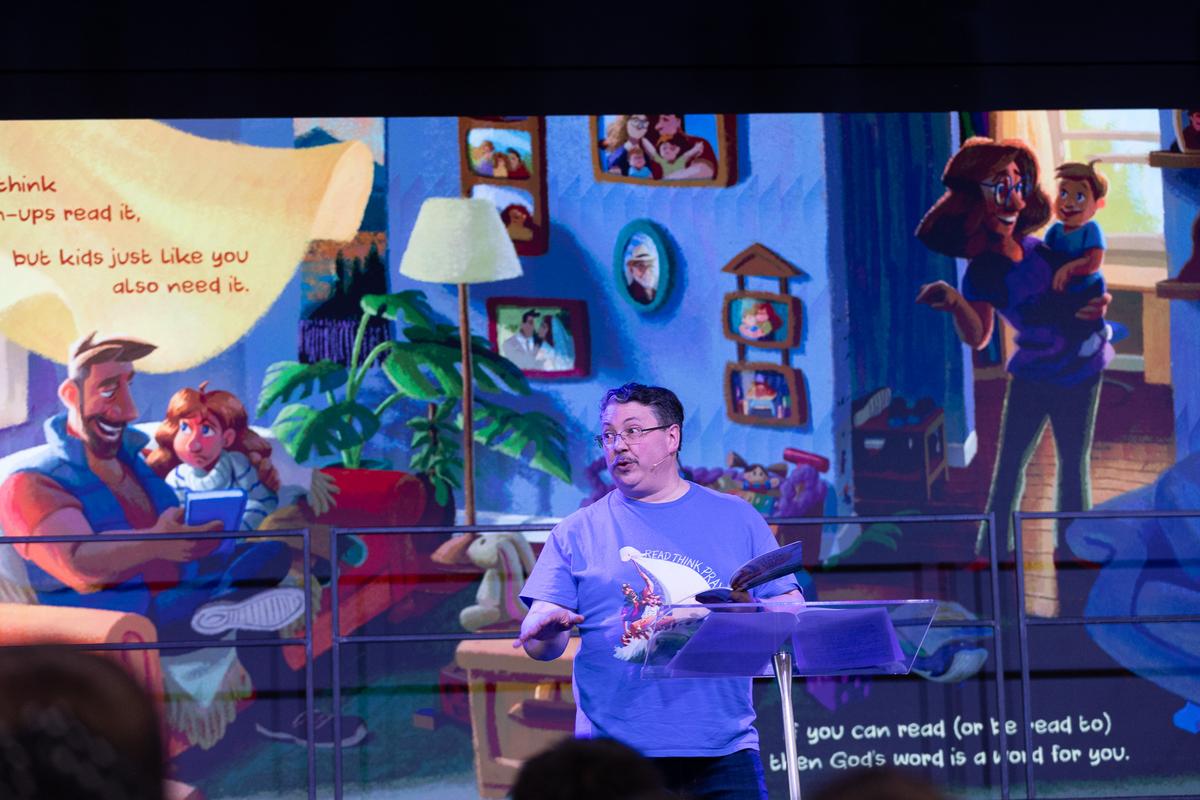
The next highlight of Book Week was our Book Week Chapel, ably led by our Junior School Performing Arts Captains Isaac W (6D), and Sarah G (6D), with our Secondary School English Captains Rachel J (10.4) and Amelia V (10.3). We were also delighted to welcome the 4-year-old Kinder group from Oxley Kids to join us on this special occasion. After a time of praise and worship, our student leaders reminded us of the joys of reading and the important part it plays in our lives. Simon again spoke to us—in a very interactive talk— about how to not only read the Bible, but to think about it, pray, and act on what we do—a message helpful to us all.
Finally, our Secondary School students organised a book cover colouring competition and were overwhelmed with the response. The 4 winners, Munashe M (Prep R), Lydia W (2S), Bethany W (4D), and Tiara T (4M) all received a signed copy of Simon’s book.
Lest you think the Library is only about our Junior School readers, Years 7 and 8 students continue to be enthusiastic Library users. Participation in the book reading competition remains strong, and book borrowing is at a very high level. Students attend the Library for one English lesson each fortnight, and many are regular visitors during lunchtime. The use of Sora has grown considerably, allowing students to enjoy both eBooks and audiobooks. We have also noticed more students sharing recommendations and reviews through the Oliver library system. This growing culture of reading and discussion not only promotes a love of books but also highlights students' developing writing skills as they share their thoughts with others.
In the lead-up to Book Week, ALIA (Australian Library and Information Association), ACSL (Australian Coalition for School Libraries) and Australia Reads published a combined statement on the importance of reading for pleasure. It said:
“Students who read for pleasure are more likely to be proficient readers,
have better receptive language and expressive language abilities,
are more likely to achieve strong academic results,
better understand the world around them and the experiences of others,
have better mental health outcomes,
have increased positive,
long-term economic and employment outcomes,
are more likely to develop a lifelong habit of reading.”
We are blessed to have a lovely Library at Oxley, and it is well loved and well used. Keep encouraging your children and young people to read!
Mrs Jenelle Coote
Library Manager
The Lifelong Benefits of Reading
Research by Merga and Roni (2018) suggested schools and parents need to expound the lifelong value of reading more explicitly to students. Their research found that students who read less frequently tend to only value reading that is linked to assessment. Within their research, one student expressed, ‘We have technology these days, so we don’t need to read.’ Such attitudes are alarming and becoming more pervasive in our society. In our technology-soaked world, do students really understand the value of reading beyond assessment?
As stated by education researchers McGraw and Mason (2022), the value of reading is ‘unequivocal.’ It touches every area of our life as adults; from wellbeing to job opportunities. Those who read before bed reported significantly reduced stress levels and improved quality of sleep. Reading also fosters social connection, sparking reading inspired conversation and alleviating feelings of loneliness or isolation. Within the workplace, those will strong reading skills are more likely to experience job advancement and satisfaction (McGraw & Mason, 2022). Furthermore, reading deeply requires complex cognitive skills such as inferring, synthesising and extrapolation. These are essential skills in any workplace context. Education researchers Mangen and van der Weel (2022) reflected that, ‘Higher-level reading is a central mechanism for personal development, and is central to critical thinking.’ With the rise of AI, the ability to read with discernment is more important than ever. We need to follow, to comprehend and to evaluate what we are reading rather than accepting information passively.
The ability to engage in critically thinking through reading is in alignment with Scripture, as 1 Thessalonians 5:21 instructs believers to ‘Test all things; hold fast to that which is good’. As our children grow, it is vital that we foster discernment in their reading habits. Romans 12:2 reminds us, ‘Do not conform to the pattern of this world, but be transformed by the renewing of your mind’. Development of faith and wisdom is achieved by spending time reading God’s Word. Through this, we are able to follow the way God has mapped out for us.
Encourage your child to consider the many lifelong benefits of reading. In doing so, we are shaping their character and faith.
Mrs Rebekah Paul
Literacy Coordinator