Wordslayers (English)
English Faculty
Wordslayers (English)
English Faculty
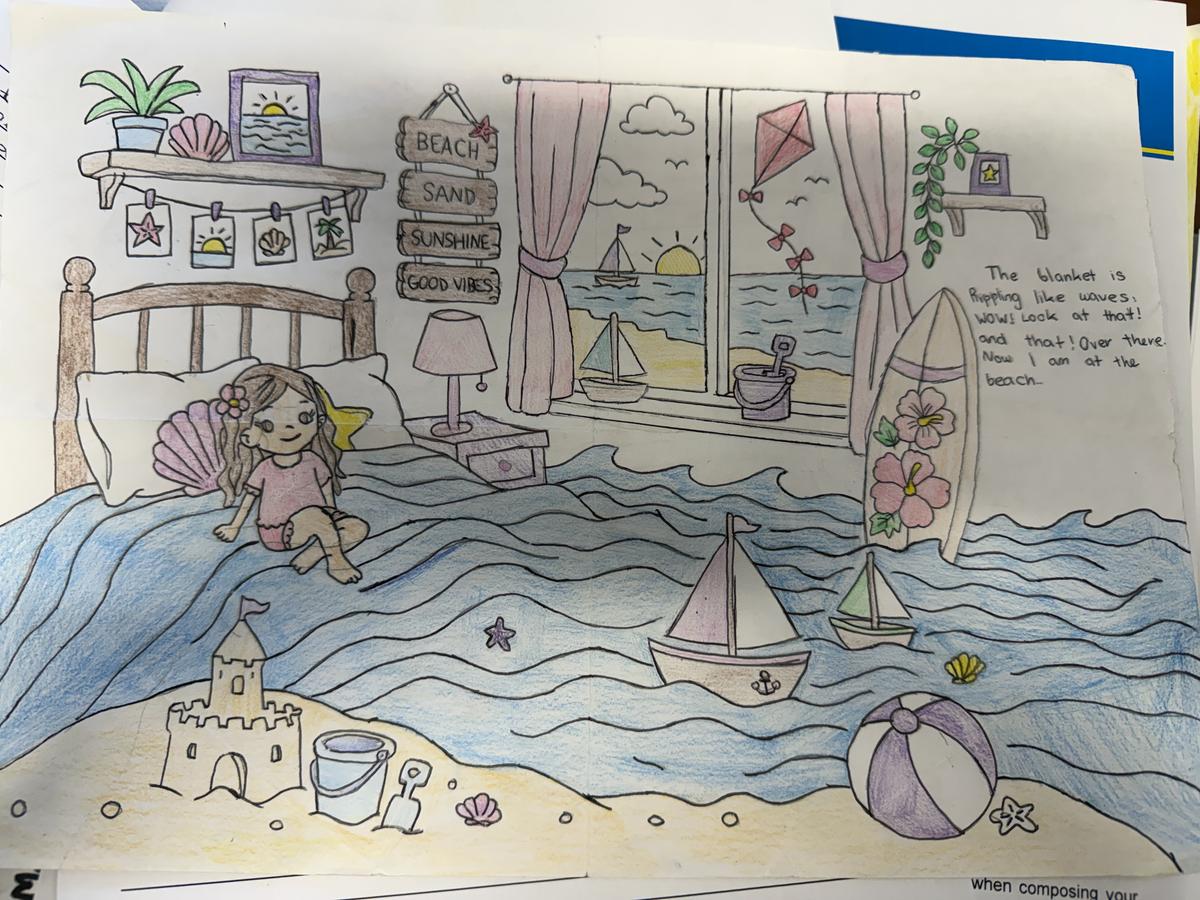
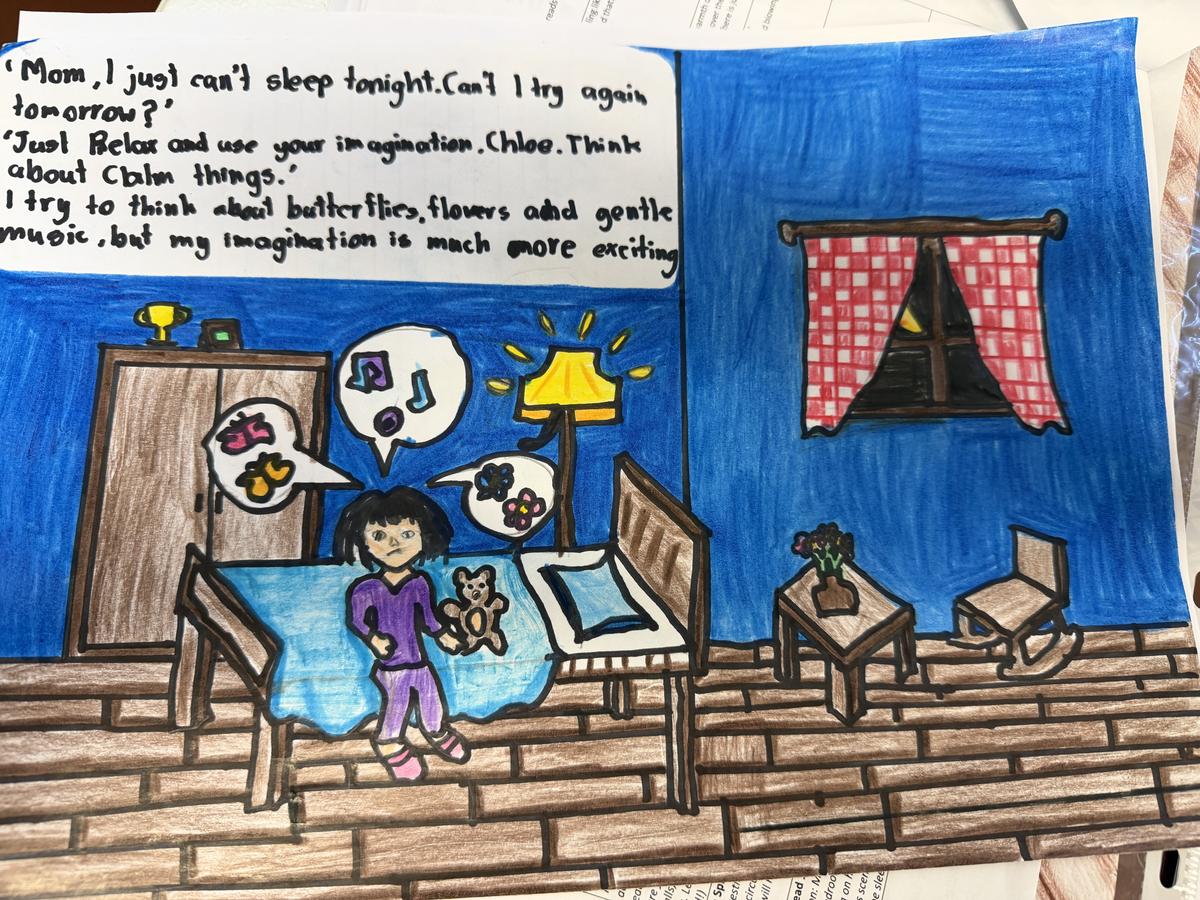
Our Year 7 English students have been exploring imagination, setting and visual storytelling as part of their Tell Me a Story unit. Students were challenged to transform an ordinary bedroom into an imaginative world, using colour, detail and carefully selected visual elements to show how a character’s thoughts and imagination can reshape a familiar environment.
As the examples pictured demonstrate, students created highly individual responses, transforming bedrooms into everything from peaceful beach landscapes to imaginative dream-like spaces, while considering how setting can establish mood, reveal character and engage an audience. This creative activity supports students in developing the skills of representing ideas and experiences, making deliberate creative choices and communicating meaning for an audience, which are key areas of learning within the Year 7 English course.
The finished pieces showcase the creativity and attention to detail of our students while providing an engaging way to explore how stories can be communicated through both words and images.
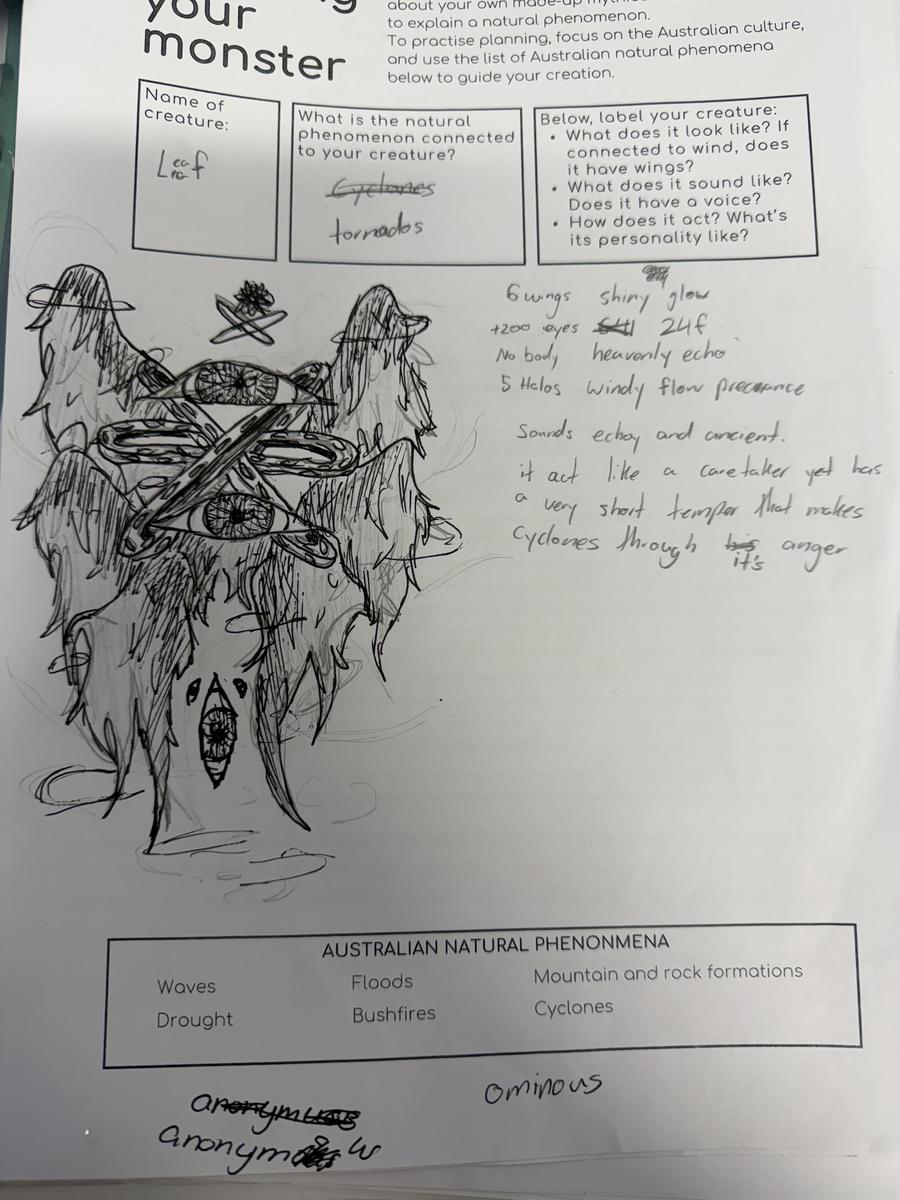
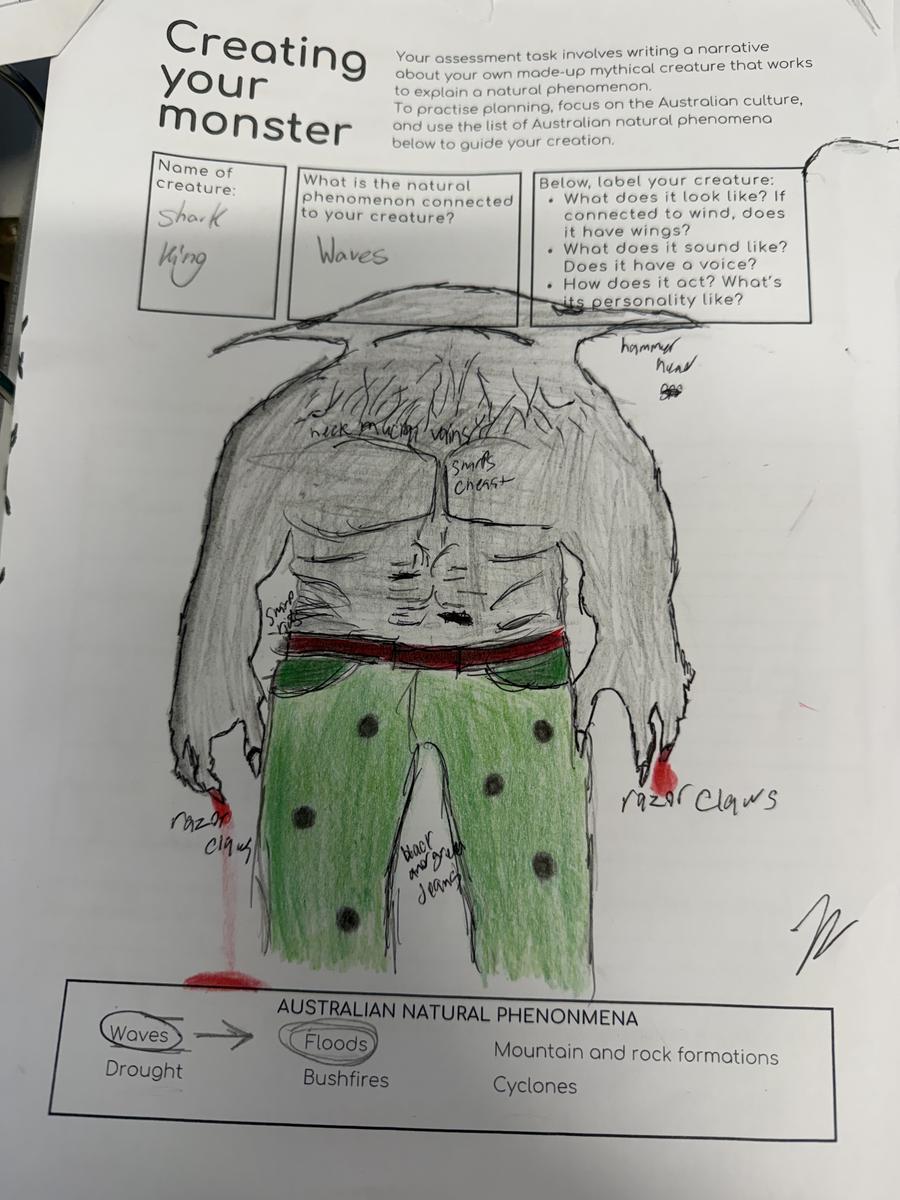
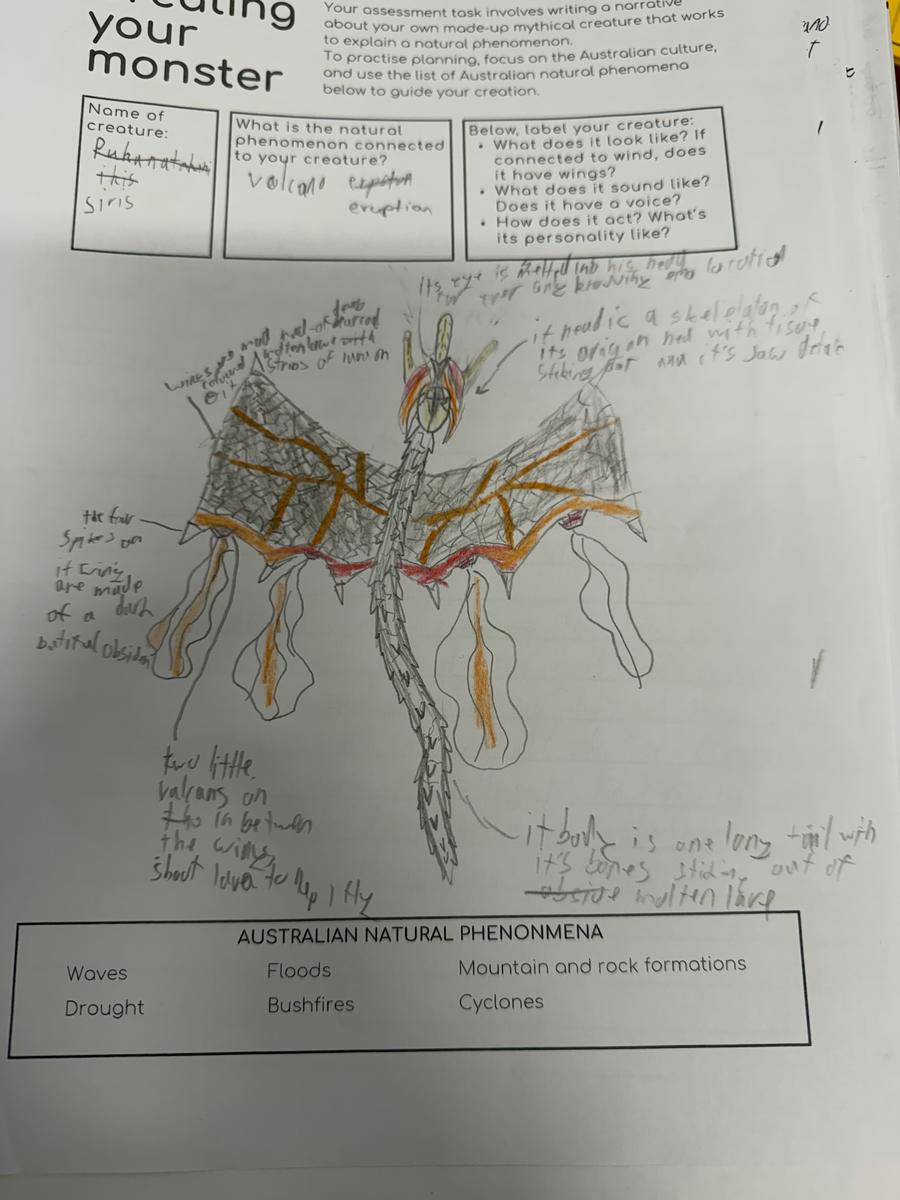
Our Year 8 English students have been exploring myths, monsters and legends through the Monsters Who Made the World unit. As part of their preparation for the assessment task, students designed their own original mythical creature and connected it to a natural phenomenon of their choice. Students will use these ideas to create a narrative that explains how their creature caused or created the natural phenomenon, incorporating a clear setting, characters and plot alongside language techniques such as imagery, simile, metaphor and personification.
This activity has given students an engaging opportunity to develop their creative writing and narrative planning skills while considering how myths have traditionally been used to explain the natural world.
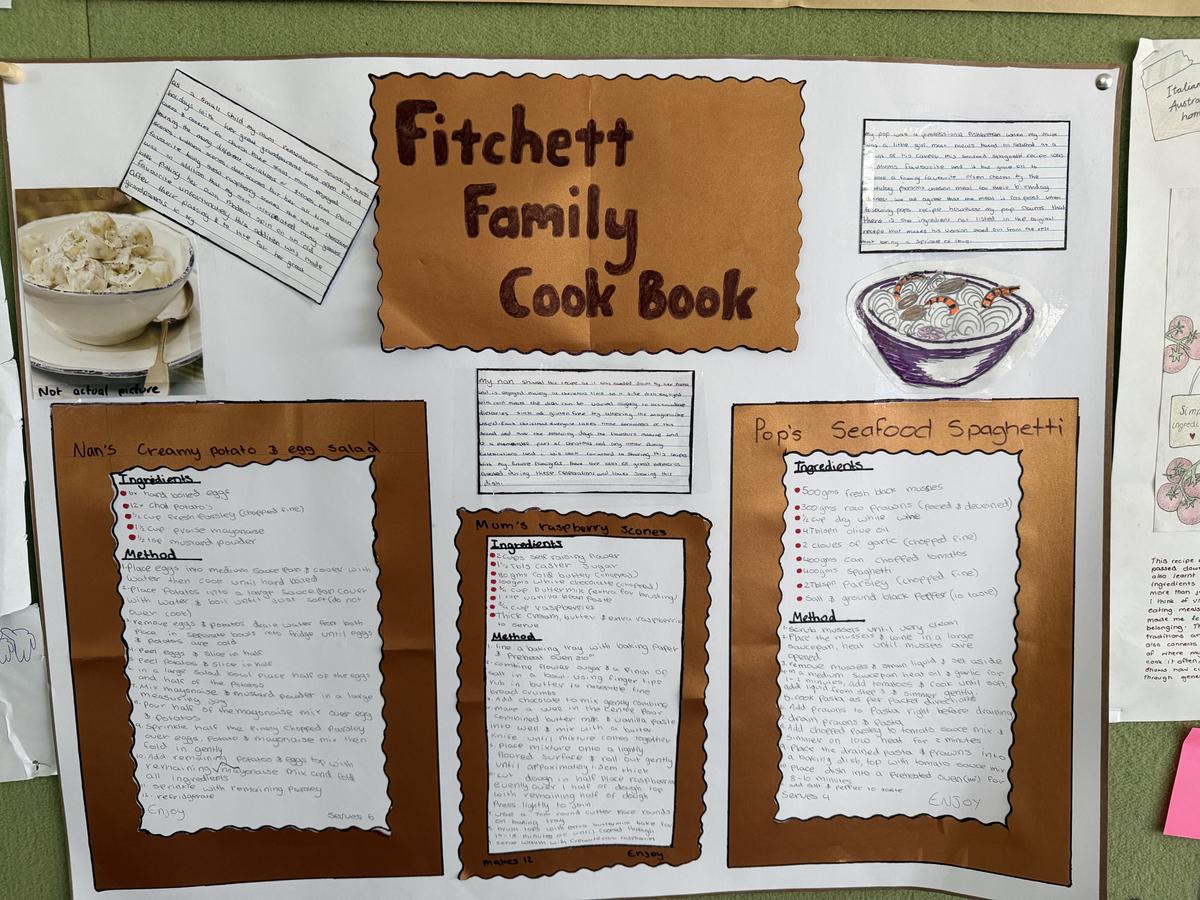
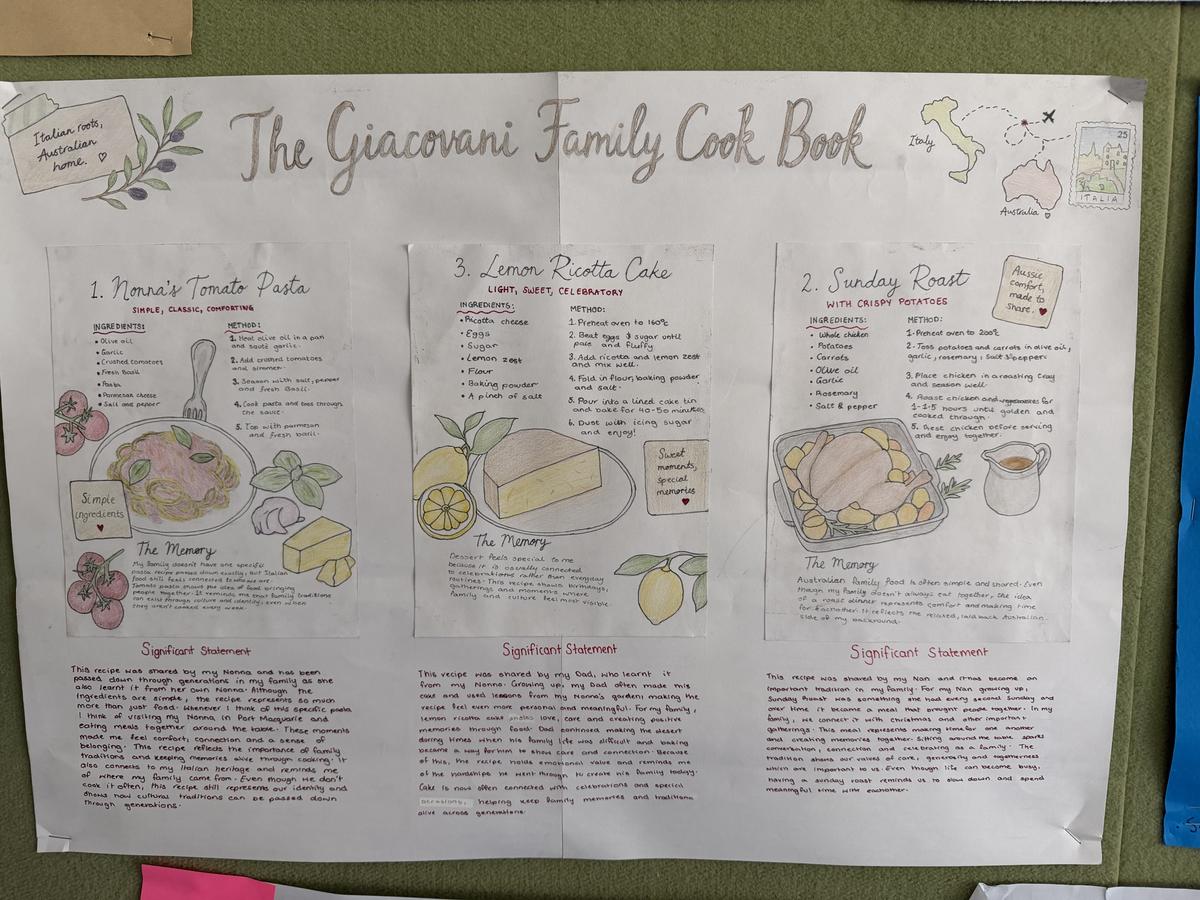
Year 11 English Studies students have been exploring the importance of family, connection and belonging through their Part of the Family assessment task. Students created a personalised Family Cookbook Display featuring three recipes that hold significance to their family, presenting each recipe using appropriate procedural writing conventions alongside photographs, drawings and other visual features. For each recipe, students also wrote a short significance statement explaining who shared the recipe, why it is meaningful, and the memories, traditions, celebrations or cultural connections associated with it.
The task encouraged students to recognise how food can represent much more than a meal, acting as a way of preserving family stories, traditions, identity and relationships.