Year 12 Biology
🧬 Tracing Human Evolution Through Skulls
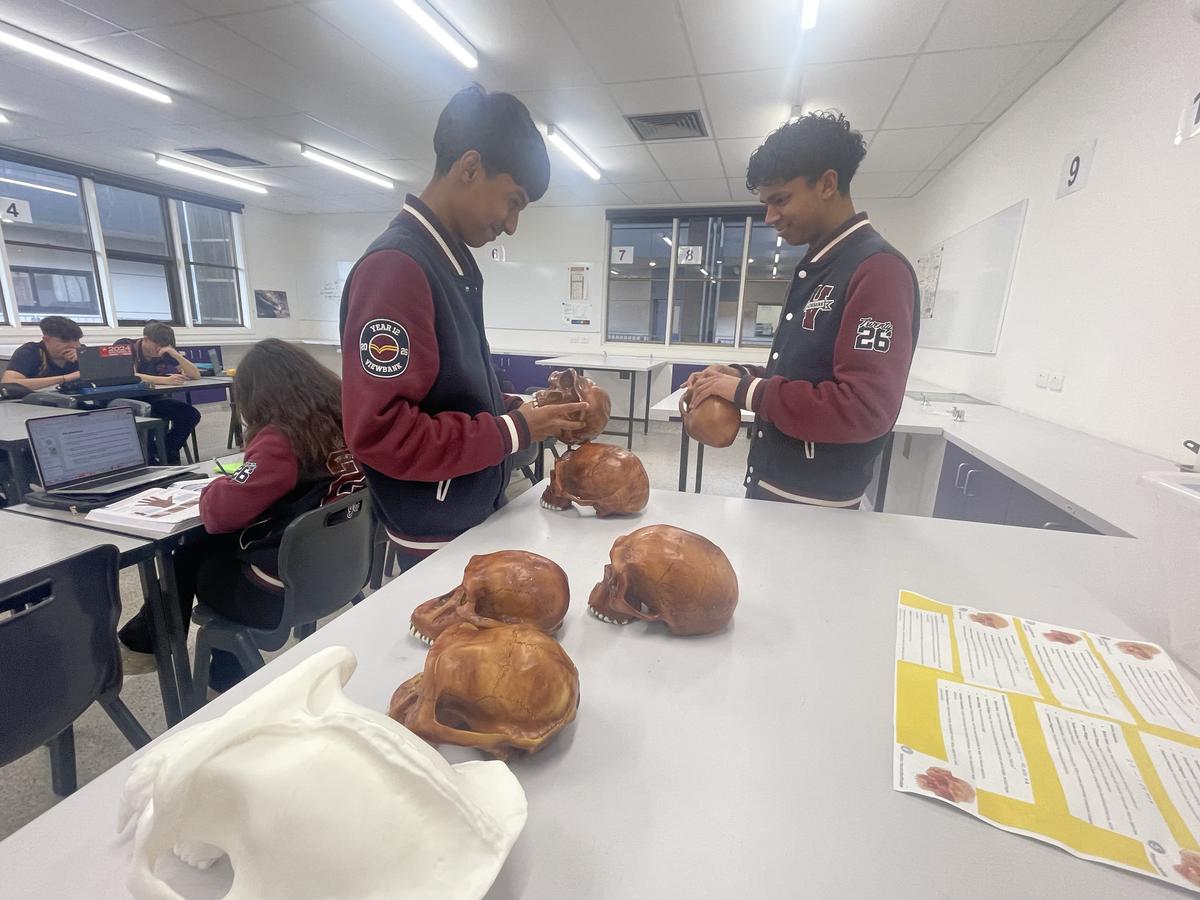
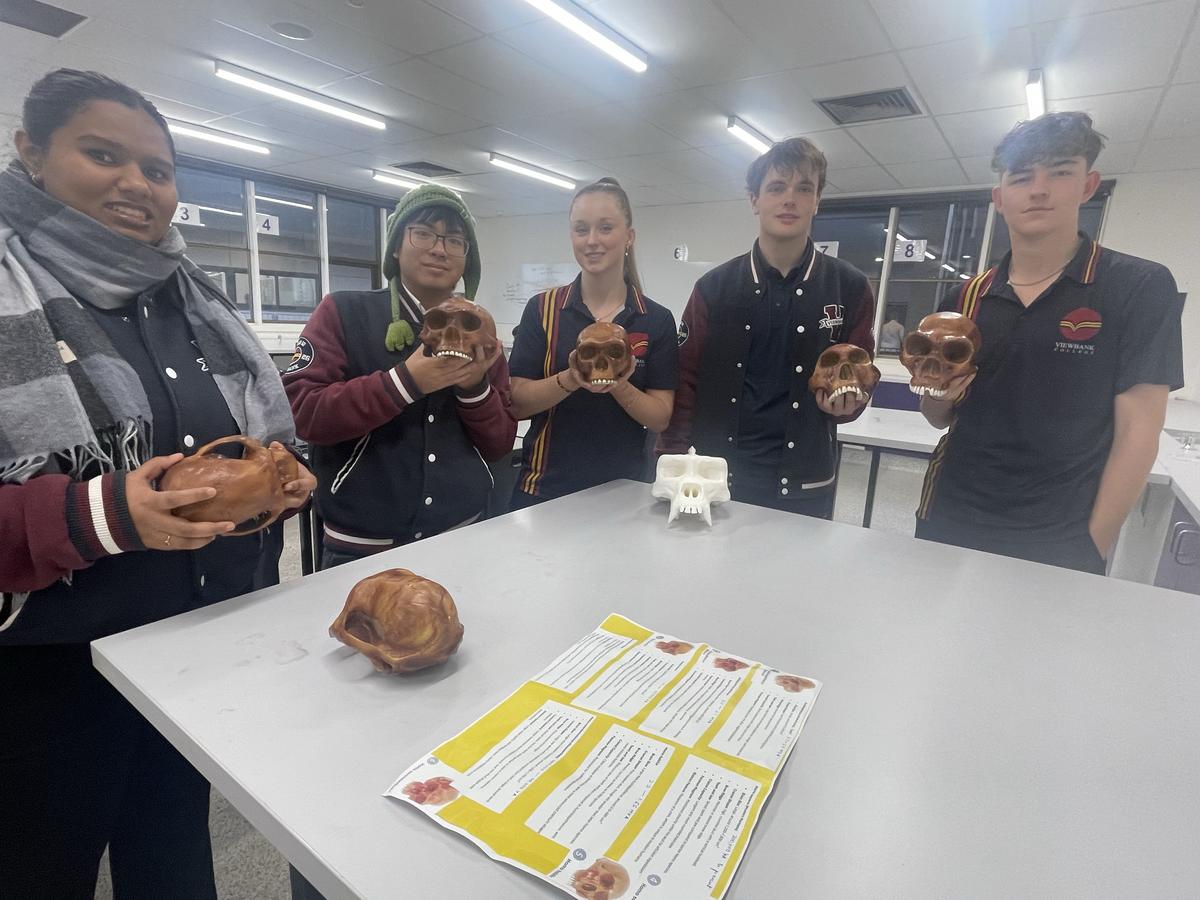
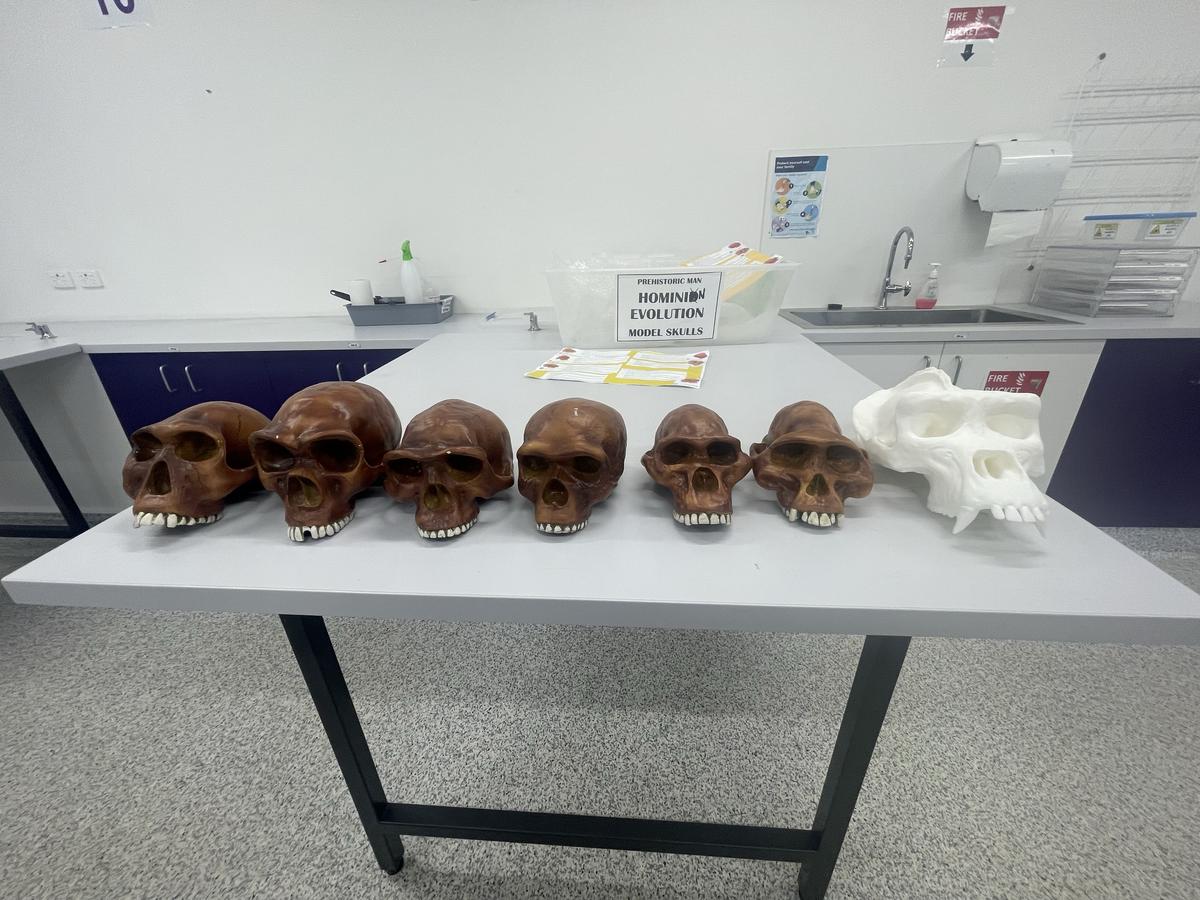
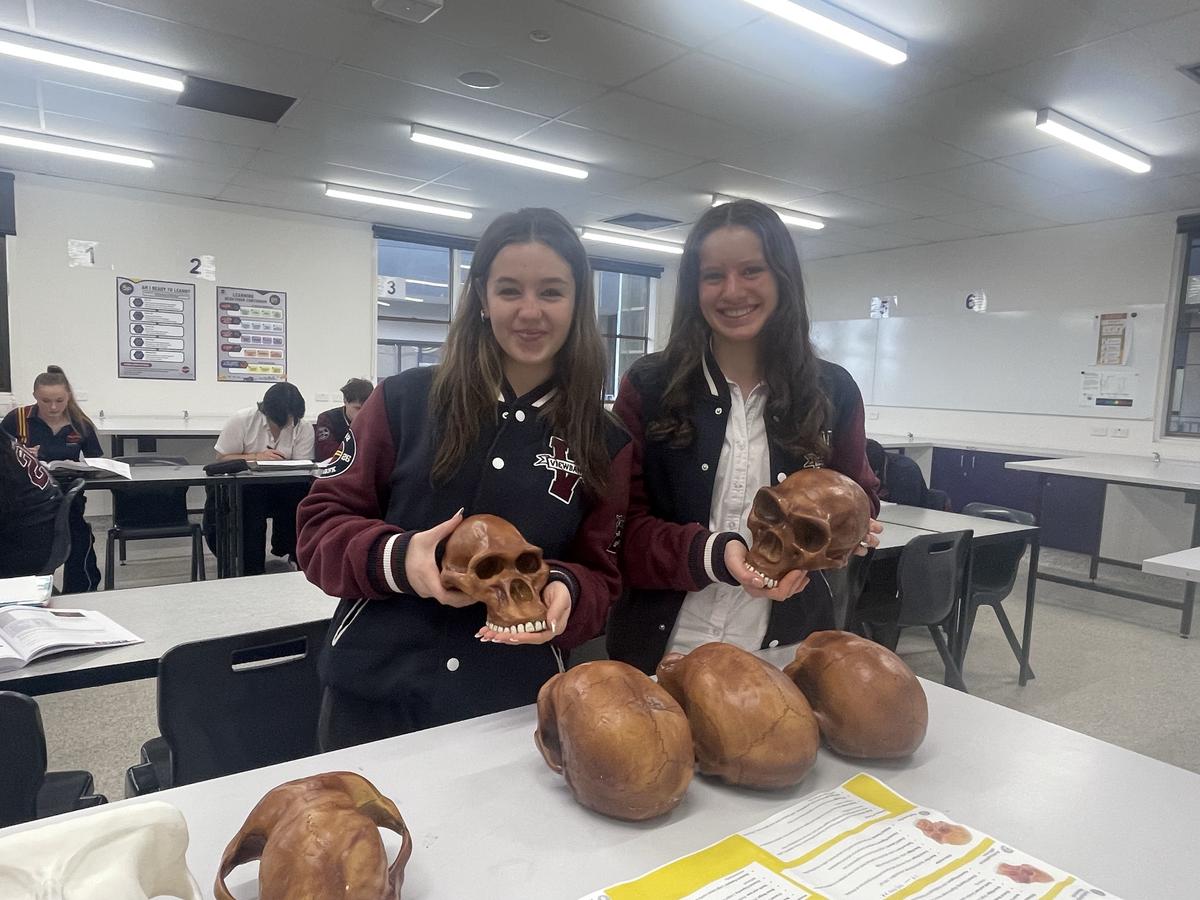
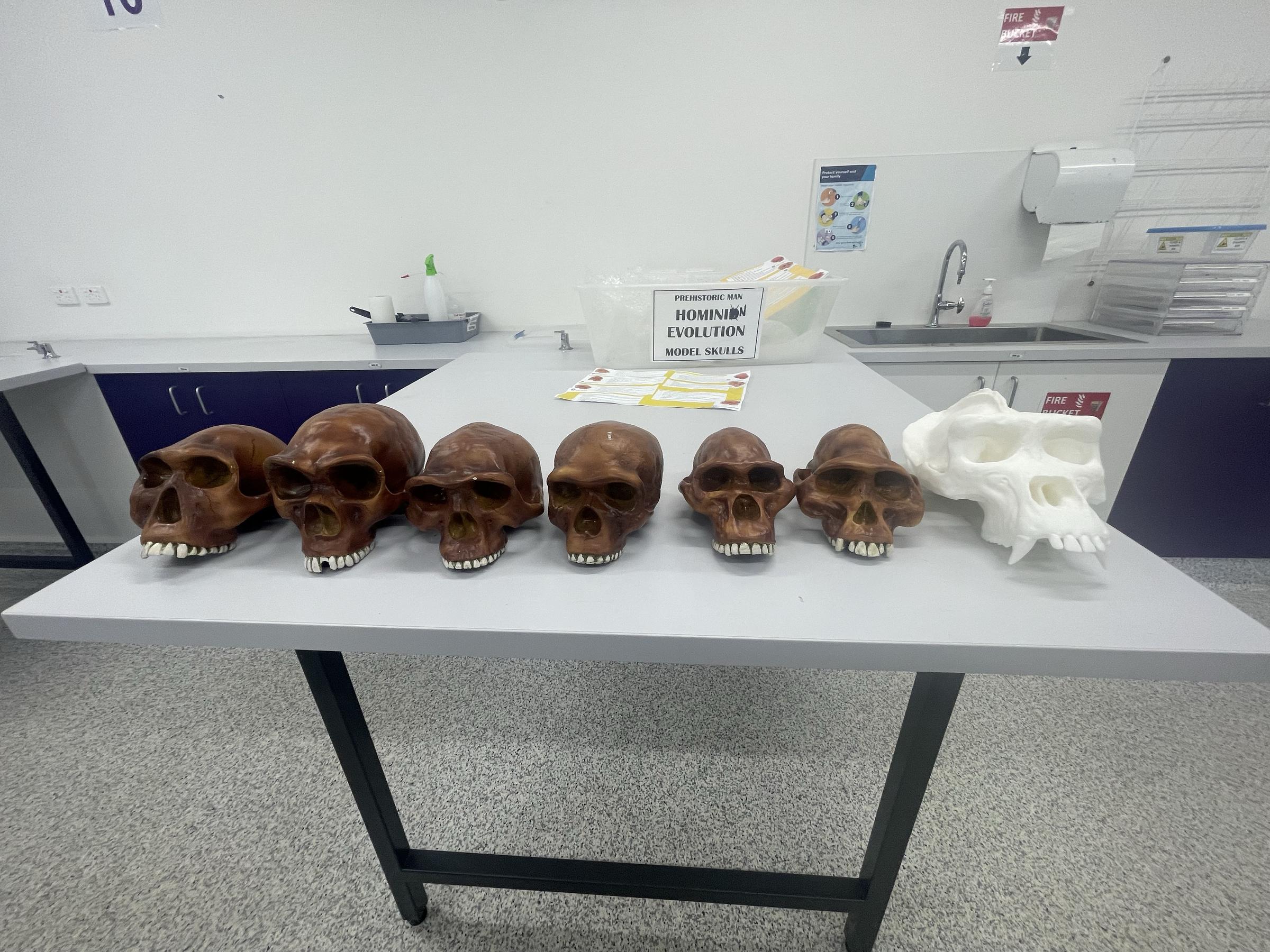
Year 12 Biology students stepped back in time to explore human evolution through the study of skulls. Using a collection of skulls representing different stages of human evolution, students carefully examined and compared features such as cranial shape, brow ridges, jaw size, teeth, facial structure and braincase size.
The collection included a chimpanzee skull for comparison, along with prehistoric and human skulls representing species including Australopithecus afarensis, Australopithecus africanus, Homo habilis, Homo erectus, Homo neanderthalensis and Homo sapiens.
Students used these physical specimens to identify patterns of change over time and considered how differences in skull morphology provide evidence for evolutionary relationships. It was a hands-on opportunity to connect classroom concepts such as natural selection, adaptation, common ancestry and hominin evolution with real anatomical evidence.
By closely examining the skulls, students were able to see how the story of human evolution is revealed not just through textbooks and diagrams, but through the physical evidence left behind by our ancestors.