Glen Education Aspendale North
























 Glen Education Inc.
When We Listen, Learning Grows
By Saige Nichol, Early Childhood Educator and Kay Lee, Early Childhood Teacher
We are very proud to share that our kindergarten was recently rated Exceeding across all seven Quality Areas as part of our Assessment and Rating process.
This wonderful outcome reflects the strong relationships, thoughtful teaching, inclusive practices and ongoing reflection that are part of our everyday work. Most importantly, it reminds us of the importance of continuing to listen carefully to children and recognise them as capable and active participants in their learning.
This term, we are celebrating children’s voices and the important role they play in shaping our curriculum.
For us, children’s voice is more than simply asking children what they would like to do. It is about noticing their questions, listening to their theories, following their interests and creating opportunities for their ideas to influence what happens next.
When a Question Becomes the Beginning of Learning
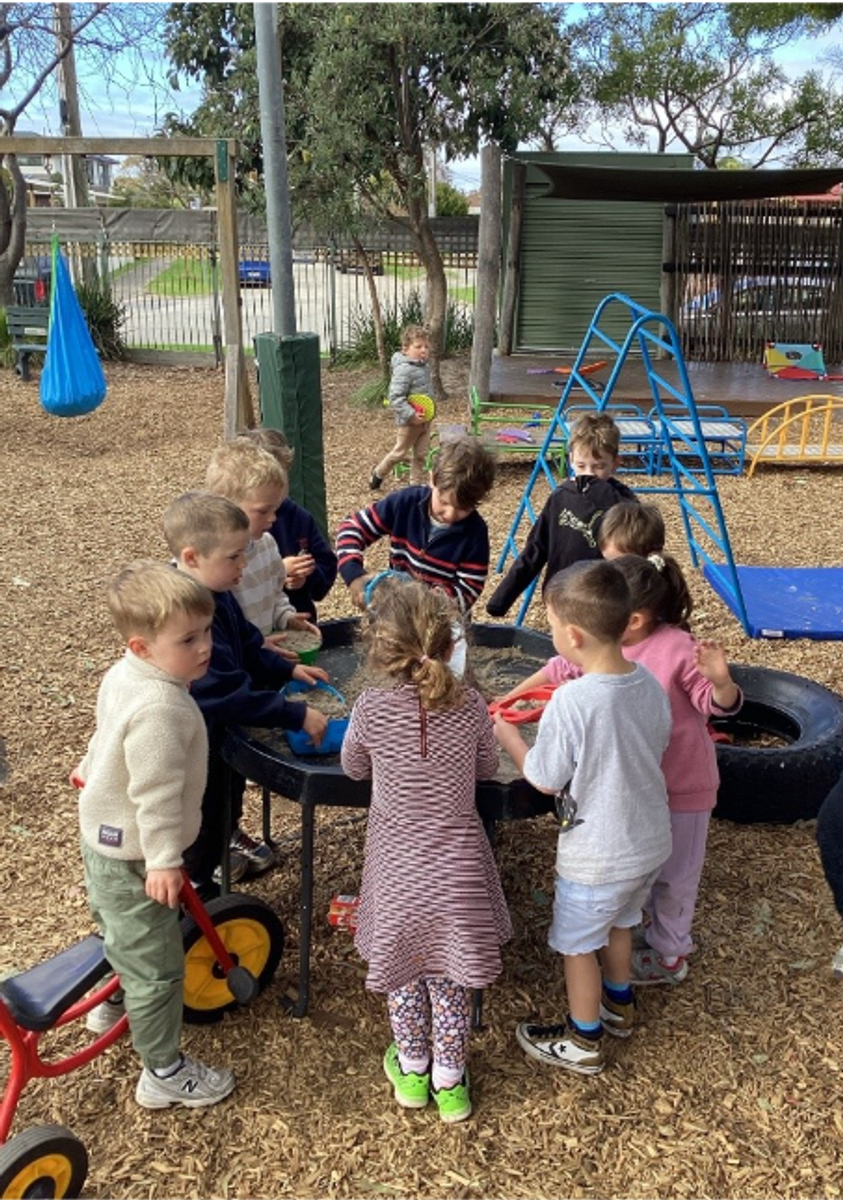
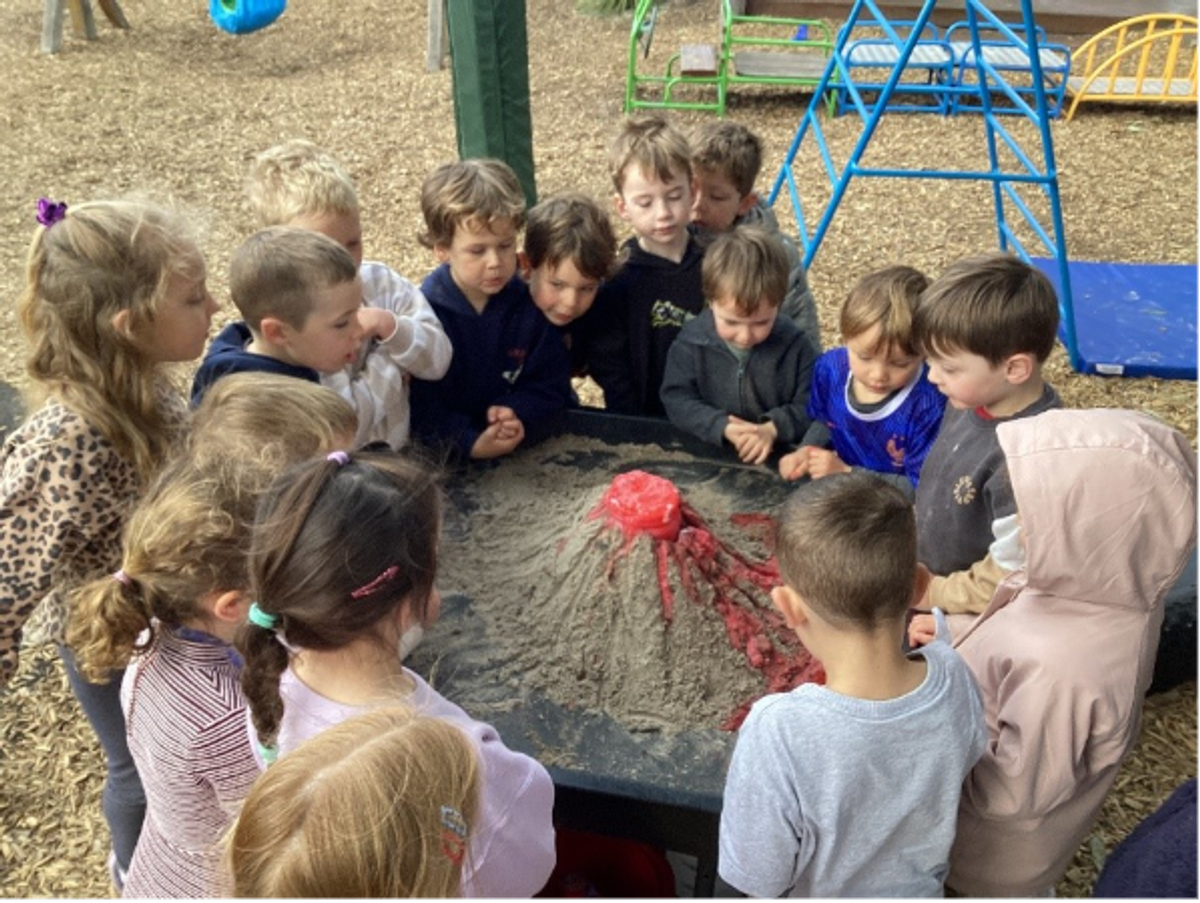
Recently, the children became fascinated by creating their own volcanic eruption. Working together, they shaped sand into a volcano and experimented with water, vinegar and baking powder. As the red foam erupted, the children watched with excitement.
Archie proudly announced, “It’s eruption!”
The children continued to observe what was happening until Xavier noticed something unexpected. The lava was flowing down only one side of the volcano.
He asked, “Why is it only going down one side?”
Rather than giving Xavier an answer, we encouraged the children to think about what they could change. The children decided to make the other side of the volcano lower. Together, they changed the shape of their volcano and repeated the experiment.
As they watched the second eruption, they carefully observed whether their idea had made a difference.
Later, Ralph excitedly called out, “It’s magma!”
What began as a simple science experience became something much richer because the children’s questions and ideas shaped where the learning went next.
The children were not simply following an experiment prepared by an educator. They were observing, questioning, making predictions, changing their environment, testing their ideas and sharing their theories.
This is what children’s voice can look like in everyday play-based learning.
Listening, Responding and Following Their Lead
Throughout our program, we look for these moments every day;
A child’s question can lead to a new investigation. A drawing can reveal an emerging interest. A conversation can inspire a new experience. A child’s suggestion can change the way we use our environment. A theory can become the beginning of a deeper investigation.
By listening carefully and responding intentionally, we can show children that their ideas matter and that they can influence their learning environment.
We also recognise that children communicate their ideas in many different ways — through words, gestures, drawing, movement, play, choices and relationships. Our role is to create the time, space and opportunities for every child to have their voice heard.
Children’s Voices Continue at Home
Families play an important role in helping us understand what matters to each child.
We would love to hear about the questions your child is asking at home, something they are particularly interested in, a new idea they have shared, or something they would love to explore.
These small moments provide valuable insights into children’s thinking and help us build meaningful connections between home and kindergarten.
As we continue our learning this term, we look forward to listening closely, wondering alongside the children and following their ideas wherever they may lead.
Because when we listen to children, we don't just hear their voices, we discover where their learning can go next.
Special Children’s Voice Page:
What Words Make Us Feel Loved?
During group time, we asked the children:
“What do you like your Mum or Dad to say to you?”
The children eagerly shared the words and actions that make them feel loved, safe and special.
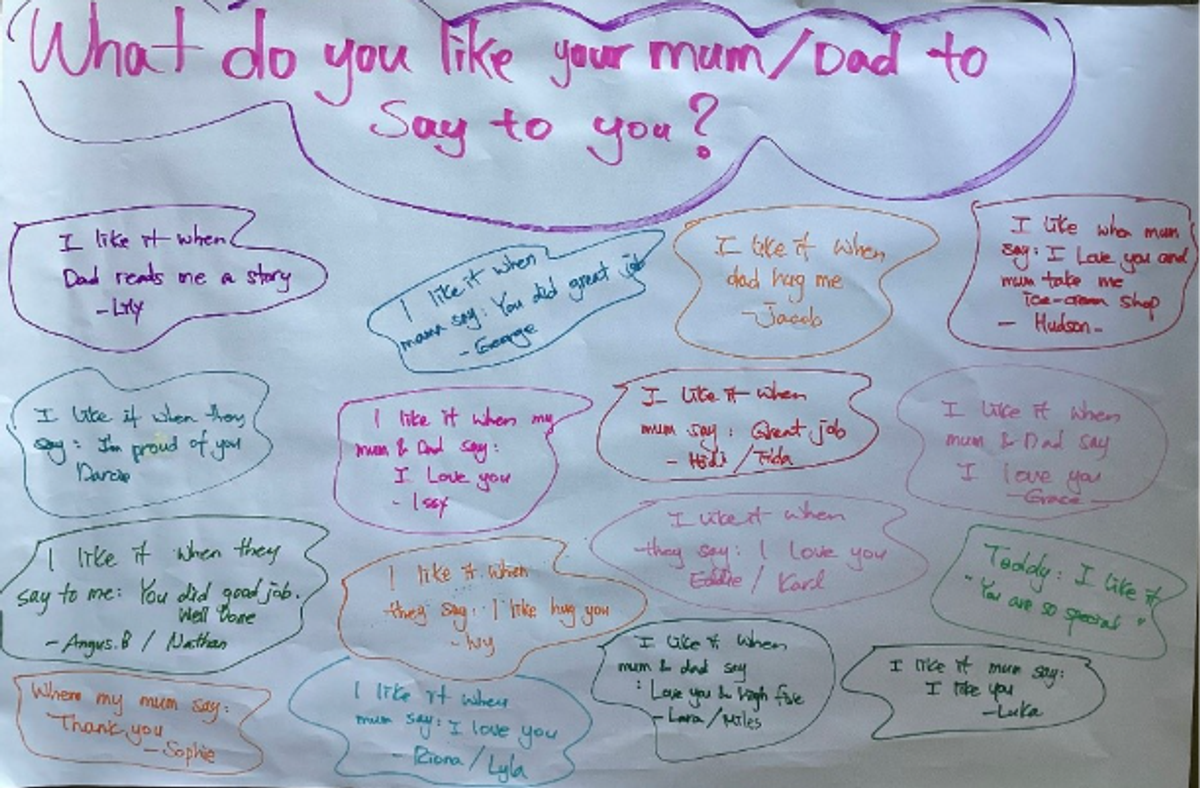
Our children said...
“I love you.”
“I’m proud of you.”
“Great job!”
“You are so special.”
“I like hugs.”
“I like kisses.”
“I like bedtime stories.”
“I like spending time with my Mum and Dad.”
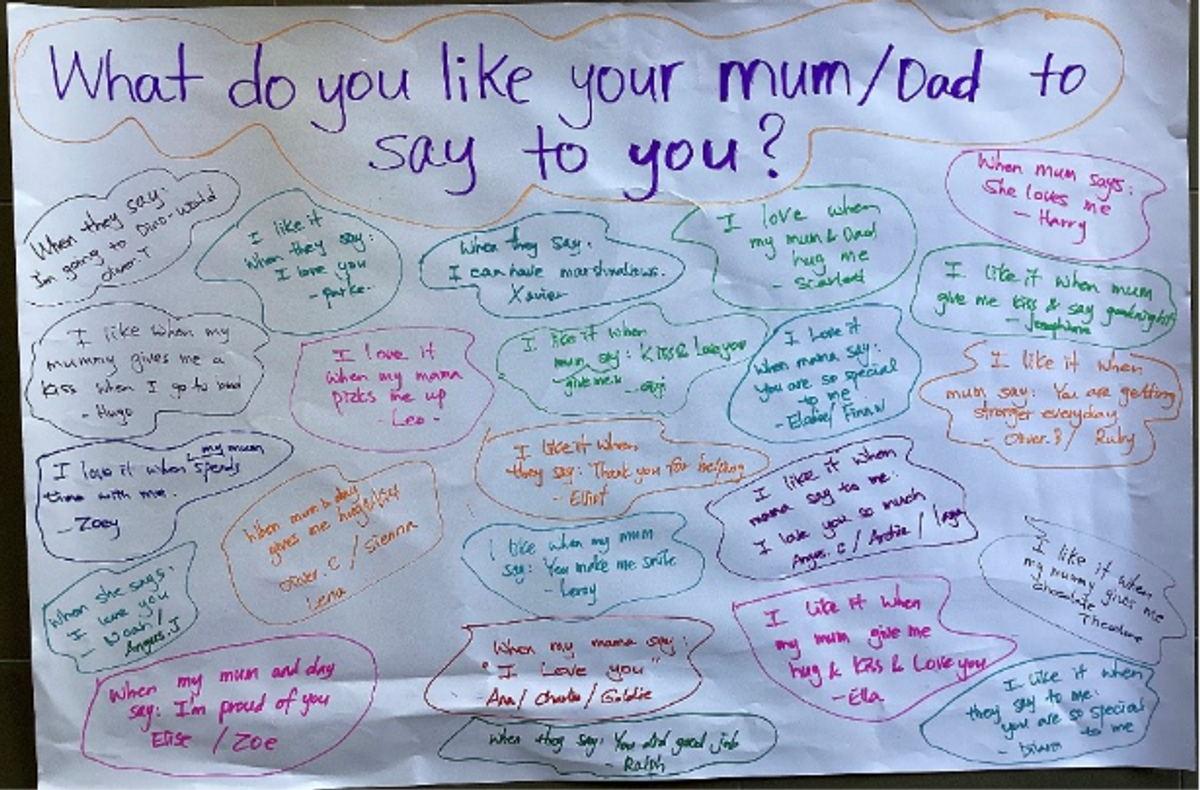
The children’s responses gave us a beautiful insight into what makes them feel loved, valued and connected. Their words reminded us that small moments of affection, encouragement and connection can have a big impact on children’s sense of belonging and wellbeing.
We loved hearing the children express what is important to them and sharing their perspectives in their own words.
A conversation to continue at home
We invite families to continue this conversation at home by asking:
“What words make you feel happy, loved and confident?”
You might be surprised by what your child says!
Sometimes, the smallest words can make the biggest difference.