Glen Education St Patrick's





























 Glen Education Inc.
The Power of Children’s Voices
By Yuliati Susilo, Early Childhood Educator
At Glen St Patrick’s Kindergarten, we encourage children’s voices throughout their everyday experiences. We create opportunities for children to express their ideas, opinions, questions and feelings during one-on-one interactions, small-group experiences, mat time, mealtimes and many other experiences throughout the day.
We believe that listening to children is an important part of building respectful relationships. When we take time to listen to what children have to say, we show them that their thoughts, ideas and feelings matter. It also helps children develop confidence in expressing themselves and encourages them to become active participants in their learning.
One-on-One Interactions
During one-on-one interactions, educators spend time connecting with each child and show genuine interest in what they are doing. We might begin by greeting the child and asking questions about the activity they are engaged in.
For example, if a child is completing a puzzle, an educator might ask, “How are you finding this puzzle?” If the child responds that the puzzle is too easy, we listen to their feedback and offer more challenging puzzles. In this way, children are encouraged to communicate their needs and preferences, while educators respond to and extend their learning.
Sharing Ideas During Story Time
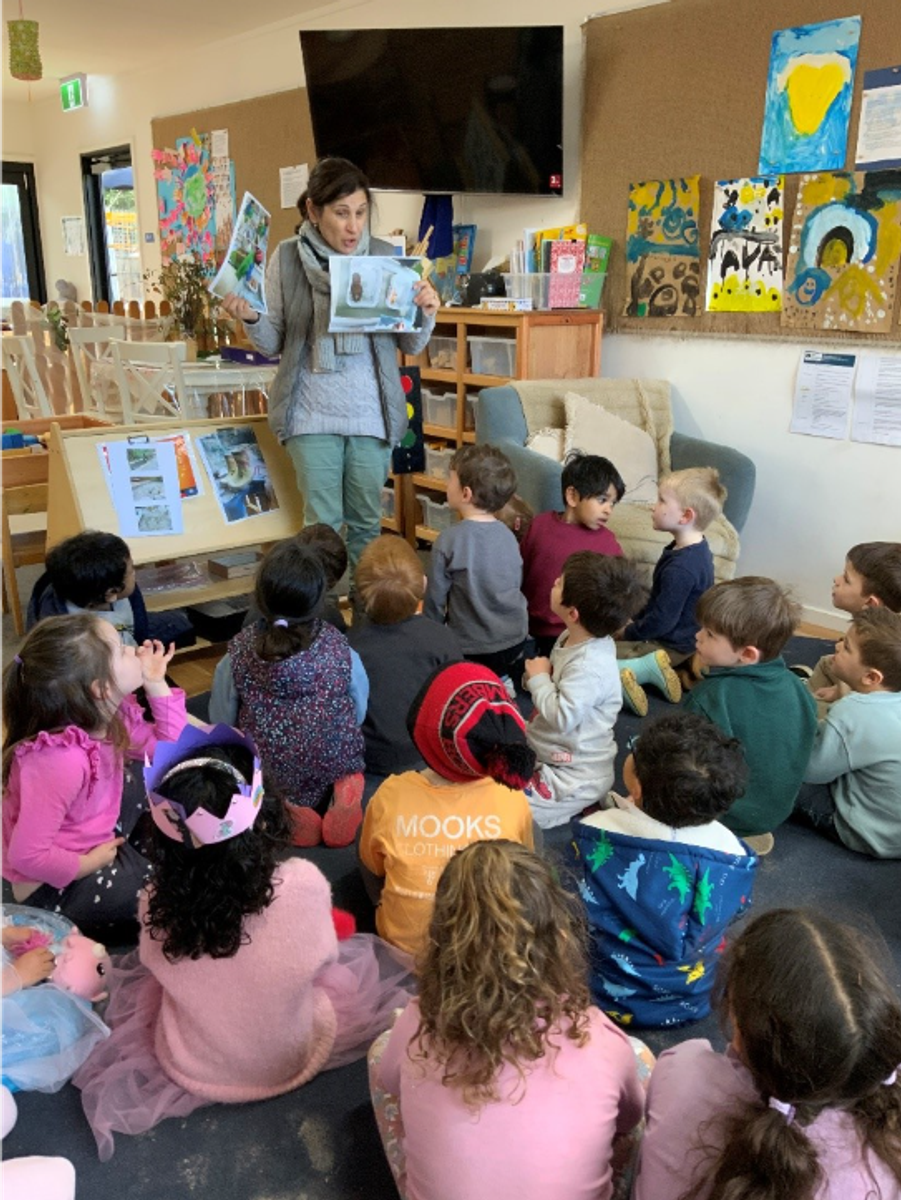
Small-group story sessions provide an opportunity for children to share their voices and ideas. During and after a story, educators encourage children to think further by asking questions such as:
“What do you think about the story?”
“What happened to the characters?”
“How did the characters solve the problem?”
“Would you like to read another story?”
These conversations encourage children to share their thoughts, make connections, express their opinions and listen to different perspectives from their friends.
Sharing Our Voices During Mat Time
We also invite children’s voices when planning our kindergarten program. We believe children should have opportunities to contribute ideas about the experiences they would like to explore and how they would like to participate in our kindergarten.
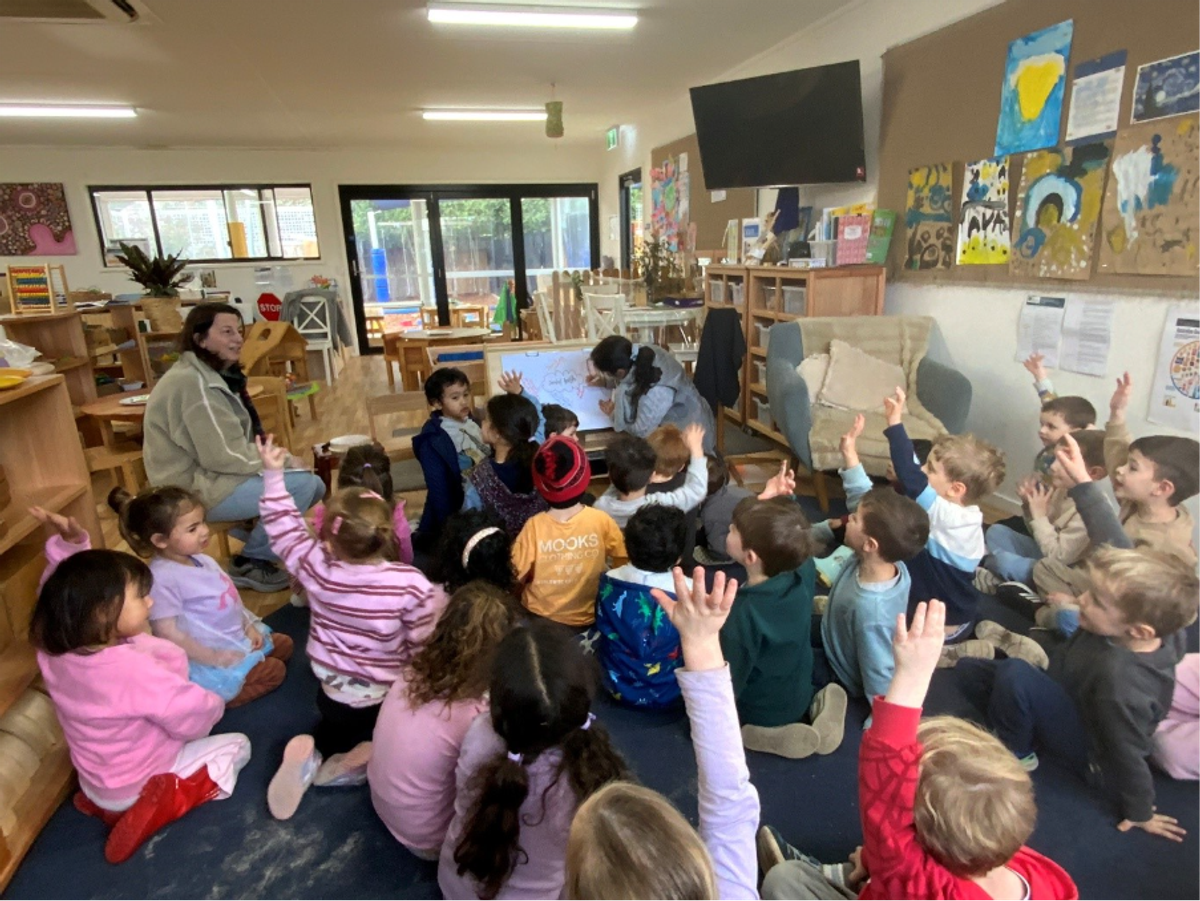
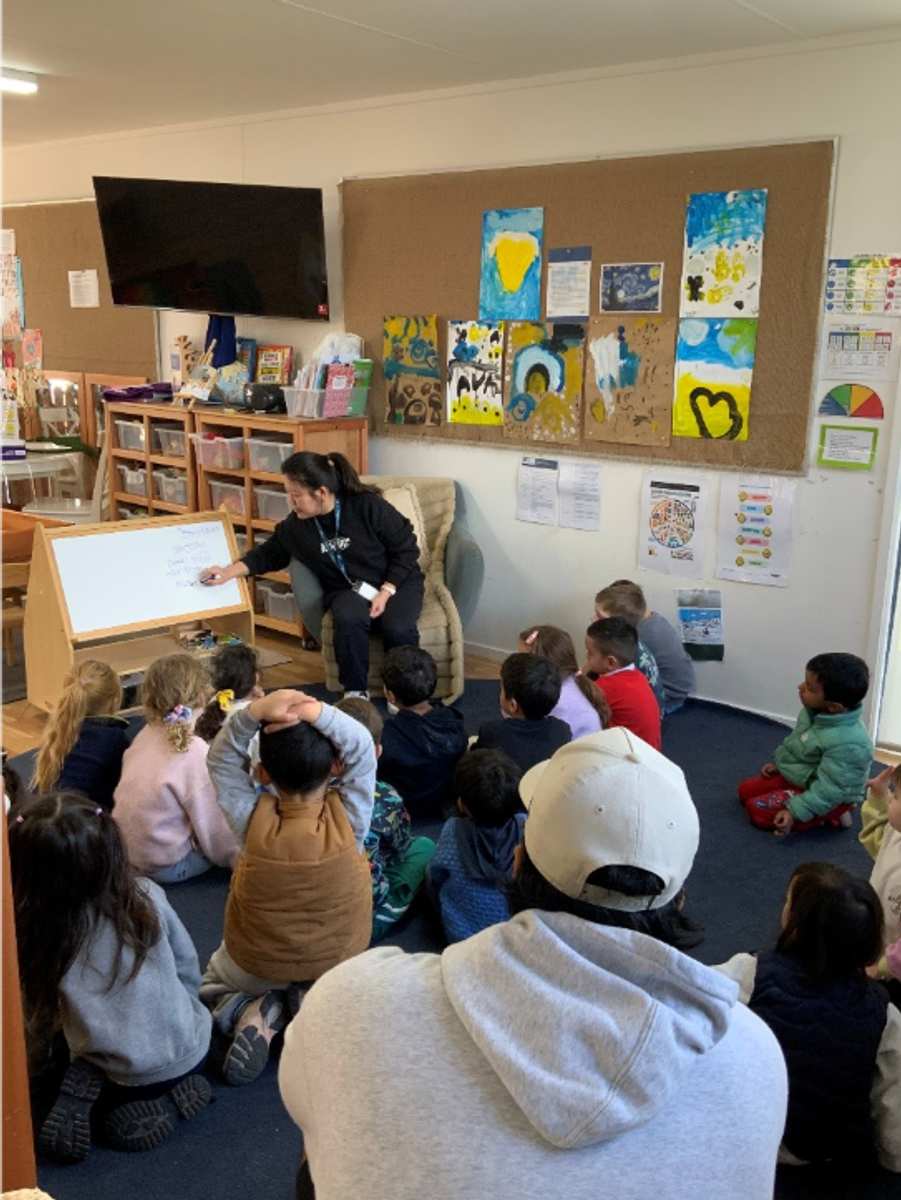
We create opportunities for children to share their ideas through Circle Time. During circle time, children are encouraged to listen to one another, share stories, participate in collaborative discussions and express their interests and ideas. Circle Time provides a safe and respectful space where children feel heard and valued, and where they can confidently express themselves and contribute to conversations about our program.
During this time, we have discussions about what children would like to do, explore and learn. Educators listen carefully to children’s ideas and use their suggestions to help guide our planning. For example, when we celebrate special days, we ask children what sorts of activities that they are interested in. We encourage them to share what they would like to do and listen carefully to their suggestions.
We also use Mind Mapping as a way of supporting children’s decision-making and documenting their learning. Mind Mapping makes children’s thinking visible and provides a way for young learners to visually connect their ideas. Through the use of words, pictures and colours, children can see their thoughts represented and make connections with their different ideas and interests. This process supports children to contribute to decision-making and see how their ideas can influence what happens in our learning environment.
We understand that children communicate in many different ways. While most children share their thoughts through talking, some other children may communicate through drawing, pointing, gestures, facial expressions, or choosing pictures. We take time to observe and listen to these different forms of communication and make sure every child has a way to contribute.
Children are also invited to contribute their ideas when we talk about particular topics at kindergarten. We ask questions such as, “What do you know about this topic?” or “What can we all do to know more about this topic?” Educators listen to their ideas and record their suggestions so that children can see that their contributions are valued.
We understand that it is not always possible to accommodate every idea at the same time. However, we make an effort to include children’s suggestions by finding opportunities to incorporate their ideas into our program. This allows children to experience that their voices can influence what happens in their learning space.
Listening During Mealtimes
Mealtimes are also valuable opportunities for meaningful conversations. As children enjoy their meals, educators listen to their excitement and encourage them to talk about the foods they are eating. Children may communicate their food preferences, describe what they like about particular foods, or talk about why they enjoy eating them.
These relaxed conversations help children feel heard while creating opportunities to build connections with educators and their friends.
Children’s Choices About Their Artwork
Another way we encourage children’s voices is by giving them a choice about what happens to their artwork.
We have discovered that while many children feel proud and excited to see their artwork displayed, not every child wants their work to be on display. Some children choose to take their artwork home because they would prefer to share it with their families.
We believe that children have the right to make choices about their own creations. When a child would like to take their artwork home but is also happy for it to be displayed, we offer to make a copy—one for the child to take home and one for our display. When children agree, this allows us to respect their wishes while also celebrating their creativity within our learning environment.
However, there are times when a child clearly says “no” and does not want their artwork to be displayed. In these situations, we respect their decision by not displaying it.
These remind us that children’s voices are not only about encouraging them to speak; they are also about listening to and respecting their choices.
Children Voices about Chaos in Colours (What does it mean?)
Isla: it means crazy
Maxwell K: means messy
Emma Cummins: mess up that you have to clean up
Lenny: you go crazy
Matteo: mixed colours
Brandon: put rainbow colours on the paper
Niamh: colouring the whole page
Rohan: So many snakes roll around
Elijah: This looks like a chaos. It’s messy
Nova: making messy things
Amelia: Rainbow tornado
Harriet: Roller coaster
Children Voices about Everyday Food:
Georgina: Strawberries
Charlie L: Watermelon
Archie: Mandarin
Emma Cohen: Lollies not good for you
Akira: Not eating too many sweet
Niamh: Veges are everyday food
Children Voices about Dental’s Health:
Ollie: If you don’t look after your teeth, you will have pretend teeth
Tilly: I got a hole in my teeth and I need to get it fixed
Rohan: You have to brush your teeth. Your teeth is dirty
Joshua: When I go to the dentist, I don’t get a sticker. I got a toy!
Jack Y: I have a toothbrush at home
Max J: We need to clean our teeth so they don’t get a crack in them
Penelope: My baby sister went to the dentist
Anna: My brother Toby’s teeth fell out
Leopold: Drinking milk is good for your teeth
Bella: you will have cavities when you eat too many sweets
Shanavi: cavity is called germs
Brandon: I brush my teeth by myself
Children Voices about Book Week:
Lenny: We bring a book Nicholas K: Spiderman
Anna: We do a parade Isla: Elsa
Lachlan: We get to dress up Amelia: Gabby
Tilly: I have Elsa’s costume. I also got gloves Shanavi: Anna
Akira: I will dress up as Optimus Prime Ayaneeka: Elsa
Eliza: I’ll dress up as Elsa Frankie: Elsa
Chacha: I’ll be a fairy Matteo O: Stormtrooper
Maxwell K: Spiderman Gigi: Anna
Niamh: Moana Marcel: Batman
Luka: Captain Jack Sparrow Rohan: Skeleton
Leroy: Peter Pan
Molly: I want to dress up as a witch
Children Voice:
What is something you love learning about right now?
Max J: About teeth Emma Cummins: Balancing
Jack W: Writing Elijah: Numbers
Leopold: Counting Arsyad: Writing my name
What makes you happy when you come to kindergarten?
Kianna: Reading books with the teacher Charlie F: Craft
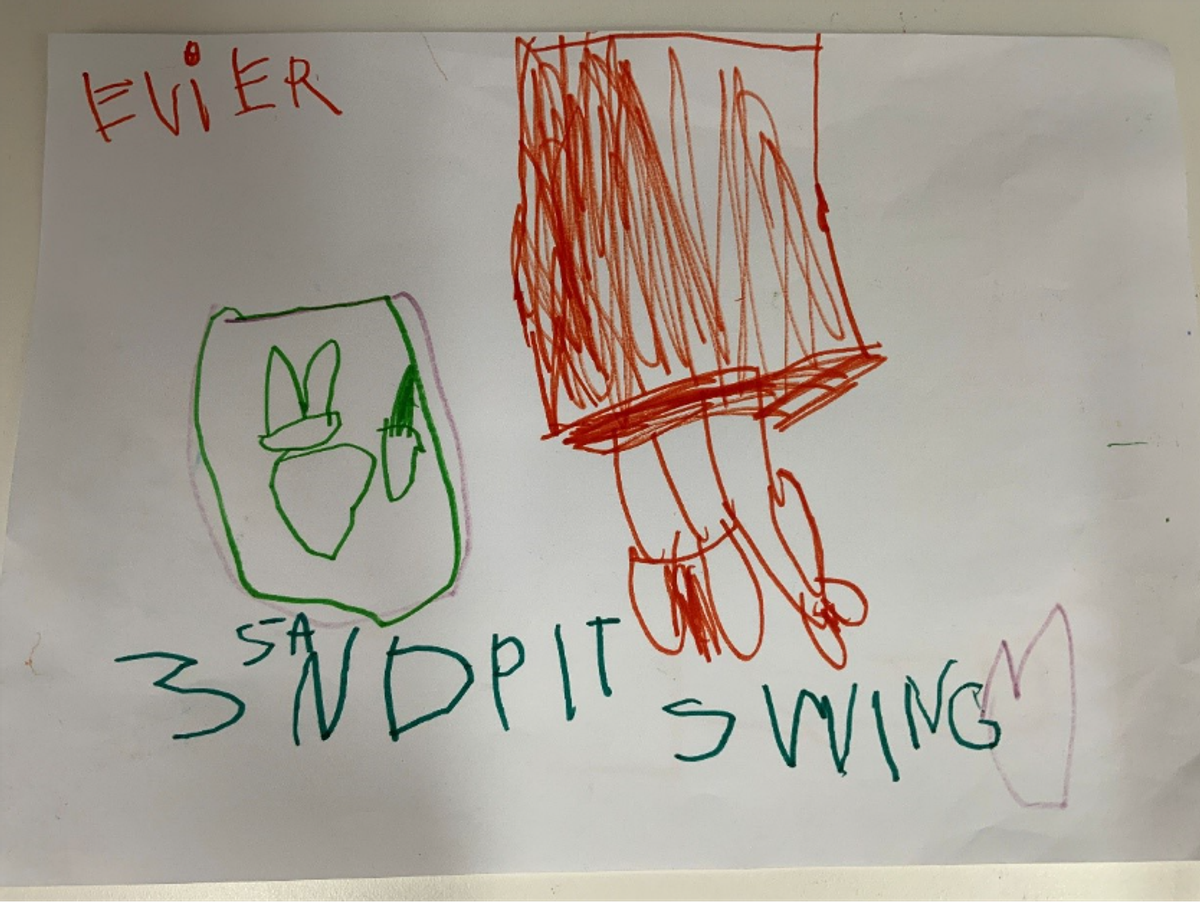
Eloise: Going outside and playing on the swing Ava: Drawing
Gabriel: Playing with friends Molly: Swinging
Willow: Bringing my own food from home
If you could change or add something to our environment, what would it be?
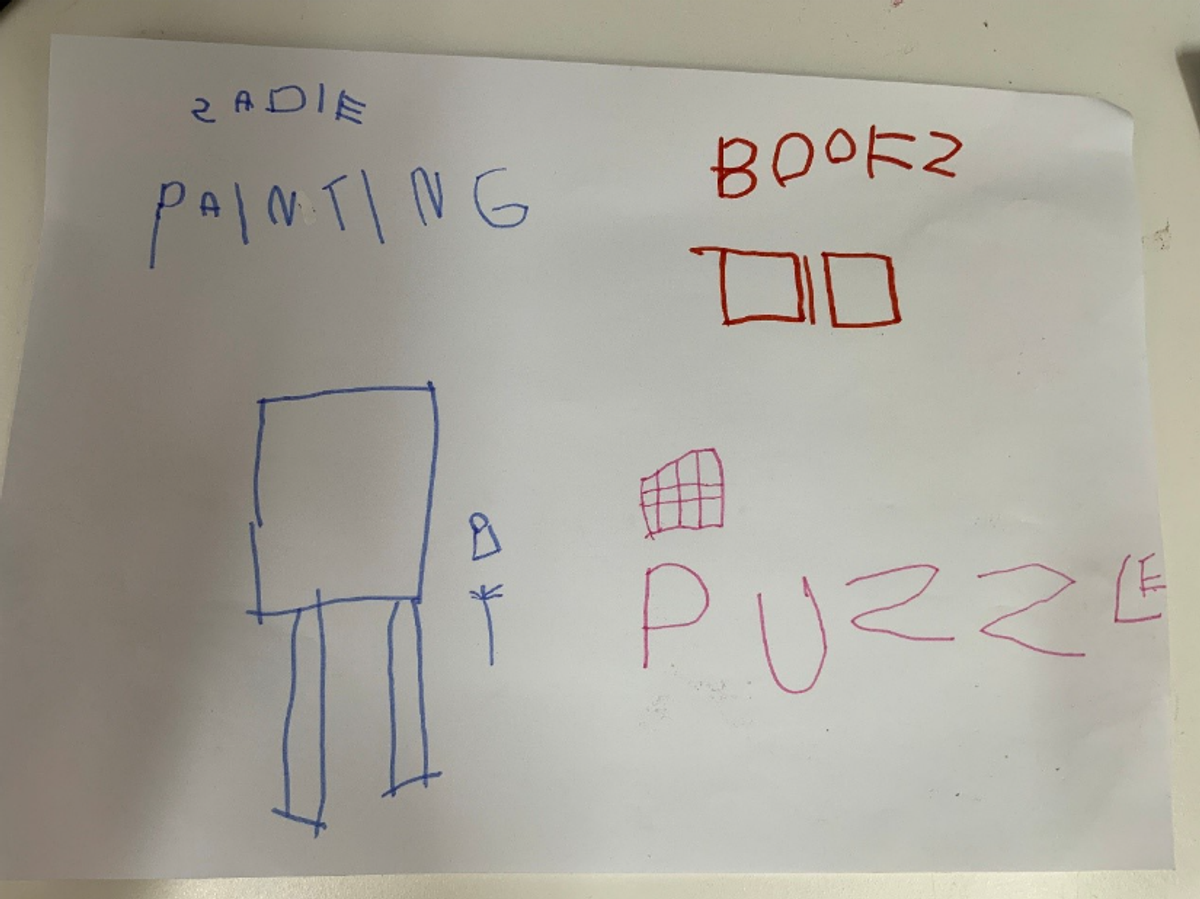
Penelope: Painting on a small easel Willow: I like playing with slime
Leo: I want to play planets Varenya: I like Princesses
What is something you are really good at:
Max J: Drawing Owen: Craft
Maya: Writing Harriet: Swimming
Evie R: Packing up Matteo D: Looking after my brother
Lachlan: Soccer, footy and basketball Evie H: Helping to clean up
Bella: Writing Archer: Lego
Wakana: Cooking pancakes with Mum Leopold: Telling jokes
George: Playing tennis Matteo D: Listening to Mummy and Daddy
What is important to you?
Jack W: My family and my dog Emma Cohen: Packing up toys
Max J: Drinking water and going to the toilet Arsyad: Drinking milk and eating food
Eloise: Eating healthy food Bodhi: Parents and Grandparents
Gabriel: Doing arts Harriet: Drinking milk
Contribution from Families about Children Voice:
In our home, we want our children to know that their feelings, opinions and choices matter. We encourage age-appropriate independence, like choosing their own clothes and hairstyles, and we make space for all feelings - even anger and sadness - while teaching them to express those feelings respectfully. I am often saying 'I am here and ready for a hug when you are', allowing them to take the space they need when angry and upset.
We also try to really listen when they tell us what they need. Just this weekend, we had planned a trip to Bunnings. Our daughter explained that she really didn't want to come because she'd been the week before and finds it boring. We were able to change our plans so she could go to the arcade with Dad - her biggest wish - while I managed the Bunnings trip alone. That won't always be the outcome, but we want her to know that her needs are heard and considered. Having a voice doesn't mean always getting her way, but we want her to know that what she thinks and feels matters.
-Kristy (Willow’s Mum)-
The Wisdom of Little Voices
A few weeks ago, after an especially busy week of work, school activities and the usual family juggle, my five-year-old daughter came home excited to show me a drawing she had made.
I looked at it and nodded, but my mind was still somewhere else.
She looked at me and said, “Mum, you’re home now. Why are you making a grumpy face? I want you to listen to me. I want you to be with me.”
That little voice stopped me in my tracks.
As working parents, we often talk about finding work-life balance. But perhaps balance isn’t about dividing our time perfectly. Maybe it’s about being truly present in the moments we do have.
Our children notice when we are physically there but mentally somewhere else. And sometimes, it takes their little voices to remind us to stop, listen and appreciate what is right in front of us.
The emails and to-do lists can wait. Childhood can’t.
We don’t know what tomorrow holds, so perhaps the best gift we can give our children today is simply to be there — not just in the room, but in the moment.
-Pamela (Ayaneeka’s Mum)-
When I feel like talking to Mum but she is already talking to another adult. I touch her hand so she knows that I would like to say something to her. She then gives my hand a little squeeze so that I know she will be with me soon.
-Milena (Luka’s Mum)-
Lachlan likes to take his dog, Waffles on lots of walks because he has so much energy. Lachlan loves throwing the ball for Waffles at the park. Lachlan: “It’s not so fun when Waffles tries to steal my food and my toys, but he is still learning!”
When we go to the park, we often ask Lachlan which park that he wants to go to. He also chooses which ball he wants to take to the park.
-Jen (Lachlan’s Mum)-
“At home, Kianna sometimes asks for a little more time before moving on to the next activity.
She normally says, ‘Can I have five more minutes, then I’ll get ready?’ I acknowledge her request and give her a clear timeframe and sometimes she even asks to put timer on so she knows that time is up and she starts to put on her clothes.
I find this helps her practise expressing her thoughts, making choices, understanding boundaries and becoming more independent.
-Greena (Kianna’s Mum)-
Children Voice Through Drawing:
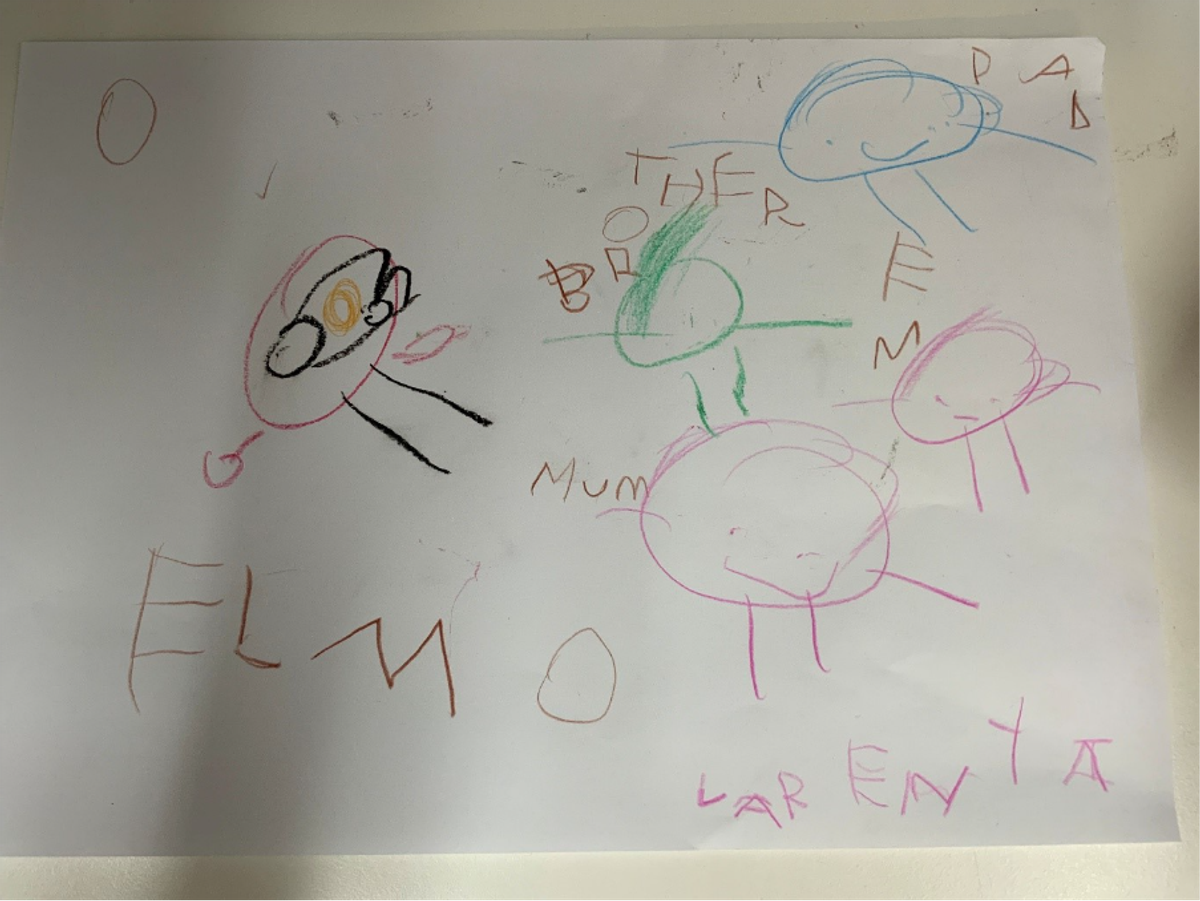
What Is Important To You?
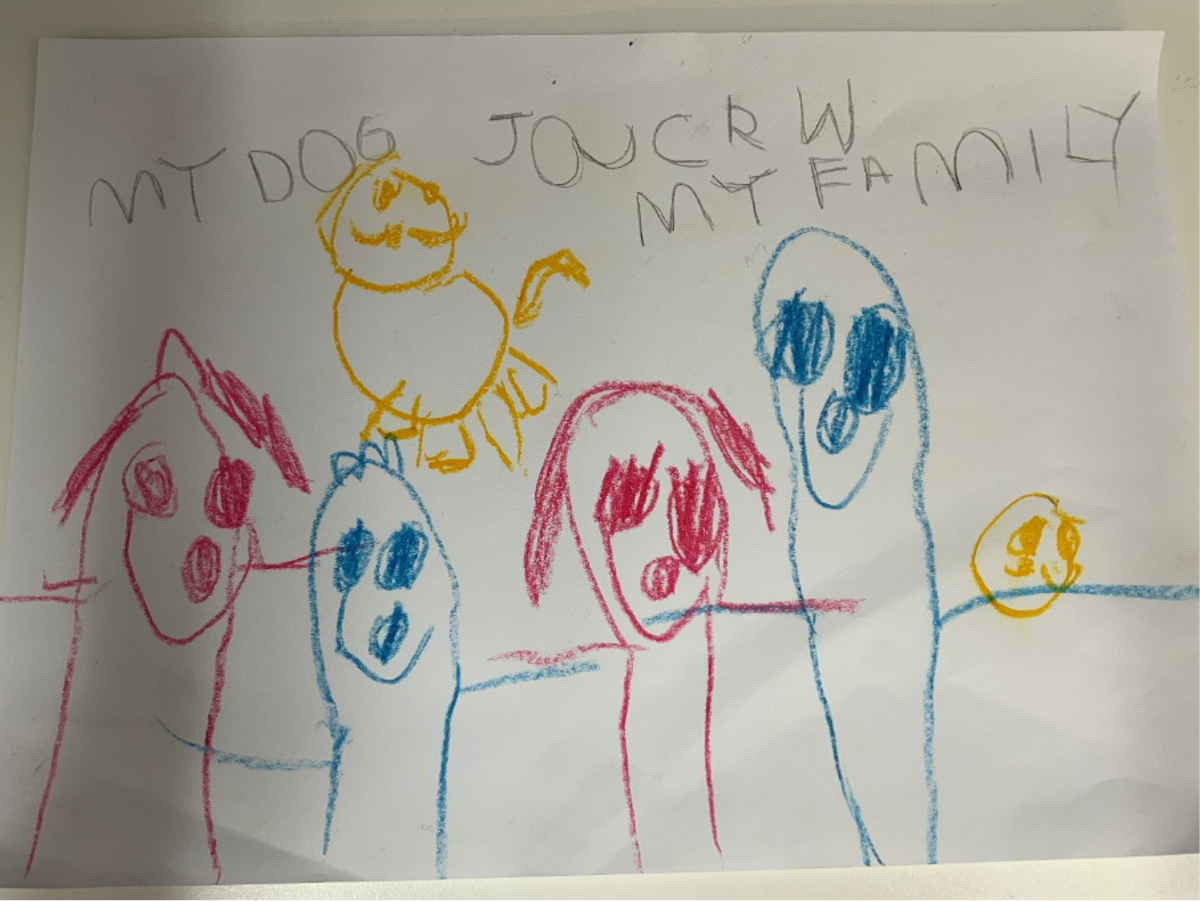
What Makes You Happy When You Come to Kindergarten?