Science
Grade 1
Grade one have continued with their unit about Growing Well, and have been investigating where water actually goes when we water our gardens?
Do we need to water the leaves and flowers? How do plants get their food and energy?
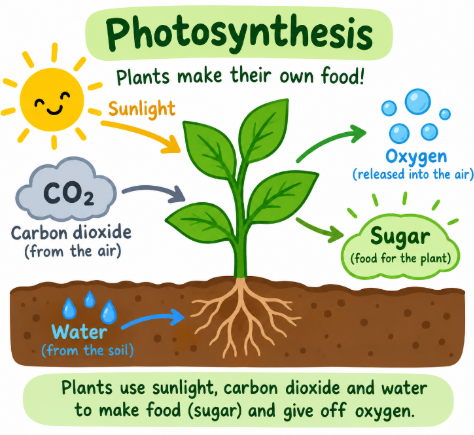
While most children were able to tell me that plants get water from the ground through their roots and this was their food, many did not know that plants were able to make their own food through photosynthesis. Photosynthesis is the process where plants absorb sunlight and carbon dioxide through their leaves and together with water drawn up through the roots, convert this energy into food, and then release oxygen into the air.
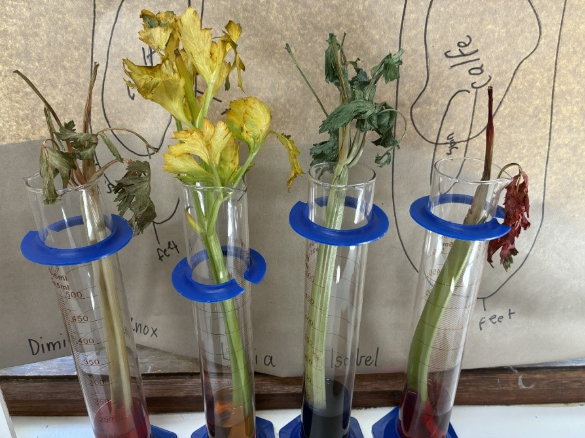
We have also completed an investigation to demonstrate how plants draw water up through their roots, into their stems or trunks and right to the tips of their leaves. This is an investigation that could easily be completed at home. We used celery stalks with the leaves on the top and called them our ‘celery trees’. We placed a stalk of celery into a solution of water and food dye, and by the time each class returned to the science room the following week, the stalks had drawn the coloured water up to the leaves which now displayed the colour of the water. This can also be done using cut flowers too if anyone would like to try it in the holidays!
Grade 2
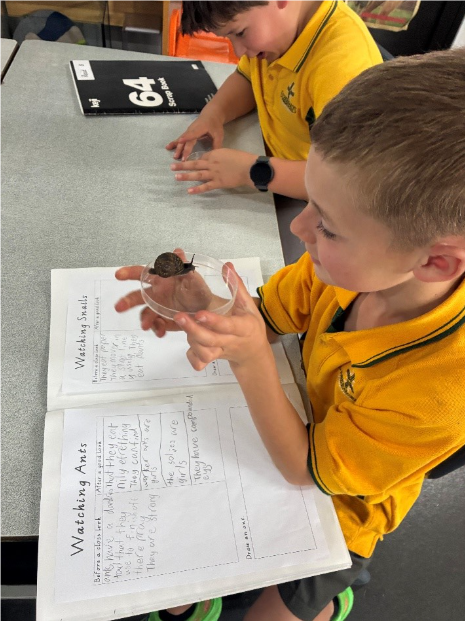
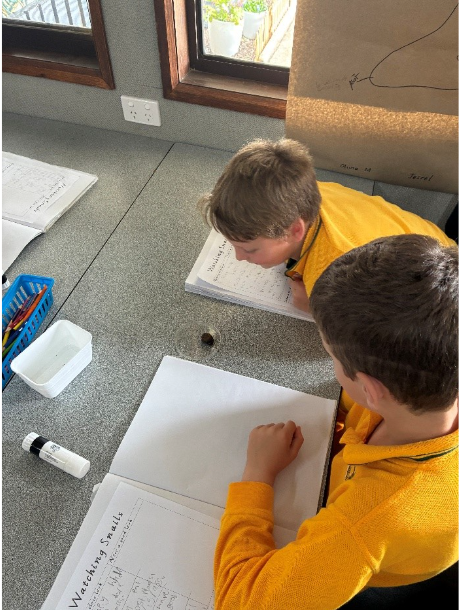
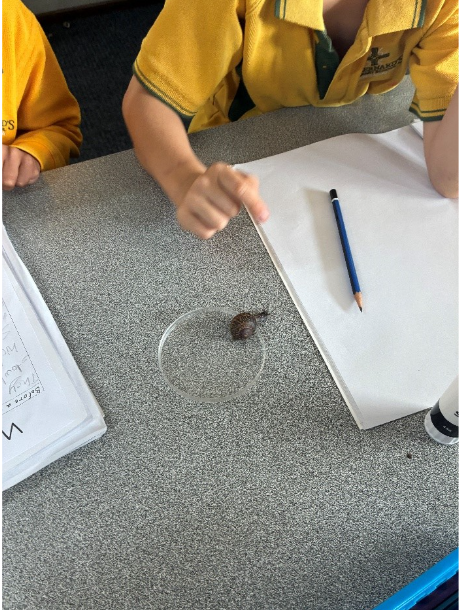
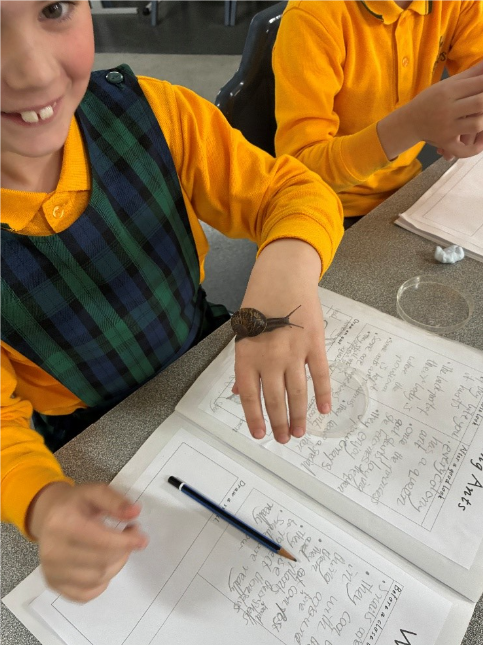
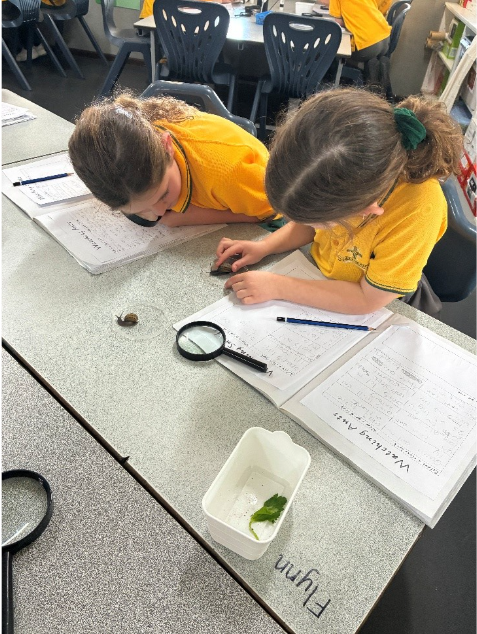
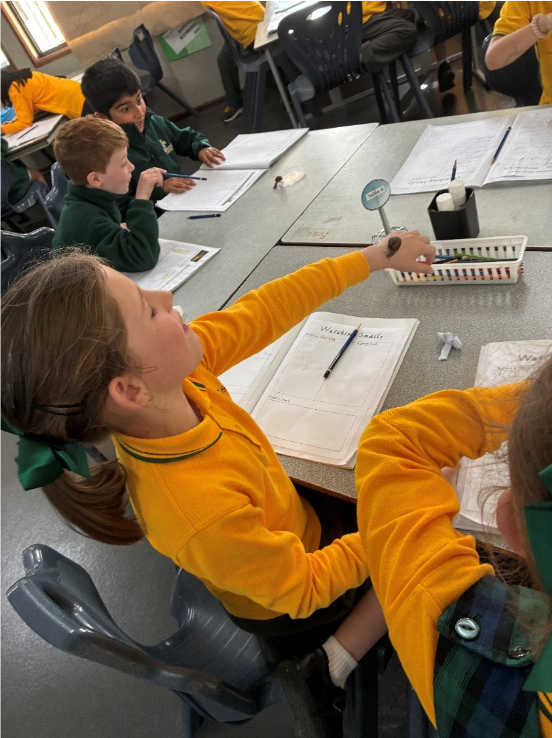
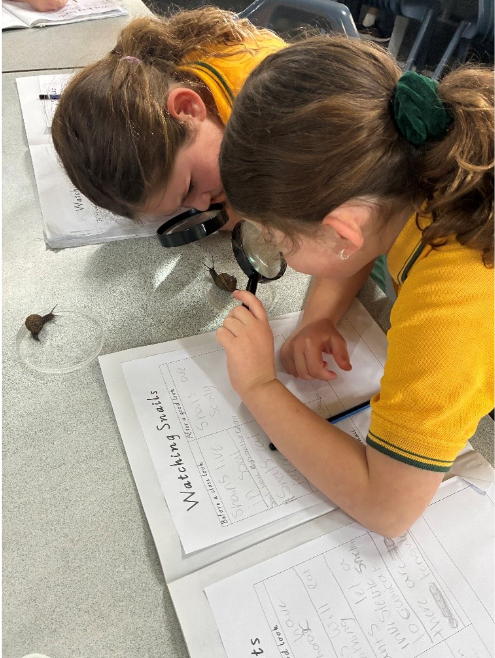
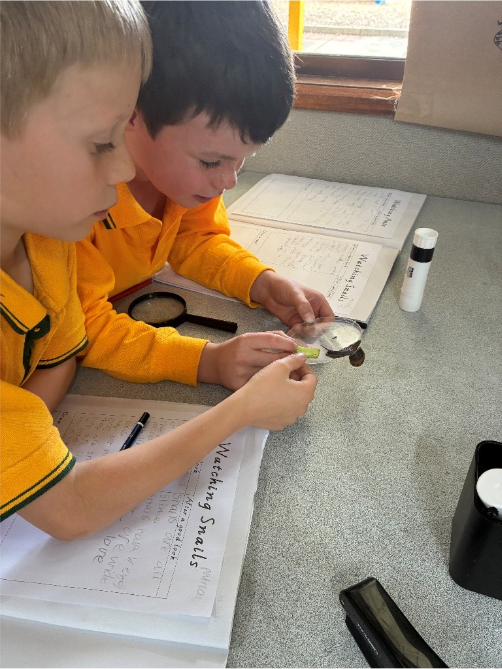
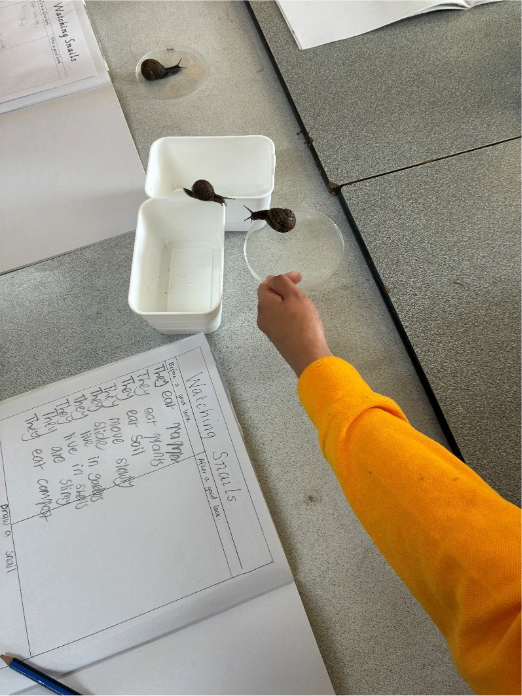
Grade two children have been looking into the features of ants and snails more closely.
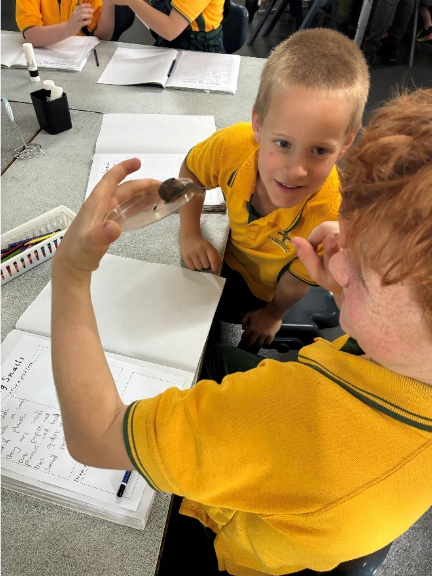
We have created mind maps with what we already know, and then looked at these creatures more closely, looked at information books and short video clips and then listed new understandings. The children were particularly excited to have live snails the room and watched as they moved on their ‘foot’ (large muscle that helps them slide along) and excrete their snail trails over the tables in the room! We have learned that snails are great escape artists due to their ability to use their sticky slime to move up vertical surfaces and then out of the containers they are in.
Grade 3
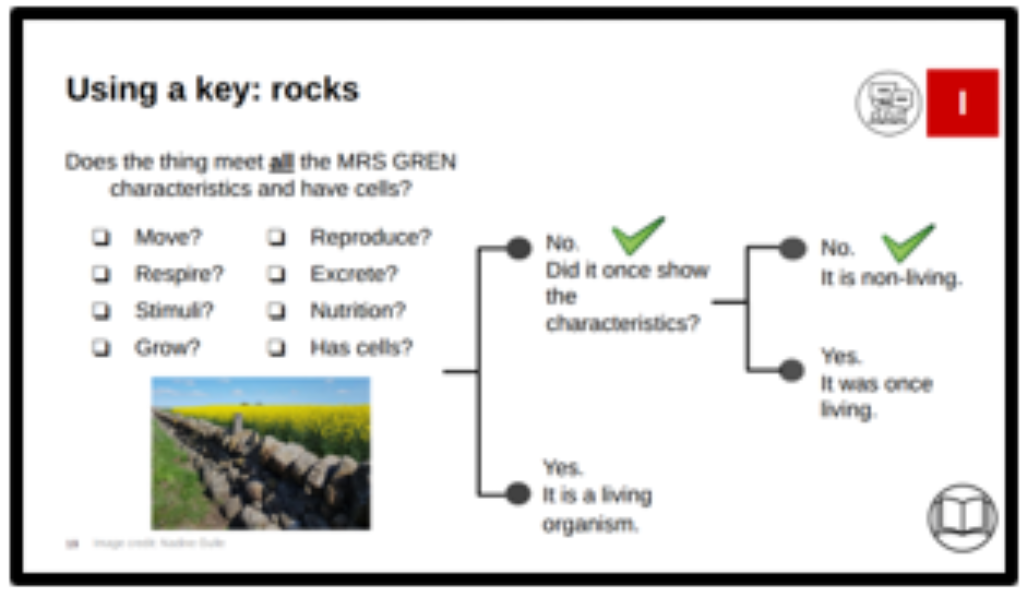
Grade three students have continued to use the characteristics of MRS GREN (Movement, Respiration, Stimuli, Growth, Reproduction, Excretion and Nutrients) to classify things as living, non-living or once living. They have used a ‘key’ to determine this if unsure (for example – Fire – Is it living, non-living or once living?)
Grade 4
Grade 4 students have continued to develop their understanding of food chains and how all living things rely on each other for these food chains to continue. They have distinguished between producers and consumers, herbivores, carnivores and omnivores, predator and prey. They have explored the questions – What happens if one part of a food chain is disrupted? (removing or disturbing one part of the food chain can impact the entire ecosystem)
Grade 5
Grade 5 students have continued to learn about the different body systems of a human being including the respiratory system, the digestive system and the circulatory system. We have looked at each of these in detail, and students have successfully been able to identify that the role of the respiratory system is to help us breathe in oxygen and breathe out carbon dioxide; gas exchange occurs in the lungs when gases move from the air sacs into the lungs and into the bloodstream or vice versa; the digestive system helps us take the food we eat and break it down so the smallest units of protein, fat and carbohydrates, and other nutrients can be absorbed; the digestive system is a long hollow system made of many different parts including the mouth, oesophagus, stomach, small intestine, large intestine, rectum, anus; there are further organs that produce fluid that help digest food and these include the liver, gallbladder and pancreas; digestion of food requires both a mechanical and chemical process.
Mechanical digestion refers to the food being broken down into smaller parts while chemical digestion involves chemical reactions that break the food down into parts that can be absorbed into the bloodstream; blood moves through the circulatory system and helps transport oxygen, nutrients and waste around the body; the heart is a muscular organ that pumps blood around the body via the circulatory system; the heart has two sides, one pumps blood towards the lungs and the other towards the body tissue; there are blood vessels that transport blood away from the heart (arteries) and towards the heart (veins) ;capillaries transport blood to the body tissue and supplies oxygen and nutrients and transports carbon dioxide and waste products away from the body tissue.
Grade 6
Grade 6 students have been working on an Inquiry task to create a presentation (poster, diorama or word document) answering the question – How does a habitat support living things, and how can people help protect and rehabilitate it?
Students were asked to relate this question to an Australian Habitat and will have had 4 Science lessons to research and complete this task. All classes will have the last week of term to complete and submit the task. I have placed some spare copies of the task in each classroom for anyone who wishes to work on it at home as well to do so and be ready to submit their work by Friday 18th September.