Grade 6 Community News



We have reached the Week 4 mark of the students’ final term of primary school!
Reminders:
- Graduation: Please continue submitting your ticket requests for the upcoming Graduation ceremony.
- Prep Photos: Send your child’s Prep photo to their classroom teacher.
- Mad Mex: Please ensure the completed Mad Mex form is returned to your child’s teacher.
- Sun hats: All students must have a sun hat during Term 4.
English
Over the past few weeks, our Grade 6 students have continued their study of Once, a historical novel set in Poland during World War II. This section of the book deals with serious themes, so we have approached it with sensitivity and care, with plenty of opportunities for students to ask questions and talk through what they read. Students have followed Felix as he faces increasingly difficult circumstances, and through class discussion they have explored how he changes, how his friendships with Zelda and Barney shape his choices, and the big ideas of courage, hope, resilience, compassion and the power of storytelling. They have also learnt new vocabulary such as escorted, squinting, plummet, frenzy, snarling and lurches.
In Writing, students have strengthened their sentence skills by practising nominalisation, which turns verbs into nouns for a more formal, academic style (for example, “Felix escaped from the cellar” becomes “Felix’s escape from the cellar”). They have also converted keywords, abbreviations, and symbols into full sentences and used subordinating conjunctions to build complex sentences. At the paragraph level, they have used single-paragraph outlines and combined outlines to summarise the main idea of a section of the novel, with a clear topic sentence, supporting details, and a concluding sentence.
Students have also continued their information reports on Poland, researching using non-fiction texts, taking notes, and writing body paragraphs about Poland’s flora and fauna and Australia’s connections with Poland. They edited their work using a checklist to refine language, spelling and cohesion. At home, you could ask your child what they think the author wants readers to understand through Felix’s story, or have them explain how a topic sentence, supporting details and a concluding sentence work together in a paragraph. If your child has any questions or concerns about the novel's content, please contact your child’s teacher.
Maths
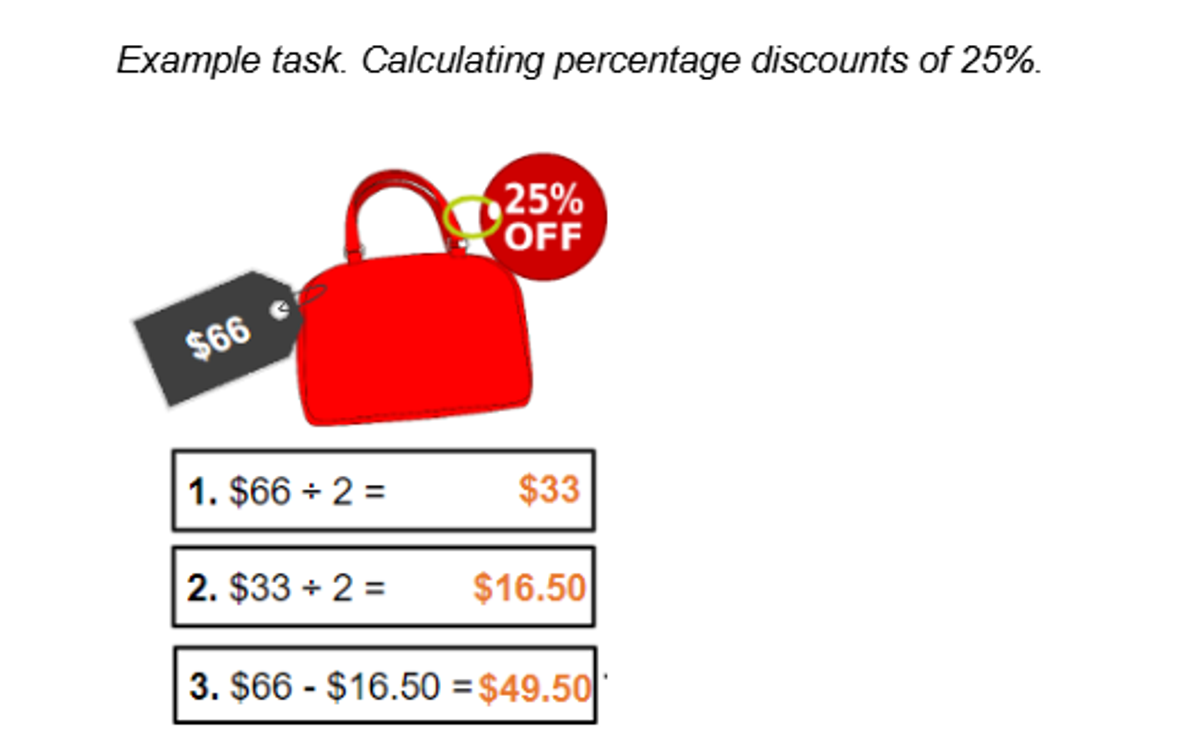
In Maths, Grade 6 students are exploring the relationship between fractions, decimals and percentages. They are learning how these different representations can be used to describe parts of a whole and how to convert between them to solve problems efficiently.
Students will apply their learning to real-life situations, including calculating percentage discounts, finding fractions and percentages of amounts, and using decimals to perform calculations. They will explore a range of mental, written and digital strategies, including the use of calculators, to solve mathematical problems.
Students will also develop their estimation skills by rounding numbers and using familiar fraction, decimal and percentage equivalents to check whether their answers are reasonable. Through practical activities and problem-solving tasks, students will be encouraged to explain their mathematical thinking, compare different strategies and choose the most efficient approach.
Humanities
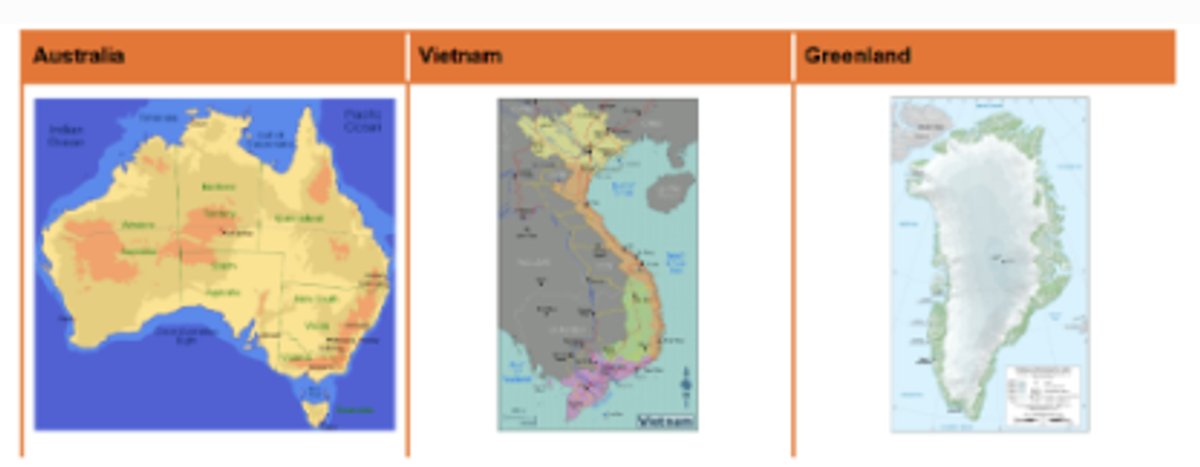
In Humanities, students will continue exploring Australia, Vietnam and Greenland, investigating how geography influences the way people live and how countries develop. They will learn about the natural resources found in each country and how these resources shape trade, industries and economic activity. Students will explore imports and exports and discover why countries rely on one another to access goods and resources.
They will also compare population sizes, population density and settlement patterns, examining how factors such as climate, landforms, access to water and natural resources influence where people choose to live. They will investigate why many Australians live along the coast, why Vietnam has densely populated regions supported by fertile farmland and rivers, and why Greenland’s population is concentrated in small coastal communities.
Finally, students will explore the cultures, traditions and daily lives of people in Australia, Vietnam and Greenland. They will consider how geography influences housing, clothing, food, occupations and cultural practices, while developing an appreciation of the similarities and differences between communities around the world.
Through class discussions, map investigations, research and problem-solving activities, students will strengthen their geographical knowledge and develop their ability to compare places, interpret information and explain the connections between people and their environments.
Thank you for your continued support,
PLC 6