Class 5/6 S

Kii Class 5/6 Families,
Main Lesson – Ancient Rome
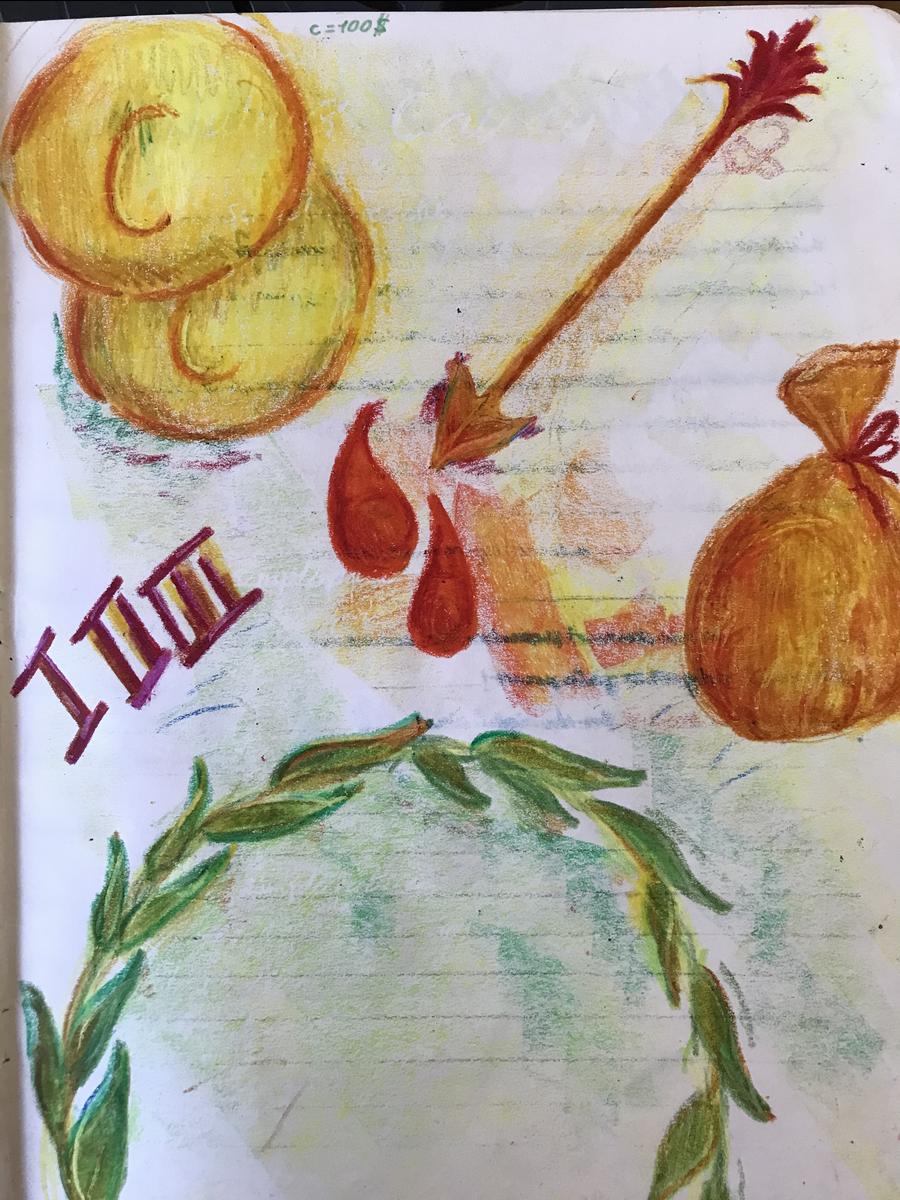
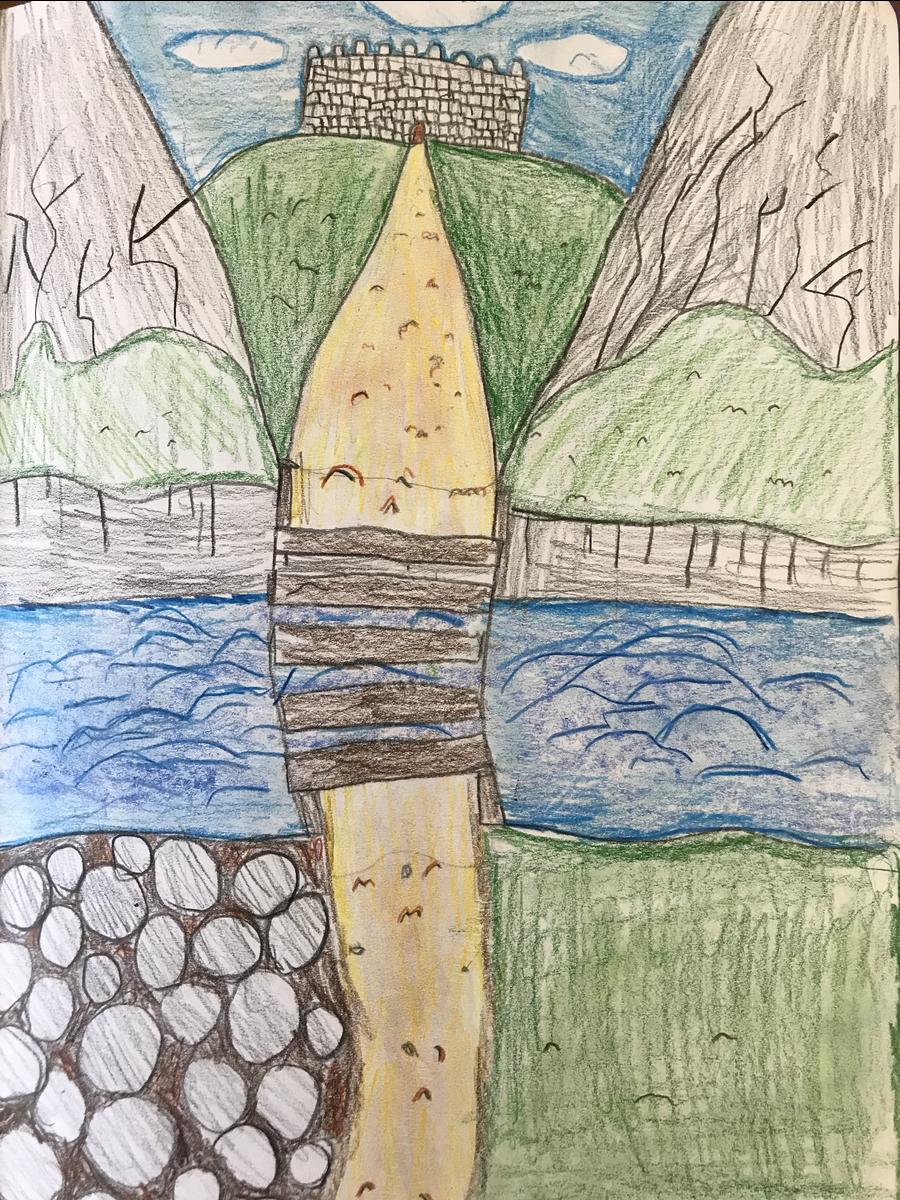
This week, we continued our exploration of Ancient Rome by learning about the rulers who followed Julius Caesar and the transformation of Rome from a republic into an empire. We followed the rise of Augustus, who became Rome’s first emperor after defeating Mark Antony and Cleopatra following years of civil war. We explored how Augustus brought a period of stability to Rome while retaining many of the traditional institutions of the Republic. We then followed the succession of emperors through the early Roman Empire, exploring how the immense power held by the emperors could lead to growing extravagance, violence and abuses of power, taking our story through to the reign of Nero.
We also learned about the birth of Christianity in Roman-ruled Judea. We explored how the teachings of Jesus developed into a new religious movement and how Paul helped spread Christianity beyond its Jewish origins and throughout the Roman Empire. This provided an important foundation for understanding the growing influence Christianity would have within the Empire and its significance to Roman history in the centuries that followed.
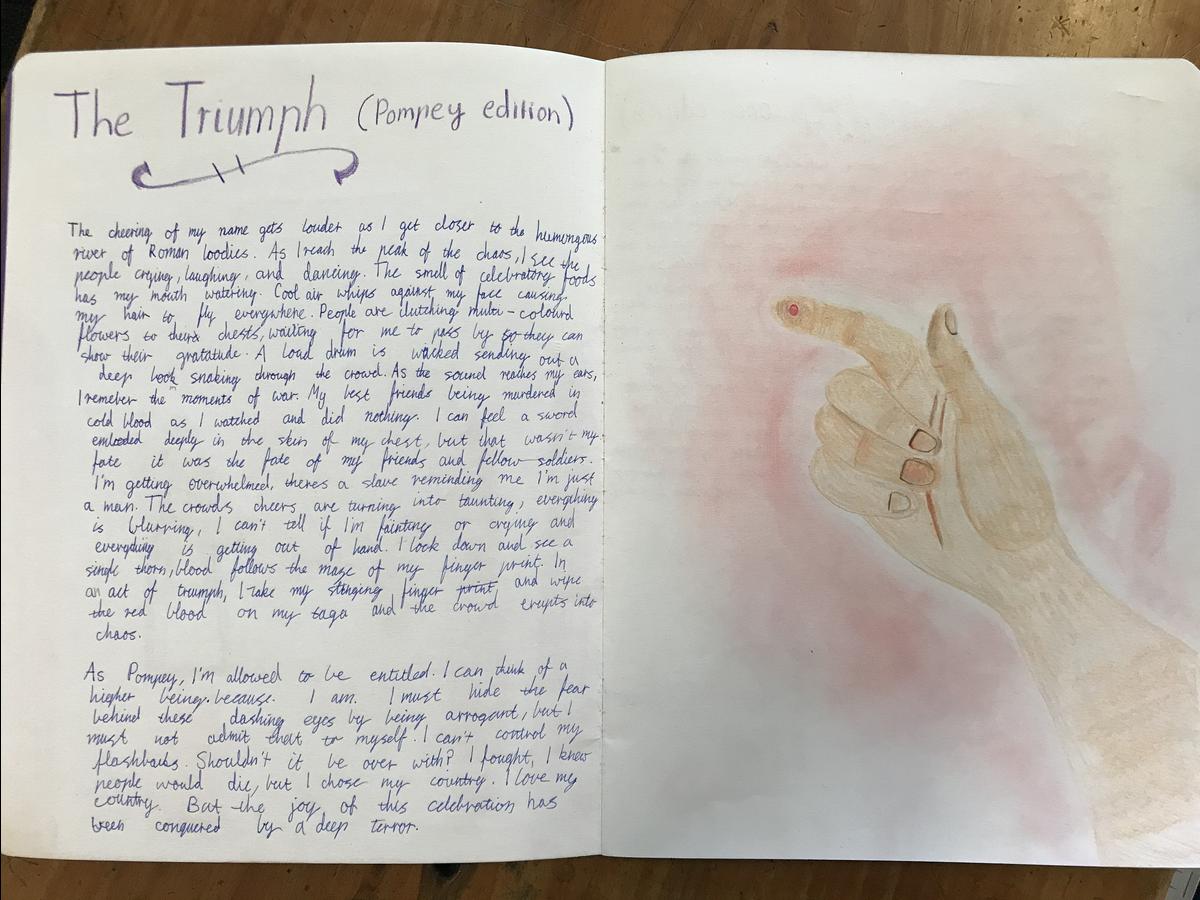
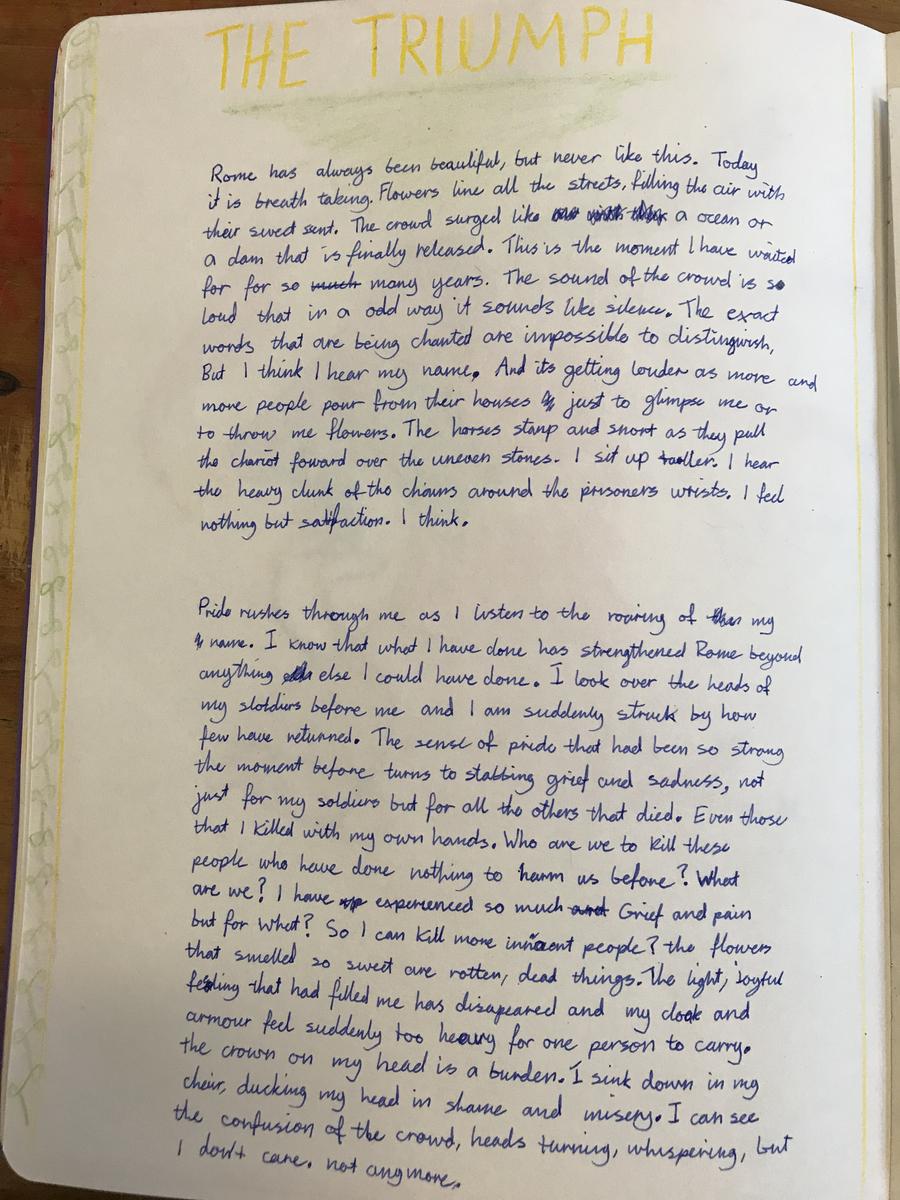
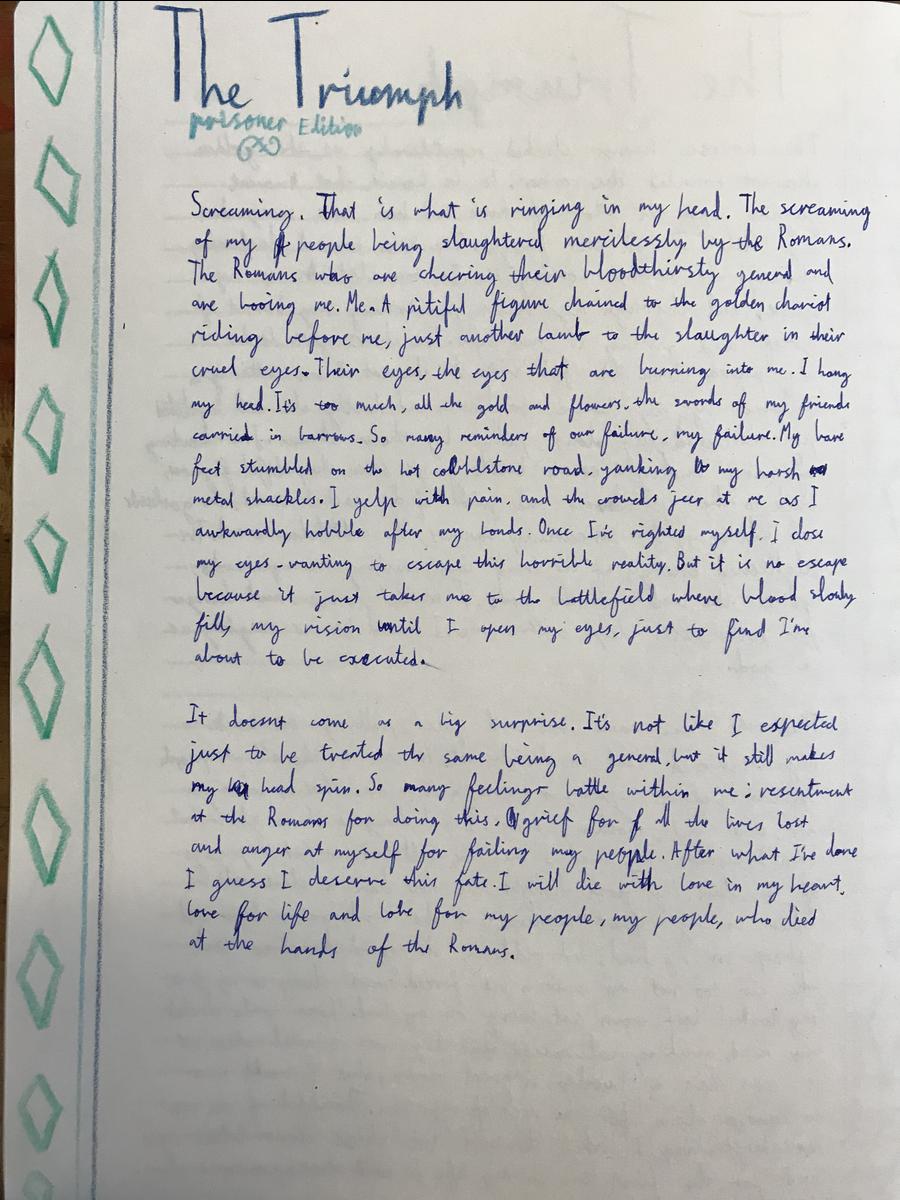
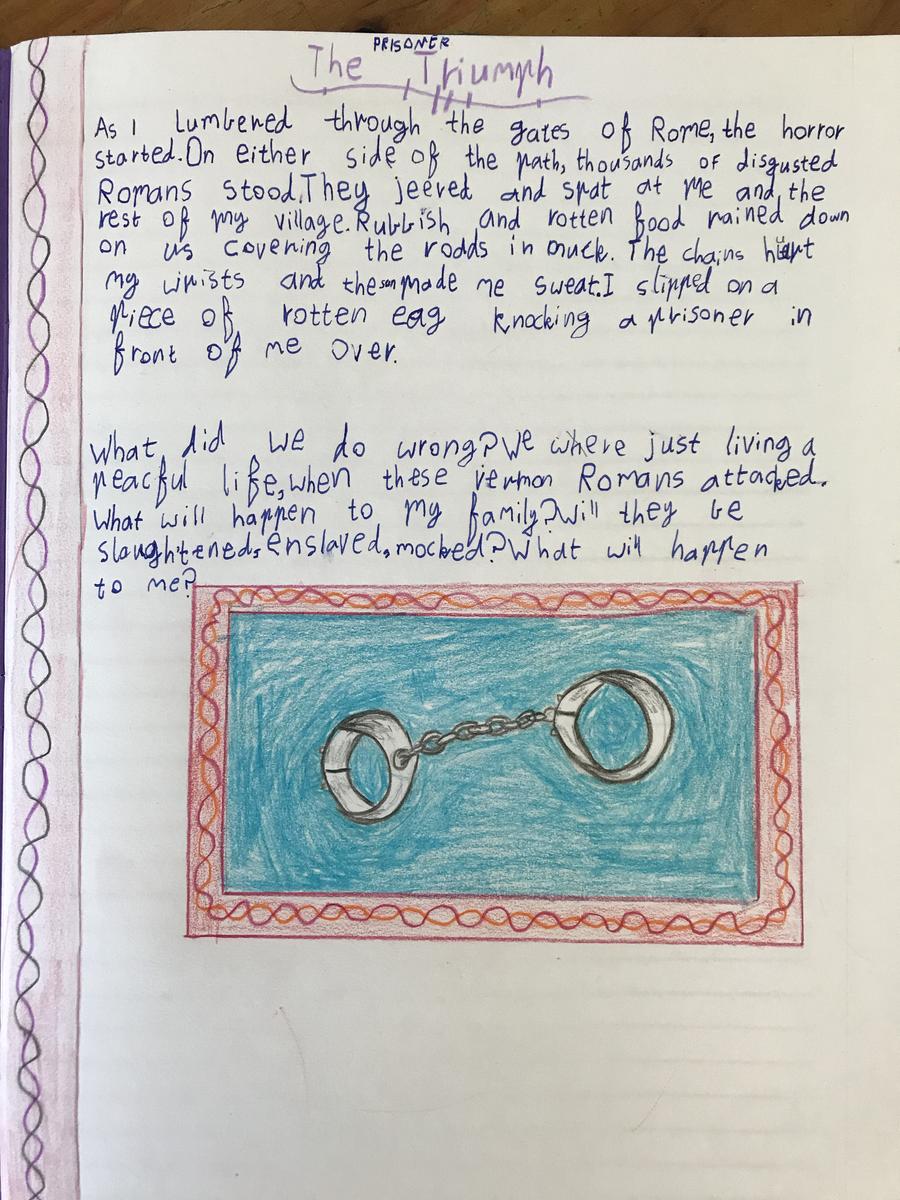
This week, students applied the grammar skills they have been developing in recent weeks to their own writing. Students wrote descriptive pieces that explored the experience of a Roman triumph from two very different viewpoints: first through the eyes of Pompey as a celebrated general, and then through the eyes of a prisoner. Writing from these contrasting viewpoints encouraged students to consider how the same event can be experienced in very different ways and to recognise that there is often more than one way of seeing a situation. They developed their ability to describe physical experiences and the emotional responses these experiences can evoke, using detail and carefully chosen language to bring each viewpoint to life.
Reading
This week, students continued with their Literature Circles, reading and discussing their novels in small groups. Students took on different discussion roles, encouraging them to engage with their texts from a range of perspectives and share their thinking with others. Through these discussions, they continued to develop their reading comprehension by summarising, making connections, exploring vocabulary, asking thoughtful questions, and supporting their ideas with evidence from the text.
Mathematics
This week, students continued to practise converting fractions to a common denominator, working with both related and unrelated denominators. They applied this understanding to compare and order fractions and to add and subtract fractions with different denominators, strengthening their fluency and confidence with these processes.
Students then moved on to applying their fraction knowledge to worded problems. They worked on identifying the relevant information, determining which operation was required, and using their understanding of fractions to solve problems in a range of contexts. This provided opportunities for students to apply their mathematical understanding beyond straightforward calculations.
Ngoongodjin,
Robin