
Glen Education Oakleigh South
Digital Responsibility and Child Safety at Glen OSK
By Poonam Negi, Early Childhood Teacher
At Glen Oakleigh South Kindergarten (Glen OSK), we recognise that child safety includes the digital world. As children engage with technology in their learning and play, we take a deliberate, reflective, and rights-based approach to ensure their experiences are safe, respectful, and inclusive. We use digital tools to document learning, support communication, and explore creativity—always with a focus on enhancing learning while protecting each child’s safety and wellbeing.
Safe Use of Digital Devices
To protect children’s privacy and ensure responsible management of digital content, only Glen Education-issued iPads and cameras are used to capture and document learning. Educators do not use personal mobile phones or devices in the learning environment, except in approved emergency situations. We encourage families to support this approach by avoiding mobile phone use within the kindergarten. All media is stored securely on password-protected platforms, with access limited to authorised staff only.
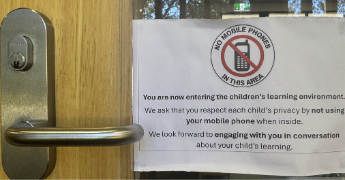
Reminders on the door supporting digital safety for children
Technology in Everyday Learning – With Purpose and Safety
Digital tools are thoughtfully integrated into our curriculum to enhance children’s learning experiences. During “brain recharge” time, for example, children enjoy movement activities such as dancing and yoga. We use iPads to play carefully selected, child-appropriate music that aligns with their interests and developmental needs. Currently, the children are learning an “Insect Dance”—a fun and energetic extension of their recent inquiry into mini-beasts. This activity supports coordination, rhythm, and memory recall, while also reinforcing vocabulary and language linked to their interests.
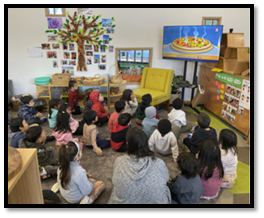
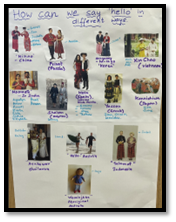
As part of our exploration of diversity, children learned how people around the world celebrate festivals, dress, and enjoy different foods. Educators used culturally inclusive videos and images to support this learning, all of which were carefully previewed for suitability. The children then collaborated on a collage using printed images, supported by guided discussion and safe, supervised use of digital content.
(using youtube to explore foods, cultures across the globe)
Children as Active Digital Citizens
We believe children are not passive users of technology; they are emerging digital citizens. We support our learners to collaborate with peers to take photos, record stories, and document their work using iPads. They learn to understand that digital tools are for learning, creating, and communicating. Technology is used under the supervision and guidance of teachers to help build safe and respectful digital habits. Children also engage in ongoing conversations about consent and responsible use—such as asking permission before using iPads—fostering early digital literacy and a sense of personal agency.
(Collage made by the children)
Building Consent into Everyday Practice
Consent is obtained from both families and children before taking or sharing any images or recordings. Educators actively involve children in the decision-making process by asking, for example, “Can I take a photo of your block building to show your family?” Children are empowered to say yes or no, and their choices are always respected.
Secure Communication with Families
We use Kinderloop, a secure and password-protected platform, to share documentation, updates, and reflections with families. Before posting any content, educators carefully check that consent has been granted, the image is appropriate and respectful, and the child’s identity is protected.
Ongoing Reflection and Professional Learning
Our approach to digital safety is dynamic and continually evolving through regular team reflection on our practices and policies, including the Child Safe Environment and Wellbeing Policy. We engage in ongoing professional learning focused on digital ethics, online safety, and children’s digital rights. Open communication with families ensures transparency, trust, and a shared sense of responsibility.
How Families Can Support Digital Safety at Home
We encourage families to have regular conversations with their children about safe and respectful technology use, set healthy boundaries around screen time and digital engagement, and feel confident to ask questions or raise any concerns about how their child’s digital information is used or stored.
Guided by Policy and Practice
Our practices are guided by:
- The Glen Education Organisational Risk Assessment
- Early Childhood Australia – Statement on Young Children and Digital Technologies
- eSafety Commissioner – Online Safety for the Early Years
- Child Safe Standards – Commission for Children and Young People (Victoria)
These frameworks support our goal to provide a safe, inclusive, and digitally aware environment for all children.
At Glen OSK, digital technology is used with intention, respect, and care. It supports our curriculum, strengthens family partnerships, and empowers children to be active participants in their learning. Above all, we remain committed to ensuring that every child’s digital experience is safe, respectful, and meaningful—in line with our values and responsibilities as a child safe organisation.