From the Director of Diversity and Inclusion K–12
Mrs Deearne Spaulding

From the Director of Diversity and Inclusion K–12
Mrs Deearne Spaulding
Children are more likely to engage when they feel seen, heard, valued and understood.
Strong relationships:
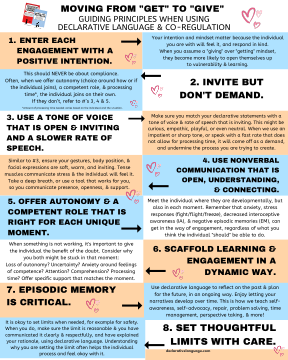
Declarative language is a way of communicating that shares what you notice, think, wonder, feel or expect, rather than directing, questioning or correcting. It is widely used in relationship‑based approaches, autism support, restorative practices and responsive teaching because it promotes collaboration, autonomy and trust. Declarative language invites young people to engage, connect and feel understood.
Linda K. Murphy, author of the Declarative Language Handbook (2020), teaches caregivers and educators to use declarative language – statements that share information rather than give commands – to support social learning, flexibility, problem‑solving and co‑regulation, particularly for neurodivergent learners.
Benefits of Declarative Language with Children
1. Reduces pressure and anxiety
Declarative statements do not require an immediate response. This can be especially helpful for children who:
Example:
This allows the child to communicate when they are ready.
2. Supports natural language development
Children learn language through repeated exposure to meaningful models. Declarative language:
Example:
3. Encourages independent thinking
Instead of giving solutions or directing behaviour, declarative language invites children to:
Example:
The child is encouraged to connect the information with an appropriate action.
4. Promotes social communication
Declarative comments resemble natural conversations more than questions or demands. They help children learn:
Example:
5. Builds confidence
Frequent questions can make children feel tested or worried about giving the wrong answer. Declarative language:
6. Supports emotional regulation
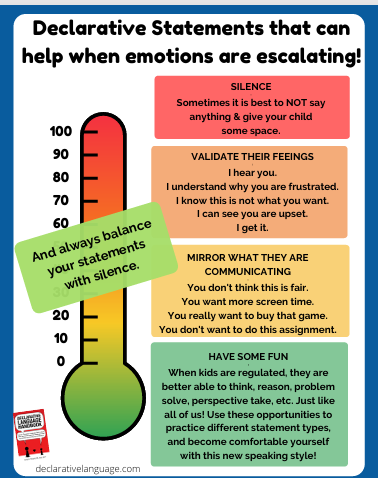
Declarative language helps children identify and understand feelings without judgment.
Example:
This acknowledges emotions and supports emotional awareness.
7. Strengthen relationships
Because declarative language is less directive and more collaborative, it helps build:
Children often become more willing to engage when they feel understood rather than questioned.
Below are two free resources from Linda Murphy’s website that may be a helpful starting point: