Foundation

















Welcome back to Term Four in Foundation 2026!
Our final and most exciting term of the year! We hope you enjoyed a restful break and are ready for the wonderful learning, celebrations, and milestones ahead. The children have returned with growing confidence, strong friendships, and a real sense of pride in how far they’ve come.
This term is all about consolidating skills, deepening independence, and enjoying the special moments that come with finishing Foundation.
Our team remains committed to ensuring every child feels safe, supported, and ready to shine as they prepare for Year One.
In this newsletter, you’ll find:
- Key dates for Term Four
- Learning focus areas
- Ways to support learning at home
- Updates on routines and celebrations
We’re looking forward to a joyful, memorable final term together.
Important Dates
- 9th October - Whole School Mass
- 16th October - Foundation & Year 6 Mass
- 2nd November - School Closure Day
- 3rd November - Melbourne Cup Day Holiday
- 11th December - Last Day of Formal Classes, Step up Day for 2027 & Whole School End of Year Mass
- 14th December - Last Day for Students
- 15th December - Pupil Free Day
- 16th December - Pupil Free Day
What we’re learning
Religion
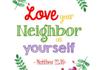
This term in Religion, students will explore the question “Who is your neighbour?”, learning that we are called to show kindness, fairness and compassion to all people. Through stories, discussion and simple classroom experiences, students will connect this idea to Catholic Social Teaching, especially the principles of caring for others, including everyone, and making choices that help our community.
As we move toward the end of the year, students will also learn about Advent, the season of waiting and preparing for Jesus’ birth. They will explore symbols of hope, peace, joy and love, and take part in gentle prayer experiences that help them reflect on how they can bring these values to others
English
In Term Four, students will continue strengthening their early reading, writing, and speaking skills as they move toward the end of their Foundation year.
Reading
- Phonics and decoding — Students continue blending and segmenting one‑syllable words, reading CVC words, naming all letters, and using sound–letter knowledge to read both decodable and authentic texts.
- Making meaning — Students practise monitoring meaning using context clues and emerging grammar skills.
- Text types — Students learn to identify differences between narrative and informative texts.
Writing
- Sentence features — Students explore how capital letters begin sentences and names, and how punctuation marks signal the end.
- High‑frequency words — Students read and write familiar words to build fluency.
- Morphemic knowledge — Students begin noticing that words can contain more than one meaningful part.
- Shared editing — Students participate in editing their own writing for meaning, spelling, capital letters and full stops.
Speaking & Listening
- Expressing preferences — Students explore language to express likes, dislikes and opinions.
- Retelling stories — Students retell and adapt familiar texts through play, performance, drawing and writing.
Maths
This term, we are consolidating our early number skills as students continue naming, representing and ordering numbers to 20 using hands‑on materials and numerals. We will also explore everyday position and location language, helping students describe where objects and people are in familiar spaces using words like next to, behind and between.
Number
- Number naming and ordering — Students will continue naming, representing and ordering numbers from zero to at least 20 using hands‑on materials, digital tools and numerals. They will build confidence recognising numbers in different contexts and comparing their position in a sequence
Space and Location
Position and location language — Students will describe where objects and people are located in familiar spaces using everyday language such as next to, behind, in front of, between and beside. They will practise giving and following simple positional instructions during play and classroom activities.
Maths learning happens naturally in everyday routines. Here are easy ways to support Term 4 Maths learning:
- Daily number practice — name, order and compare numbers to 20 using toys, snacks or household items.
- Use positional language like next to, behind and between.
- Notice numbers in real life — clocks, letterboxes, signs.
- Create quick number stories (“We had 5 apples, now 1 is gone”).
HUMANITIES
This term in Science, students are exploring movement and how objects can be made to move through pushes and pulls. Through hands‑on investigations and play‑based activities, they will observe how different forces change the speed, direction or shape of objects. Students will experiment with everyday items — balls, toys, classroom materials — to see what happens when they push, pull, roll or slide them, helping them build early understanding of cause and effect in the physical world.
PERSONAL AND SOCIAL CAPABILITIES
This term, students will continue developing important personal and social skills that help them build confidence, independence, and positive relationships at school.
Building Independence
This term, we are continuing to encourage students to build their independence in their daily routines. To support this, we kindly ask parents to begin saying goodbye at the door, allowing children to settle into their morning routines on their own.
Successful independence looks like:
- Students walking themselves into the classroom
- Students unpacking their bags independently
- Students beginning their morning tasks without assistance
Caring for Others & Belonging to Groups
Students will explore the different groups they belong to — their family, class, and school community. They will learn:
- how to include others
- how to show care and kindness
- how friendships are formed and maintained
This helps students understand the importance of connection and belonging.
Communication & Collaboration
Through role‑play, discussions, and group activities, students will practise:
- recognising verbal and non‑verbal communication
- responding respectfully to others
- working with peers to complete simple tasks
- using strategies to navigate social situations, including resolving small conflicts
These experiences help students develop strong social skills and positive relationships.
SUPPORTING LEARNING AT HOME
Small, consistent routines make a big difference. Here are simple ways to support your child’s Literacy development at home:
- Daily reading — talk about pictures, characters and events.
- Spot capital letters and punctuation in books or signs.
- Retell favourite stories through play or drawing.
- Practise blending and segmenting simple words.
Use high‑frequency words in everyday routines.
REMINDERS FOR TERM FOUR
Uniform & Hats
- Students are required to wear their Summer uniform this term, with black school shoes.
- On sports days and PMP days, students should wear the correct sports uniform.
- Hats must be worn for all snack and lunch plays, as well as sports lessons.
Lunchboxes & Fruit Break
- Please pack nude‑food style lunchboxes with minimal packaging.
- Include a piece of fruit or vegetables for our daily fruit break.
Label Everything
- Ensure all uniforms, lunchboxes, drink bottles, and personal items are clearly labelled.
- Lost items can be checked at the student office.
Hair & Accessories
- Hair longer than shoulder length must be tied back for safety and hygiene.
Toys & Personal Items
- Students are encouraged not to bring toys or personal items to school.
- Comfort items are acceptable only if discussed with the classroom teacher.
Arrivals & Departures
- Please ensure students arrive on time to support a smooth start to the day.
- If collecting your child early, please sign them out at the student office.
COMMUNICATION
We value open and clear communication with families to support your child’s learning journey. To stay connected, we encourage you to:
Regularly check your emails, the school app, and SeeSaw for important updates, event details, and messages from teachers.
For specific inquiries:
To report an absence or for general inquiries, please contact the school office on 03 5996 2724.
To reach your child’s teacher directly, you can use the email addresses listed.
Please note: SeeSaw is an informal communication platform intended for sharing learning activities and updates. For all inquiries, please use email to ensure they are received and addressed efficiently.
We’re here to help—don’t hesitate to reach out if you have any questions!
TEACHER CONTACTS
Casey Thomson (FT) cthomson@stacbourne.catholic.edu.au
Priscilla Maddelena (FM) pmaddelena@stacbourne.catholic.edu.au
Keely Deighton (FD) kdeighton@stacbourne.catholic.edu.au
Shevaun Lazarus (FL) slazarus@stacbourne.catholic.edu.au