Pedagogy and Academics
A conversation worth having
I have been thinking a lot about the current media attention being given to technology in education and the growing number of voices asking whether we've moved a little too quickly toward putting a device in front of every child for almost every kind of learning.
It is a question that has been sitting with me as stories have emerged about the extraordinary lengths AI companies are going to in their search for high-quality human knowledge. Anthropic has faced a $1.5 billion settlement over books used to train its AI, while Amazon has been buying large quantities of books, scanning them to train AI systems and, in some cases, destroying the physical books in the process. It feels uncomfortably close to dystopian fiction.
There is something (unhumorously) ironic about this. What happens when we become increasingly capable of teaching machines to absorb and reproduce human knowledge, while simultaneously questioning whether our students might benefit from doing a little less of their learning through technology?
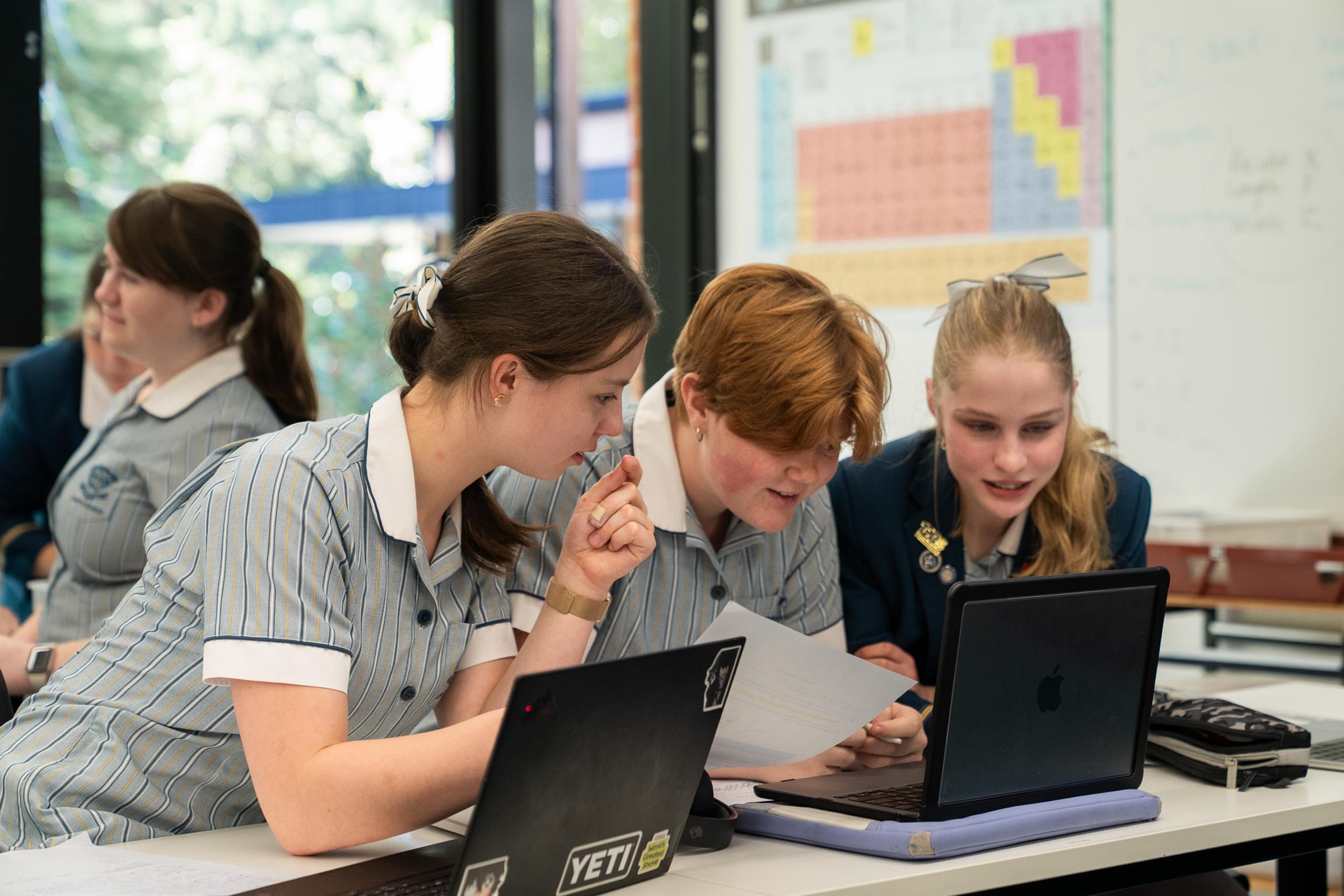
Across Australia and internationally, schools are reconsidering screen use: introducing technology-free days, reducing device time, returning to handwriting and questioning whether a screen genuinely improves learning.
This is not an argument for abandoning technology. Our students need to be digitally capable, and technology can transform learning when it is used purposefully. But perhaps digital capability also means knowing when not to use it.
As research continues to give us reason to question the role of technology in our classrooms, perhaps it is time to think more critically about how much technology we use to educate and empower our students. Finding that balance feels increasingly important.
The conversation is only just beginning, and I believe it is an important one for our College community. What are you noticing at home? What helps your daughter concentrate, read deeply, think independently and be present? And where might we all benefit from putting the device aside?
I truly welcome your thoughts as we navigate this delicate and important time together. Let’s keep the conversation open.
Mel Pedavoli
Assistant Principal: Pedagogy and Academic Leadership