Teaching and Learning Principal
Zachary Parr

Teaching and Learning Principal
Zachary Parr

Welcome to the Teaching & Learning section of our newsletter. Each edition is designed to give families a clear and meaningful window into what students are learning, how we are supporting their growth, and the many opportunities available to them both inside and beyond the classroom.
In this space, you’ll find:
Key Teaching & Learning priorities for the term
Snapshots from classrooms, showcasing engaging learning moments across year levels
Updates on whole‑school initiatives, instructional practices, and innovations
Highlights from co‑curricular programs that enrich learning beyond the timetable
Practical tips to help families support study habits, wellbeing, and engagement at home
Celebrations of effort, progress, and achievement across our student community
By sharing these insights, we aim to strengthen the partnership between school and home—something consistently shown to improve student connection and outcomes. Effective school newsletters help families feel informed, included, and confident about their child’s learning journey, and that is exactly what we strive for here.
Our recent Curriculum Day provided staff with valuable opportunities to deepen their professional practice in two key areas: Artificial Intelligence (AI) and VTLM 2.0 Assessment and Feedback.
The day commenced with a session exploring the safe, ethical, and responsible use of emerging AI technologies in education. Drawing on key insights and innovative practices shared at the recent Principal Conference, staff considered how AI can enhance teaching and learning while supporting student engagement, differentiation, and efficiency. Discussions focused on the importance of teachers modelling responsible AI use and equipping students with the skills needed to navigate digital technologies critically and safely.
The second and third sessions focused on the Assessment and Feedback dimension of VTLM 2.0. Through a series of assessment audits and collaborative discussions, staff examined current assessment practices to ensure they accurately measure student learning and align with curriculum expectations. Teachers worked together to analyse assessment tasks, moderate student work samples, and reflect on how evidence of learning is collected and used. This process supported a shared understanding of achievement standards and strengthened consistency in teacher judgement across the school.
A key focus was ensuring that assessment provides an accurate picture of where students are in their learning, enabling teachers to identify strengths, address learning gaps, and plan targeted next steps. Staff also explored how purposeful feedback can empower students to better understand their progress and take greater ownership of their learning. The day highlighted our ongoing commitment to evidence-informed practice and continuous improvement in teaching and learning.
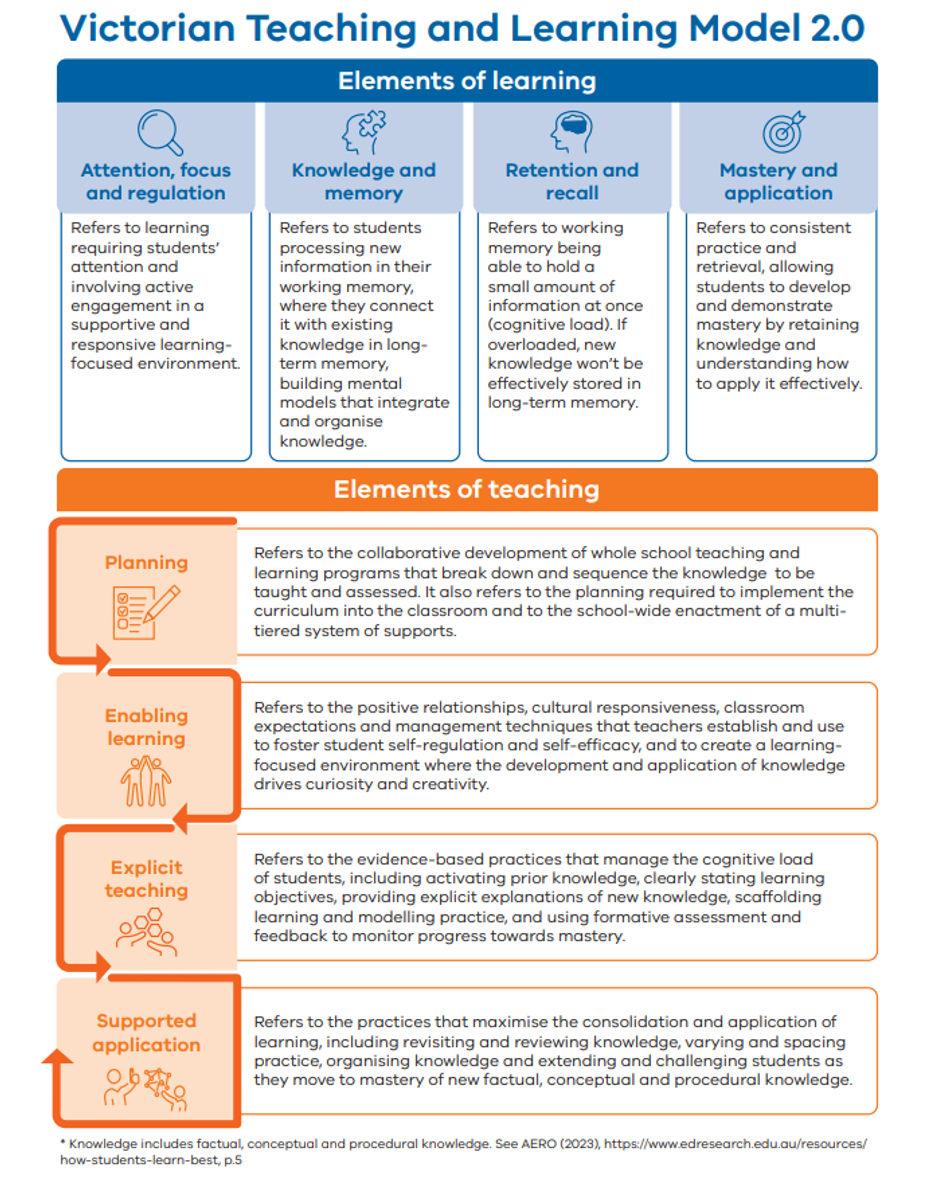
Understanding the new Victorian Teaching and Learning Model 2.0
As parents/carers, staying informed about the direction of state education is a helpful way to support your child’s learning journey. Government schools have been introducing the Victorian Teaching and Learning Model (VTLM) 2.0. This model focuses on fostering student engagement, personalisation and collaboration to ensure each child can thrive at school.
What is the VTLM 2.0?
This model is different to previous models because it takes into consideration the ‘elements of learning,’ or what some might call the science of learning.
The model (see below) identifies 4 elements of learning:
Attention, focus and regulation
Knowledge and memory
Retention and recall
Mastery and application
We will be sending more information about this model out over the next term or so, but more importantly, this model will help us determine the professional learning direction for our teachers to ensure we can continue to provide an outstanding educational program at our college.
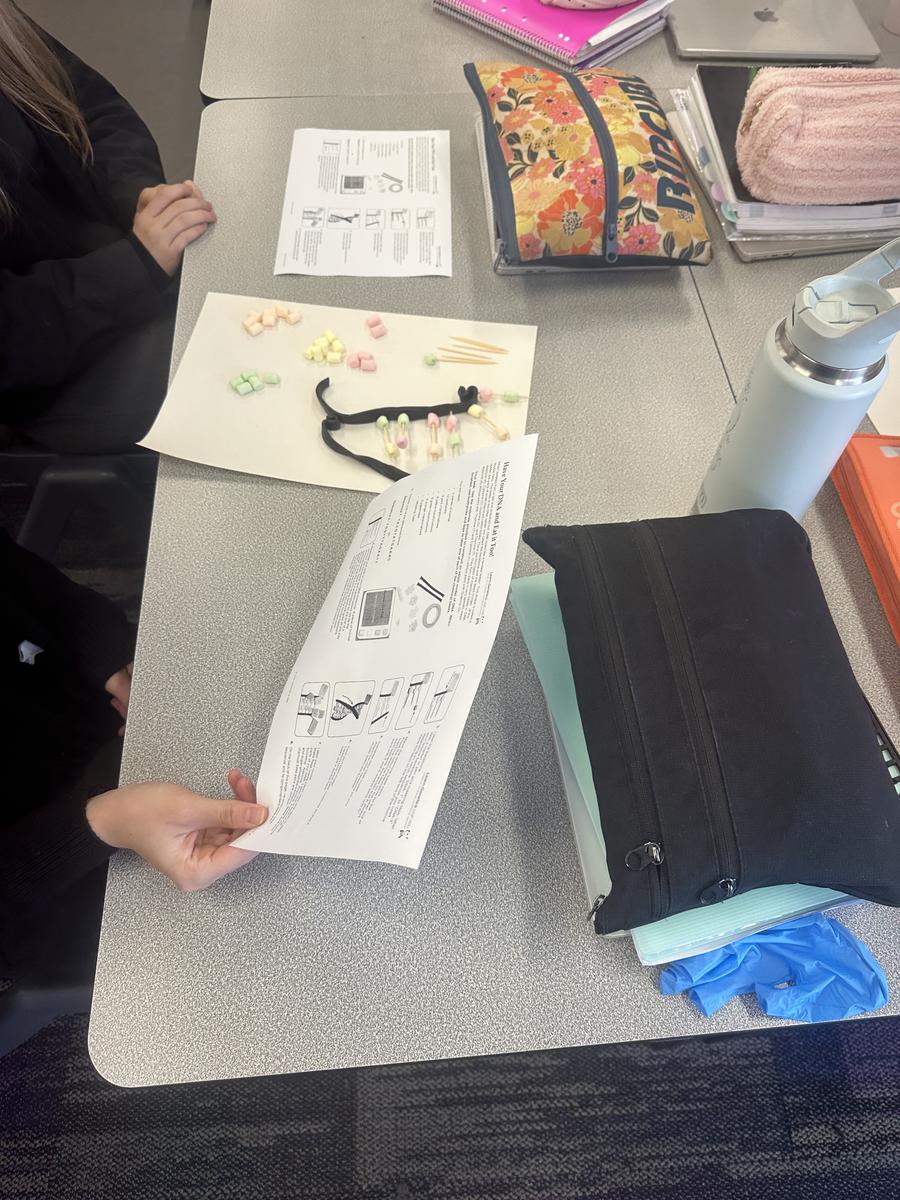
This week, Year 11 Biology students explored the structure of DNA and investigated how genes, alleles, and genomes contribute to inheritance and the expression of traits.
To bring these complex concepts to life, students took part in the engaging "Have Your DNA and Eat It Too!" activity, using licorice and marshmallows to construct edible DNA models.
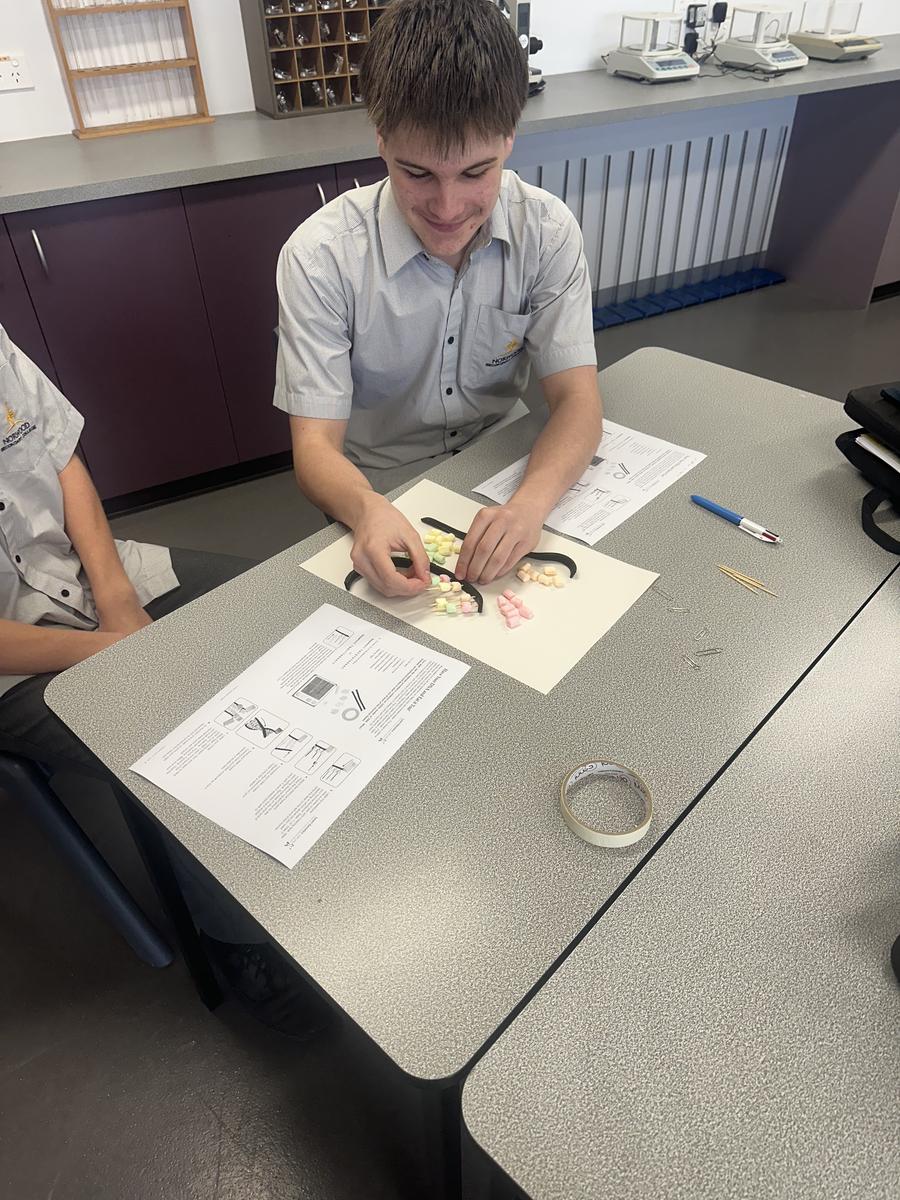
As they built their double helix structures, students identified complementary base pairs and developed a deeper understanding of how DNA stores genetic information.
Once their models were complete, students recorded DNA sequences and determined the matching complementary strand, reinforcing their understanding of DNA structure and function. The activity provided a hands-on and memorable way for students to connect theoretical knowledge with a practical model of one of biology’s most important molecules. 🧬🍬
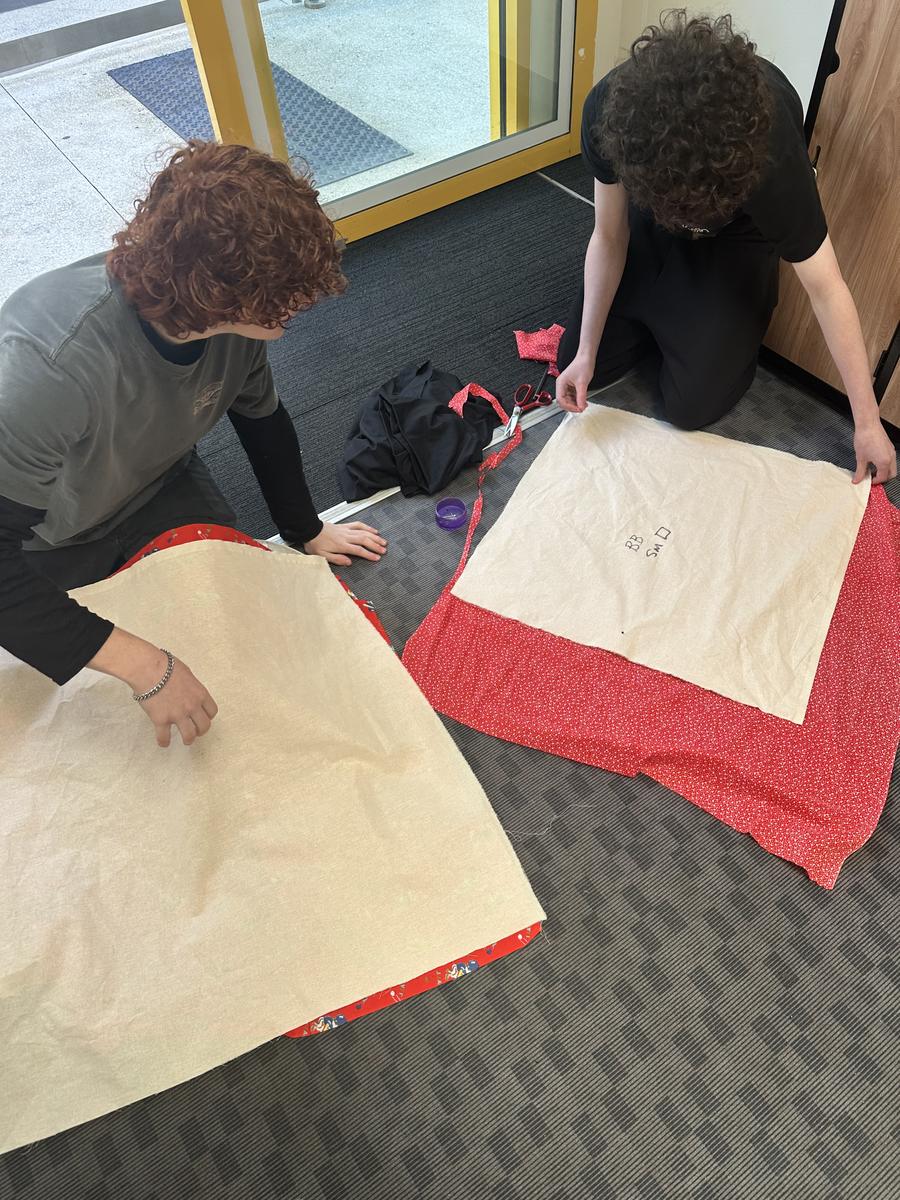
This week in Ms Grill’s Year 10 Product Design class, students revisited essential textile production skills through the creation of a Bordered Baby Blanket. The project provided an opportunity for students to build their confidence and accuracy when using sewing equipment in a safe and responsible manner.
Students practised threading sewing machines, completing a range of stitches including straight stitch, reverse stitching, and zig-zag stitching. They then selected fabrics, measured and cut materials accurately, and began constructing their blankets using their newly revised skills. The project also highlighted the importance of precision, craftsmanship, and safe work practices within a textile environment.
It has been wonderful to see students developing their practical skills while creating a functional and professional-quality textile product.
Conferences (or meet and greets) will be held on Wednesday 16th of September. More details, including how to book, will be sent out when GPAs are published at the mid point of this term. Please tentatively lock this date in now.
Norwood Secondary College understands that students have different learning strengths, preferences and interests and may approach learning activities and homework differently. If parents/carers are concerned their child may not understand the homework tasks that have been set, or if their child is spending a long period of time completing their homework, we encourage parents/carers to speak to their child’s teacher.
Students who may benefit from support completing their homework tasks are encouraged to attend Homework Club held in the College Library on Wednesday and Thursday afternoons between 3.15 and 4.15pm. Homework Club resumed this week and parent/carer permission is required to attend. Please complete the form below and return it to the General Office.
*For information on the school's Homework Policy, visit the Junior and Senior School Handbooks.