
English News

International Competitions and Assessments for Schools (ICAS)
During Week 5 and Week 6, the Year 9s, Year 10 World Classics class, and Year 11 Literature class undertook the ICAS English competition.
Recalling the hour we spent, I realise that the challenge laid within the questions, rather than that text. I had finished reading through the passage, confident I understood its main ideas and sequence. Yet, when I glanced over to the right of my screen, the multiple-choice questions fuelled a sense of confusion in me.
Whilst some asked for knowledge of the English language, such as specific jargon, others required us to understand the author's intent. This reminded me that only reading can limit what we gain from the material. Indeed, to question a text's ideas and structure is to learn why it is important and relevant.
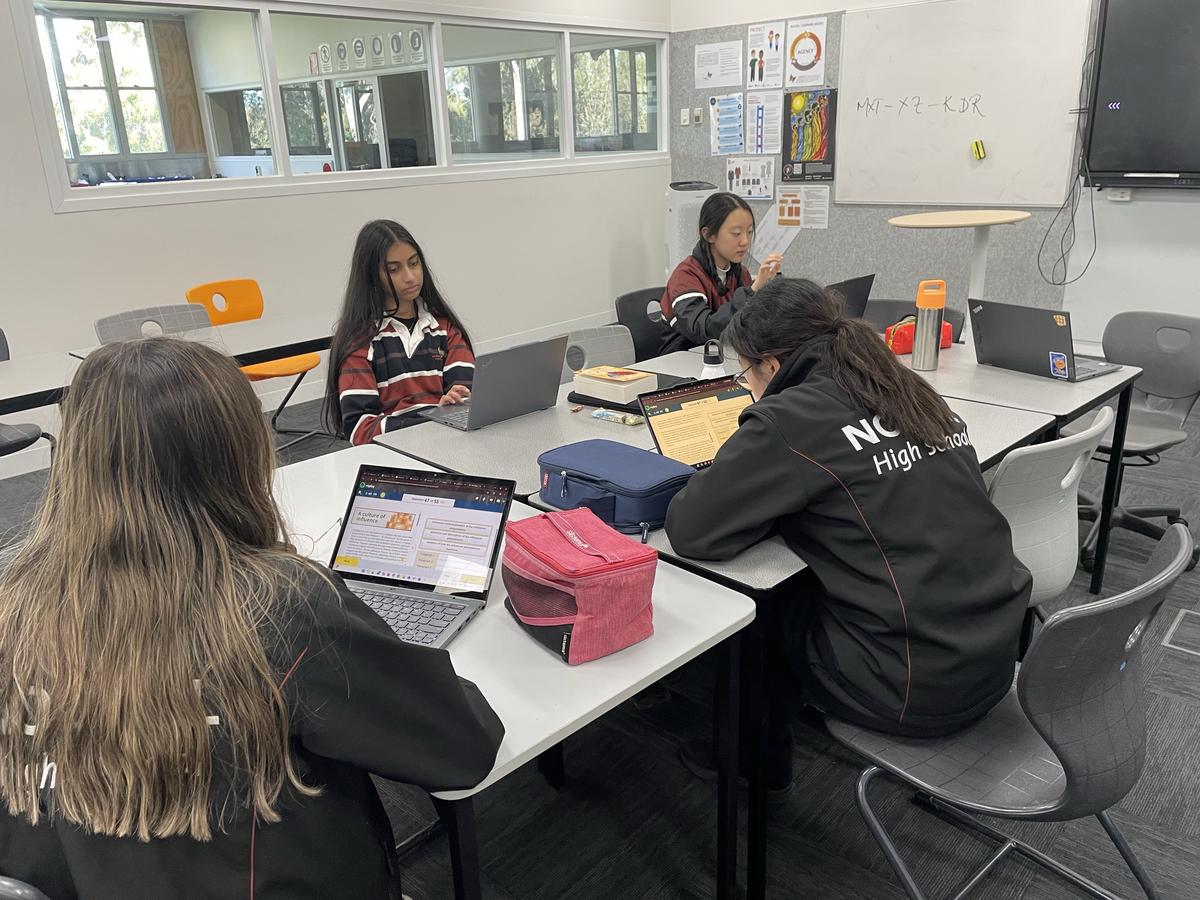
I was also pleasantly surprised to find Biology concepts my teacher had just introduced, in one of the texts provided. Later, I thought about how comprehensible the text was for me because my teacher had both explained it well, as had my textbook. Thanks to the way my teacher communicated their knowledge to me, I achieved an apt understanding. Importantly, the ICAS competition proved that English is not just associated with literature, instead, it is one of the few things whose reach does not have a scope and aids us in our understanding of ALL things. Overall, it was an engaging and rewarding experience.
Lucia Fang
Year 10 Student
Blak and Bright’s Yarn Club
On Thursday 3 September, our two literature classes were given the opportunity to attend Blak and Bright’s Yarn Club at State Library Victoria. Blak and Bright is Australia's leading organisation dedicated to showcasing and elevating First Nations literary voices. Before beginning our first session, we were welcomed to Country by a First Nations elder and introduced to Bebe Oliver, the artistic director and CEO of Blak and Bright.
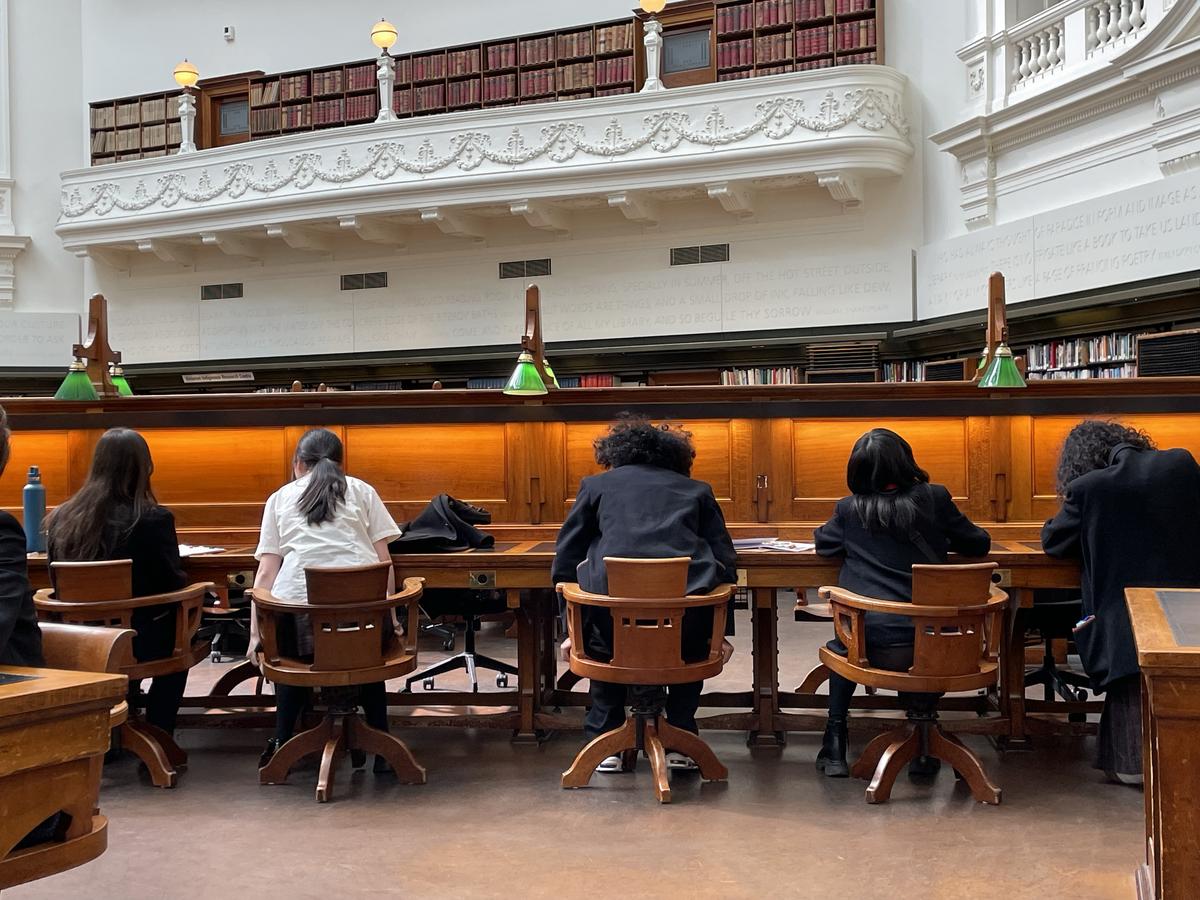
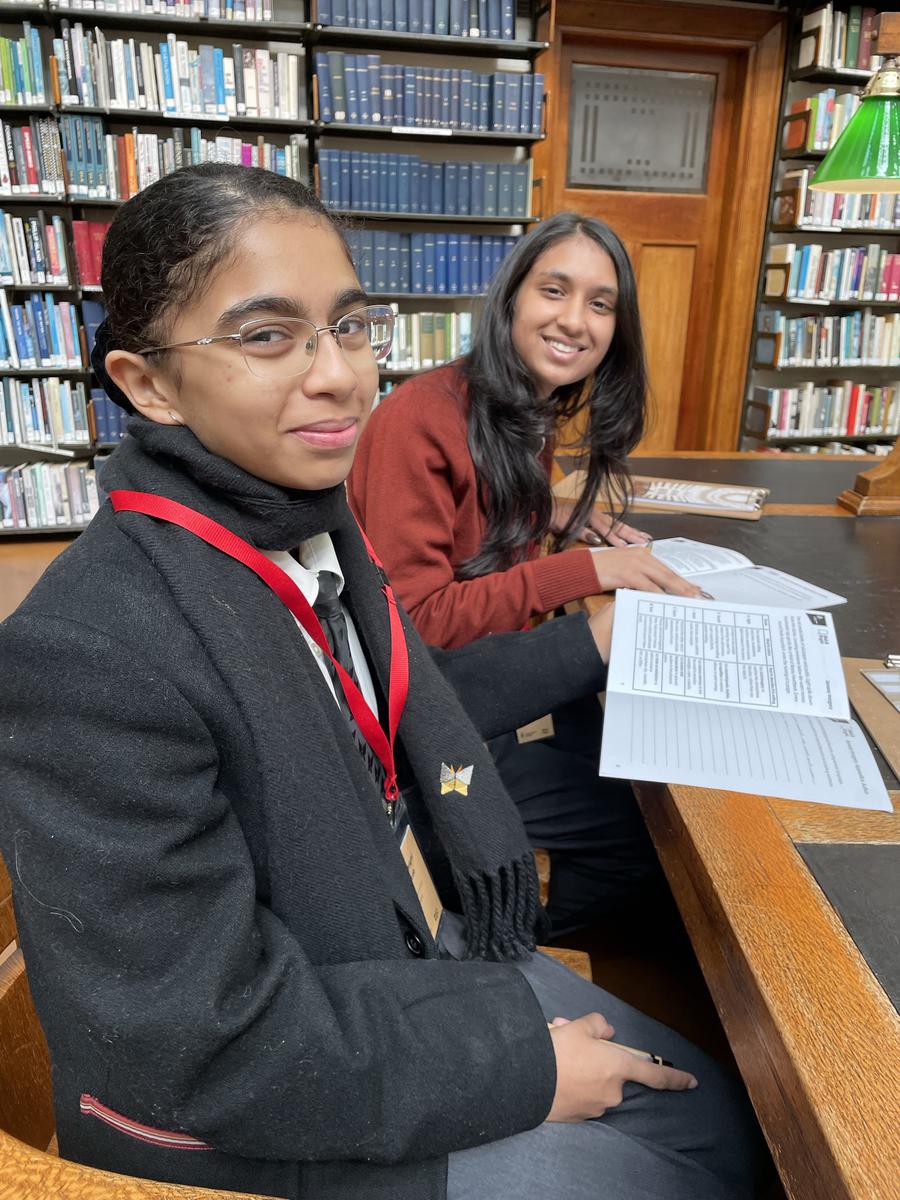
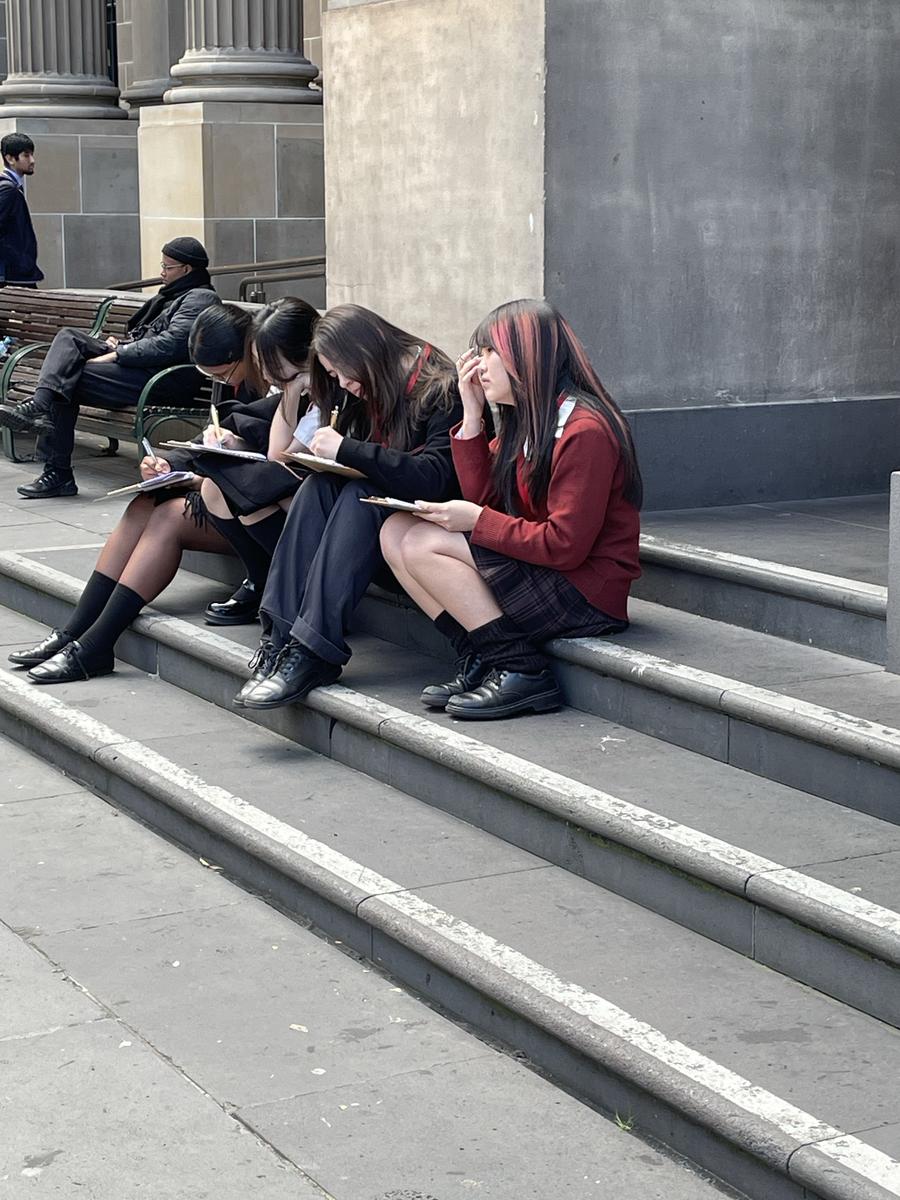
Our first session was with Aunty Fay Muir, a First Nations community elder and children’s book author. We were presented with the task of writing on the words ‘past’, ‘present’ and ‘future’, with no instructions, structure or prompts, but to simply write whatever those words sparked in our creativity. This activity allowed us to tap into our creative freedom and choose whatever genre and style we wished to write in, including multiple different pieces on existential themes, narratives or even personal experiences.
We then toured the library while simultaneously answering creative writing prompts on the basis of people watching, the La Trobe Dome Reading Room and artworks on First Nations peoples, just to name a few.
After a quick lunch, we returned to the State Library for our final session with James Parr, a First Nations writer and disability advocate, to work on style features that can be utilised in our creative writing to improve it. This was helpful as he provided insight on the impacts of different style features such as metaphors in writing.
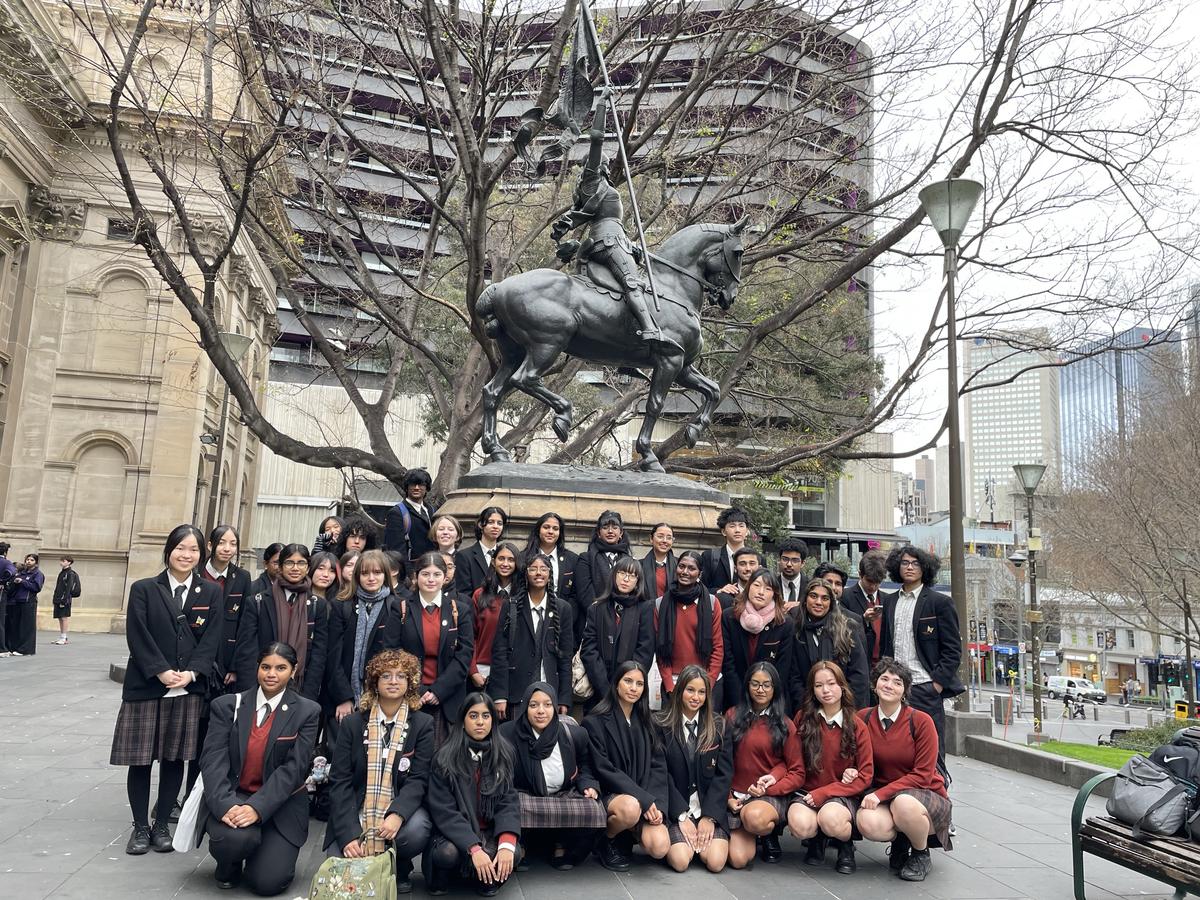
Overall, the excursion was a stimulating experience that introduced us all to talented First Nations authors and exposed us to new ways of writing.
Methmi Karunaratne
Unit 1 & 2 VCE Literature Student