Science - Core

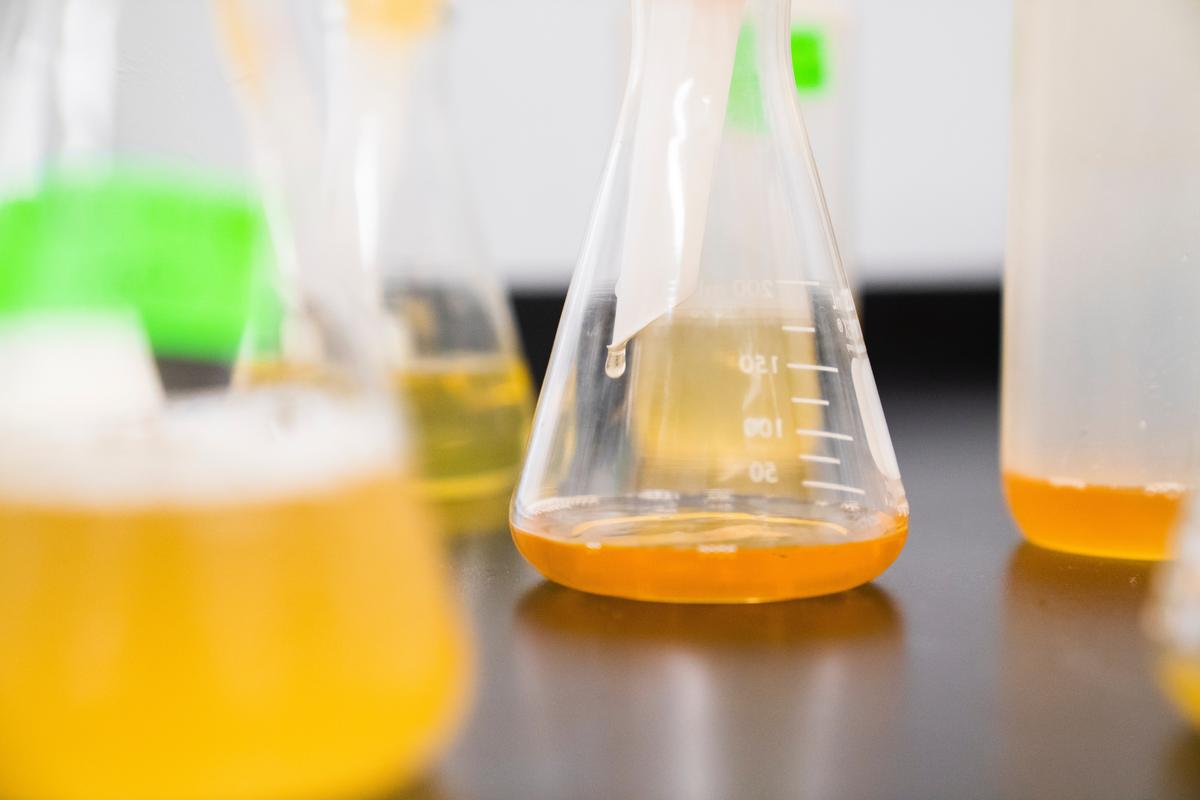
Subject Name: Science
In this course students will be studying content to best prepare them for VCE Science courses.
Content
DNA and Genetics – Students will study the structure and function of DNA, the passing on of DNA in cell division, the inheritance of genes in sexual reproduction, the patterns on inheritance in pedigrees, the causes and impacts of genetic diseases and the ethics of biotechnology.
Atomic Structure and Chemical Reactions – Students will study atomic structure and the periodic table, types of bonding and writing chemical formulae, different types of chemical reactions, writing balanced chemical equations and investigating factors affecting the rate of a chemical reaction.
Forces and Motion – Students will study how the motion of objects can be described, Newton’s Laws of Motion, energy and energy transfer/transformation, the Law of Conservation of Energy and investigating factors affecting the motion of an object
Student Design Investigation – Students will study the scientific method, how to design an investigation, collect present data, analyse and evaluate data and writing a practical investigation report in a poster format.
Science Understanding
- genetic inheritance involves the function of DNA, chromosomes, genes and alleles, and the roles of mitosis and meiosis in passing on genetic information to the next generation; the principles of Mendelian inheritance can be used to predict ratios of genotypes and phenotypes in monohybrid crosses involving dominant and recessive traits VC2S10U04
- the model of the atom changed following the discovery of electrons, protons and neutrons; natural radioactive decay results in a change from unstable to stable atoms VC2S10U06
- the organisation of the elements in the periodic table is related to the structure and properties of atoms; patterns and trends include the significance of rows and periods, metallic and non-metallic properties, atomic size and reactivity VC2S10U07
- chemical reactions are described by the Law of Conservation of Mass and involve the rearrangement of atoms; they can be modelled using a range of representations, including word and simple balanced chemical equations VC2S10U08
- chemical reactions include synthesis, decomposition and displacement reactions and can be classified as exothermic or endothermic; reaction rates are affected by factors including temperature, concentration, surface area of solid reactants, and catalysts VC2S10U09
- Newton’s laws of motion can be used to quantitatively analyse the relationship between force, mass and acceleration of objects VC2S10U17
- the Law of Conservation of Energy can be analysed in systems, including Earth systems, by assessing the efficiency of energy inputs, outputs, transfers and transformations VC2S10U15
Science Inquiry
- investigable questions, reasoned predictions and hypotheses can be used in guiding investigations to test and develop explanatory models and relationships VC2S10I01
- valid, reproducible investigations to answer questions and test hypotheses can be planned and conducted, including identifying and controlling for possible sources of error and bias in sampling or in making observations; safe, ethical investigations include undertaking risk assessments and following protocols when accessing cultural sites and artefacts on Country and Place VC2S10I02
- equipment can be selected and used to generate and record data sets that show precision, including consideration of sample size and using digital tools as appropriate VC2S10I03
- data and information can be organised, processed and summarised by selecting and constructing representations including tables, graphs, descriptive statistics, models, symbols, formulas and mathematical relationships VC2S10I04
- the validity and reproducibility of investigation methods and the validity of conclusions and claims can be evaluated, including by identifying assumptions, conflicting evidence, biases that may influence observations and conclusions, sources of error and areas of uncertainty VC2S10I06
- arguments based on a variety of evidence can be constructed to support conclusions or evaluate claims, including consideration of any ethical issues and cultural protocols associated with accessing, using or citing secondary data or information VC2S10I07
- communicating and justifying scientific ideas, findings and arguments for diverse audiences involves the selection of appropriate presentation formats, content, scientific vocabulary, conventions, models and other representations, and may include the use of digital tools VC2S10I08
Science as a Human Endeavour
- scientific knowledge is contestable and is validated and refined over time through expanding scientific methods, replication, publication, peer review and consensus VC2S10H01
- scientific knowledge may be interpreted in different ways by individuals and groups in society; the values and needs of society can influence the focus of scientific research VC2S10H04
Cross Curricular Capabilities
- ways to analyse and improve the structure, clarity, consistency and coherence of a conclusion and its justification in different contexts VC2CC10R01
- how more than one of the consequences framework, duties framework or virtues framework can be used to guide decision-making in response to an ethical issue, and similarities and differences between these and alternative ethical frameworks VC2CE10D02
Assessment Tasks
- Semester Exams
- Topic Tests
- Ethics of Biotechnology
- Rates of Reactions Investigation
- Motion Investigation
- Student Design Investigation
Resources
Stile