Literacy Update





















 St Fidelis' Catholic Primary School
Reading at Home: Building Vocabulary
Last week, we looked at reading fluency and how children can develop accuracy, an appropriate pace and expression when reading. This week, we are focusing on vocabulary and why knowing the meaning of words is important for reading comprehension.
Vocabulary is the collection of words a child understands and uses. Children need to understand the meaning of words to make sense of a text. A child may be able to read a word correctly but still struggle to understand the sentence if the word is unfamiliar.
For example, a child might be able to read the word enormous but may not know that it means very large. If important words are unfamiliar, children can miss key information in a story or information text.
Vocabulary develops through conversation, listening, reading and direct discussion of word meanings. Children benefit from hearing new words, discussing their meanings and using them in different situations.
How can you help at home?
Stop and discuss unfamiliar words. When reading together, you may come across a word your child does not know. Explain what it means using language they understand.
Use examples. If a character is described as exhausted, explain that this means very tired. You could ask, "When might you feel exhausted?" or "What might make someone exhausted?"
Look at how words are used in a sentence. Discuss the other words around an unfamiliar word and consider what they tell you about its meaning. This helps children learn to use context as one clue to understanding a word.
Explore words with similar or opposite meanings. For example, discuss how enormous and huge have similar meanings, while enormous and tiny have opposite meanings.
Use new words in conversation. If you discuss a new word while reading, look for opportunities to use it again during the week. Repeated exposure helps children become familiar with its meaning.
Read a range of books. Stories, information books, recipes, instructions and other texts introduce children to different words and ways of using language.
Which words should we focus on?
You do not need to stop at every unfamiliar word. Focus on words that are important to understanding the text or that your child is likely to encounter again.
For example, if you are reading a book about weather, you might discuss words such as forecast, temperature and precipitation. Understanding these words will help your child make sense of the information.
It is also helpful to discuss words children hear in everyday life, including words used in school subjects. As children progress through school, they encounter more academic vocabulary in areas such as science, mathematics, history and geography.
Remember: Knowing how to pronounce a word is not the same as knowing what it means. Discussing words, explaining their meanings and using them in conversation helps children develop the vocabulary they need to understand what they read.
Next week, we will explore background knowledge and how what children already know about the world helps them understand new texts.
Showcasing learning in Literacy at St Fidelis
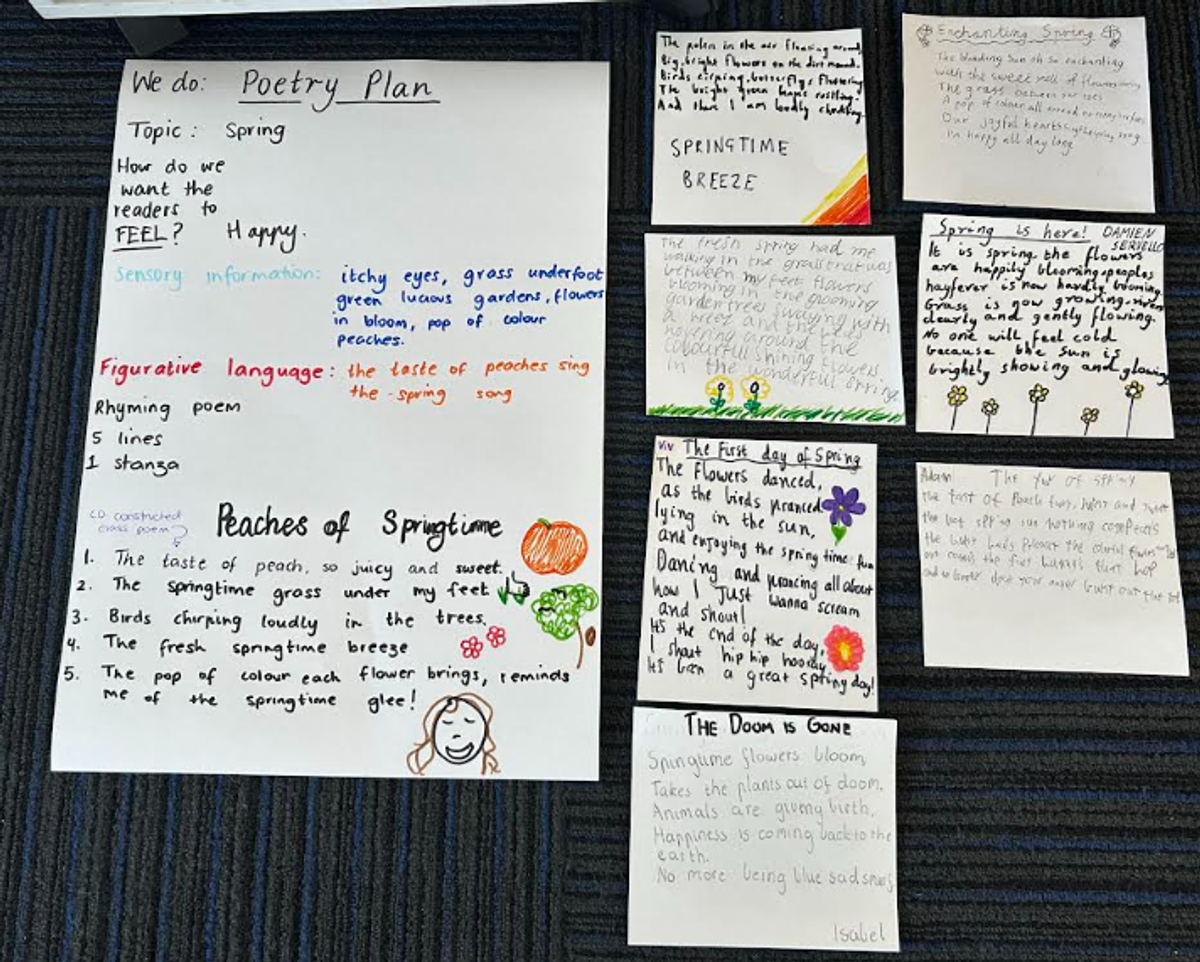
Year 4 Poetry
Year 4 students have been reading and exploring poetry, learning how poets use interesting words, comparisons and personification to bring their ideas to life. After working together to plan and create a poem, students are now applying their learning to write their own. A fantastic effort by our Year 4 students!
Bernadette Parnis | Literacy Leader