Science
Krystie Hoffmann - Science Teacher



















 The Gap State High School
Science
Krystie Hoffmann - Science Teacher
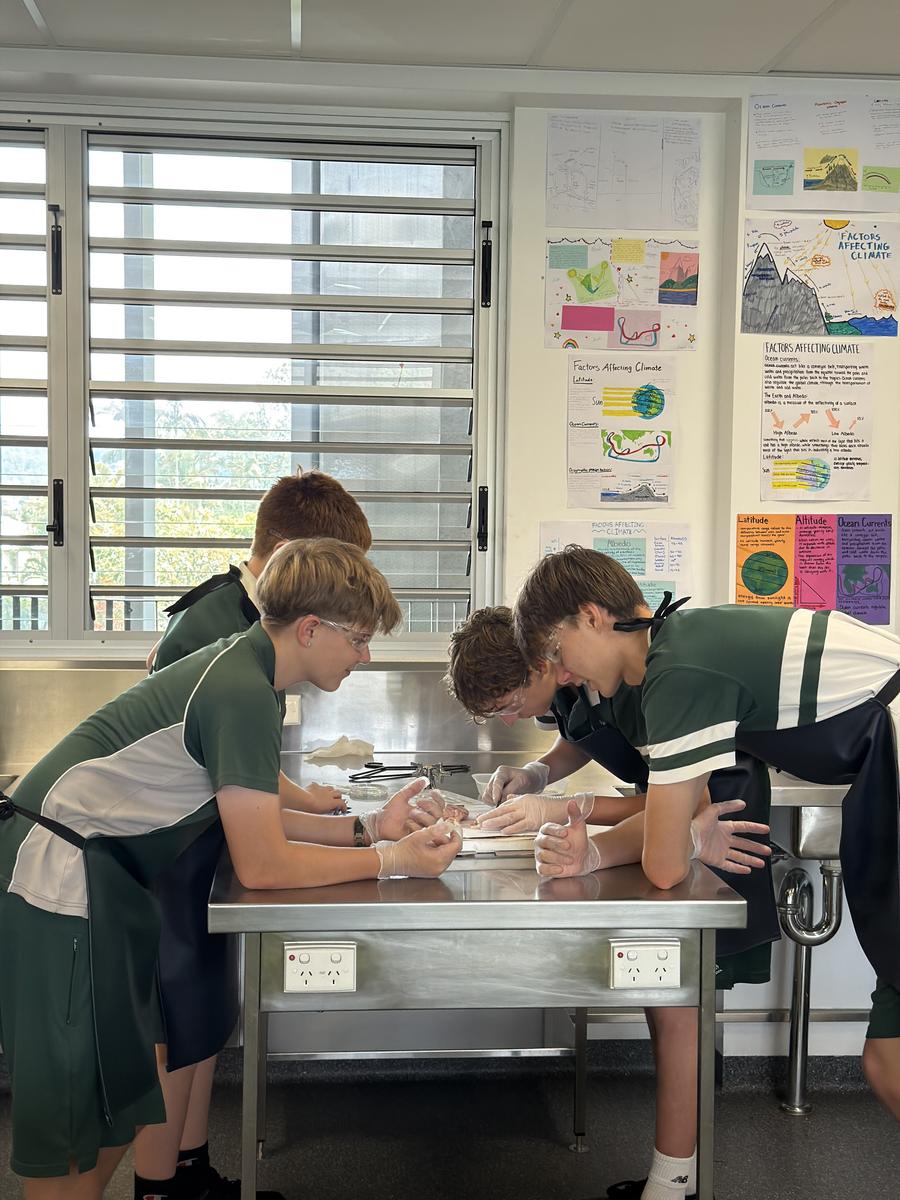
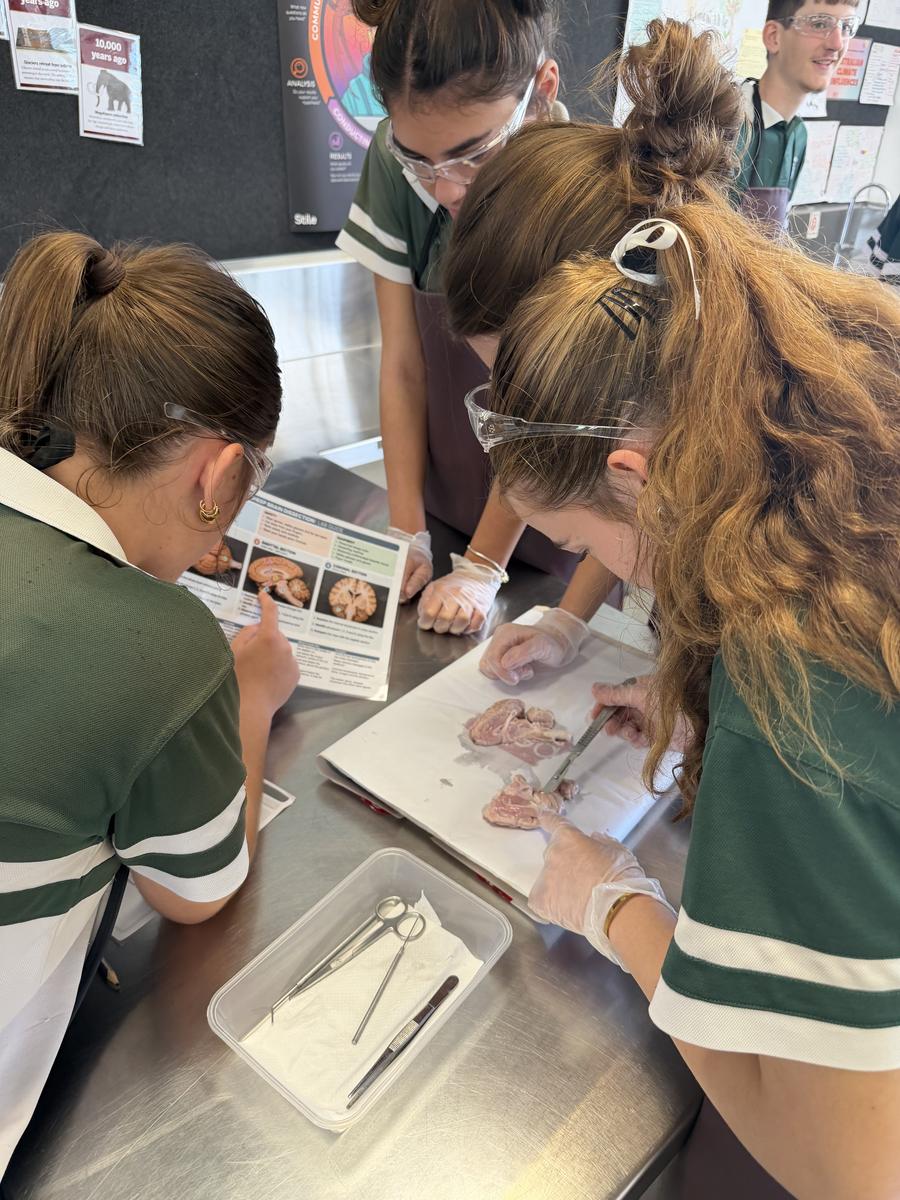
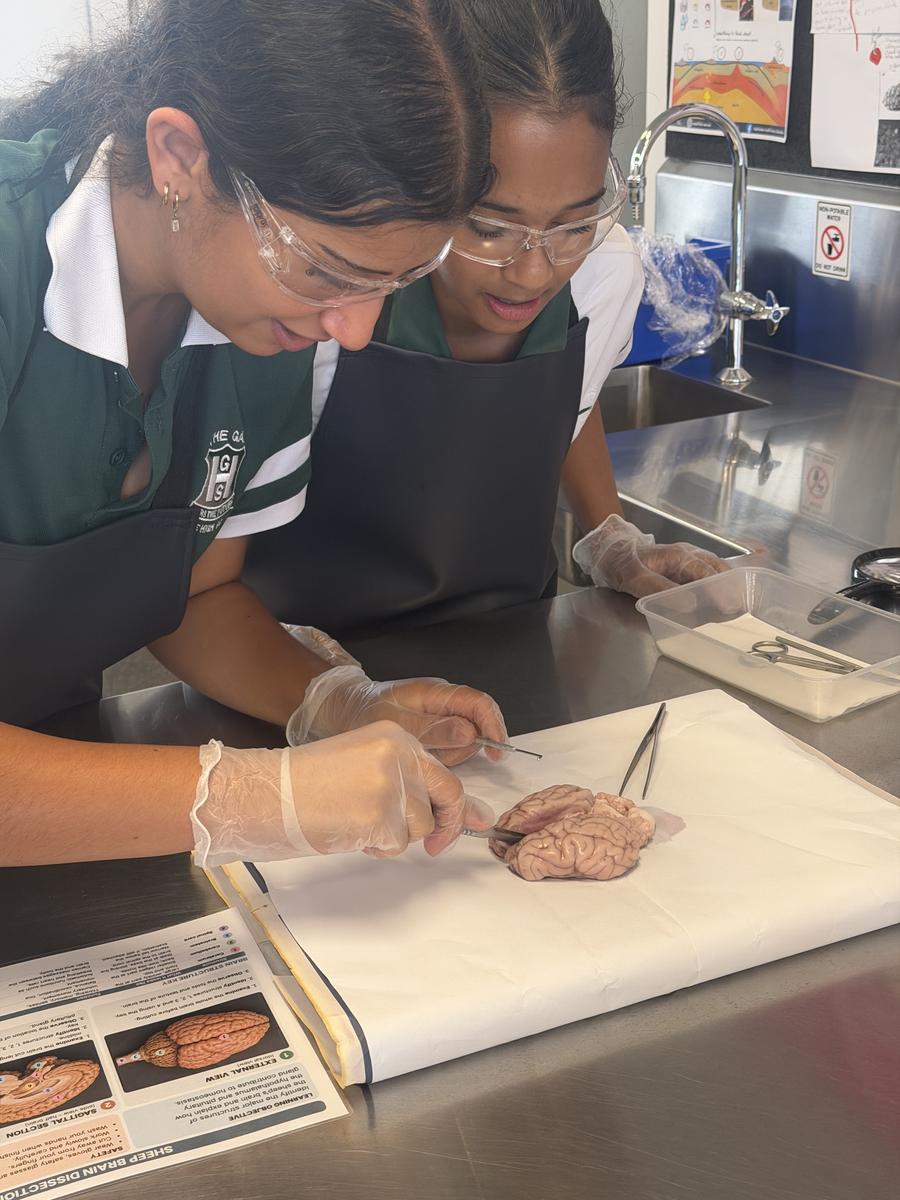
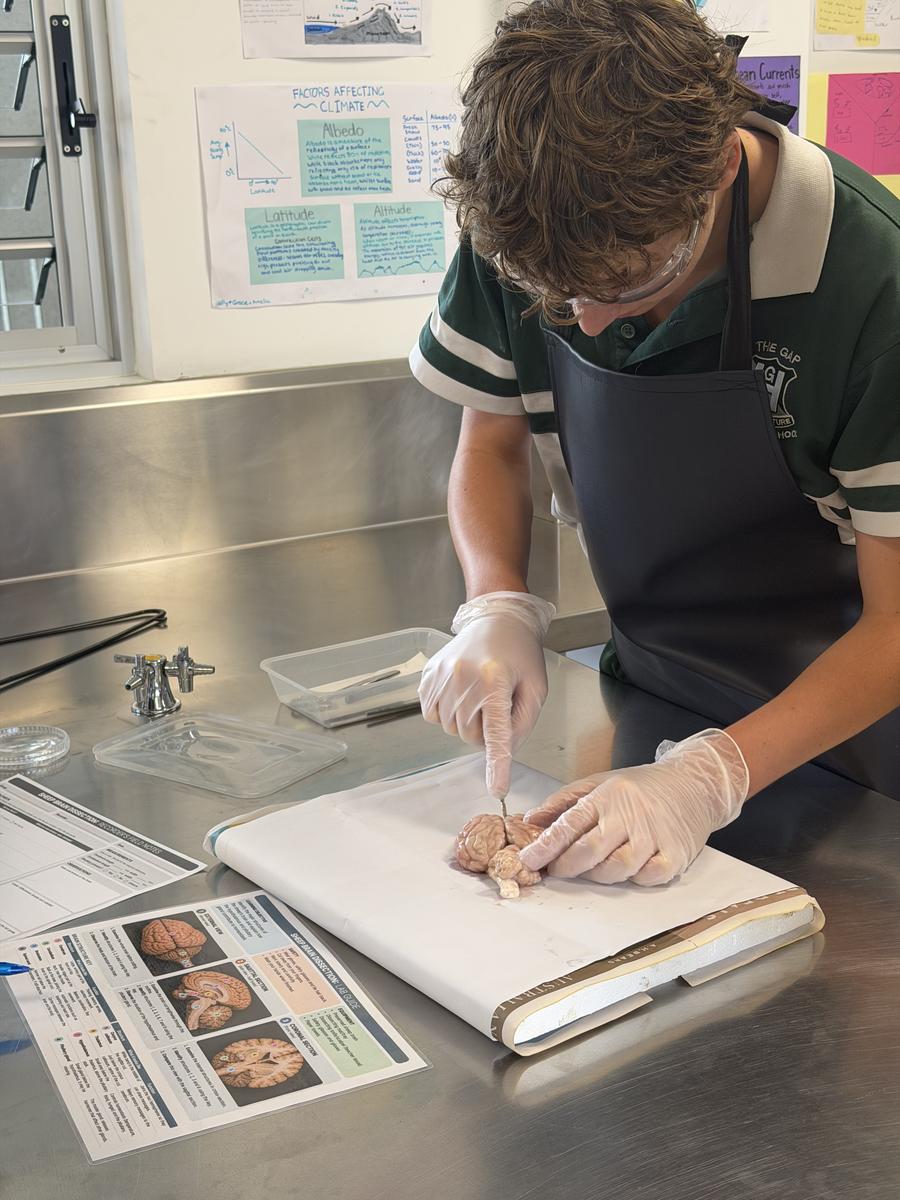
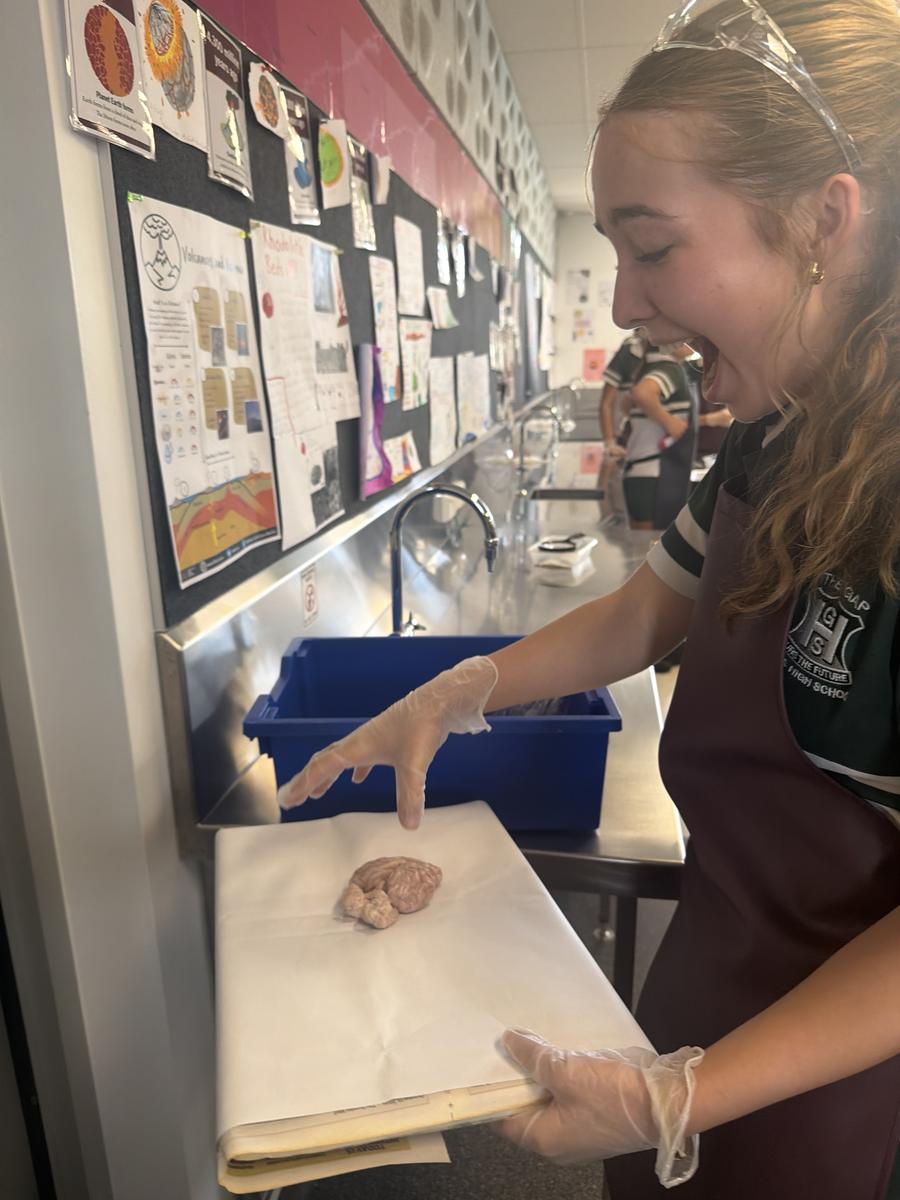
This week Year 9 students went beyond the textbook and into the real thing: a sheep brain dissection, as part of our Homeostasis unit.
How does a few hundred grams of tissue monitor, decide and respond, all day, without us ever noticing? Working in teams, students set out to see for themselves. They traced the folds of the cerebrum, the branching pattern inside the cerebellum and the brainstem that keeps us breathing, then went looking for the hypothalamus and pituitary gland, a small but powerful partnership that links the nervous and endocrine systems and keeps the body steady.
It was a big step for many. Handling real tissue, making the first cut and recording what is actually there rather than what a diagram promises takes confidence, and our students stepped up with focus, care and curiosity.
This has a bigger purpose than just for experimentation though; adolescents are living with a brain that is still developing and understanding how it works gives them useful perspective on their own lives.
The same hypothalamus that regulates temperature and thirst is involved in the stress response, the pounding heart before a test or a presentation, and in the body clock that shifts later during the teenage years, which helps explain why sleep can be so hard.
When students understand that these are normal biological processes, with a clear mechanism behind them, they are better placed to manage stress, make sense of how they feel and make informed choices.
Back in class, students will turn their field notes into a comparison of the sheep and human brain and connect what they saw to how the body keeps its internal environment in balance.