Feature Article: Understanding Poverty

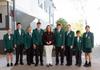














 The Gap State High School
By Peter Deng - Year 8
Peter is a Year 8 student here at The Gap State High School.
He is part of the Brilliant Futures program - a selective program where students learn about how the world works. Students have previously explored mathematics, languages, AI, science and more.
This final project is called one small thing, where students select one Sustainable Development Goal created by the United Nations and complete one small action about it.
The action doesn’t have to immediately solve the issue - it’s just one small step towards success.
Peter has chosen SDG 1: No Poverty. And his action is to raise awareness of this issue.
(PLEASE HELP PETER BY COMPLETING THE SURVEY AFTER READING THE ARTICLE)
One Small Thing - Poverty Awareness Survey – Fill out form
SDG 1: Understanding Poverty
Most of us take food, water and a safe place to live for granted. But for millions of people around the world, these basic needs are a daily struggle. Poverty is much more than just a word we hear in the news, it’s a major issue that is currently affecting millions of people around the world. The United Nations has created the Sustainable Development Goals to help guide global action and major problems such as poverty, climate change, and economy. SDG number 1: No Poverty aims to end poverty in all forms by 2030, providing everyone with safety and opportunity.
But first, what is Poverty?
Poverty is the state of lacking essential and sufficient resources to meet basic needs for a healthy life. The World Bank classifies this as living on around $8.30 USD per day depending on the country. In 2025, around 3.7 billion people experienced poverty worldwide, these people faced challenges such as unsafe housing, limited healthcare, job insecurity, and unreliable transportation.
Poverty goes back as far as human history, but its significance has changed a lot over the years. From ancient societies, where poverty was considered a normal part of life, with an estimation of 90% of the human population living in levels of poverty. Today, it is understood as a global challenge that affects health, safety, and education.
Poverty has clearly shown its impacts, with around 735 million people lacking food and facing hunger due to poverty, 244 million children lack access to education due to poverty, over 2 billion people lack access to safe drinking water, and 3.4 billion people lack safe sanitation services (toilets/hygiene).
Extreme Poverty
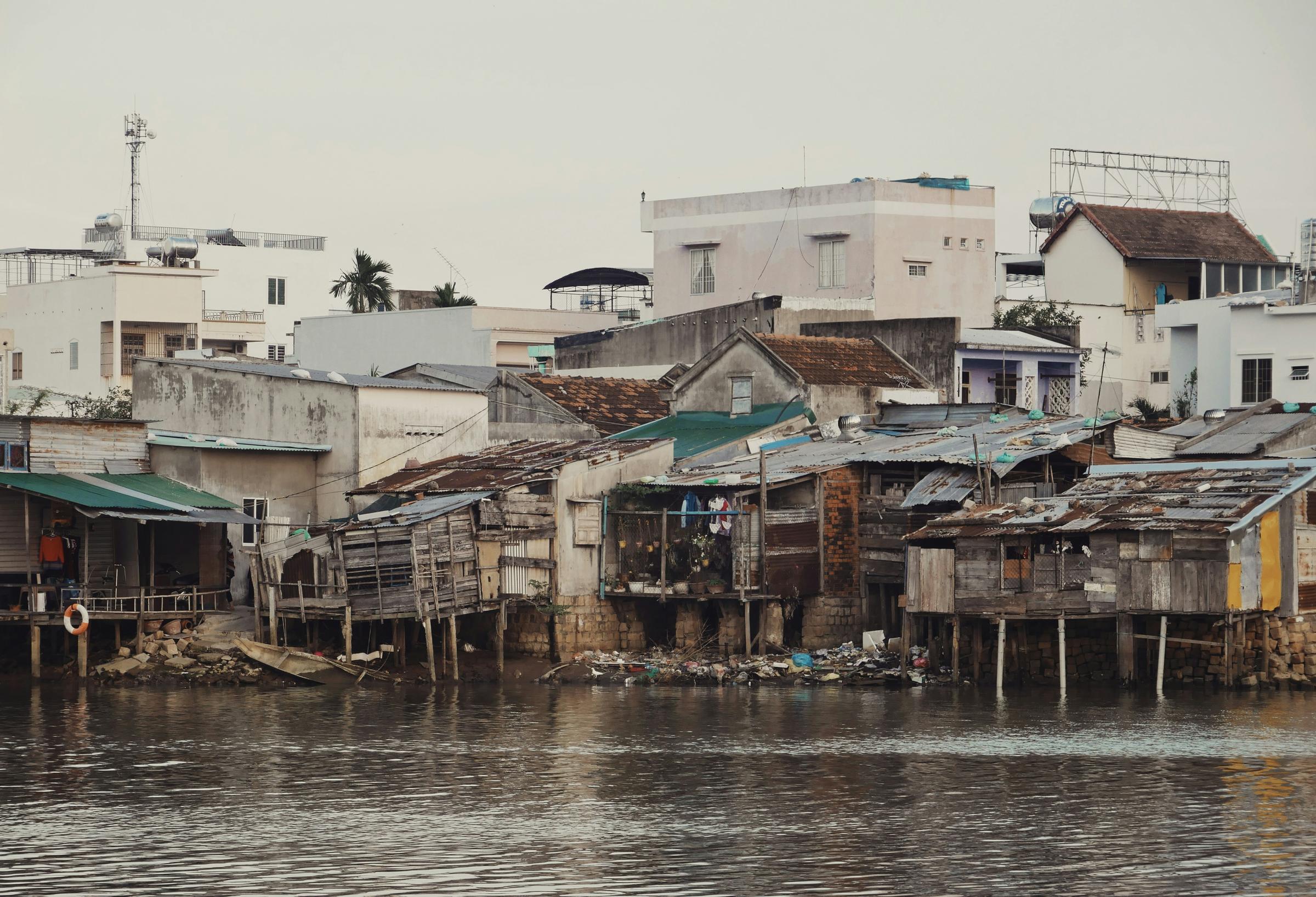
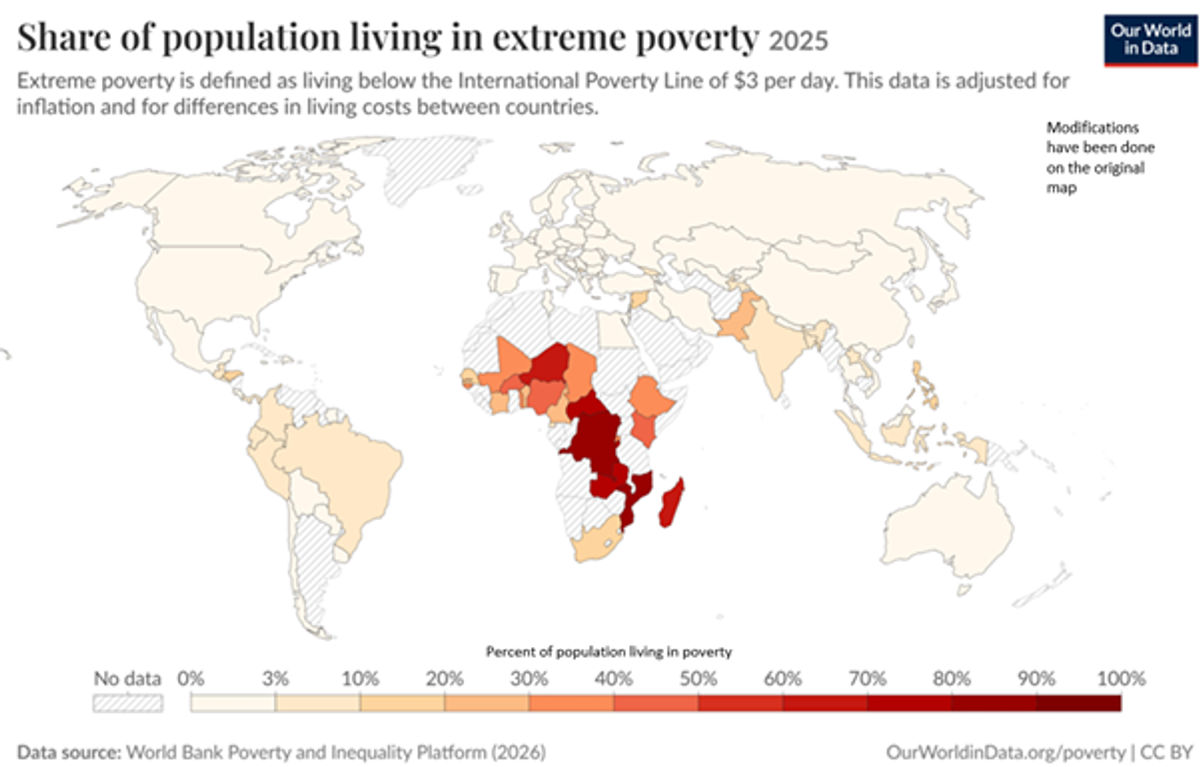
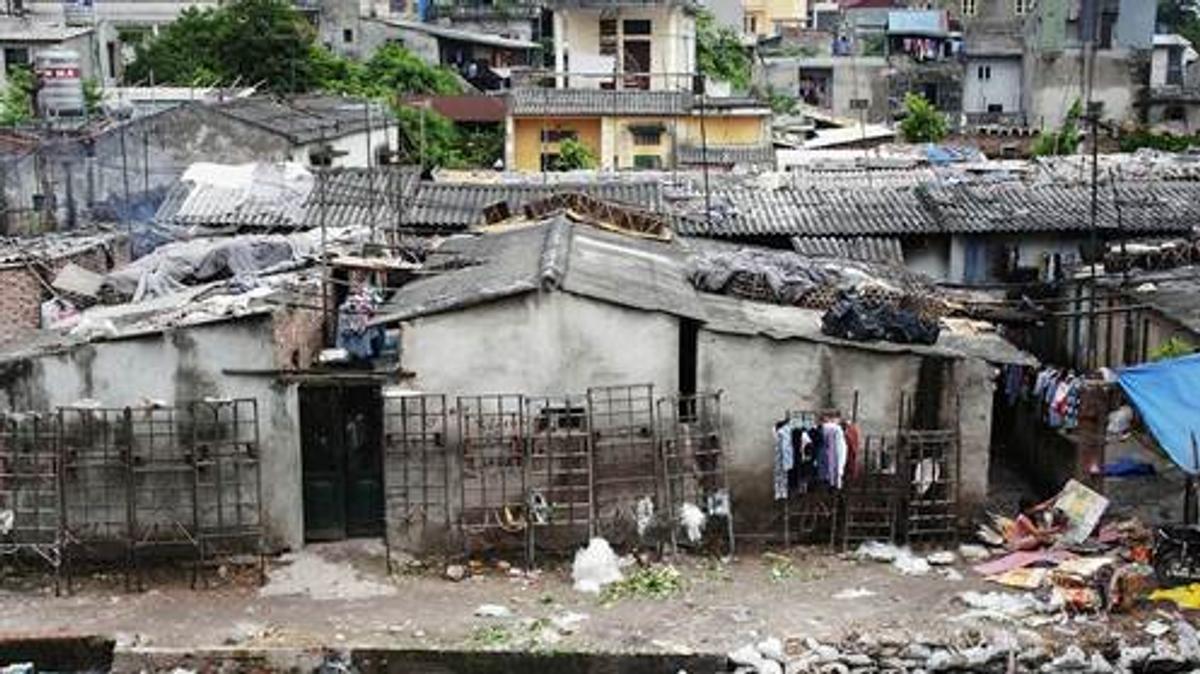
Poverty in its most severe form is known as extreme poverty, this is where people live without enough resources to even meet the most basic human needs. Lack of food, shelter, water, healthcare and education are all examples of extreme poverty. People living in extreme poverty often struggle with everyday life due to their income being far lower than what is needed to meet basic living standards. The UN (United Nations) has classified extreme poverty as living on less than $3 USD a day.
A study conducted during 2025 displayed that 831 million people still currently live in extreme poverty, 412 million of those which are children aged 17 or younger. And 45% of deaths of children under the age of 5 are shown to be due to undernutrition.
Conflict-Affected Countries
The United Nations estimates that around 2 billion people live in conflict affected areas, with a staggering 455 million living in extreme poverty residing within these countries. These places are known as conflict-affected countries and often refers to fragile countries where the government is unable to provide protection or basic services because it is too weak, corrupted or trapped in war. Since 2005, the number of people living in countries classified as fragile or conflict-affected has more than doubled.
In 2024, approximately 43% of the people experiencing poverty lived in fragile countries, within this group, 23% lived in chronically fragile countries. With only 30% living in countries not classified as fragile or conflict-affected. According to the World Bank, the rate of poverty in fragile or conflict-affected countries is 5 times higher than in other regions.
The Good News
Even though poverty remains a global issue, we have seen significant progress in the years. Since 1990, the total number of people worldwide living in extreme poverty has declined from around 2.3 billion to 831 million, even though progress has slowed down these past few years and the pace of poverty reduction among children has been slower compared to the general population.
Since 2000, global child deaths have been cut in half due to better healthcare and nutrition. Over 2 billion people have gained access to safe and clean drinking water, which helps decrease disease and improve health. Many nations are making significant progress, with over 1.5 billion people lifted out of poverty globally since 1990.
One Small Thing, One Big Difference
In conclusion, poverty is still one of the biggest challenges that the world faces today. It isn’t something that you or I can change in a couple of days, but the progress being made in the last few decades proves that change is possible. Even though there is still a long way to go, the Sustainable Development Goals have brought together nations, organisations and charities and has led the largest anti-poverty effort in history, helping move the world closer to their goal of achieving SDG 1: ending Poverty by 2030.
And even though you and I can’t solve this issue immediately, we can still do one small thing to make a difference, and it’s exactly why I wrote this article. Whether it is donating to a charity, raising awareness, or engaging with organisations that work to reduce poverty, you have helped the world move one step closer to solving poverty once and for all. Millions of small actions add up, and together they will become a real, meaningful change. And with a compassionate mindset, everyone helps move the world towards a better future where everyone can have a chance for a safe and fair life.
Quick anonymous one minute survey to tell me about your experience:
By completing this quick anonymous survey, you’ve helped to show that this article made an impact. Even reading this article could be your one small thing towards poverty, and recording it makes that action real.
One Small Thing - Poverty Awareness Survey – Fill out form
Sources:
- Social mobility (2026). History & Society. https://www.britannica.com/topic/social-mobility
- Poverty and prosperity (2025). Poverty. https://www.worldvision.com.au/global-issues/work-we-do/poverty
- POVERTY & INEQUALITY UPDATE. (2025). in World Bank Group, https://thedocs.worldbank.org/en/doc/229ff18129687a785f08af7cfb28e5e1-0350012025/original/WBG-Poverty-and-Inequality-Update-Fall-2025.pdf?deliveryName=DM265446
- End poverty in all its forms everywhere (2026). United Nations. https://sdgs.un.org/goals/goal1
- Drinking-water (2023). World Health Organization. https://www.who.int/news-room/fact-sheets/detail/drinking-water
- Child poverty (n.d.). UNICEF. https://www.unicef.org/stories/child-poverty
- Nearly half the world’s 1.1 billion poor live in conflict settings (2024). United Nations. https://news.un.org/en/story/2024/10/1155821
- Archie, A. (2022). World is seeing the greatest number of conflicts since the end of WWII, U.N. says. Npr. https://www.npr.org/2022/03/31/1089884798/united-nations-conflict-covid-19-ukraine-myanmar-sudan-syria-yemen
- THE 17 GOALS (2026). United Nations. https://sdgs.un.org/goals
- Häkkinen, S. (2016). Poverty in the first-century Galilee. sciELO. https://www.scielo.org.za/scielo.php?script=sci_arttext&pid=S0259-94222016000400046
- Roser, M. (2025). The end of progress against extreme poverty? Our World in Data. https://ourworldindata.org/end-progress-extreme-poverty
- George. (2025). What Does Living in Poverty Look Like: Key Challenges Explained. Reality Pathing. https://realitypathing.com/what-does-living-in-poverty-look-like-key-challenges-explained/#google_vignette
- Metadata Glossary (2025). World Band Databank. https://databank.worldbank.org/metadataglossary/world-development-indicators/series/SI.POV.UMIC
- Clean water and sanitation (2026). United Nations. https://unstats.un.org/sdgs/report/2025/Goal-06/
- SDG 1 image: https://www.univ-eloued.dz/sdg/sdg1/
- Extreme Poverty housing image: https://www.globalcitizen.org/en/content/extreme-poverty-definition-statistics-rate/
- World map image (modifications have been made): https://ourworldindata.org/poverty
- Quote Image: https://quotefancy.com/quote/941707/Yogi-Berra-Doing-the-little-things-can-make-a-big-difference