
Child Safe & Wellbeing
Safety, Respect and Learning

Child Safe & Wellbeing
Safety, Respect and Learning
Bullying is an ongoing or repeated misuse of power in relationships, with the intention to cause deliberate psychological harm. Bullying behaviours can be verbal, physical or social. It can happen in person or online, via various digital platforms and devices and it can be obvious or hidden. Bullying in any form or for any reason can have immediate, medium and long-term effects on those involved, including bystanders.
Despite the efforts made to reduce bullying behaviours, the research tells us that one in four students still report being bullied every few weeks. However, not all negative behaviour should be considered bullying. The key difference is that bullying does not stop on its own. It’s important young people learn how to identify behaviours that are rude, behaviours that are mean, and behaviours that are related to bullying.
Often the reasons for bullying can be complex. Some young people do it to get approval from others, some do it to regain control, whilst others may do it because it makes them feel safe. Supporting young people as they work through their emotions will help them unpack the motivation and reason behind the behaviour.
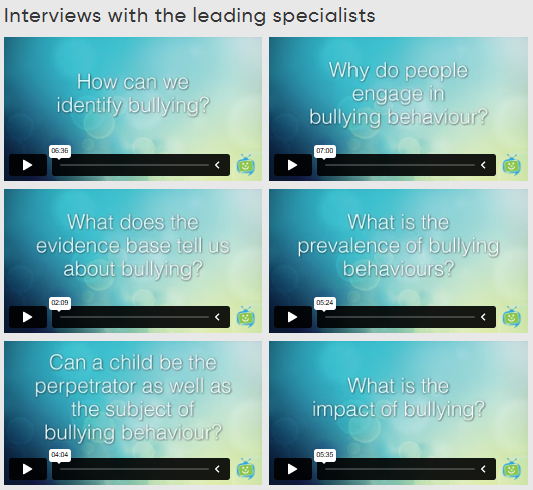
Watch the helpful videos on our SchoolTV site to learn more:
https://cranbourneeast.catholic.schooltv.me/newsletter/bullying
At St Thomas the Apostle, students are continuing
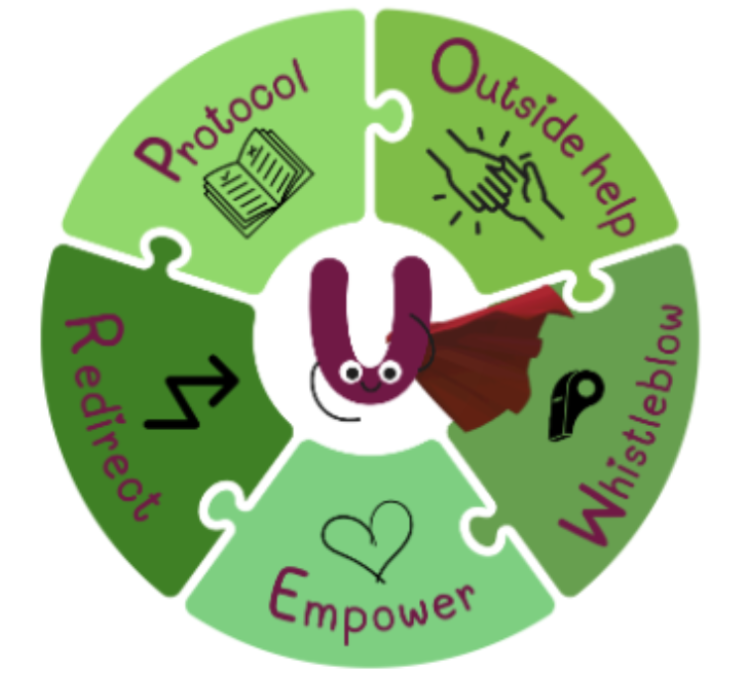
to build their understanding of our whole-school bullying prevention initiative, “Upstanding U: Have the POWER.” This week, the focus is on the next letter of the POWER framework:
E - Empower
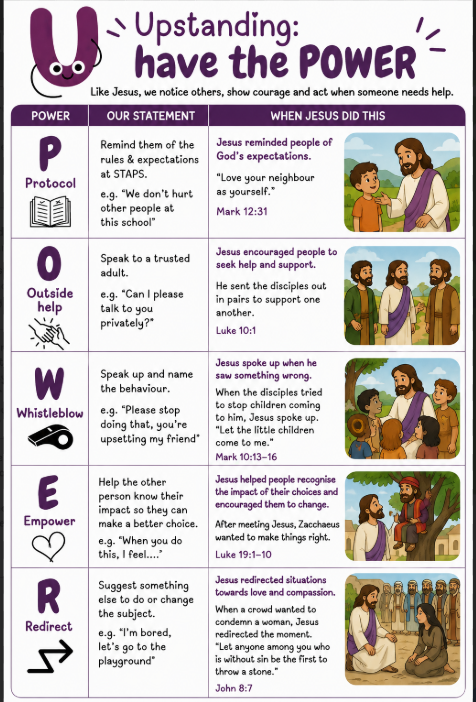
Empower means helping someone recognise that they have the ability to make a safer, kinder and more respectful choice. Students learn that being an upstander is not only about stopping harmful behaviour, but also about encouraging others to reflect, repair harm and choose a better way forward.
Across the year levels, students will explore Empower through age-appropriate classroom discussions, practical scenarios, role-play and reflection. Younger students may practise using simple encouraging language such as, “You can make a better choice.” Older students will consider how they can support a peer to change their behaviour without shaming, embarrassing or excluding them.
Students will learn that empowering others involves treating every person with dignity, even when they have made a poor choice. They will practise responding calmly, offering a positive alternative and helping others understand how their actions affect the people around them.
Our learning will continue to be explored through a Catholic lens. Students will reflect on Luke 19:1–10, where Jesus meets Zacchaeus and helps him recognise a better way to live.
Jesus does not shame Zacchaeus or reject him. Instead, he treats him with dignity and gives him the opportunity to change. This Scripture reminds us that people are more likely to make positive choices when they feel respected, supported and encouraged.
When students empower others, they follow Jesus’ example by showing compassion, recognising the dignity of each person and helping others move towards kinder and more responsible choices.
Families can support this learning by discussing how children can encourage others to make better choices while still speaking respectfully and showing care.
We look forward to continuing to support our students as they develop the compassion, confidence and responsibility needed to be active upstanders within our school community.