
Wellbeing

Last term, our school community came together to celebrate b kinder day, an inspiring event focused on the power of empathy, connection and small acts of kindness.
It was a beautiful reminder for all of us about the big impact a gentle word or thoughtful gesture can have!
As part of the day's events, every single student in the school designed a unique kindness card featuring a personal message of hope and love.
Our Year 3 students took on the special job of delivering these heartfelt cards to local businesses and residents in Elwood Village, as well as to the team and visitors at the Sacred Heart Mission.
Seeing the genuine joy and smiles on people's faces brought the lesson home: thinking of others doesn't just make someone else's day, it warms our own hearts, too. It was an incredible hands on learning experience in empathy for our Year 3s!
The kindness didn't stop at card deliveries! Students across all year levels participated in meaningful creative projects around our grounds:
- Inspirational River Stones: Students painted uplifting messages on stones, which are now nestled in our Indigenous garden for everyone to find and enjoy.
- Kindness Superheroes: Creative minds got to work designing original superhero characters whose main power is spreading goodness.
- Daffodil Planting: Hands were happily dug into the soil as classes planted daffodil bulbs along the front of the school, a bright reminder of kindness that will bloom for seasons to come.
Compliment Sharing: Classroom walls and desks were filled with warm compliments written by students for their classmates.
"No act of kindness, no matter how small, is ever wasted."
Bern Bradley

Michael Grose
14 July, 2026
How Chores Build Real Confidence and Resilience in Kids
When we over-service our children to protect their self-esteem, we accidentally make them fragile. True resilience begins with a shift toward contribution.
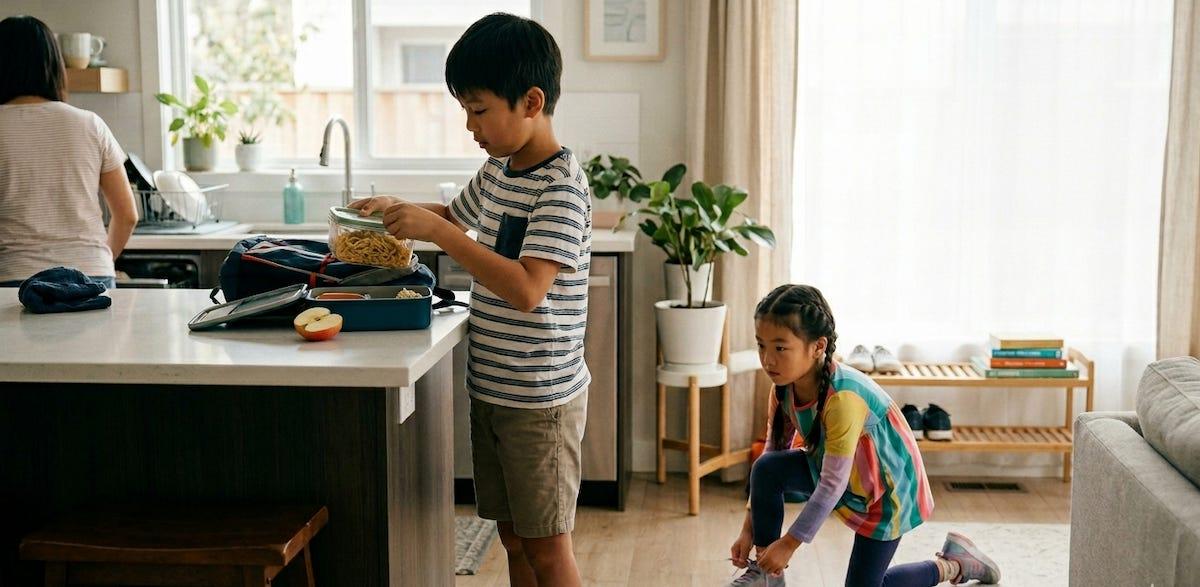
The natural instinct for most parents is to curate children’s lives.
That is, smooth their path, clear the hurdles, and do everything for them, ensuring they don’t experience hardship and difficulty.
The common thinking behind this parenting style is that by protecting and over-serving kids, we preserve their confidence and self-esteem.
But the opposite is true.
Constant protection from the realities of life breeds fragility that shatters the moment life becomes real.
Fortunately, there is an effective, evidence-based way to build child confidenceregardless of the circumstances.
The shift involves moving away from external protection and overdoing it for kids, and focusing on building a deep, internal sense of belonging.
Focus on Belonging through Contribution
Alfred Adler, a key founder of modern psychology, argued that a child’s confidence isn’t rooted in being told they’re special,but infeeling useful.
When a child feels they truly belong to a group, whether it’s a family, a classroom, or a sports team they develop a strong psychological safety net.
And how to create a strong sense of belonging?
As Adler said, belonging is best cultivated through contribution, which is the essence of lasting confidence and happiness.
When you give children real responsibilities, you send a powerful message: “I need you. You have something of value to offer.”
And how they belong in their families sets the pattern for how they belong in all their various groups throughout their lives.
Three Practical Ways to Build Confidence
Parenting shelves bulge with tomes about building confidence in children.
I'll save you some reading time.
Here are, hands down, the three best principles for building lasting confidence in kids.
1. Never do for a child what a child is capable of doing for themselves
Do you do the ordinary things of life for children that they can do for themselves? (Get their breakfast? Get them out of bed? Unpack their school bags each day?)
It’s easy to fall for the trap of doing things for children that they can do for themselves.
Let’s face it, it’s often simpler, faster and less challenging to do things for kids - especially when you’re time-poor, and your kids drag their feet.
Every time we over-service a child, we inadvertently whisper that they are incapable.
Start stepping back.
Let them manage their own morning routine or pack their own bag.
The message should be: “I’m here if you’re stuck, but I know you’ve got this.”
2. Expect kids to contribute without being paid
Here’s a question I ask every child I work with. “What do you do in your family that someone else relies on?”
Unfortunately, this question is often met with a shrug.
If your child would answer this question with a similar shrug, perhaps it’s time to involve them in the household business and shift some responsibility their way.
Whether it’s help with meal planning, gardening, or basic maintenance, these acts of service create a sense of ownership.
And yes, that extends to chores. It’s their family, not just yours, so let them belong by making a regular contribution that matters.
And chores matter.
A child who contributes to the household is a stakeholder, not a guest.
This stakeholder mindset is the bedrock of contribution.
3. Let your kids experience HFDs-hardships, frustrations and difficulties.
In a perfect world, your child will navigate friendships with ease, win every game they play and handle homework with aplomb.
But… the world doesn’t work that way.
At least, not the world you and I inhabit.
The best way I know to prepare kids for the real world, where hardship, frustration and difficulty live, is to build their resourcefulness and adaptability.
Start this process by ignoring the natural urge to fix every social slight or minor disappointment, acknowledging their feelings, and giving them the space to resolve their own problems.
This moves the child from a victim state to a state of agency- a state when they have some control over their own lives.
It reinforces the idea that while they can’t control what happens to them, they have total control over how they respond.
Finally….
Confidence isn’t a personality trait; it’s a muscle developed through use.
We can’t always be there to catch our children when they fall, but we can provide them with the internal strength that comes from knowing they are a vital, contributing part of something bigger than themselves.
When a child feels a true sense of belonging, they don’t just survive setbacks—they learn from them.
Their confidence is supported by their competence, providing them with a lasting sense of control over their lives.
Supporting Families Beyond the Classroom
Children thrive when schools and families work together.
Tuning in to Kids™ is an evidence-based parenting program that helps parents better understand their child's emotions, respond calmly during challenging moments, and strengthen family relationships.
The practical strategies parents learn can support children's emotional wellbeing, confidence and resilience both at home and in the classroom.
If you know families who may benefit, we'd greatly appreciate you sharing this opportunity with your school community.
Program Details
Starts: Wednesday, 5 August 2026 (6 consecutive Wednesdays)
Time: 12:00pm - 1:30pm (AEST)
Where: Live online via Zoom
Delivered by: Monique Shipp, Clinical Psychologist
https://mindboxpsychology.com.au/tuning-in-to-kids-group/
Michael Grose
21 July, 2026
Every Parent Needs to Raise Strong, Capable Kids
Simple, actionable shifts to help your child move from dependency to real-world competence.

Most parenting advice is about how to keep our children close; I want to talk about how to let them go—one micro-habit at a time.
As parents, our greatest success isn’t in what we do for our children, but in what they can eventually do without us.
That means we need to make ourselves redundant (not irrelevant) as early as possible so kids can develop agency over their own lives, relationships and emotions.
This is a strategic shift from being a manager to a mentoring leader.
It’s about building the Triple C: Confidence, Competence, and Capacity.
- Confidence: Building self-belief by reducing anxiety and building the courage to be imperfect.
- Competence: Equipping children with the technical and life skills to act independently.
- Capacity: Strengthening the emotional muscles required to navigate struggle and social complexity.
The easiest way to raise can-do kids (kids with real agency) is to follow the Redundancy Roadmap.
The simplest, most direct way to get there is to add these five essential parenting habits to your toolbox:
1. Practise the “Never Do” Rule to build agency
We all need rules and principles to govern our parenting behaviour, including when we make ourselves redundant.
The central rule to achieve this is simple: Never do for a child what they can do for themselves.
When you tie the shoes of a child who is capable of doing it, you aren’t being helpful. You are communicating that you don’t trust their competence.
Every time you hold back and let them struggle through a task, you are developing their agency over their world.
“What are you routinely doing for your child that they can do for themselves?”
2. Use The 10-Second Pause to Build Capacity
When life gets busy, expediency takes over.
And when kids whinge, whine and nag at you, it’s so easy to take the path of least resistance and give in and do what they want.
When a child fumbles for a word, struggles with a zipper, or hits a snag in a sibling game, our instinct is to dive in. We do it for them.
Problem solved. Move on with life.
Well-intentioned, but not doing kids any favours in the long run.
Instead, count to ten.
That ten-second gap is where your child’s Capacity grows.
It gives them the space to think, “I can handle this,” before you offer scaffolding.
If you want your child to be resourceful, you need to give them opportunities to develop their own resources.
That means stepping back rather than rushing in when difficulties emerge.
3. Point Your Feet to Build Connection
Parenting is about presence, not just verbal commands.
When your child comes to you, stop what you are doing and physically point your feet toward them.
This tiny shift in body language moves the relationship from a transactional management exchange to a deep leadership connection.
It tells them they are heard, which is the foundational soil where Confidence grows.
This simple skill enables you to listen, guide, mentor, suggest- whatever your child needs.
Giving your child space to solve their own problems is different to emotional distance.
Maintaining a strong bond is reassuring when they struggle, so that they know they aren’t alone.
4. Use Consultant Language to Promote Resourcefulness
Do you constantly give orders to your kids?
If so, reduce the number of orders and start asking for plans.
Instead of saying, “Put your coat on, it’s cold,” try asking, “It’s raining outside—what’s your plan for staying dry on the way to soccer?”
By using consultant language, you are handing the cognitive load back to the child.
Yes, you're inviting them to solve their own problems and develop vital agency over their own lives.
This helps them develop the problem-solving pattern, rather than going to you (or someone else) to solve their problems.
Step back from being the manager of their life; step up to the role of mentor, helping them navigate their own way.
5. Use Side-by-Side Communication to Build Emotional Capacity
One of the most difficult parts of family life is talking to kids on a deeper, emotional level.
Much of our language with kids is transactional -” What do you want for dinner? How was your day? Time for bed.”
If you want kids to open up about what they’re thinking and feeling, you need to use specific tools.
One of the best tools you can use to encourage kids to open up is shoulder-to-shoulder communication. This is especially effective with boys, who often go quiet when you make direct eye contact with them.
Side-by-side. Shoulder-to-shoulder. Doing things together.
Wash the car together, go for a walk, or shoot some hoops.
When their hands are busy, and their eyes are focused elsewhere, their tongues loosen up.
The pressure is off, and the real conversation begins, allowing you to find out what your child thinks and feels.
This simple activity builds their Capacity to articulate their internal world without feeling under a microscope.
It builds their self-knowledge and self-regulation, which are essential to their future success.
The Road to Redundancy
Raising Can-do kids doesn’t happen by accident.
It happens when we intentionally work ourselves out of a job.
It’s about stepping back, so they have the room to step up.
Yes, it’s about becoming redundant as a parent, but not in one step.
It’s a gradual process, one problem, one process and one piece of personal power at a time.
Finally…….
My challenge to you. Pick just one area where you are currently over-servicing your child.
Maybe it’s making their bed, packing their sports bag, or resolving a recurring argument.
Maybe it’s stepping back, using the 10-Second Pause, and watching what happens.
Pick a tool that makes sense to you and try it.
That’s how you improve and grow as a parent, one tool, one habit and one new pattern at a time.