
Learning and Teaching

NAPLAN results
The school and individual NAPLAN results for 2026 have arrived and been sent home this week. NAPLAN was completed by our Year 3 and Year 5 students in March.
Reading a NAPLAN individual student report
The front page of the student report provides general information about the tests and an explanation of how to read the report.
The second and third pages show the student’s result in each assessment area. The results are classified into one of 4 proficiency levels: Exceeding, Strong, Developing and Needs additional support.
This report also shows how the student is performing compared with other students.
- The student’s result is shown by a black dot.
- The national average for students in the same school year is shown by a black triangle.
- The range of results for the middle 60% of students is shown by a light shaded box.
In some states and territories, the report also shows the average result for the student’s school.
The final page of the report gives a short summary of the skills students typically demonstrate at each proficiency level. More detailed descriptions of these skills are available in the proficiency level descriptions.
Please note the following statement:
NAPLAN results should always be interpreted with care. This is important for writing results in 2026 because some students experienced disruptions during the online writing test due to connectivity issues. Your child’s teacher will have the best insight into your child’s educational progress.
Vision for Instruction
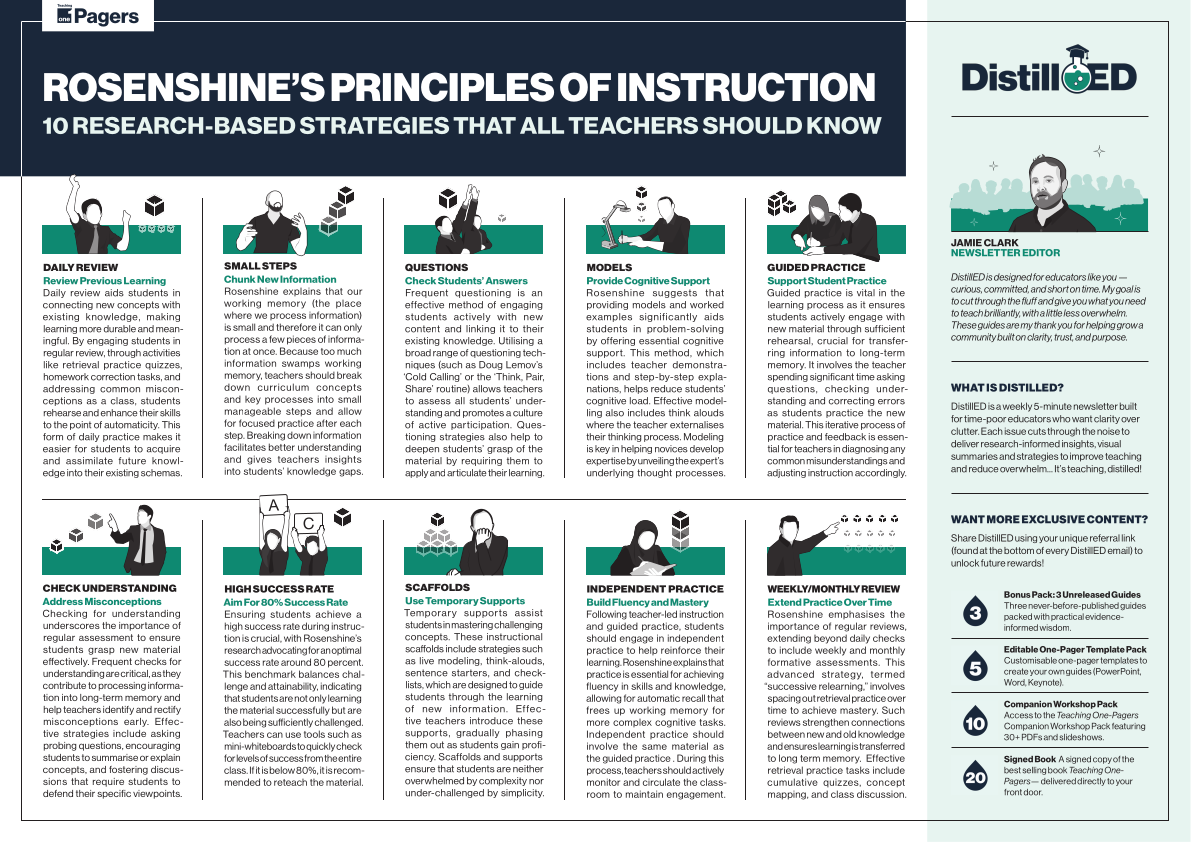
Staff have been learning about Rosenshine's Principles of Instruction:
- Our lessons start with a daily review; revisiting the concepts we have taught over the last few weeks or last year to bring the concept back to the front of the brain.
- New information is presented in small maanageable chunks.
- All literacy and maths lesson include a CFU (Check For Understanding) to ensure question what the studens already know, have retained and connected from another perspective. This then informs teachers whether or not students are ready to move forward in their learning.
- We provide models on the whiteboard or on poster paper so students understand how to approach a task.
- Independent practice time is given for students to practice new skills or work with new information. Sometimes this is repeated in order for students to become confident with the skill or knowledge and for them to become fluent learners (able to accurately and quickly recall the skill or information).
Do you have a question about learning and teaching at OLSC? If so, please feel free to email Bec and ask.
Bec Tardrew
Deputy Principal
Learning and Teaching Leader