Parent Corner






 Boroondara Park Primary School

How Do We Know How Your Child Is Going in Reading?
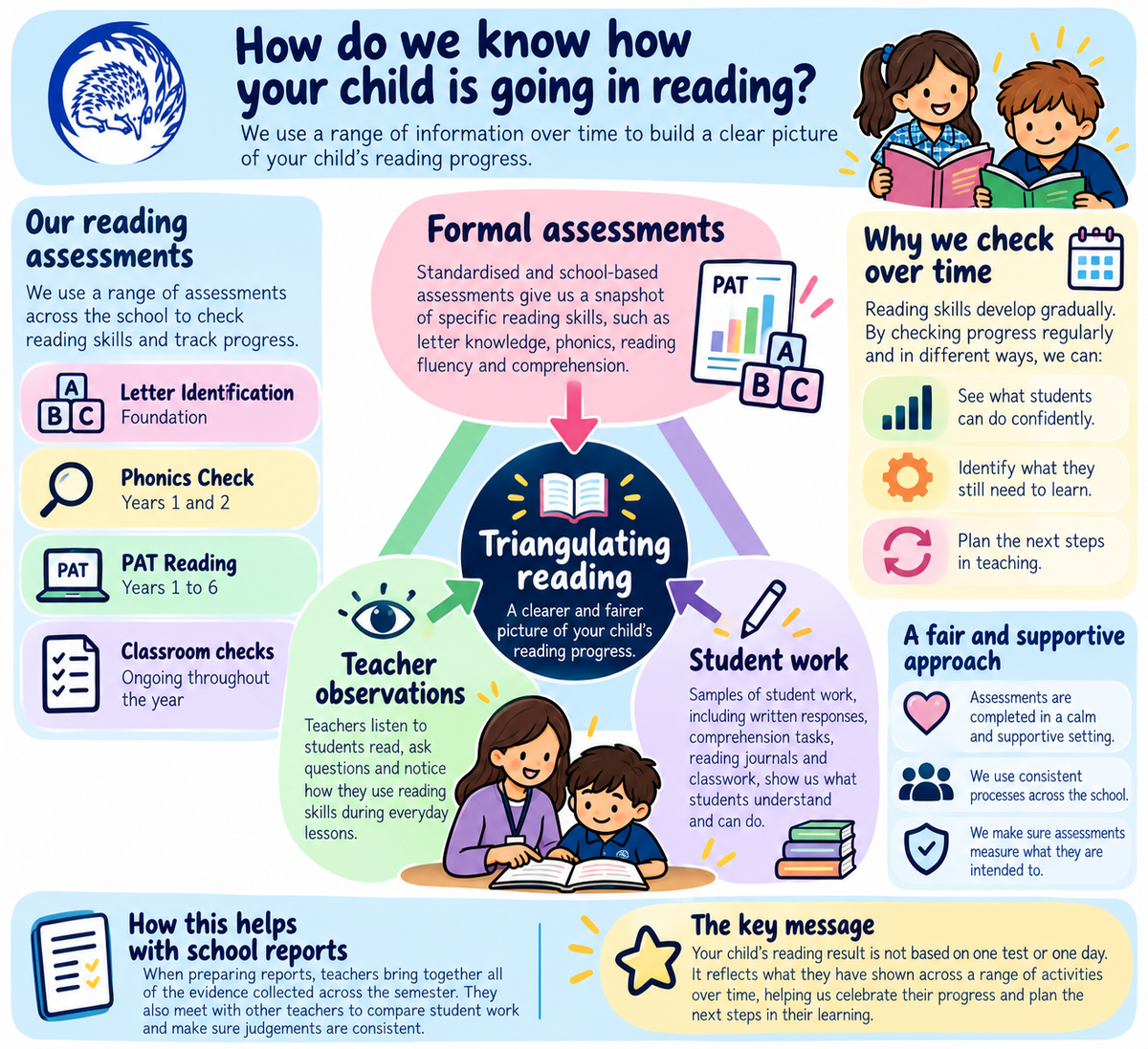
At Boroondara Park Primary School, we know that learning to read takes time, practice and support. Children develop their reading skills at different rates, so teachers use a range of ways to check their progress throughout the year.
A child's reading result is never based on just one test. Teachers bring together information from three main areas to build a clear picture of what each student knows and can do.
1. Reading Assessments
We use a range of assessments across the school, including:
- Letter Identification (Foundation): Checks how well students recognise and name letters.
- Phonics Check (Years 1 and 2): Checks how students use letters and sounds to read words.
- PAT Reading: Helps teachers understand students' reading skills and track progress over time.
- Classroom checks: Short activities, questions and tasks that help teachers see what students understand during lessons.
2. Teacher Observations
Teachers listen to students read, ask questions and notice how they use their reading skills during lessons. This helps teachers see what students can do independently and where they may need extra support.
3. Student Work
Teachers look at students' responses to texts, reading activities and written work. This shows how students understand and use their reading skills in different situations.
Why Do We Check Reading Throughout the Year?
Learning takes time. Students need regular chances to practise skills, revisit what they have learnt and use their reading skills with different texts.
Teachers check progress throughout the year, rather than relying on one day. Assessments are carried out fairly and in supportive settings so students have the best chance to show what they know.
This approach follows the Victorian Teaching and Learning Model 2.0, which highlights the importance of clear teaching, regular practice, checking understanding and giving feedback.
How Does This Help With School Reports?
When preparing reports, teachers look at assessment results, classroom observations and student work collected across the semester.
Teachers also meet with colleagues to compare student work and discuss reading progress. This helps them make fair and consistent decisions about each student's achievement against the Victorian Curriculum.
The key message for families: Your child's reading result reflects what they have shown across different activities and over time, not just how they performed on one test.
By using all this information, we can celebrate each child's progress and plan the next steps in their reading journey.