
Child Safety & Wellbeing

Bullying No Way Week
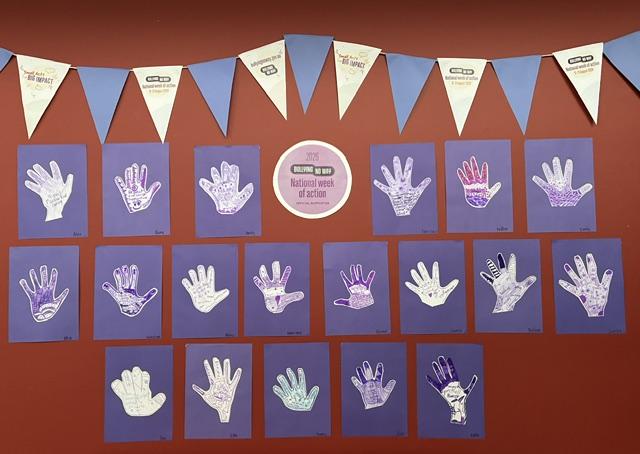
3/4D Bullying No Way Display
3/4D Bullying No Way Display
This week our students have been exploring bullying - what it is, what it is not, and how to seek help. This learning and our conversations are important, and will continue as we support our students to navigate relationships and their social interactions.
Adults play a vital role in teaching children to navigate different social encounters safely. This includes helping children to understand the differences between a person being rude, mean, or bullying, as well as effective strategies to manage the situation, including help seeking.
This article highlights the differences to strengthen our own understanding. Rude, Mean, or Bullying - Article
It is also a timely reminder for the adults who are supporting children, both at home and at school, that our young people are still learning how to safely and respectfully interact with others. Teachers are often helping young children to manage interactions where there has been a misunderstanding between children, especially those who are still learning how to communicate effectively.
For instance, a child who is attempting to be helpful by giving a friend a reminder is sometimes interpreted as 'bossy,' potentially leading to unfriendly responses and hurt feelings. Additionally, when children are learning to assert themselves, their volume, tone, facial expression and/or body language may be (or perceived to be) too strong, which can be confusing for children and lead to further conflict.
Supporting children through these 'misunderstandings' can help children to become more self-aware, resolve minor conflicts safely, and develop the skills to repair relationships.
For more information please visit https://www.bullyingnoway.gov.au/
The definition of bullying
There is a nationally agreed definition of bullying that all Australian schools use:
"Bullying is an ongoing and deliberate misuse of power in relationships through repeated verbal, physical and/or social behaviour that intends to cause physical, social and/or psychological harm. It can involve an individual or a group misusing their power, or perceived power, over one or more persons who feel unable to stop it from happening. Bullying can happen in person or online, via various digital platforms and devices and it can be obvious (overt) or hidden (covert). Bullying behaviour is repeated, or has the potential to be repeated, over time (for example, through sharing of digital records).Bullying of any form or for any reason can have immediate, medium and long-term effects on those involved, including bystanders. Single incidents and conflict or fights between equals, whether in person or online, are not defined as bullying.
Australian Government (2021)
Child Safety Team

Mr Steve. Miss Melissa. Miss Erin. Miss Renee.
Mr Steve. Miss Melissa. Miss Erin. Miss Renee.
Mr Steve, Principal: principal@sfxfrankston.catholic.edu.au
Miss Melissa, Mental Health & Wellbeing Leader: mel.s@sfxfrankston.catholic.edu.au
Miss Erin, Deputy Principal & Diversity Leader: diversity@sfxfrankston.catholic.edu.au
Miss Renee, Student Wellbeing Officer: renee.v@sfxfrankston.catholic.edu.au