Grade 6 Community News

Welcome back, Grade 6 families!
We hope everyone had a wonderful and relaxing break. It has been fantastic to welcome our Grade 6 students back for Term 4 and see them return with such positive energy and enthusiasm for their learning. We are looking forward to an exciting term filled with reading, writing, discussion, problem-solving and opportunities for students to share their ideas and build their confidence across all areas of learning.
English
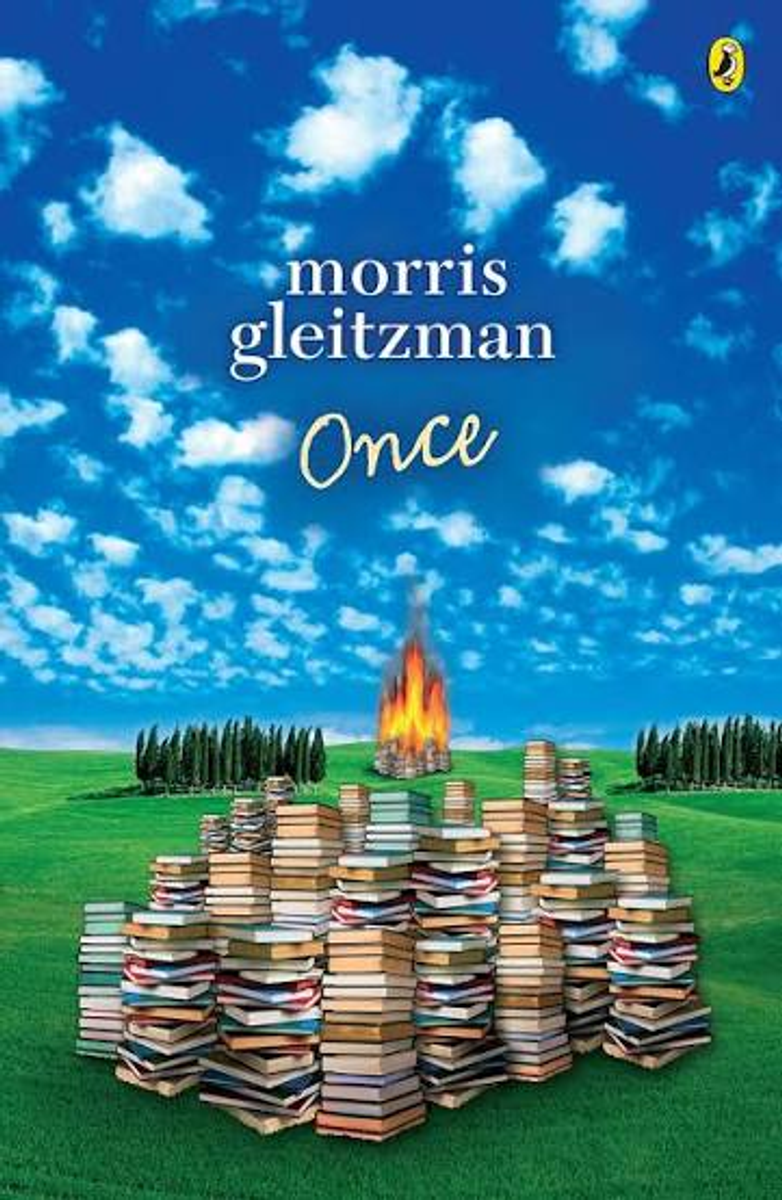
We are now in Week 4 of our class novel, Once by Morris Gleitzman. Through the novel, students are exploring the experiences of Felix, a young Jewish boy living in Poland during World War II.
As we read, students are developing their understanding of character, setting, historical context, relationships and perspective. We are encouraging students to look closely at Felix's thoughts, feelings and actions and consider how the events around him influence the way he sees and responds to the world.
In Writing, students will continue developing their ability to create informative and engaging texts. We will explore the structure and language features of information reports, with a focus on organising information clearly, selecting relevant details and using precise vocabulary.
Students will also continue applying their knowledge of relative clauses and appositives to add detail and information to their sentences and make their writing more engaging for the reader.
Alongside our novel study, students will continue with their Spelling Mastery routines while building their vocabulary by exploring and analysing unfamiliar words in context.
We are looking forward to a fantastic Term 4 and seeing our Grade 6 students continue to grow as confident readers, writers and communicators!
Maths
This week, students will explore how data can be represented in different ways to communicate information and enhance meaning. They investigated how data can be classified and organised, recognising variation within sets of information and considering what we might expect to happen based on patterns and evidence. Students explored concepts such as distribution and randomness, using tables, graphs and other visual representations to identify trends and make comparisons. Through practical investigations, students collected, interpreted and discussed data, considering how different representations can highlight different aspects of the same information. They will also develop their ability to make informal inferences by using evidence from data to make reasonable predictions and conclusions. Throughout the unit, students will be encouraged to question data, explain their thinking and recognise that data can tell different stories depending on how it is collected, organised and represented.
Next week, students will explore how fractions, decimals and percentages can be used to represent parts of a whole and different quantities. They will develop their understanding of equivalence and recognise that the same value can be represented in different ways, such as ½, 0.5 and 50%. Students will use their knowledge of the base-10 system to convert between fractions, decimals and percentages and develop efficient strategies for calculations. Through practical and real-world problem-solving activities, students will apply these representations to situations involving money, measurement, discounts, data and comparisons. They will also explain the strategies they use and justify why different representations are equivalent. By making connections between the three forms, students will build greater confidence and flexibility when working with numbers and develop efficient mathematical strategies for solving increasingly complex problems.
Humanities
This week, students are learning to describe the location of Australia, Vietnam and Greenland and explain the geographical factors that influence each country. They will use maps, globes and geographical tools to identify each country’s position in relation to the Equator, hemispheres, oceans and other significant places. Students will investigate how geographical features such as climate, landforms, waterways and natural resources influence the way people live, work and interact with their environment. They will compare the three countries and consider how their different locations and physical characteristics contribute to differences in climate, settlement, agriculture, transport and lifestyles. Through map-reading, research and discussion, students will develop their ability to use geographical language and interpret information from a range of sources. Students will also begin to recognise the connections between people, places and environments and understand how geography can influence the opportunities and challenges faced by different communities around the world.
Next week, students are learning to identify and compare the physical features and landscapes of Australia, Vietnam and Greenland. They will investigate how mountains, rivers, coastlines, deserts, forests, islands and other landforms contribute to the unique environments of each country. Students will also explore the natural resources found in each country, including minerals, agricultural products, fisheries and energy resources. They will consider how these resources are used locally and how they contribute to trade and economic activity. By comparing Australia, Vietnam and Greenland, students will develop an understanding of how physical geography and natural resources can influence the ways people live, work and interact with their environment. Through maps, images, research and geographical data, students will develop their ability to describe landscapes, make comparisons and explain connections between the environment, resources, trade and human activity.
Thank you for your continued support,
PLC 6