Stand Up Project
Behaviours ignored are behaviours accepted.
All too often we allow inappropriate actions and behaviours to occur because we wait for someone else to step in and call it out. When everyone thinks this way, no one acts and we create a culture where such actions and behaviours are accepted. This is the Bystander Effect, and we see this play out in many settings.
The Stand-Up Project (SUP) aims to break this cycle by upskilling our students to become an Upstander rather than a Bystander. An Upstander identifies inappropriate behaviours, in particular bullying behaviours, and takes action.
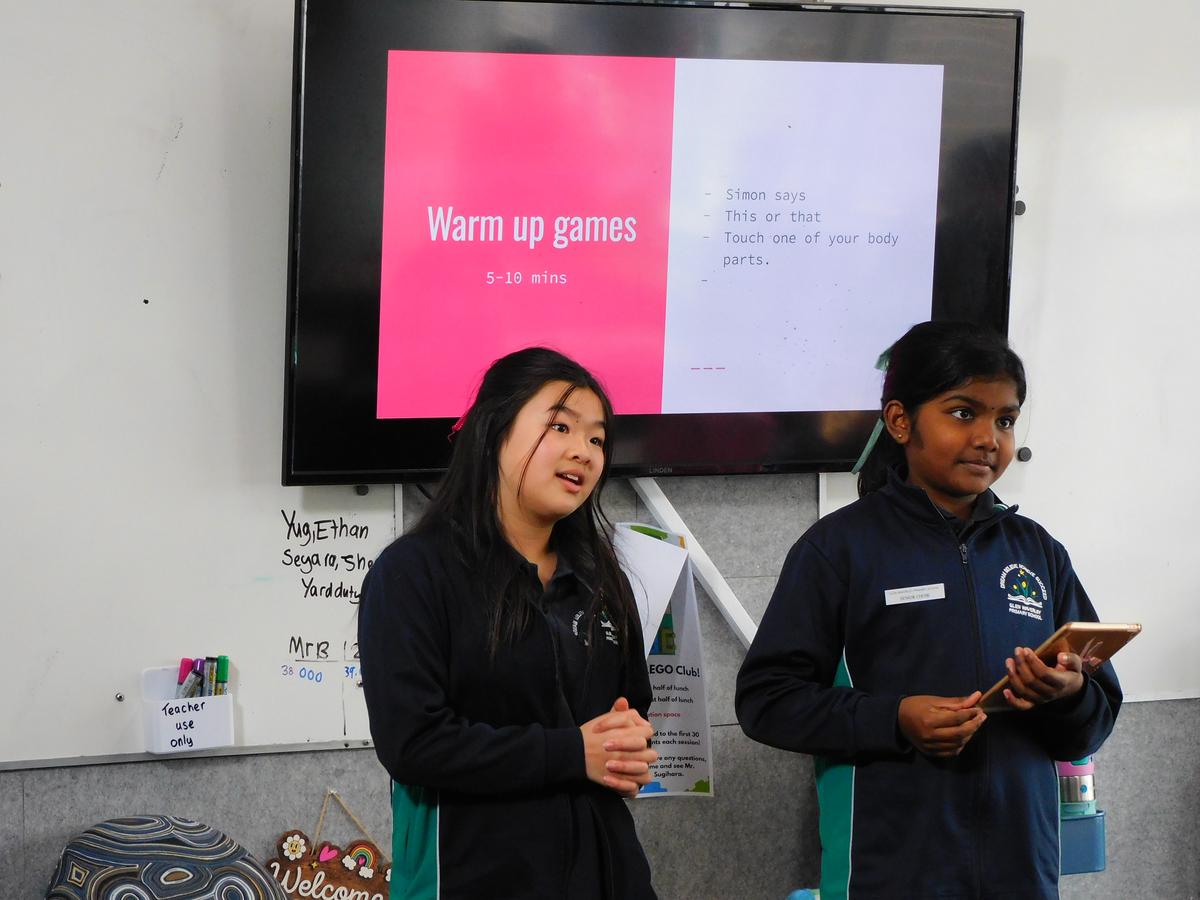
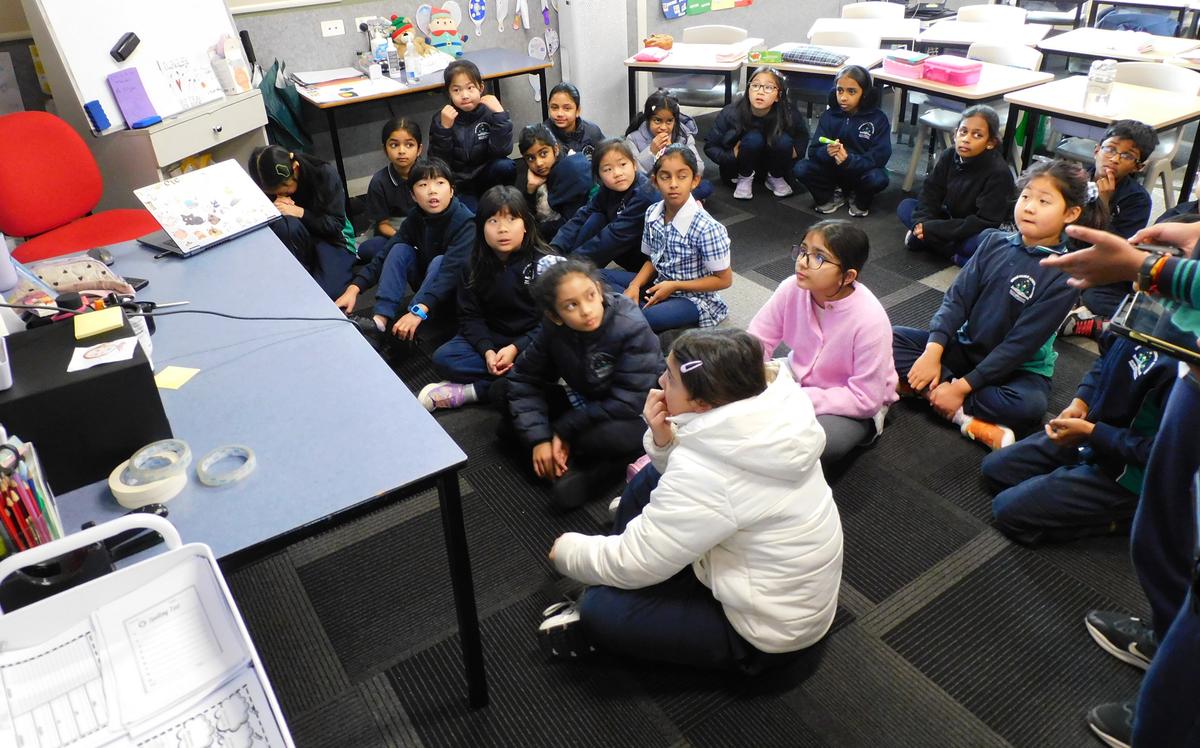
SUP is a student-driven wellbeing program, where our Year 5 and 6 SUP student leaders deliver lessons on how to be an Upstander to their younger peers. The lessons are created by the student leaders based on issues in the school that are important to them. Throughout Term 1 and 2, the SUP student leaders have been supported by Zach and Maria from The Stand-Up Project team, as well as Mrs. Kaur (Year 5) and Ms. Parish (Year 6), to learn about being an Upstander and designing the learning program. They even presented to the parents and teachers about their learning!
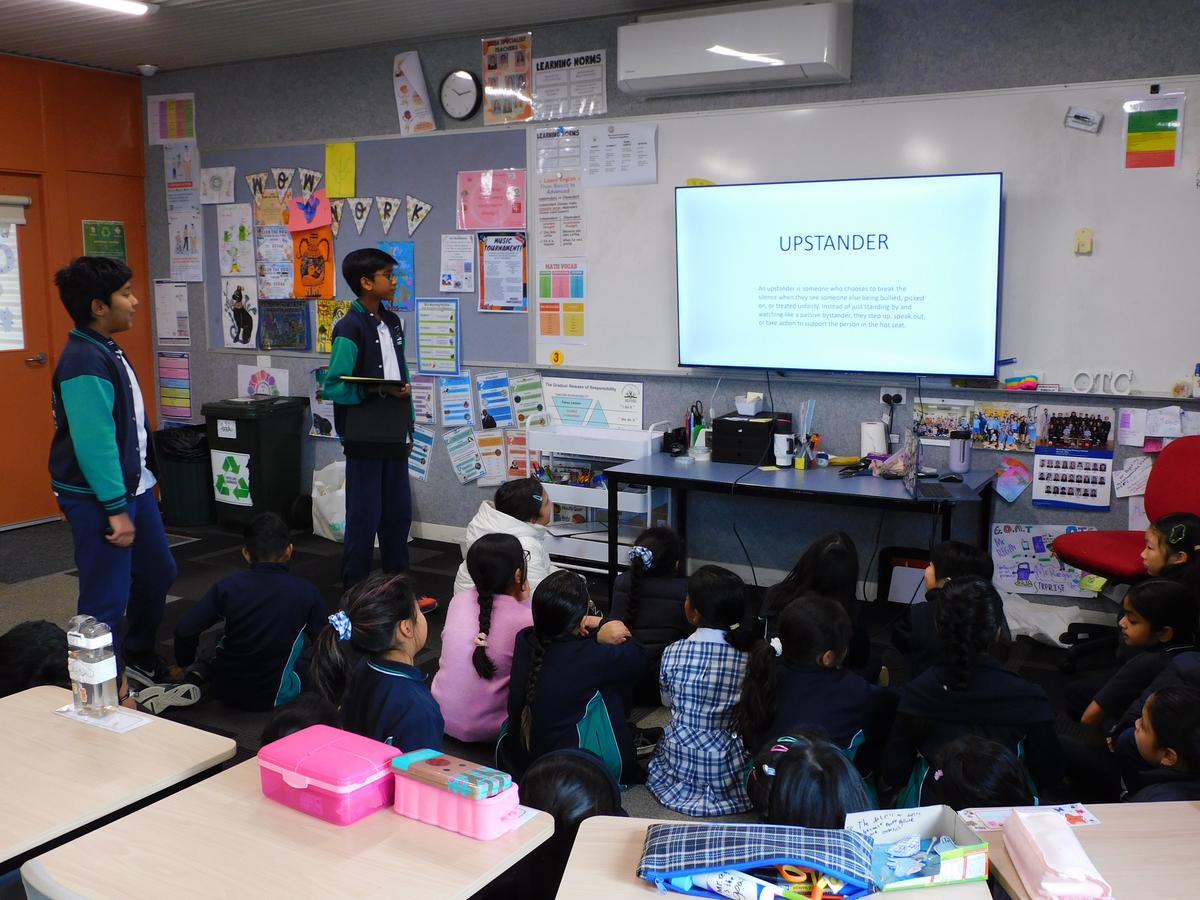
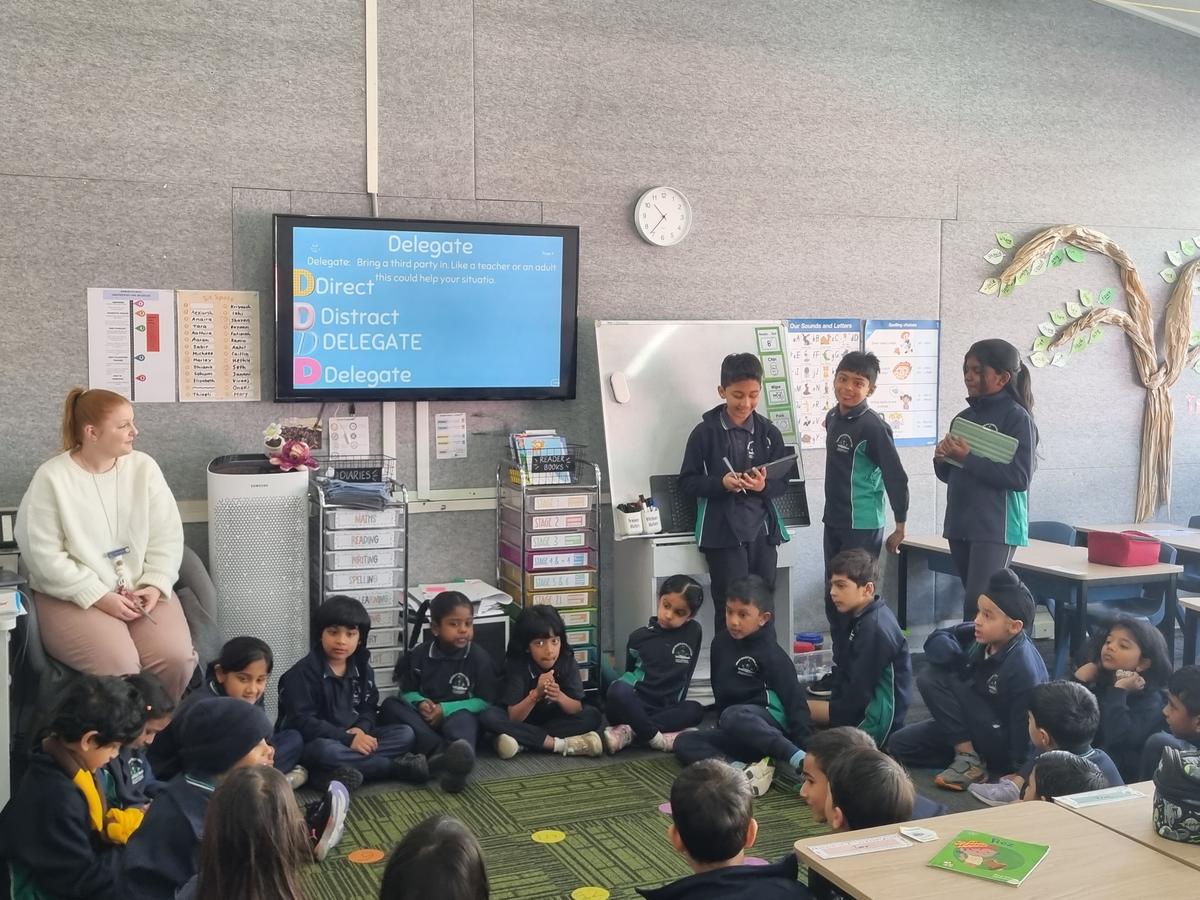
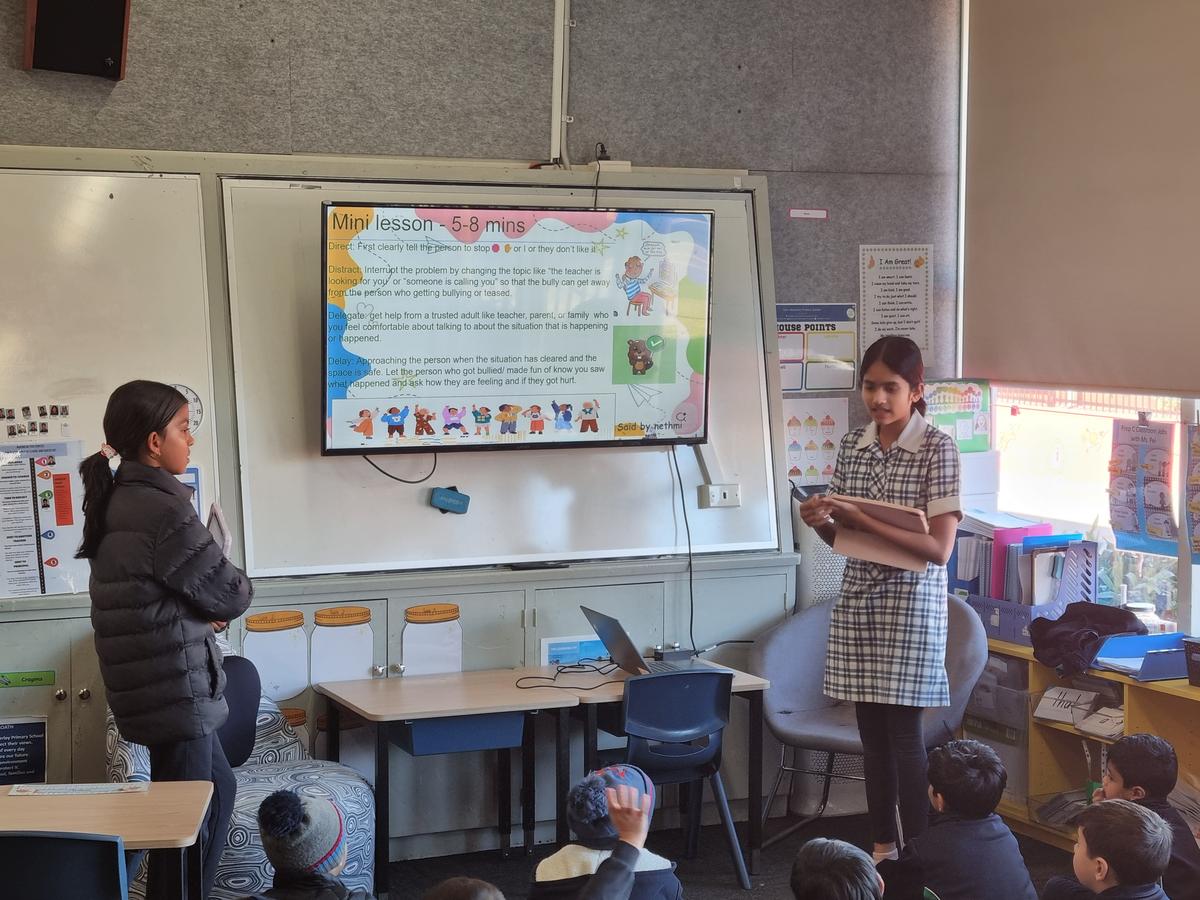
Now in Term 3, they have begun to teach their younger peers, and they have been absolutely fantastic! The SUP student leaders presented with confidence and deep knowledge of the topic. Both students and the teachers were blown away!
Between the two lessons taught so far, the SUP student leaders have covered the following topics:
- The difference between an Upstander and a Bystander,
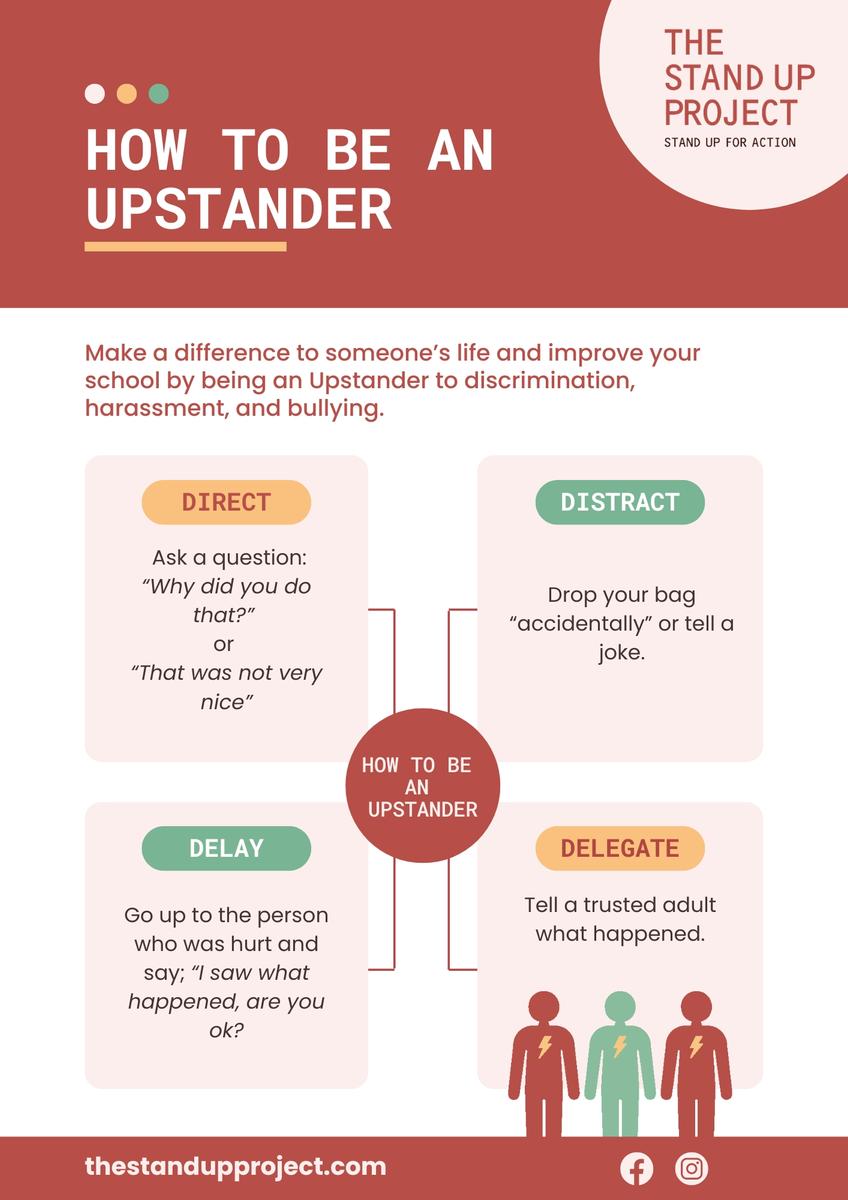
- How to be an Upstander,
- The 4Ds of Upstanding:
- Direct – assertively calling out the behaviour through phrases such as “Why did you do that?” or “That was not very nice”.
- Distract – shift the attention away from the target to stop the bullying behaviours.
- Delay – sometimes it is unsafe to call out the behaviour on the spot, so you may need to delay your response and focus on supporting the target who has been hurt.
- Delegate – look for support from another person, often a trusted adult who can handle the situation for you.
- The difference between Friendship Fires, Mean on Purpose and Bullying:
- Friendship Fires – A disagreement between friends. This is a normal part of a relationship and should be resolved respectfully.
- Mean on Purpose – A stand alone incident when someone intentionally hurts another person’s feelings.
- Bullying – A repeated and ongoing situation where someone uses words and/or actions to hurt others on purpose.
Here are some of the things the students have learnt so far…
- Maddie Prep: I learnt what an Upstander and a Bystander is. An Upstander is when you stand up and help people. A Bystander is when you stand there and just watch people get hurt.
- Mia Year 1: We learnt how to be helpful. When someone is upset, we can be an Upstander and ask them, "What's wrong?"
- Tatiana Year 2: We learnt about Bullying. It's when someone does something rude to another person and it happens all the time.
- Callan Year 3: We learnt the about the 4Ds - Delay, Direct, Delegate and Distract, and the strategies to be an Upstander so we can always support the target who is getting bullied.
- Ved Year 4: I learnt about the Bystander Effect. It is when you don't stand up against something and then the bullies become more confident to continue because other people also don't stand up. So, if something like this is happening, you need to stand up to the bully and tell the teacher.
We encourage you to continue this conversation at home. Some prompts you might like to use are:
- Tell me how you were Upstander today.
- Did you notice someone being an Upstander? What did they do?
- If your child complains about a peer ask them, “Is it a Friendship Fire or Mean on Purpose? How do you know?”
- Share your personal experiences – normalize being an Upstander and show your child that even adults need to be Upstanders too.
At Glen Waverley Primary School, we will continue to teach and reinforce these important and valuable life skills through our Wellbeing programs and initiatives. If you have any questions or concerns, please feel free to reach out to me on ryo.sugihara@education.vic.gov.au or chat to me in person at school!
Ryo Sugihara
Mental Health and Wellbeing Leader