PRINCIPAL'S PEN
News from Glen Seivers
College Principal

PRINCIPAL'S PEN
News from Glen Seivers
College Principal
“It is not enough to love the children; it is necessary that they are aware that they are loved." St John Bosco
This quote was shared by keynote speaker Professor Br David Hall at the recent Marist Schools Australia Biennial Conference in Perth. It immediately resonated with me.
At first glance, the quote seems simple. Yet it captures one of the most profound responsibilities entrusted to schools and challenges us to think deeply about the purpose of education.
It is not enough for teachers to care about their students. It is not enough for schools to provide opportunities, support and guidance. Young people need to know they are valued. They need to know they matter. They need to experience, through words and more importantly through actions, that there are adults who genuinely care for them and want them to flourish.
Over the past fortnight, our college community has provided countless examples of love in action. Our Year 10 students returned from their camp at Karma Waters after five days of challenge, perseverance and growth. At the same time, our Year 11 students participated in a retreat that encouraged reflection, spirituality and a deeper understanding of leadership, themselves and others. These important experiences can only happen because staff willingly step away from their own families and personal commitments to accompany our young men. Their presence sends a message: You matter enough for us to be here with you.
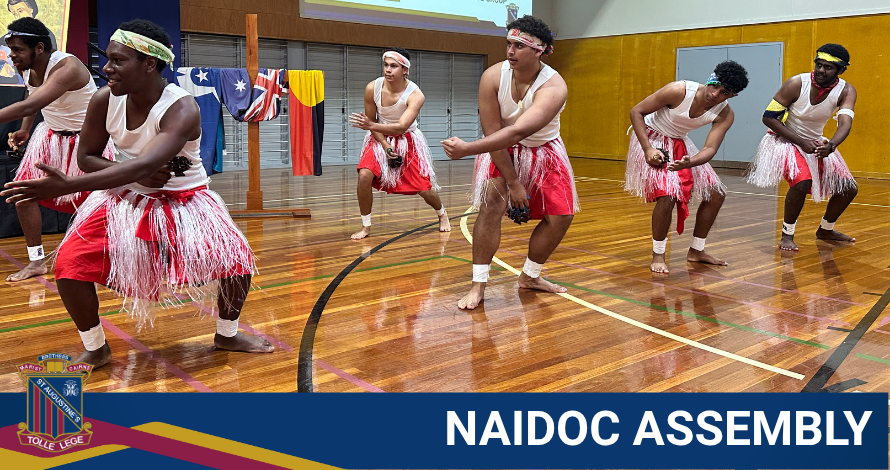
The same can be said of our recent NAIDOC Assembly. Through the generosity of guest speakers Stephen Ung and Louise Manas, our students were invited to reflect on culture, identity, resilience and belonging. Inspirational, traditional dancing, led by JJ Parsgaard, celebrated the rich cultural heritage of many of our young men and highlighted the deep connection between Saints and the Torres Strait community. While this year's NAIDOC theme celebrates 50 Years Deadly ["deadly" here means excellent or impressive], the relationship between St Augustine's and Aboriginal and Torres Strait Islander students stretches back much further. For example, Stephen Ung’s family have been associated with the school for more than 60 years.
Our participation in Relay for Life provided another powerful lesson. The more than $12,000 raised by our students reflected genuine compassion for those whose lives have been touched by cancer. In a world that often celebrates individual achievement, our boys experienced the importance of standing alongside others, serving their community and contributing to a cause greater than themselves.
Saints' young men are surrounded by staff who show through their daily actions that they are valued, supported and cared for. They see:
The most important lessons about character are rarely delivered through a PowerPoint presentation or assessment task. They are learned through relationships, example, and presence, one of the Marist values.
When Old Boys visit, they often speak about camps, sporting teams, retreats, assemblies and friendships. More importantly, they mention the teachers who believed in them, encouraged them, challenged them and helped them become the men they are today.
That is why recent events matter so much.
Behind every college activity stand dedicated staff who continue to invest in the lives of our young men. Through their presence, generosity and witness, they communicate something every student needs to hear: You belong. You matter. You are valued.
In a world where many young people are searching for identity, purpose and connection, perhaps there is no more important message a school can provide.