
Year 5/6 Bulletin

Learning Intention
To identify the rule or pattern within words
Overview of the lesson
This week, students have begun their spelling sessions with a Spelling Sprint to build fluency, memory and accuracy. Students briefly studied a set of Grade 5/6 spelling words before attempting to recall and spell as many as possible from memory. They then self-checked their work and selected a challenging word to practise further, focusing carefully on the tricky part of its spelling.
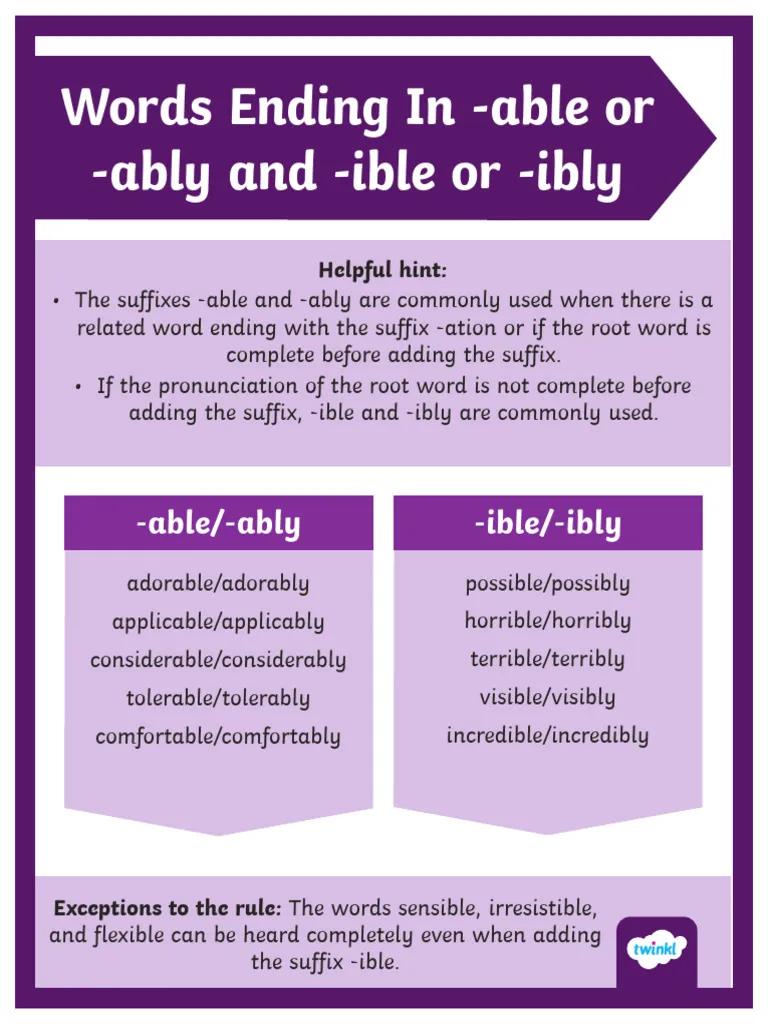
Following the fluency activity, students have revised the suffixes -able and -ible, exploring how these endings can change the meaning and spelling of words. They have identified common patterns, discussed the meaning of each suffix, and examined spelling changes in words such as notice → noticeable, value → valuable and rely → reliable. Students have also practised sorting and analysing words ending in -able and -ible, explaining word meanings, identifying additional examples, and applying their understanding through activities from their individual spelling lists and the Spelling Choice Board.
How you can support your child at home
Y can support their child at home by briefly practising both spelling fluency and the -able/-ible pattern.
- Give your child a short Spelling Sprint using 8–10 words: show the words for about 30 seconds, hide them, then ask them to write as many as they can remember.
- Ask your child to explain the difference between words ending in -able and -ible and identify the suffix in words they see while reading.
- Encourage them to look for spelling changes when suffixes are added, such as notice → noticeable or rely → reliable.
- Choose a few challenging words from their spelling list and practise them in sentences rather than only copying them.
- Ask, “What part of this word is tricky?” and have your child underline or circle that section before practising the word again.
Thank you for your continued support!
Year 5/6 Team
Allira.Zeneli@education.vic.gov.au