
Digital Download
Every Student should learn to code 5th Edition
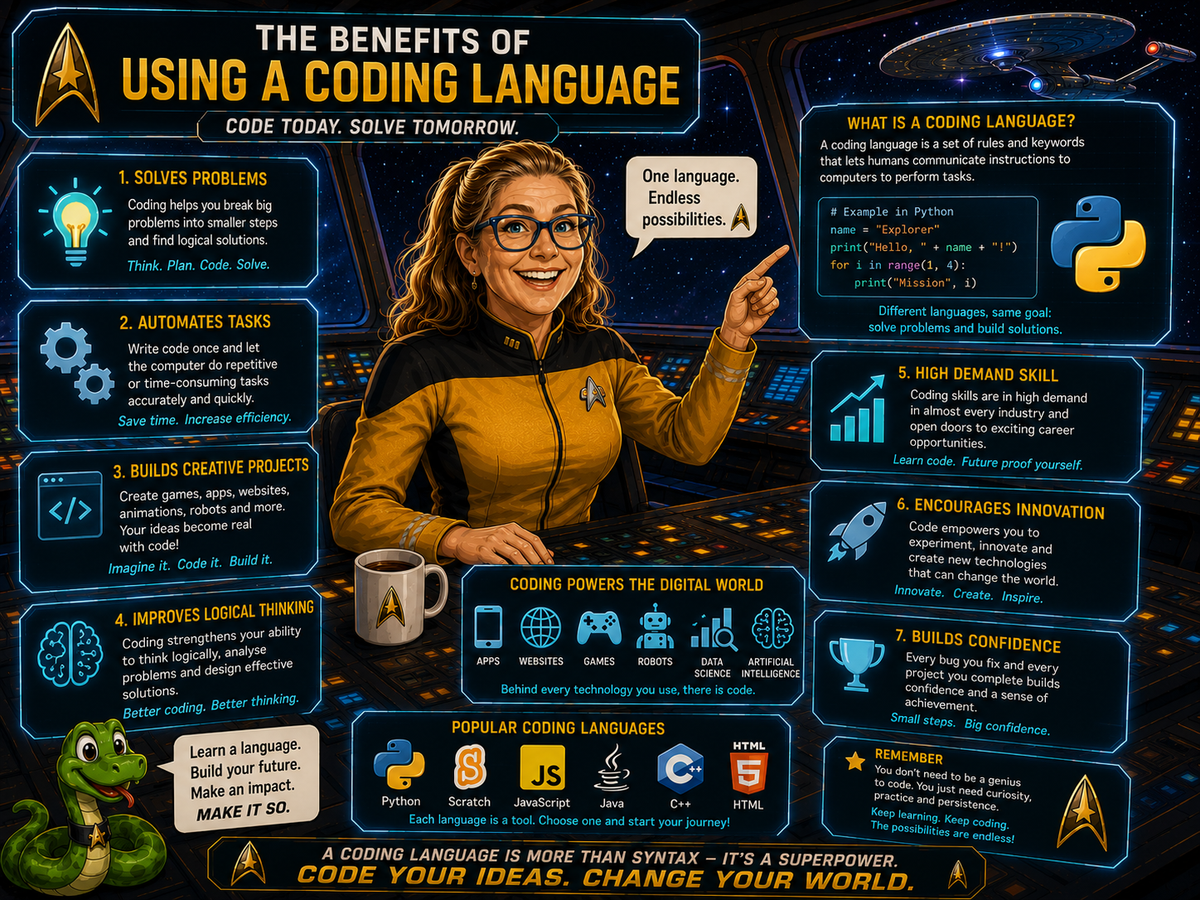
Walk into almost any workplace today — a hospital, a farm, a design studio, a sports team's analytics office — and you'll find code quietly running in the background. Coding isn't just for people who dream of working at a tech company anymore. It has become a basic literacy, much like reading, writing, and maths, and it's reshaping what it means to be prepared for the future.
Here's why it matters for every student, not just the ones who already love computers.
1. Coding Teaches You How to Think, Not Just What to Type
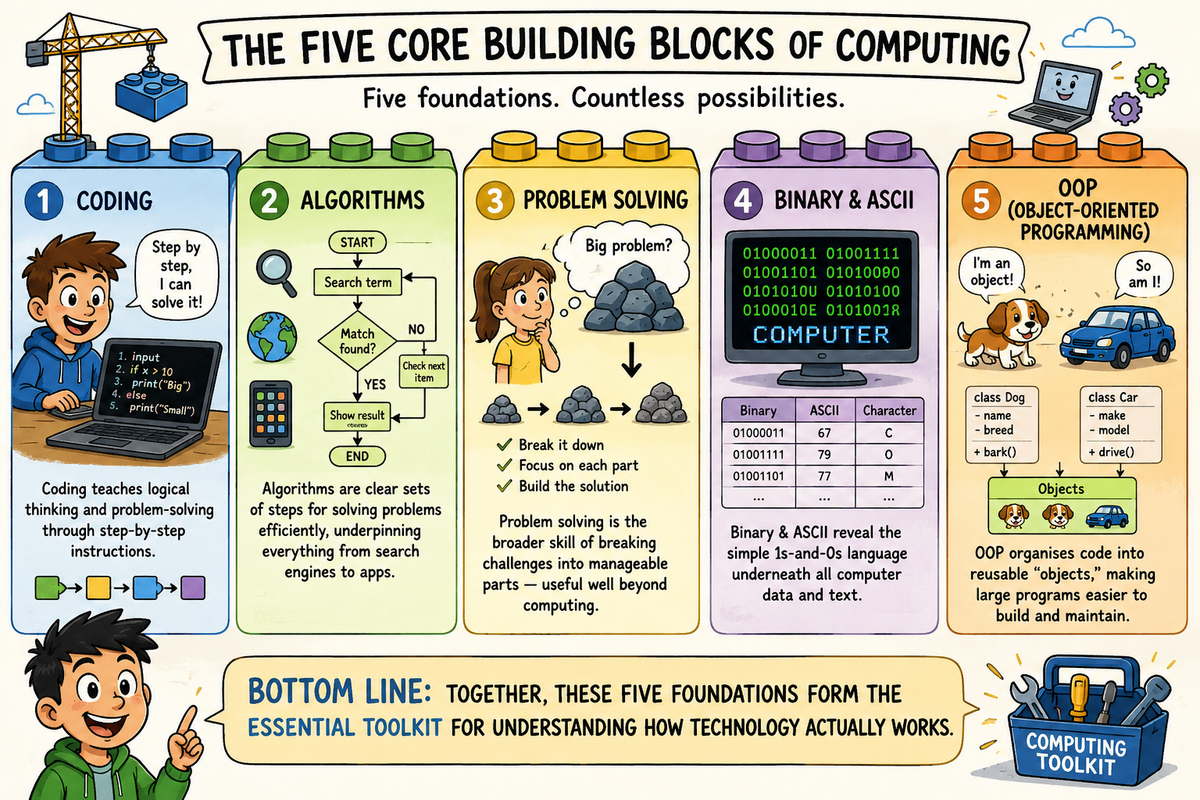
At its heart, coding is problem-solving. When students learn to code, they learn to break a big, messy problem into small, manageable steps — a skill called computational thinking. This isn't just useful for building an app; it's useful for planning an assignment, organising a group project, or figuring out why a recipe didn't turn out right. Coding trains the brain to look for patterns, test ideas, and learn from mistakes without giving up.
2. Mistakes Are Part of the Process
One of the most valuable lessons coding teaches is resilience. Code rarely works perfectly on the first try. Students who code learn to expect errors, calmly find them (this is called debugging), and try again. This builds a growth mindset that carries over into every subject and every part of life — the belief that abilities can be developed through effort and persistence.
3. It Opens Doors — In Every Career
You don't need to become a software engineer to benefit from coding skills. Journalists use code to analyse large sets of data. Doctors use it to interpret medical scans. Musicians use it to produce and edit tracks. Farmers use it to run automated irrigation systems. Small business owners use it to build websites and manage online stores. Understanding how technology works — even at a basic level — gives students an advantage no matter which path they choose.
4. Coding Turns Students from Consumers into Creators
Most young people spend hours every day using apps, games, and websites built by someone else. Learning to code flips that relationship. Instead of just scrolling, students start to ask, "How was this built? Could I build something like this?" That shift — from consumer to creator — is empowering. It gives students a genuine sense of ownership over the technology that surrounds them.
5. It Builds Skills for an AI-Driven Future
As artificial intelligence becomes part of everyday work, understanding the basics of how systems, data, and logic fit together is more valuable than ever. Students who understand coding are better equipped to work with AI tools thoughtfully and critically, rather than simply relying on them — because they understand what's happening under the hood.
Getting Started Doesn't Require a Computer Science Degree
Coding today is more accessible than ever. Whether it's through block-based tools, web development, robotics, or app design, there's an entry point for every interest and every skill level. The goal isn't to turn every student into a professional programmer — it's to give every student the confidence and capability to engage with the digital world on their own terms.
Encourage your student to give coding a try this term — even fifteen minutes of exploration can spark a new way of thinking.
Ms Cathie Webber
Information Technology and Maths Teacher