Health & Wellness


























 Blackburn Primary School

Thunderstorm Asthma – be prepared this pollen season
Grass pollen season in Victoria usually runs from October to December. During this time, asthma and hay fever symptoms can get worse. There is also an increased risk of thunderstorm asthma.
Ten years ago, Melbourne experienced the largest thunderstorm asthma event in the world. Thunderstorm asthma can be sudden and serious. It can be life-threatening, especially if a person’s asthma or hay fever is not well controlled.
Managing asthma and allergies matters. During this pollen season, there are some things you can do to protect yourself and your family:
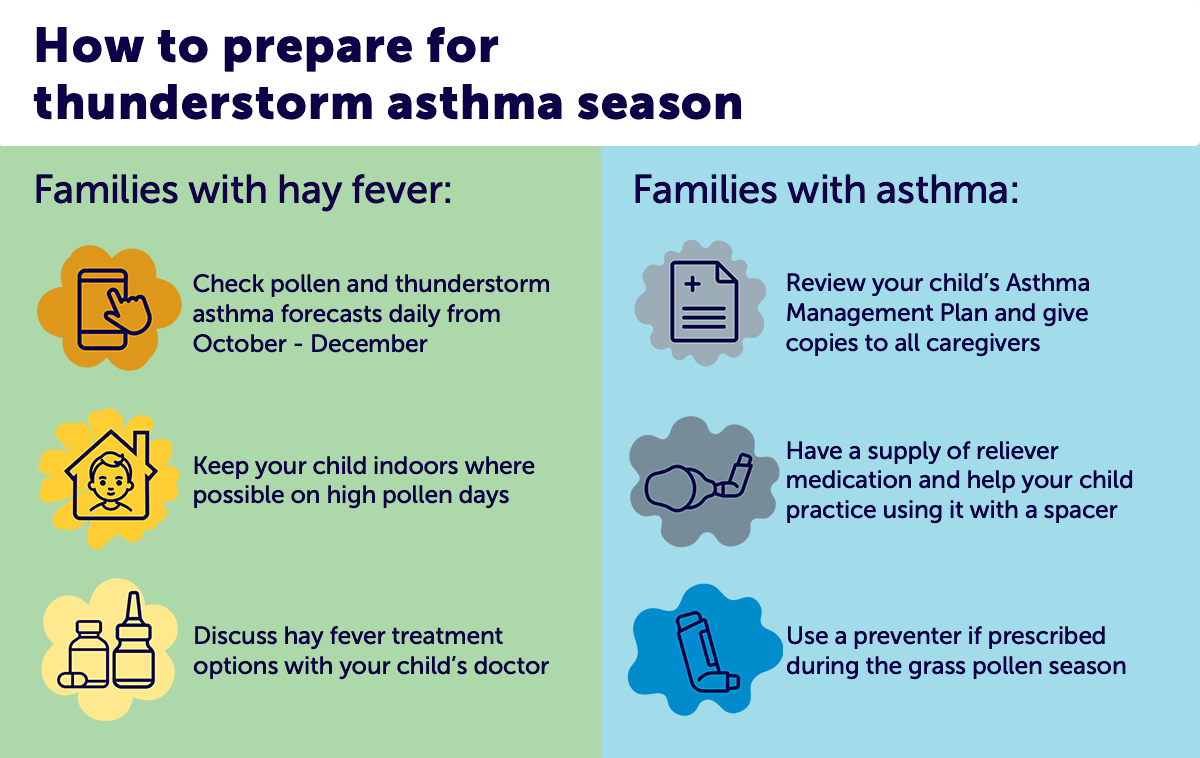
- If your child has ever had asthma, talk to your doctor about your Asthma Action Plan and to make sure symptoms are well controlled.
- If your child has hay fever, talk to your pharmacist or doctor about a hay fever plan and check if you need an asthma reliever puffer.
- If your child has cough or wheeze with hay fever, talk to your doctor to make sure they don’t also have asthma.
- Take asthma medication as directed by your doctor, as the good control of symptoms can prevent thunderstorm asthma.
- Follow the VicEmergency website or app. Where possible, avoid being outside during thunderstorms – especially during the winds that come before the storm. Go inside and close your doors and windows. If you have your air conditioning on, turn it to ‘recirculate’.
- Know asthma first aid. If you are not sure if someone is having an asthma attack, you can still use a blue asthma reliever puffer.
Find out more
For more information, speak to your doctor. You can also:
- speak with an asthma educator on 1800 ASTHMA (1800 278 462). This is a free service from 9 am to 5 pm, Monday to Friday
- refer to Better Health Channel. This includes information in different languages.
- Royal Children's Hospital Fact Sheet
From Asthma Australia:
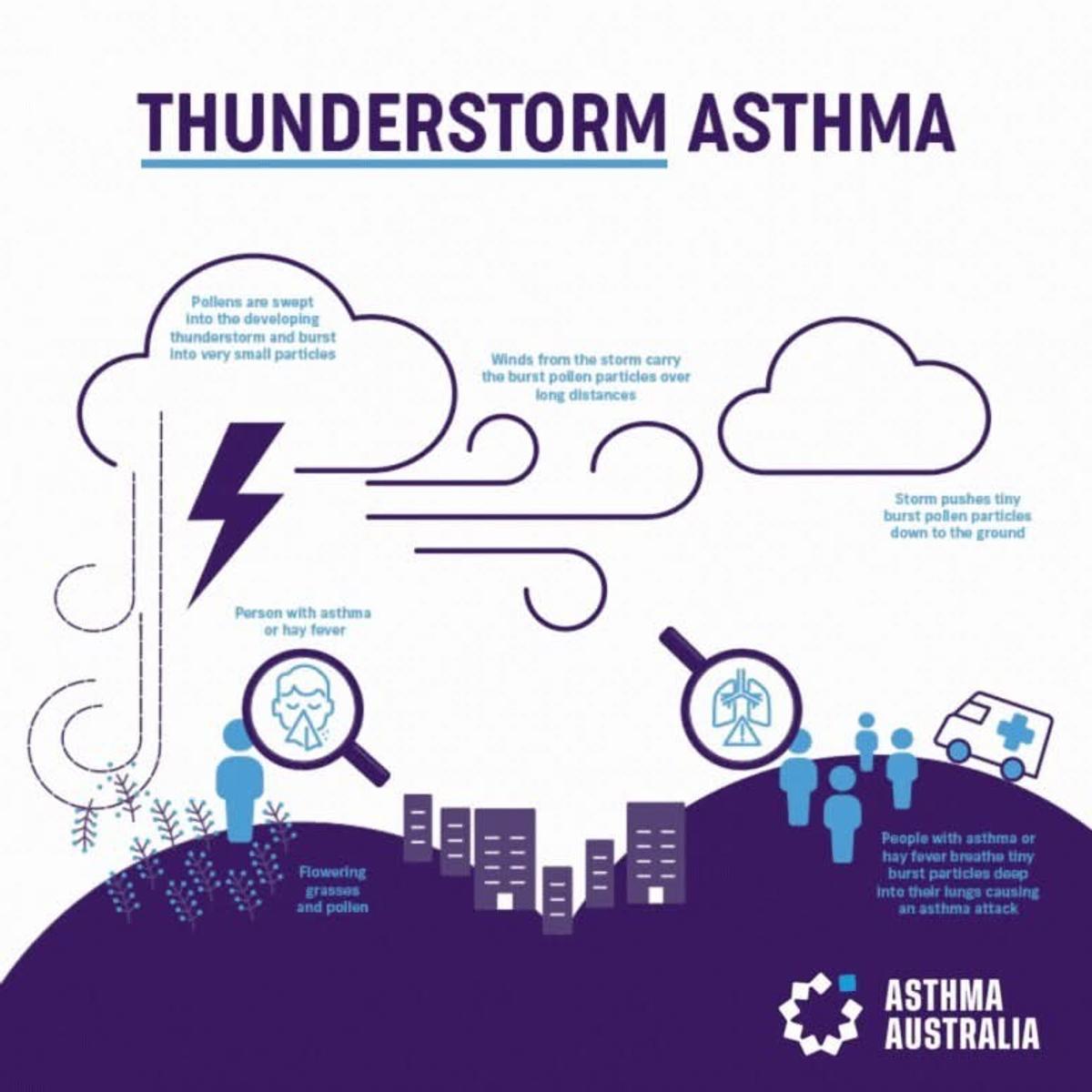
Thunderstorm asthma can happen at any time during the warmer months.
Thunderstorm asthma events are thought to happen when high levels of grass pollen combine with a certain type of thunderstorm.
During these storms, pollen can be swept into the air and burst into tiny pieces. When breathed in, these particles can travel deep into the lungs and trigger an asthma flare-up or attack.
You don't need to have asthma to be at risk. People with seasonal hay fever or a history of asthma can also be at higher risk.
Thunderstorm asthma can happen quickly, so don't wait for a storm to get prepared.
Find out what you need to know about thunderstorm asthma here: https://buff.ly/b2JFXga
From Royal Children's Hospital:
Key points
- Thunderstorm asthma is triggered by high pollen levels and thunderstorms.
- The condition is rare but can be sudden, serious and life-threatening.
- Thunderstorm asthma is more likely to affect children with asthma or hay fever, but any child can get it.
- Watch the pollen count and thunderstorm asthma forecast during the spring.
- If the forecast predicts thunderstorm asthma conditions, try to keep your child inside, close your doors and windows and set your air conditioner to recycle air when in use.
- Be alert for signs of asthma, such as difficulty breathing, tightness in the chest, wheezing and coughing.
- If your child has asthma, follow their Asthma Action Plan.
- Call an ambulance (000) immediately if your child struggles to breathe or talk.
Fact Sheets
- Kids Health Info Thunderstorm Asthma: https://www.rch.org.au/kidsinfo/fact_sheets/thunderstorm_asthma/
- Kids Health Info Asthma: https://www.rch.org.au/kidsinfo/fact_sheets/asthma/
- Kids Health Info Hayfever: https://www.rch.org.au/kidsinfo/fact_sheets/Hay_fever/