
Teaching at BPPS
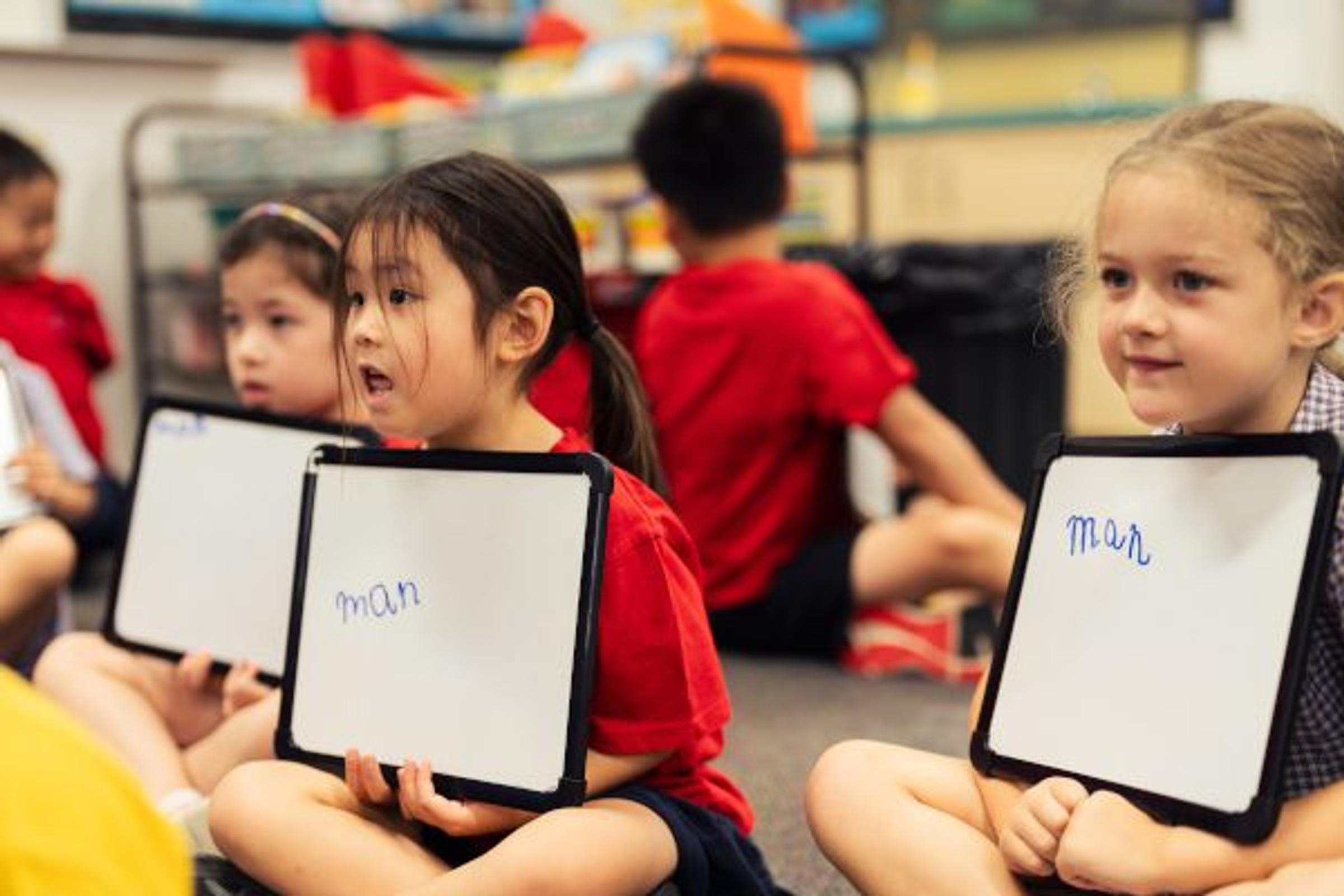
How are students given choice and agency in their learning?
In the Victorian Curriculum 2.0, student agency, voice, and choice are frameworks embedded within the Victorian Teaching and Learning Model 2.0 (VTLM 2.0) and the Framework for Improving Student Outcomes (FISO 2.0).
We want our students to become confident and independent learners, but this doesn’t mean simply letting them choose whatever they want to do. Instead, we give students clear guidance and support while also providing opportunities for them to make choices and take responsibility for their learning.
We combine explicit teaching, where teachers clearly explain and model new learning, with opportunities for students to have a say in how they learn and demonstrate their understanding.
We do this across Foundation to Year 6 in a number of ways:
1. Activating the Four Capabilities
The Victorian Curriculum 2.0 outlines specific skills that allow students to exercise agency. In the classroom we explicitly teach these capabilities so students know how to make informed choices.
Critical and Creative Thinking: Students track their own thinking using metacognitive strategies. In Foundation to Grade 2, this looks like expressing preferences based on past experiences. By Grade 5/6, it involves using visual models to map out their own design processes.
Personal and Social Capability: Students learn to monitor their emotional responses to tasks, set goals, and navigate collaborative learning dynamics independently.
Intercultural Capability: Students analyse common concepts across cultures. In an integrated unit (for example A Culture of Respect), a student might select a specific cultural practice (e.g., Japanese origami or a Scottish highland dress) to research. They choose their focus question (e.g., "How does this practice build community connection?") and present their findings through a paper or digital presentation.
- Ethical Capability: When investigating a topic such as plastic use in the canteen, students are given opportunities to choose how they want to approach the issue and share their ideas. For example, students might focus on the impact of plastic on wildlife or on our responsibility to keep our school environment clean. They can then choose how they would like to share their ideas. This might include presenting their solution to our Junior School Council who will raise it with our school leadership team, or they may become involved in creating an awareness campaign for younger students through the Keen Green Team. This gives students a voice in their learning and encourages them to think critically, make decisions and take action on issues that matter to them.
2. Supported Application in Victorian Teaching and Learning Model 2.0
Under the Victorian Teaching and Learning Model 2.0 (attached above), agency is positioned within the "supported application" phase. After a teacher provides high-impact, explicit instruction, students choose how they practice:
Tiered Tasks (Differentiation): In Mathematics, we often offer a "Mild, Spicy, or Hot" choice where students assess their own confidence level and select a starting task that challenges them appropriately.
- Open-Ended Text Creation: In English, while the structural focus might be on a specific genre (e.g., persuasive writing), students choose a topic they care about, such as school rules or environmental protection.
3. Scaffolded Choice
In the classroom, we scaffold choice based on the developmental readiness of students from Foundation to Grade 6. Examples of this in maths are:-
Foundation to Year 2 :
- The Math Goal: Connect number names to physical quantities up to 20.
- How Explicit Teaching Framework Aligns: Following whole-class counting exercises, students go to independent application.
The Student Choice: The teacher limits options to an Either/Or Choice using concrete materials.
The choice: "To practice counting to 15 today, do you want to build a tower using exactly 15 MAB blocks, or do you want to thread 15 beads onto a string?"
Why this works: The mathematical parameters are non-negotiable (reaching the number 15), but the student exercises agency by picking the concrete medium that engages them most.
Years 3 and 4:
- The Math Goal: Build the foundations for statistical inquiry by choosing data questions based on interests.
- How Explicit Teaching Framework Aligns: The teacher explicitly models how to compile a frequency tally table and translate it to a bar chart.
The Student Choice: The teacher introduces the activity and there is a choice.
The choice: Students choose their own driving question from an approved list (e.g., "What is the most popular footy team in our classroom or year level?" or "What is the most common shoe size in Year 3/4?"). They are also given the agency to choose how they display the data they gather.
Why this works: Students are still learning the important maths skills they need, but they have some choice in how they use those skills. This makes the learning more meaningful and interesting to them.
Years 5 and 6
- The Maths Goal:Students use maths to solve real-life problems involving area, perimeter, angles, measurement, time and money.
- How Explicit Teaching Framework Aligns: Teachers explicitly teach and model the maths skills students need. For example, teachers may show students how to calculate area and perimeter, measure and use angles, convert measurements and work with money and decimals.
The Student Choice: Students then use these skills in a real-world project where they have choices to make.
The choice: “Design and cost your own mini golf course within a set budget.” Students decide on the size and shape of their mini golf course and use their knowledge of area, perimeter and angles to create their design. They calculate how much synthetic grass they would need and work out the cost of the materials, making sure they stay within their budget. Students can make their own decisions about the layout, number of holes, obstacles and overall design of their course. They can also choose how to present their final design, such as a scale drawing.
Why this works: Students are using the maths skills they have been taught to solve a realistic problem. They have opportunities to make decisions, compare options, work within a budget and explain why they made their choices. This helps students see how maths can be used in everyday life.
By combining clear, explicit teaching with meaningful opportunities for choice, we help students become active and confident participants in their own learning. As students move through the school, they are gradually supported to make more decisions, take greater responsibility and apply their learning in ways that are meaningful to them.
Julie Tainsh
Learning Specialist - Curriculum
Grade 5/6 Teacher