
Year 5
In English Innovation, students will draw upon their learning from classroom Inquiry and English units. They will deepen and expand their understanding of persuasive texts, through the examination of advertisements, articles and images. Students will explore the nature of persuasion within politics and engage with an Incursion run by Parliament Victoria, giving them the opportunity to see 'behind the scenes' in decision making. They will then transfer their skills to engage in a 'mock parliament' experience, passing their own law.
In Mathematics Innovation, students will have the opportunity to apply their current knowledge and connect known concepts to investigate number sequences and consecutive numbers. Through this they will consider how mathematical knowledge is built upon throughout generations. Additionally, they will explore the translation of repeated instructions of step size and turn angle into physical patterns to predict higher order shapes and rules.
STEAM Innovation students are stepping into the worlds of industrial design and software engineering. First, they will take on the role of product designers, tasked with inventing a household item that is refined in both its form and function. Using TinkerCAD modelling software to interface with MakerBot 3D printers, they will prototype their ideas just like real engineers. In the second half of the term, the excitement continues as they switch to software engineering. Students will learn to program single-circuit computers, putting their new skills to the test by creating a wearable step-counter to track their movement around campus.
Students in Aviation Innovation will explore the topic from a variety of perspectives, including the history of flight, the four forces of flight and the mathematical theorems involved in a plane's operation. They will conduct various experiments before eventually collaborating with a partner to build and fly an aircraft constructed using balsa wood and electrical components.
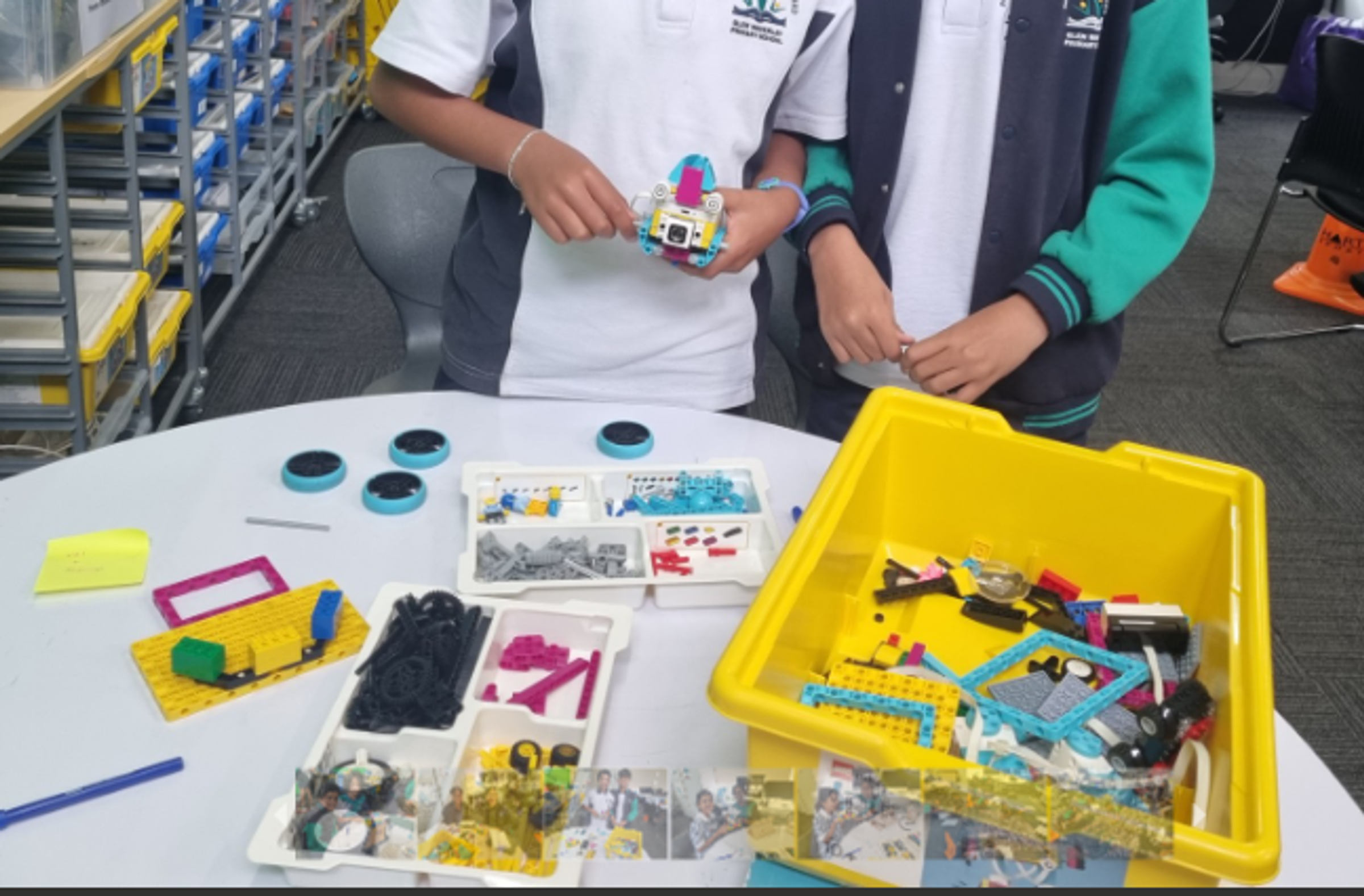
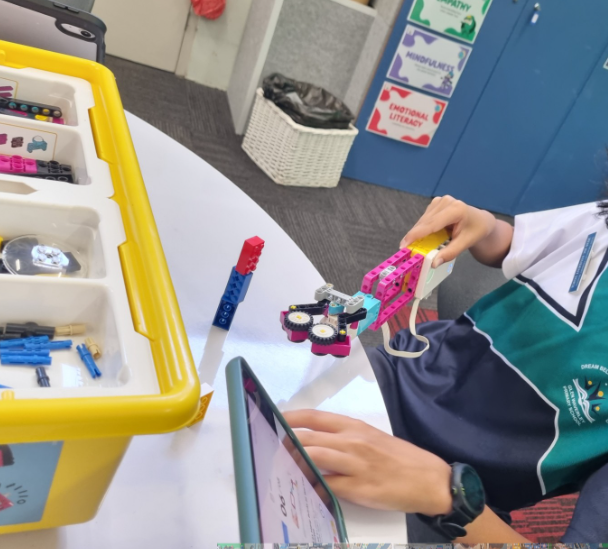
In Robotics Innovation, students will use the Lego Spike Prime robotic kits to create a variety of different builds that will introduce them to block-based coding. They will become familiar with a range of sensors, motors and a ‘hub’ that will run their coding commands to make their robotic design move, make sounds, follow commands and demonstrate their coding abilities. Working in partnerships, this is a subject that will build on collaboration and a shared vision for the students, with the final product created being a design they can build using all their coding knowledge learnt during the semester.
In Media Arts Innovation, students this term will explore the fundamentals of filmmaking. They will analyse genres of film and how to effectively tell stories and convey emotions through gestures and actions, together with dialogue. Students will learn about storyboarding and the different ways to capture the perfect shot. Editing will also feature, ensuring that the most efficient parts of vision captured makes it to the end product.
The Badminton Sports Innovation program is an engaging initiative focused on learning and refining badminton skills and techniques. Through a range of skill-building activities, challenges, and match simulations, students will develop serving, forehand and backhand strokes, net play, and defensive skills. They will also improve their tactical awareness, strategic thinking, and ability to collaborate effectively with others. The program places a strong emphasis on sportsmanship and fair play. By the end of the semester, students will have developed the essential skills required for badminton, gained an understanding of singles and doubles play, and applied these skills in competitive game situations.
In Languages Innovation, students will investigate a range of traditional and contemporary Chinese leisure activities such as jianzi, Chinese chess, calligraphy during Term Three. They will explore the cultural and historical significance of these practices and reflect on their relevance in modern-day life. Through comparing Chinese and Australian pastimes, students will develop a deeper understanding of both cultures and identify shared values and differences. Using Chinese to follow instructions, describe activities, and express their thoughts, students will strengthen both their language and intercultural understanding in this hands-on and reflective unit.
In Music Innovation, students will continue developing their musical skills through instrumental performance, listening, and responding activities. A major focus this term will be extending their understanding of ensemble performance using instruments such as piano and guitar, where students will work collaboratively to rehearse and perform music as part of a group.
Students will build on their knowledge of rhythm, melody, dynamics, and musical expression as they learn how individual parts contribute to a successful ensemble performance. They will develop important skills such as listening to others, maintaining a steady beat, and following a conductor.
By the end of the term, students will showcase their growing musicianship through ensemble performances and piano repertoire, demonstrating their ability to work collaboratively while applying the technical and expressive skills they have developed.