
Catholic Identity and Mission
Ms Nicole Dudman - Director
Catholic Identity and Mission
Ms Nicole Dudman - Director

AJASS Pilgrimage 2026
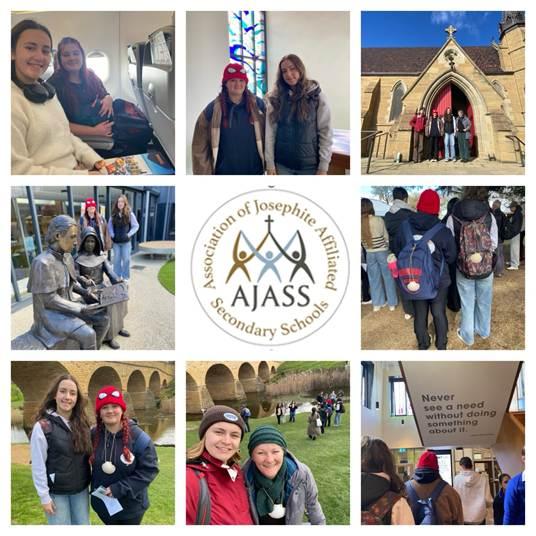
I had the pleasure of attending the AJASS Tasmanian Pilgrimage with Claire and Amelia from Year 10, along with Ms Grace Ronchi.
Over the four days, we had a variety of experiences that enabled us to learn more about the Josephite charism upon which our College has built its values and mission.
We explored the rich history of the Josephite tradition through visits to many significant Josephite sites, including the Mission and History Centre at Sacred Heart School in Newtown. We also participated in a guided pilgrimage walk through historic Richmond, which led us to the oldest Catholic church in Australia.
In Oatlands, we visited former school sites and the beautiful historic church, St Pauls. In Geeveston, Sacred Heart School houses a historic church where Father Julian had preached. These experiences enabled us to gain fresh insights into the Josephite story and the enduring relevance of Fr Woods’ vision.
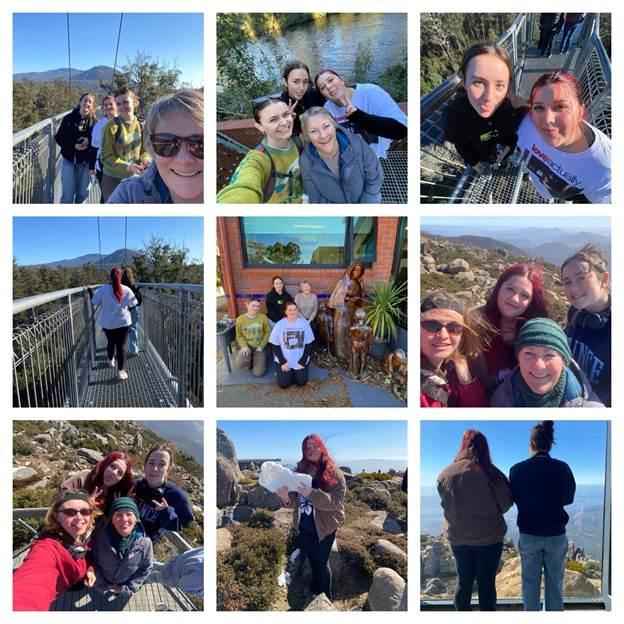
We were particularly touched by the story of Father Julian Tenison Woods. His appreciation of Tasmania’s natural beauty, and the way he documented and sought to preserve it, resonated with us. We experienced this beauty ourselves in Hobart, kunanyi/Mt Wellington, the Huon Valley and at Tahune Adventures. We also enjoyed exploring Hobart’s historic waterfront and the Salamanca precinct.
The pilgrimage concluded with our hearts and minds enriched, and we are ready to continue sharing the Josephite charism and mission in Catholic education.
We enjoyed meeting other AJASS students and teachers throughout the pilgrimage and look forward to seeing some of them at future leadership gatherings.
Mrs Claire Cassidy
College Registrar

A Reflection on Matthew 18:21-35
The Parable of the Unforgiving Servant
In last Sunday's Gospel, Peter asks Jesus a question that many of us have probably wondered ourselves: "How many times must I forgive?" Perhaps Peter thought he was being generous when he suggested forgiving seven times. Yet Jesus' response stretches our hearts and challenges our instincts: "Not seven times, but seventy-seven times."
Over the past week, I have been reflecting on this passage and how, in our daily lives, we are presented with countless opportunities to seek forgiveness and to offer it. Sometimes these moments arise from significant mistakes that have caused genuine hurt. More often, however, they emerge in the small interactions of everyday life: a harsh word spoken in frustration, an unkind judgement, a forgotten commitment, a missed opportunity to help someone, or a failure to show patience and understanding.
The parable reminds us that forgiveness is not simply an occasional act. It is a way of living. Jesus tells the story of a servant who is forgiven an enormous debt, yet refuses to forgive a much smaller debt owed to him. The contrast is striking. We are invited to recognise the extraordinary mercy that God extends to each of us and, in turn, to become people who extend that same mercy to others.
As members of a Catholic school community, we know that relationships are at the heart of everything we do. Students, staff and families journey together every day, and wherever there are relationships, there will inevitably be misunderstandings, disappointments and moments when we fall short. The Gospel challenges us to resist holding onto resentment and instead choose the harder but more life-giving path of reconciliation.
Forgiveness does not mean pretending that hurt does not exist, nor does it mean that difficult situations are easily resolved. Rather, forgiveness is a decision to allow God's grace to soften our hearts, freeing us from bitterness and opening the possibility of healing. In many ways, forgiveness is a gift we give not only to others but also to ourselves.
This Gospel also invites us to reflect on our relationship with God. How often do we turn to God seeking understanding, compassion and a fresh start? Each time we pray the Lord's Prayer, we ask: "Forgive us our trespasses, as we forgive those who trespass against us." These words remind us that receiving and giving forgiveness are deeply connected.
As we continue through the term, perhaps we can challenge ourselves to notice the opportunities for forgiveness that arise each day. Is there someone who needs to hear the words, "I'm sorry"? Is there someone we need to forgive? Is there a relationship that could be strengthened through a simple act of mercy?
The message of Matthew's Gospel is both simple and profound: we have been loved, forgiven and shown mercy beyond measure by God. Christ calls us to reflect that same mercy in our homes, classrooms, workplaces and communities. In doing so, we become living witnesses to the compassion and reconciliation that lie at the very heart of the Gospel.
May we be people who receive God's forgiveness with gratitude and offer it to others with generosity, again and again.
Enjoy a restful school break and safe travel for those heading away on holidays.