
Senior School
Head of Senior School - Jessica Zwarts
Acting Head Of Senior School - Neil LaRocca

Senior School
Head of Senior School - Jessica Zwarts
Acting Head Of Senior School - Neil LaRocca

Article by Lisa Field, Head of Learning Senior School
As a parent, you've probably heard your teenager talk about goals: a study score, a grade, making a team. But not all goals motivate equally, and research offers some useful guidance on which kinds actually help students achieve more.
Much of the strongest evidence in this area comes from Professor Andrew Martin at UNSW Sydney, whose research on "Personal Best" (PB) goals; targets that are specific, challenging, and measured against a student's own past performance rather than against classmates, has consistently shown that students who set this kind of goal make greater academic gains than those who don't (Martin & Elliot, 2016). This isn't only true for high achievers; it also benefits students who are already struggling, helping to narrow gaps rather than widen them.
Martin's work also links effective goal setting to "academic buoyancy" — a student's everyday capacity to bounce back from the normal setbacks of school life (Martin & Marsh, 2008). Students with clear, self-referenced goals tend to treat setbacks as information rather than failure, which keeps them engaged rather than discouraged. A further study found similar benefits for how much students valued their subjects and their aspirations within them (Martin et al., 2014).
This term I've been meeting individually with our Year 12 students to talk through their ATAR targets. This is, what result they're aiming for, and what that actually requires. We look together at whether their Unit 3 performance has them on track, and if not, what's realistically needed to close the gap.
The most valuable part of these conversations isn't the target itself, it's identifying the specific actions a student can take to move toward it. For different students that's looked like:
Building a more consistent approach to homework or regular study, rather than relying on last-minute effort
Booking a follow-up conversation with a subject teacher to pin down concrete, specific ways to improve
Looking honestly at attendance, and whether missed classes are part of the gap between current performance and target
What makes these conversations powerful is the same principle the research points to: a goal only motivates when it's paired with a clear, personal, and achievable next step.
What this means at home
Encourage specific, self-referenced targets rather than vague ones like "try harder."
Ask about the actions, not just the outcome — what will they actually do differently this week?
Normalise setbacks as information to recalibrate, not evidence the goal was wrong.
Revisit goals regularly — a goal set once and forgotten loses its power.
Motivation is shaped by the kinds of goals we help our young people set, and by how clearly those goals connect to everyday actions. Encouraging this at home, alongside what we do at school, gives students one of the more reliable ways to lift both achievement and confidence through the senior years.
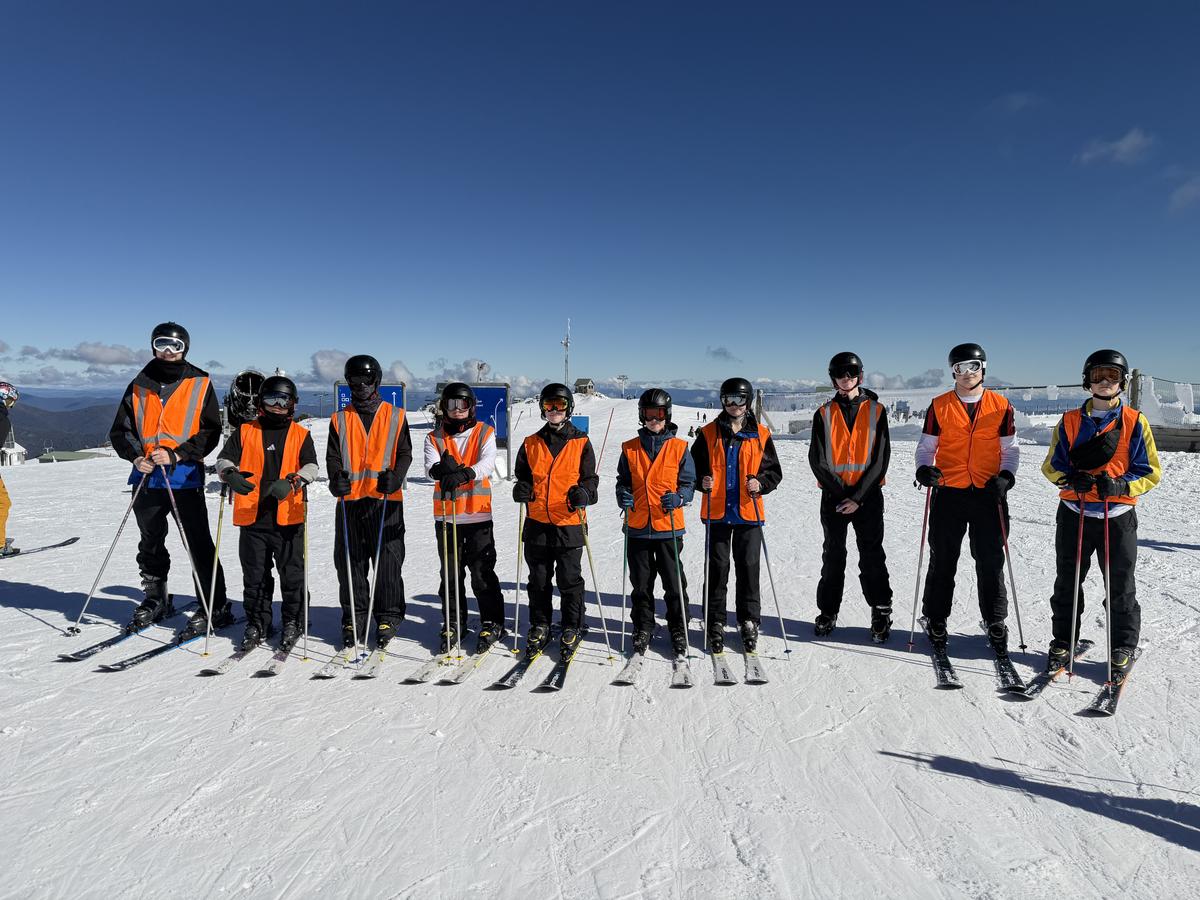
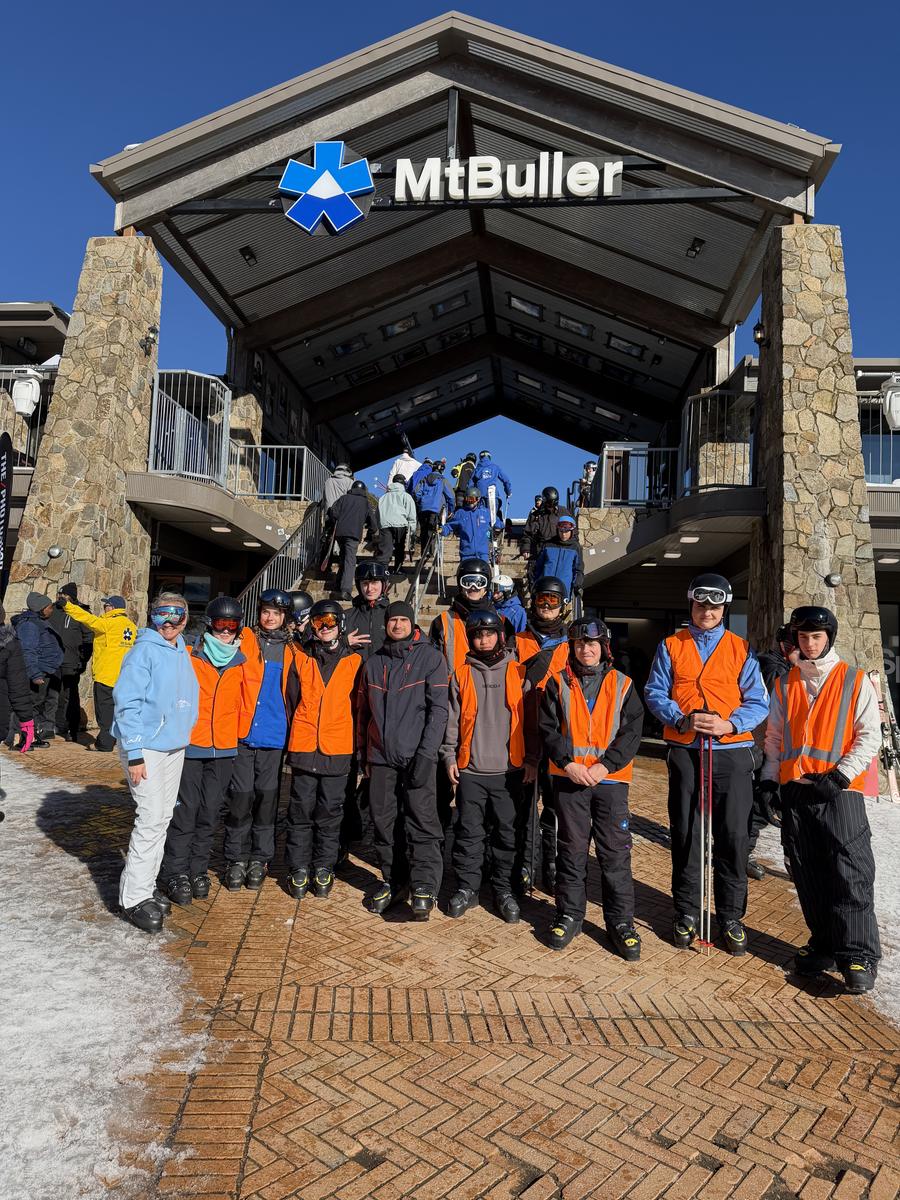
After a very early departure (5:30am!), students and staff made the journey to Mount Buller to meet with qualified ski instructors for a 2-hour lesson. What followed was lots of laughs, expressions of “oh's and ah's” and, for some students, time falling onto the snow. Simple tasks like balancing on skis was harder than it looked!
Students quickly graduated to using the chairlifts and fortunately there was plenty of snow to access the higher ski runs. After several runs down “Bourke Street”, students were exhausted and as the cold weather was setting in, it was a perfect end to the day!
After participating in Skiing at Mt Buller in Taungurung country, I have developed a sense of appreciation towards the environment and the resources it provides through recreational activities. It was also an opportunity to transform abstract concepts into direct, experiential learning that can not be replicated in the classroom - Carlo P, Year 12 Student
Thanks to accompanying staff - Natalie Di Sauro and Neil La Rocca for their instruction and guidance.



Each fortnight, the College Careers Team publishes a newsletter providing students and parents with the most up-to-date career information, events and opportunities.
Please access via the following link.