Level 1 & 2
REMINDERS & UPDATES
Hats
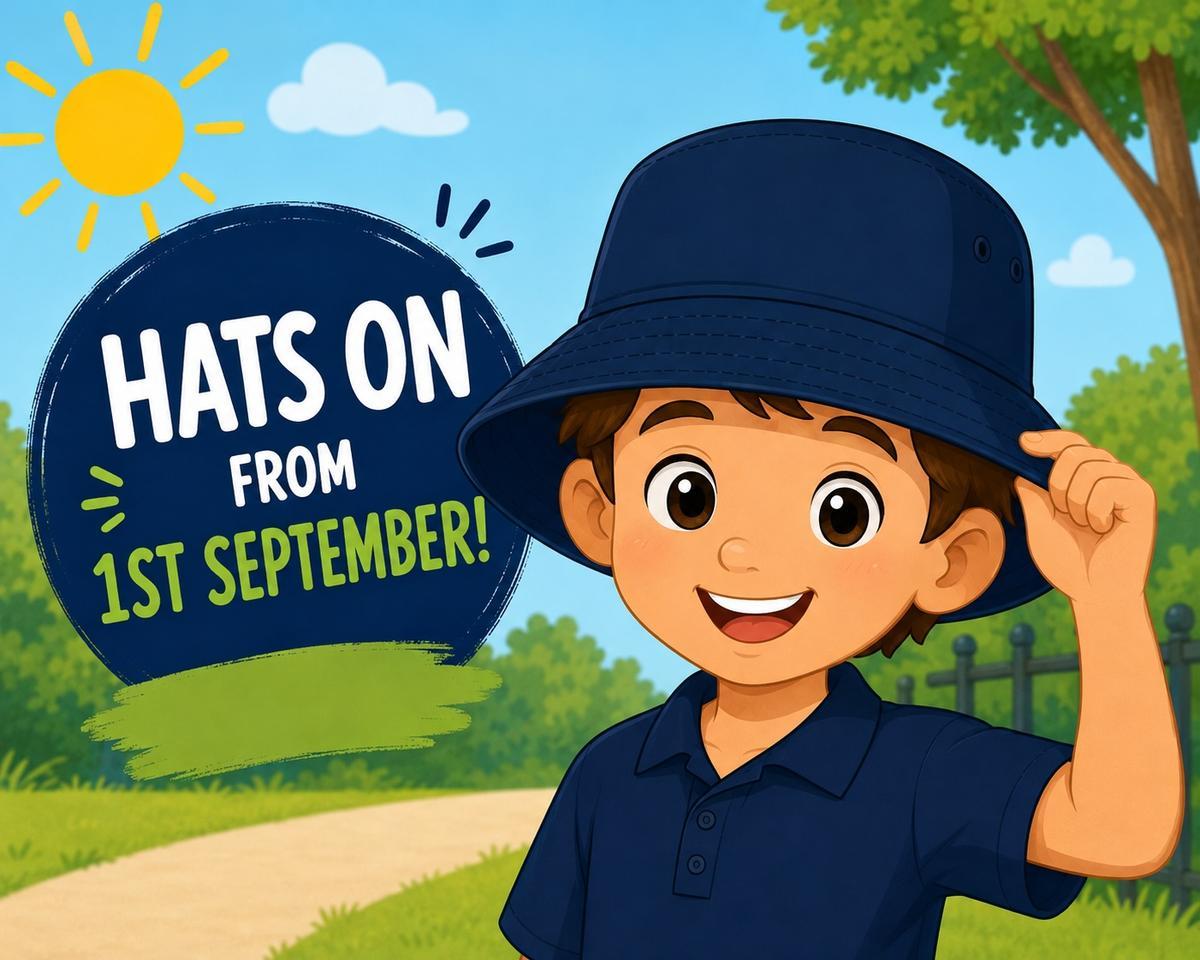
With spring here it’s time for hats to come back to school! Grade 1 and 2 students are reminded to bring their school hat back to school if they took it home over the holidays and to make sure they are wearing it during outdoor activities and break times.
iPad Reminders
- Our iPad program works best when all students who have their own iPad bring it to school each day. Please remind your child to make sure their iPad is charged and packed their school bag every morning.
Family Holidays
If you are intending on taking a holiday during the school term, please make sure you inform your classroom teacher and discuss an absence plan.
Term 4 Dates
3rd November - Melbourne Cup Day
11th November - Beauty and the Beast Junior Production
12th November - Beauty and the Beast Junior Production
16th - 20th November - 1/2 Swimming
16th December - Final Assembly
CURRICULUM THIS WEEK
Literacy
Thank you for your continued support with home reading. Reading together each night, even for just 10–15 minutes, is one of the most valuable ways you can support your child's learning. Regular reading helps build confidence, fluency, vocabulary and comprehension, while also fostering a lifelong love of books. We encourage students to continue recording their reading in their log books each evening, as this helps us celebrate their efforts and monitor their progress. Thank you for partnering with us to make reading a positive and enjoyable part of your child's daily routine.
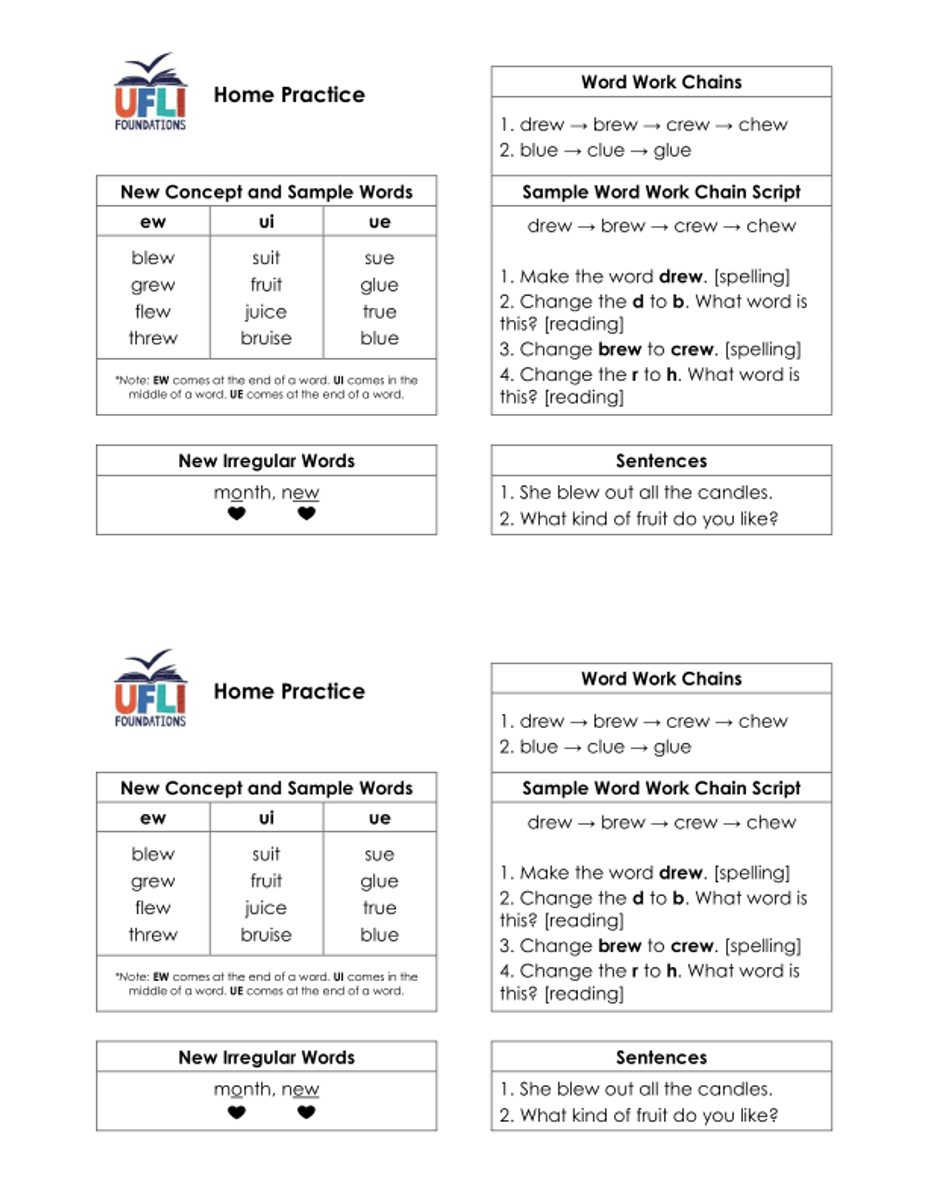
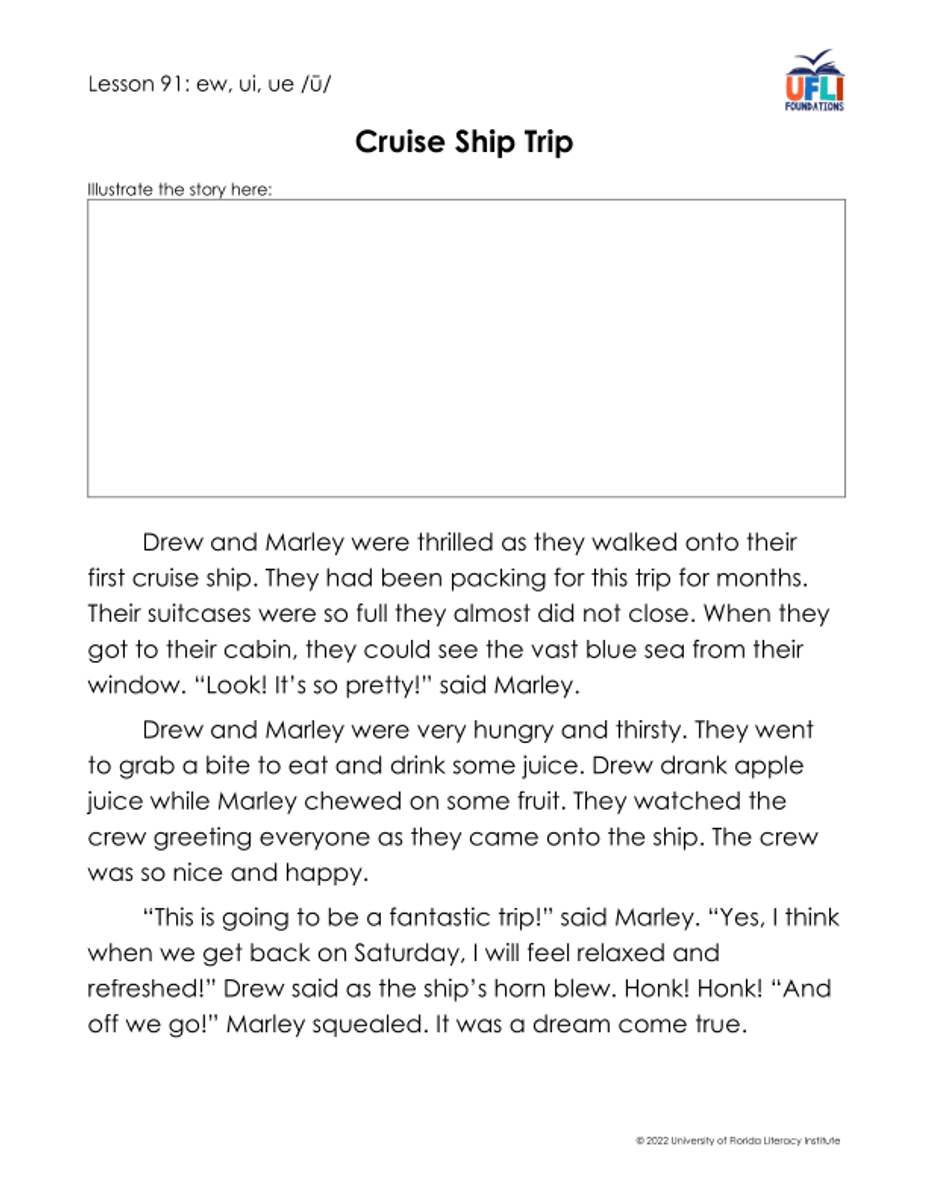
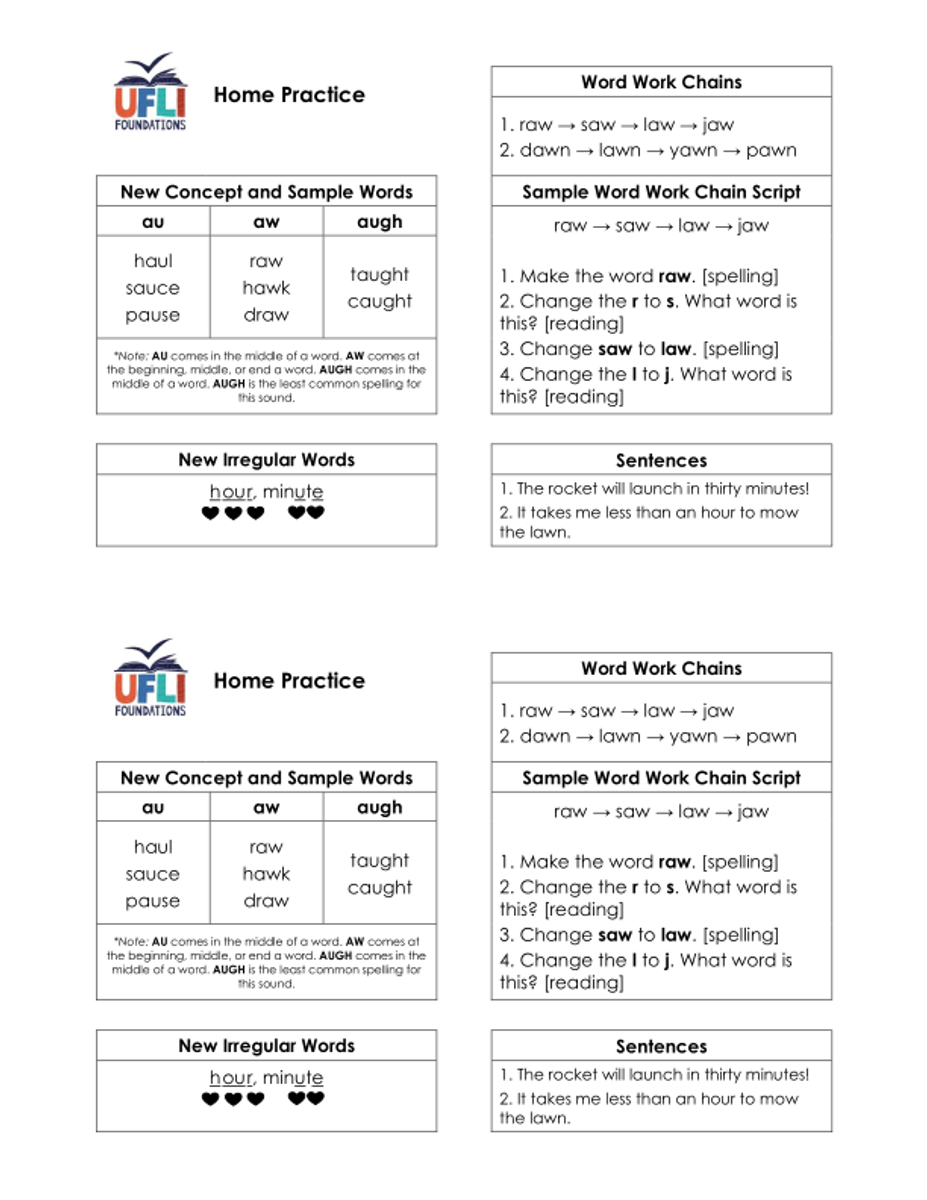
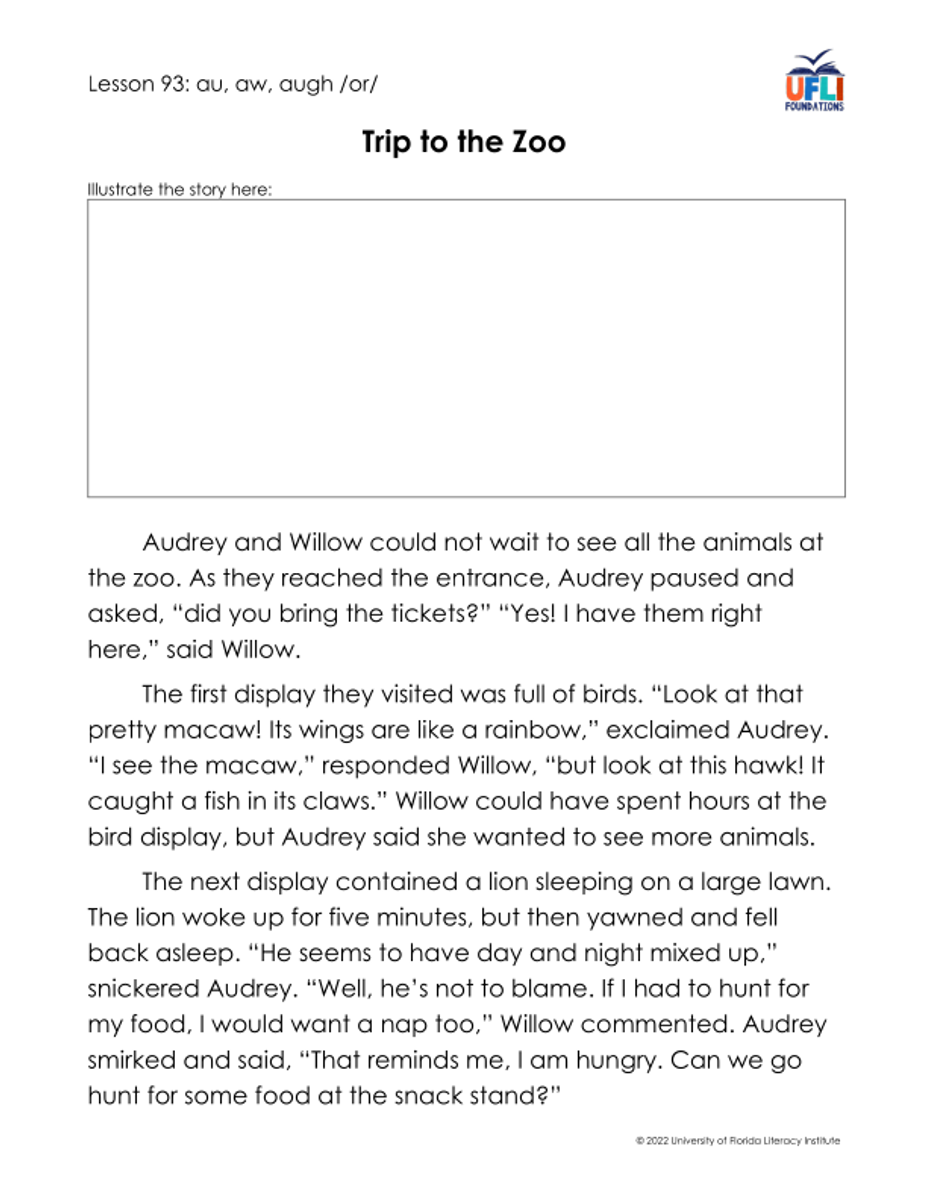
Grade 1 - This week, students will continue their phonics learning by exploring ew, ui and ue, focusing on the long /u/ sound in words such as flew, fruit and blue. We will also explore au, aw and augh for the 'or' sound in words such as launch, saw and caught. Students will practise reading and spelling words containing these patterns and applying their learning when reading and writing.
What can you do at home?
- Optional UFLI Home Practice pages
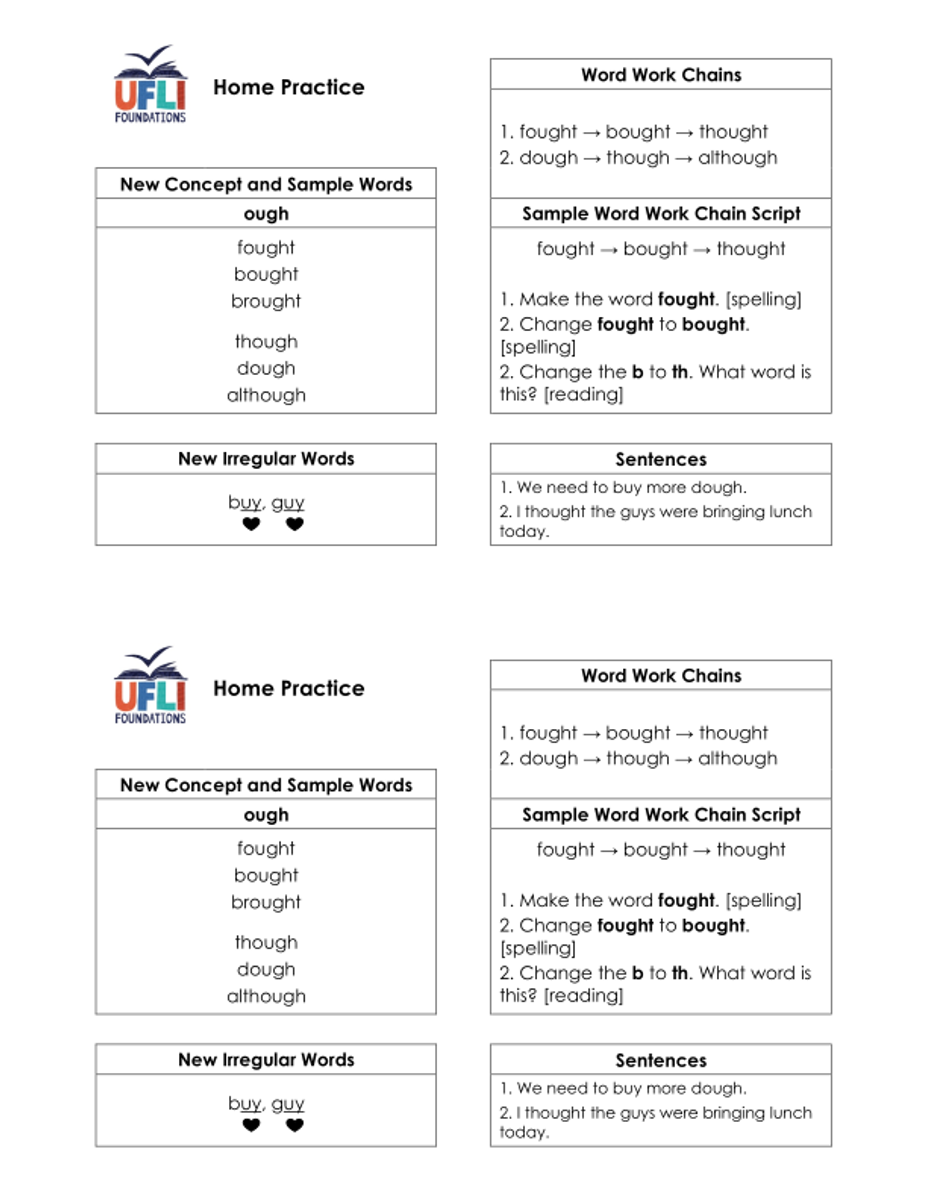
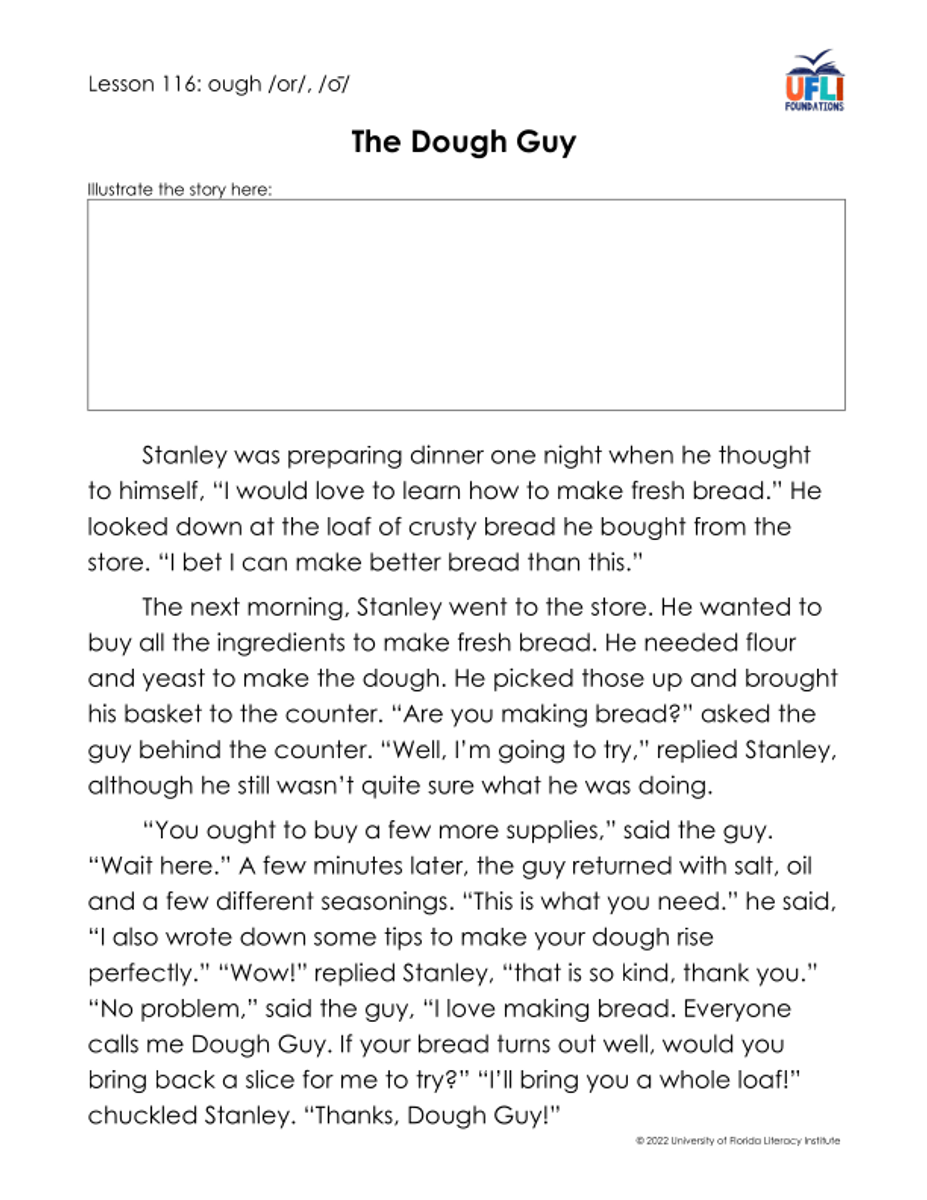
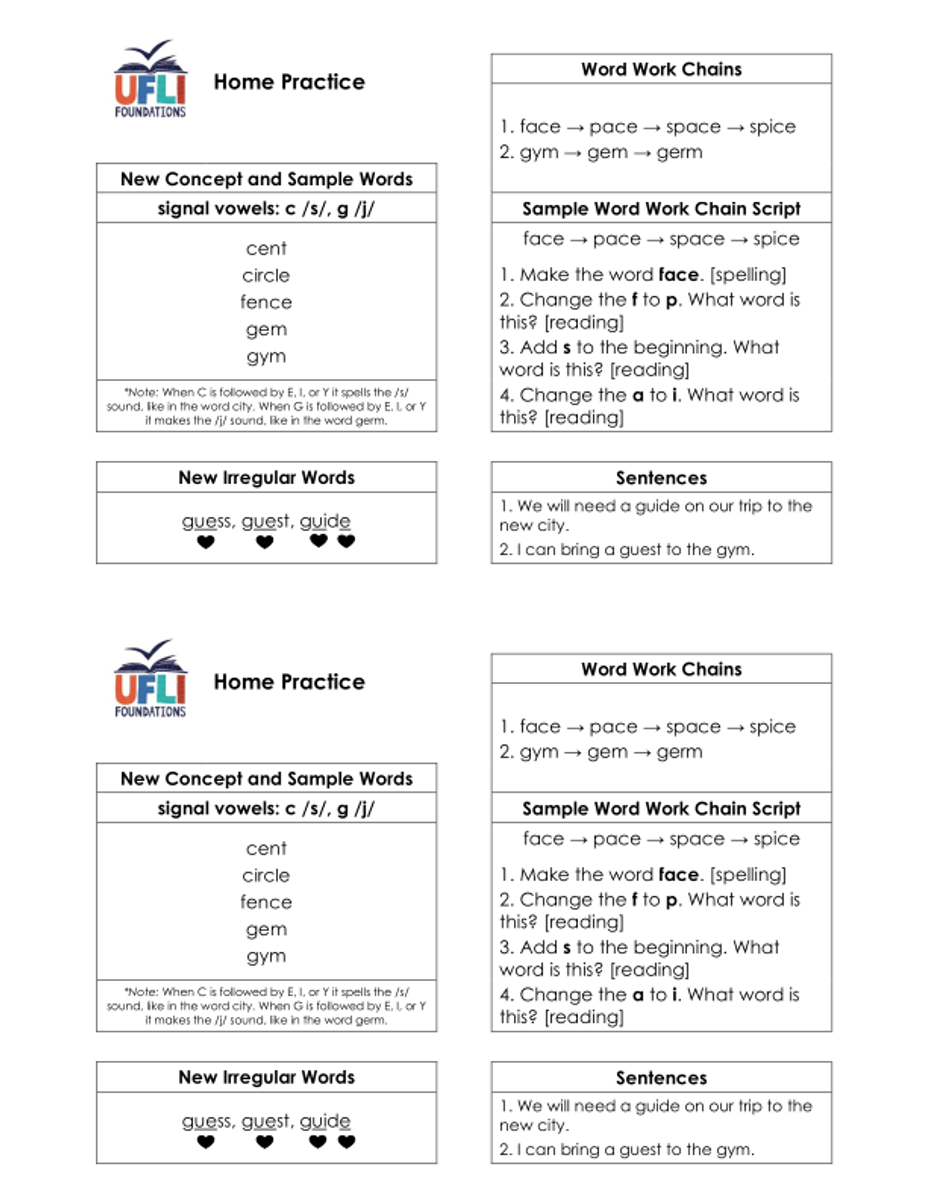
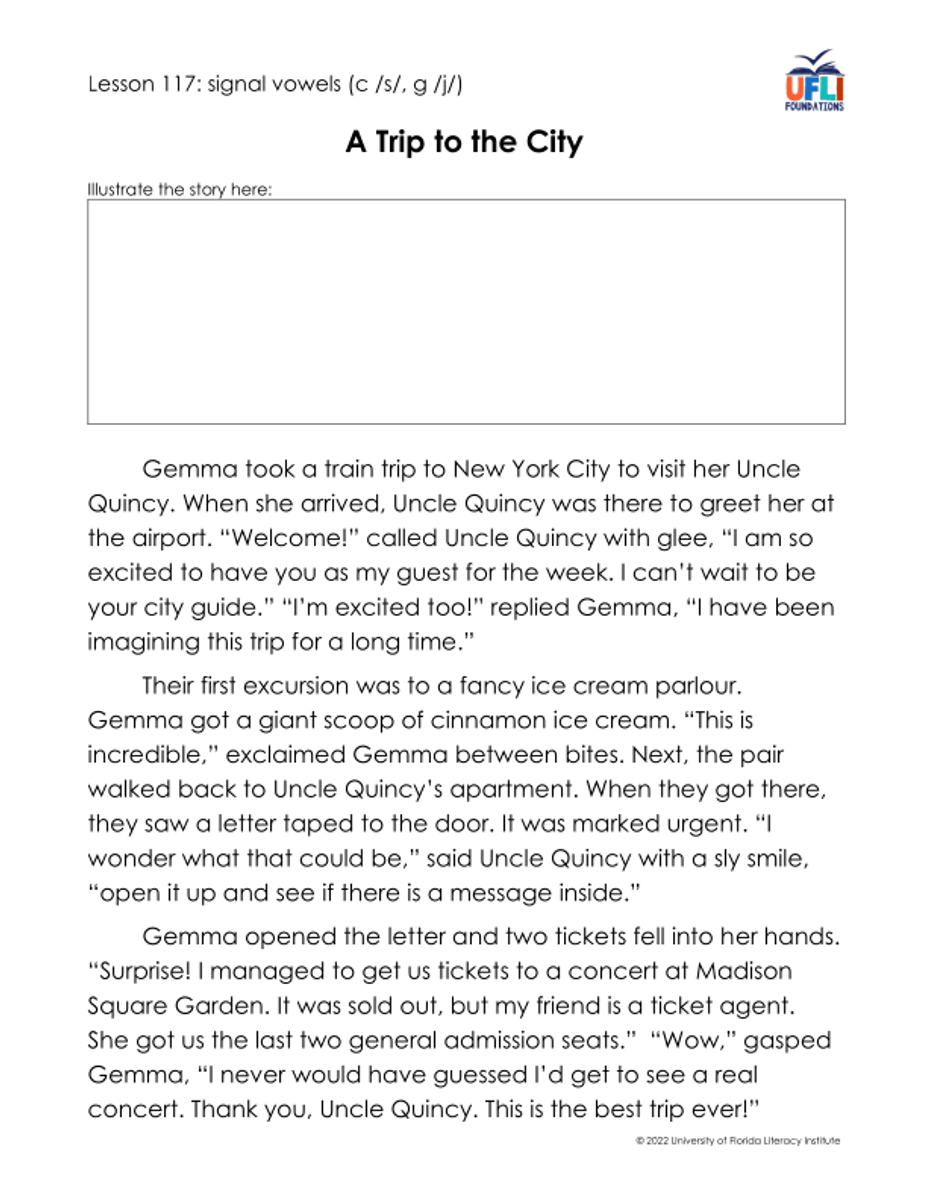
Grade 2 - This week, students will continue developing their phonics and spelling knowledge by exploring ough making the 'or' and long o sound in words such as thought and though. We will also learn about signal vowels, exploring how e, i and y can signal that c represents /s/ and g represents /j/, as in cent, city, gem and gym. Students will practise recognising and applying these patterns to become more confident and accurate readers and spellers.
What can you do at home?
- Optional UFLI Home Practice pages
Writing:
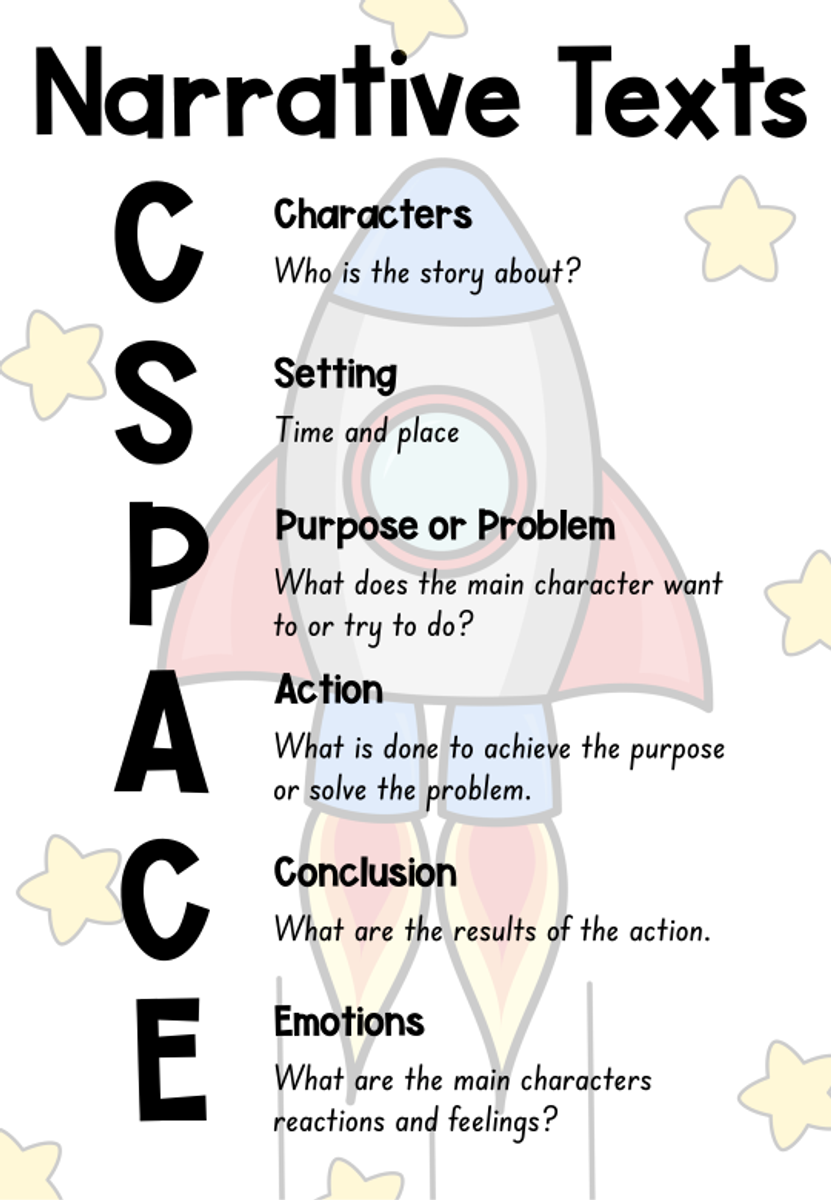
This week, students will use the CSPACE structure to support learning narrative story writing structure. Students will plan their characters, setting, problem, actions, conclusion and emotions, helping them organise their ideas and write stories with a clear beginning, middle and end.
Maths
Grade One Students
Grade 1 students will explore location and position, using language such as left and right and ordinal numbers such as first, second and third to describe where things are. Students will practise writing instructions to identify specific locations and using their understanding to solve position problems.
What can you do at home?
- Continue working through allocated Math Seeds tasks that have been assigned to your child.
- Practice skip counting by 2, 5, 10's.
- Use words such as left, right, first and second to describe the position of objects or give directions around your home.
Grade Two Students
Grade 2 students will explore fractions of a collection, focusing on halves, quarters and eighths. Students will practise sharing collections into equal groups and identifying how many objects make up each fractional part.
What can you do at home?
- Continue working through allocated Mathletics tasks that have been assigned to your child.
- Practice skip counting by 2, 5, 10's from a non-zero starting point.
- Talk about basic fractions at home, such as, “What would half of these strawberries look like?” Practise sharing collections of small objects into halves, quarters and eighths, making sure each group has an equal number. Use measuring cups during cooking to discuss the fractions they represent.
WELLBEING
SWPBS
This week, students will focus on Be kind in all settings by showing patience and waiting their turn. We will explore what this looks like in the classroom, in the playground and during everyday routines. Students will practise listening while others speak, sharing equipment and waiting calmly for their turn.
Cyber Safety
Students will learn how to communicate online with empathy and kindness. We will explore how thinking about another person’s feelings can help us choose our words carefully. Students will identify ‘yummy’ words that are kind and encouraging and ‘yucky’ words that may hurt someone’s feelings, learning to pause and think before sending a message or posting online.
What can you do at home?
Continue the Conversation at Home...
Here are some questions you might like to ask your child to reinforce our wellbeing learning:
- What was something that made you feel happy today?
- Did anything feel tricky today? What helped you get through it?
- What helps your brain and body feel calm when you're upset or worried?
- Can you show me one of the calming strategies you've been learning at school?
- Who is someone you can talk to when you need help?
- What is one thing you're proud of yourself for today?
- When you notice a friend having a hard day, how could you help them?
- What is one strategy you could use next time you feel frustrated or overwhelmed?
What are three things that made you smile today?
Taking just a few minutes each day to talk about emotions, challenges and successes helps children build confidence, resilience and a strong understanding of the strategies they can use to support their wellbeing both at school and at home.
CBL
There was plenty of excitement this week as students began posing questions about space and sharing their wonderings about our Big Idea of Survival/Systems. We invite families to look at this website together to be amazed at the size of our amazing universe:
https://neal.fun/size-of-space/
This coming week, students will explore what scientists do, including how astronomers study space. We will learn about scientific observations and how looking closely, noticing details and recording what we see can help us learn about the world around us. Students will also take a closer look at Earth and begin exploring what makes our planet special.
Guiding Questions that will support our learning over the term:
- What systems help us survive?
- Why is Earth different from other places in space?
What are scientific observations and how can I make them?
CHALLENGE
Inspire the Wonga Park community to ‘Look Up’ and wonder about space.