Student Wellbeing
What is Maths Anxiety?
Ask a room full of adults whether they consider themselves “a maths person,” and the response is rarely neutral.
For many, the question triggers a memory: a red-inked test, a moment of being called on and freezing, a sense of being permanently sorted into “good at maths” or “not.”
Maths anxiety is one of the most persistent and least discussed barriers to student achievement in Australian classrooms, and increasingly, educators are looking at hands-on, multisensory teaching not just as a pathway to better results, but as a way to prevent that anxiety from taking hold in the first place.
Anxiety and understanding are linked
Maths anxiety is not simply nervousness before a test. Research in cognitive and educational psychology describes it as a specific kind of tension and apprehension that interferes with the ability to manipulate numbers and solve mathematical problems, one that can affect working memory at the exact moment a student most needs it. Importantly, maths anxiety and mathematical ability are not the same thing. A student can have strong underlying number sense and still perform poorly under the pressure that anxiety creates.
What tends to feed this anxiety is a particular kind of maths teaching: one where students are expected to hold procedures in their heads without ever having built an understanding of what those procedures represent.
What concrete materials actually do
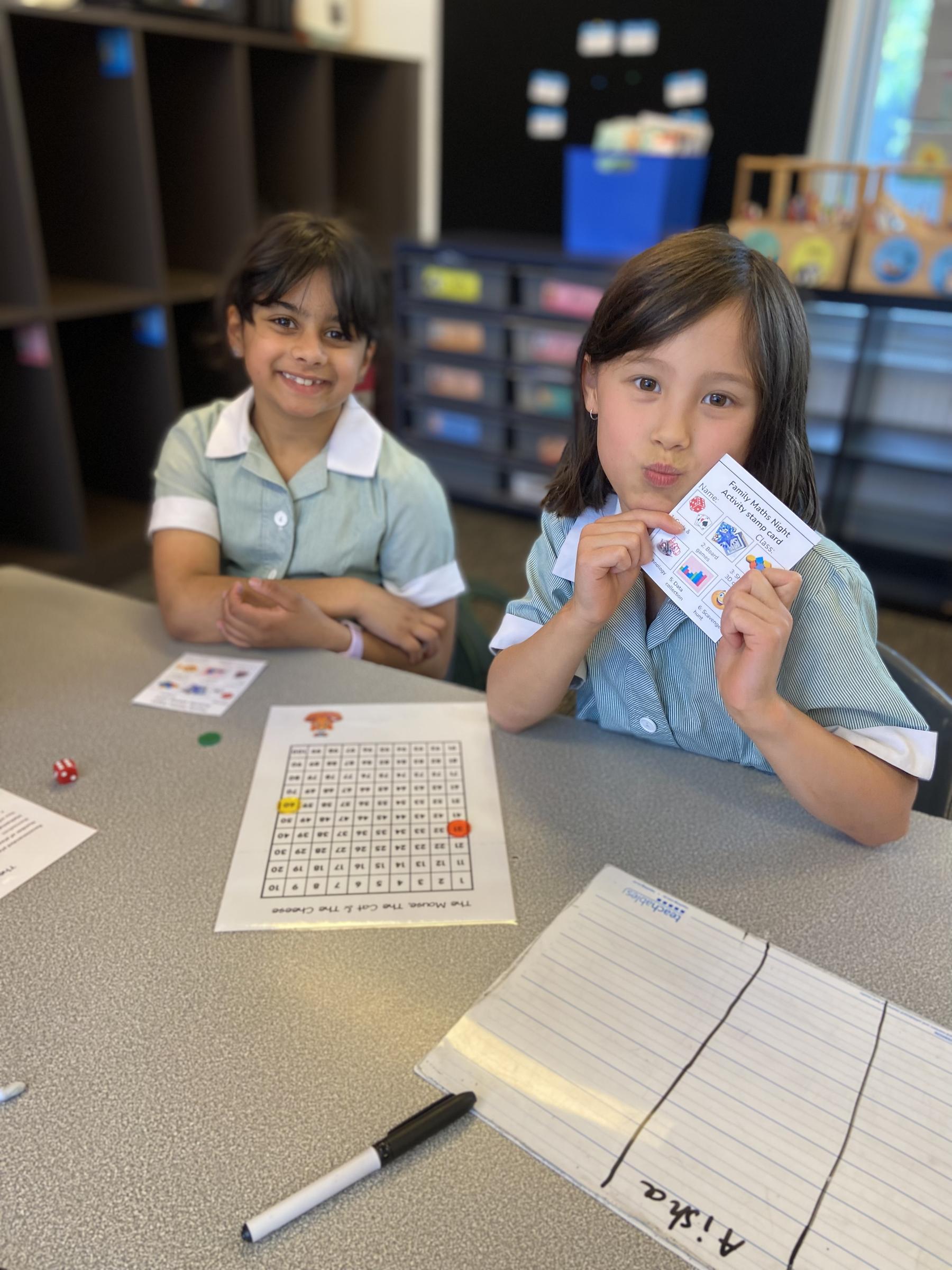
This is where manipulatives, such as blocks, counters, fraction tiles, number lines and place value materials, do some of their most important work; where explicit and colour-coded manipulatives can even reduce cognitive load and develop a dependable and reliable model for maths. They give students something they can act on, check and correct in real time, rather than a set of rules to be right or wrong about.
Related School News story: Hands-on learning: Boosting engagement and enjoyment
A student working with physical materials can see when a solution doesn’t make sense and adjust, the same way they would notice a stack of blocks was uneven. That process of self-correction, done with real materials rather than abstract symbols, builds something more valuable than a correct answer: it builds trust in one’s own reasoning.
Over time, students who have had consistent opportunities to explore mathematical ideas concretely tend to describe maths differently. Instead of “I’m not a maths person,” educators often hear “I need to draw it out” or “let me use the blocks to check.” That shift in language reflects a genuine shift in mindset, from maths as a test of innate ability to maths as a process that can be worked through.
Confidence is not the finish line, it’s the mechanism
It’s worth being precise about why this matters. Building confidence is not simply a nice byproduct of good maths teaching; it is part of the mechanism by which understanding compounds. A student who is not afraid to attempt a problem, make a visible mistake and correct it will attempt more problems, generate more mathematical thinking, and build more understanding over time than a student who is anxious about being wrong. In this sense, multisensory and hands-on approaches are not a “soft” addition to rigorous maths teaching. They are part of what makes rigorous learning possible.

A note for parents and carers
Families often ask what they can do at home, particularly if their own experience of school maths was a difficult one. The honest answer is reassuringly simple: normalise using real objects to work through problems, at any age. Counting out ingredients, splitting a bill, measuring in the garden or even using explicit manipulatives with directed playtime are all opportunities to reinforce that mathematics is something you do with your hands and your reasoning, not something you either “have” or don’t.