
Gospel


A reading from the Holy Gospel according to Matthew 16:13 - 20
You are Peter, to you I will give the keys of the kingdom of heaven

When Jesus came to the region of Caesarea Philippi he put this question to his disciples, ‘Who do people say the Son of Man is?’ And they said, ‘Some say he is John the Baptist, some Elijah, and others Jeremiah or one of the prophets.’ ‘But you,’ he said ‘who do you say I am?’ Then Simon Peter spoke up, ‘You are the Christ,’ he said, ‘the Son of the living God.’ Jesus replied, ‘Simon son of Jonah, you are a happy man! Because it was not flesh and blood that revealed this to you but my Father in heaven. So I now say to you: You are Peter and on this rock I will build my Church. And the gates of the underworld can never hold out against it. I will give you the keys of the kingdom of heaven: whatever you bind on earth shall be considered bound in heaven; whatever you loose on earth shall be considered loosed in heaven.’ Then he gave the disciples strict orders not to tell anyone that he was the Christ.

Gospel Reflection
Like last week’s gospel, this week’s story takes place in a region that was outside predominantly Jewish territory. Caesarea Philippi (north of Galilee and in the region of modern day Syria) had long been a centre of pagan worship. It was used originally by the Canaanites as a site of worship; the Greeks built a temple to one of their gods there; in 20 BCE Herod the Great built a temple to Caesar Augustus; and after his death, Herod’s son, Phillip, renamed the city Caesarea Phillipi after Tiberius Caesar and himself. It is intriguing that Matthew’s gospel chooses such a site as the location for such a significant revelation of faith.
Jesus asks the disciples who people say he is. They report that people associate Jesus with one of the great prophets of Jewish tradition. By people identifying Jesus with other great prophets they were projecting Jesus into the same mould as that prophet. What they were saying was that Jesus will be a great leader in the style of John the Baptist, or Elijah or even Jeremiah. The expectation of a messiah was running very high at the time of Jesus and everyone had their own idea about what that messiah would be like – usually aligned with some previous leader. They didn’t seem to understand that Jesus was breaking the mould and was not going to fit in with any of those expectations. To see him as one of the great prophets come again is always going to be an inadequate understanding of Jesus as messiah.
When Jesus pushes the disciples for their own ideas, it is Simon Peter who speaks up and identifies Jesus as being the Son of the living God. Making a play on Peter’s name (in Greek, petros = Peter and petra = rock), Jesus states that hereafter, Simon Peter will be known as Peter and upon the rock of his profession of faith the church will be built.
Have you thought? What’s in a name?
On many occasions in the Bible a character is given, or takes on, a new name when they take on a new role or move to a new level in their faith and relationship with God. Abram became Abraham; Sarai became Sarah; Jacob became Israel; and Saul became Paul. In all of these circumstances the person took on a new name to reflect their new relationship with God. This tradition has continued right to this day. Men and women entering religious life have traditionally taken on a new name to indicate the new life they are entering. When a new Pope is chosen, he takes on a new name to indicate the new role and the new life he is beginning.
Living the Gospel ... Who do YOU say I am?
The question that Jesus asks the disciples is a question he asks of all of us. How we answer that question reflects our relationship with Jesus. But more importantly, how we answer that question reflects the way we live our life in response to who we believe Jesus to be. If we truly say that we believe in Jesus as the son of God, then how do we live our lives in such a way that we act on that belief? The gospel shows us that an inadequate answer to that question leads to missing the point of all that Jesus is.
Gospel Focus
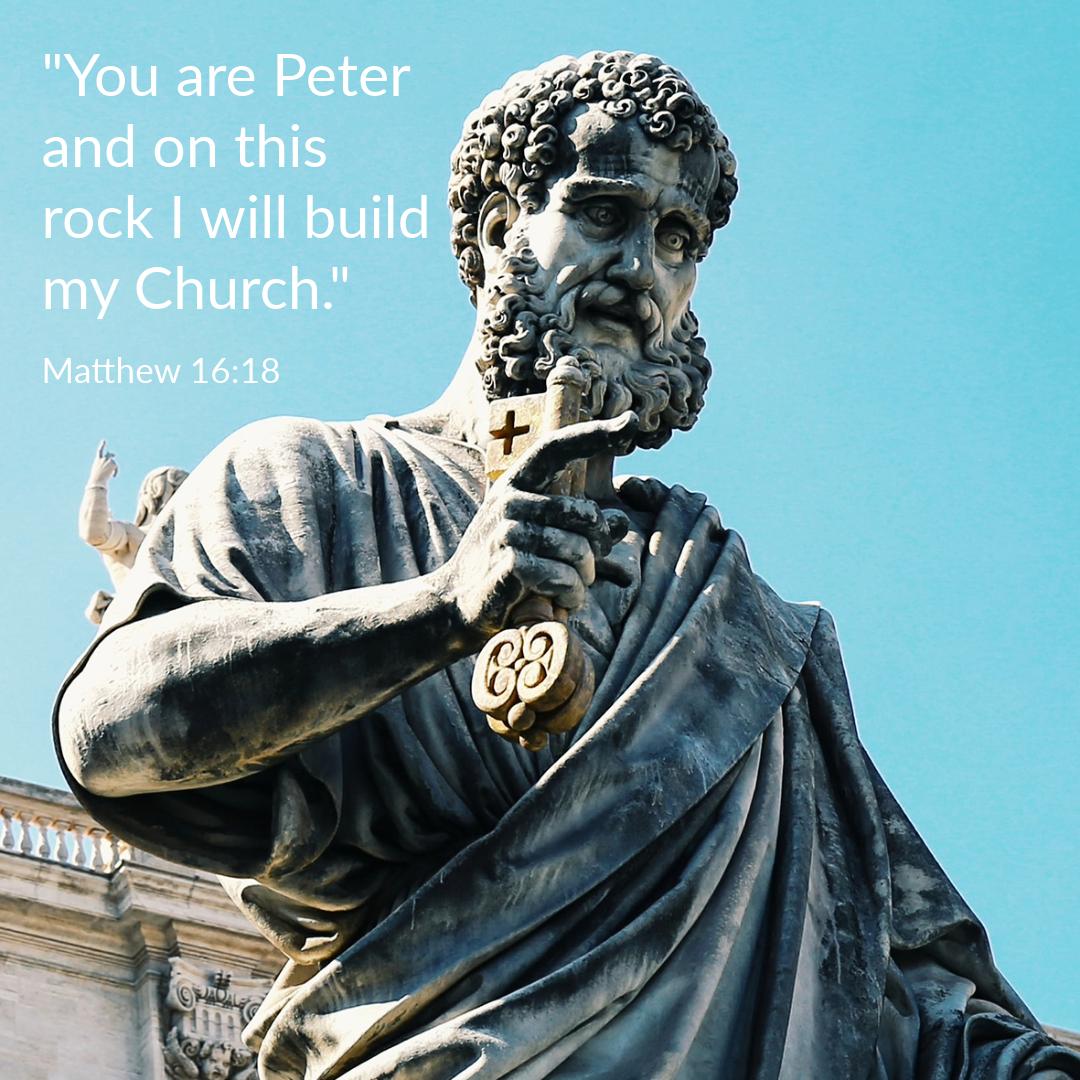
Jesus’ words to Peter, ‘on this rock I will build my church’, are obviously the gospel writers’ words and not the words of Jesus himself. (Jesus did not set out to build a church community; that did not emerge until later.) In fact they appear only in this particular gospel. The other synoptic gospels have Peter’s confession of faith but not these words attributed to Jesus. The words are sometimes understood as asserting that Peter himself is the rock on whom the church will be built, rather than his declaration of faith being the rock. This has then sometimes become confused with the line of popes beginning with Peter.