Year 10 English Holocaust Museum excursion
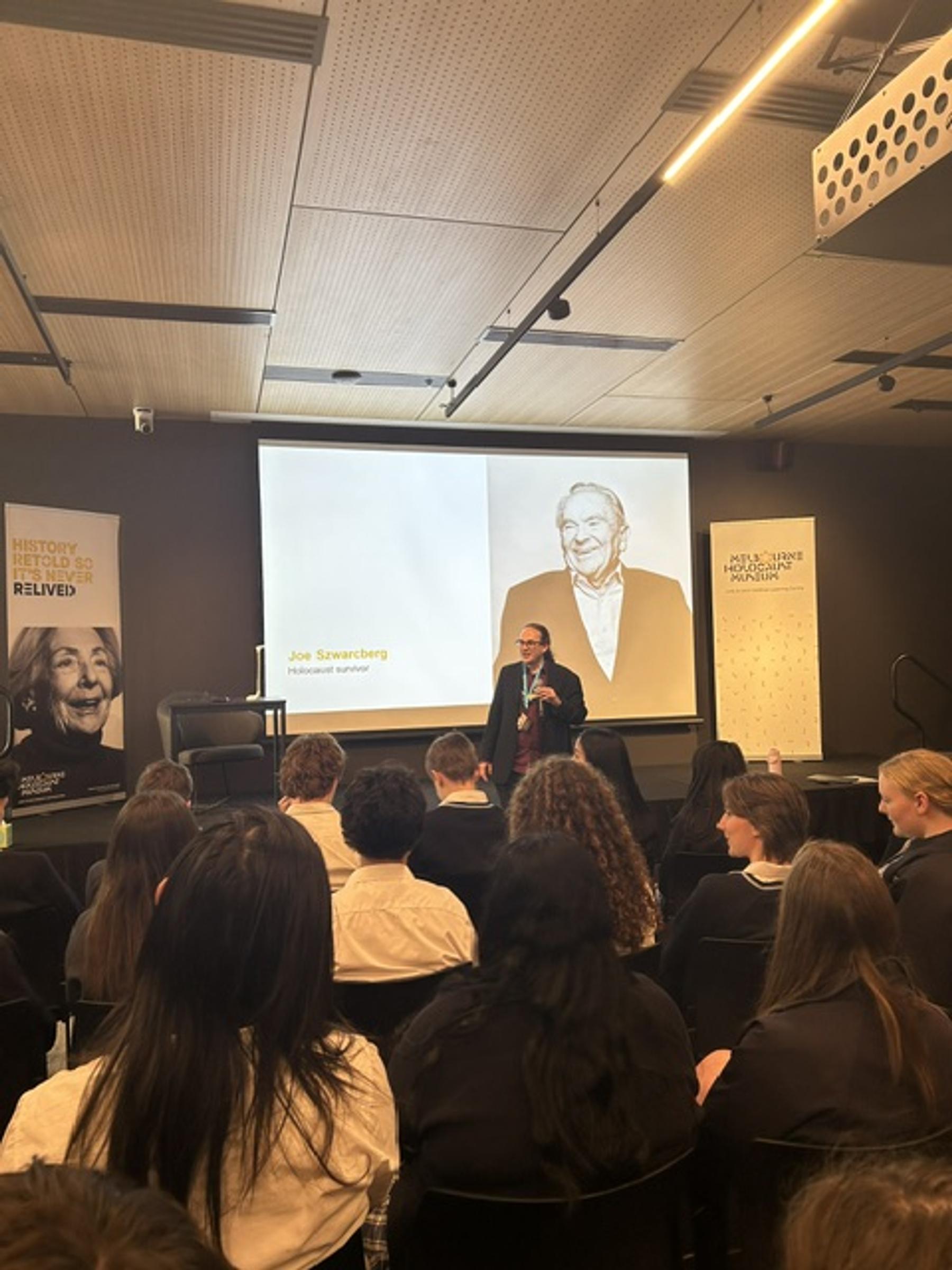
During July, two groups of Year 10 students visited the Melbourne Holocaust Museum. It was a place of reflection and a place where connections to the text Night, by Elie Wiesel, were made. It was pleasing to hear that workers at the centre acknowledged the excellent behaviour of Thornbury High Students. It was also pleasing to see that our students asked relevant and considerate questions in the session where we met Joe, a 95-year-old Holocaust survivor. Below are some thoughts from students on the excursion.
Renata Tirabassi
English teacher
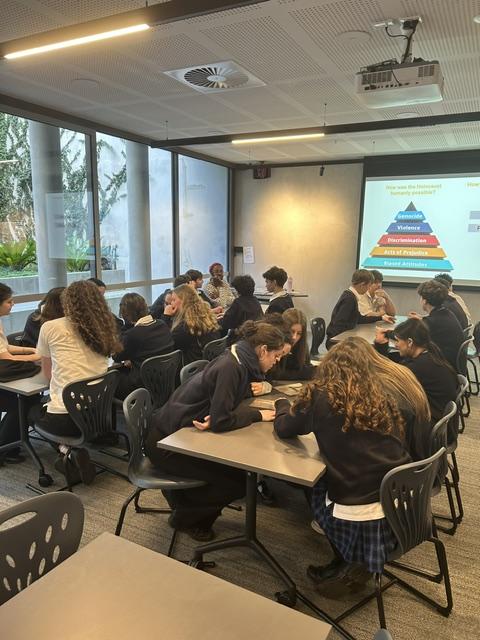
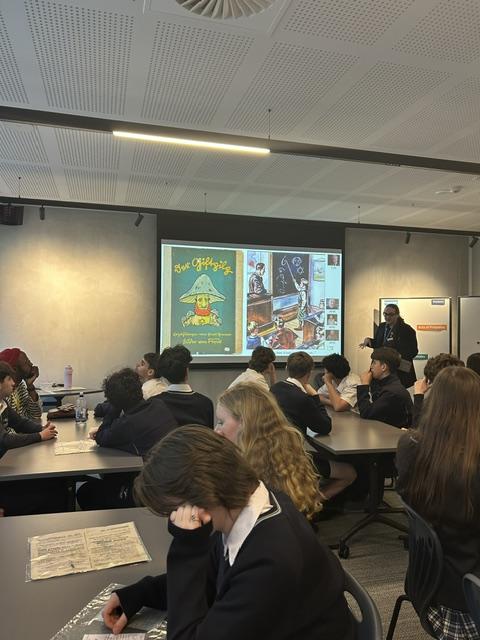
The Holocaust can be a hard thing to truly comprehend as students who haven't yet seen the possible cruelty of the world, those who either don't understand the scope of its terrible reach, or those who have been accustomed by the current world to turn a blind eye to the suffering of others in a bid to maintain their ability to sleep at night. The Holocaust Museum is one of the only monuments that could ever do the terrors of that 12 arduous years justice. As has been said, "Seeing is believing", and this is the closest equivalent that the modern world could allow, and I was shaken by what I saw. For a moment, I grasped a fraction of the absolute horror that the holocaust inflicted upon the Jewish people. However, the museum also allows for hope, to see how the survivors found light under the greatest darkness history has ever faced, and how we can honour those departed by never allowing its equivalent to happen again. To not lose the human in the inhumane, to not lose the hope in the hopeless days, that is something that may never be accurately captured by another tribute, and the ability to take the pain and suffering, and turn it into a warning for the next to not fall to fear and anger is an experience that cannot be substituted or sanitized, lest the honouring of the fallen be diminished.
William Walter
Year 10 student
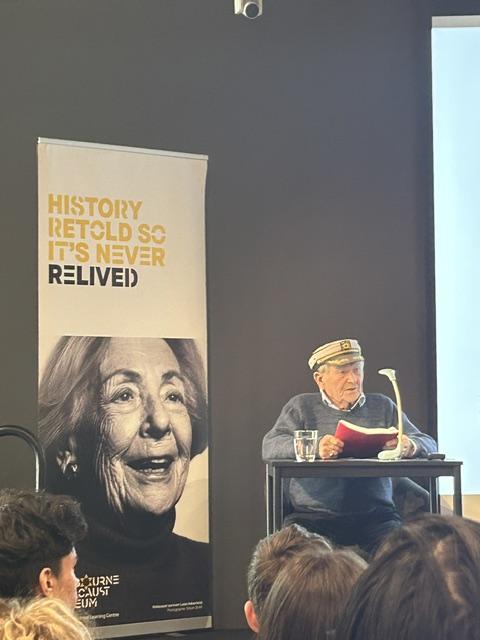
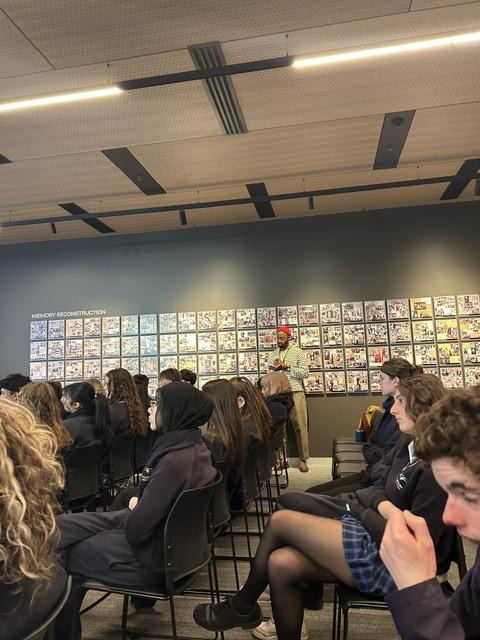
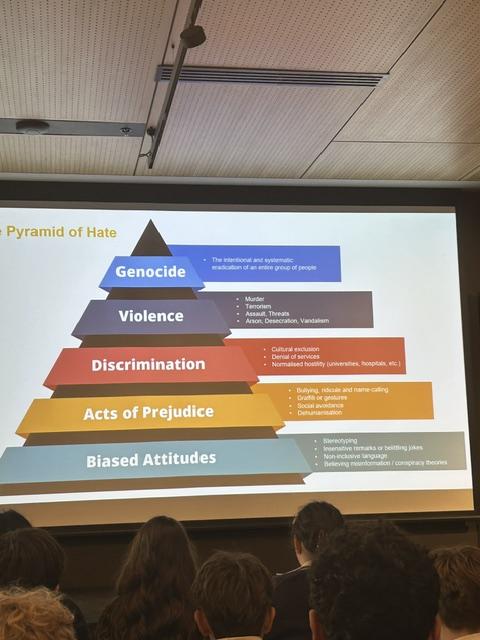
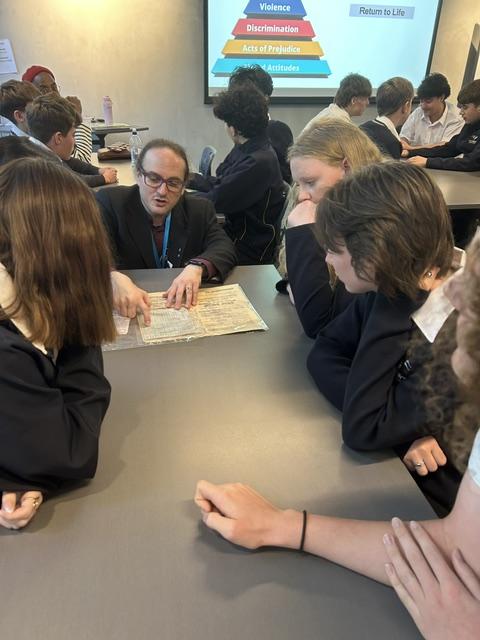
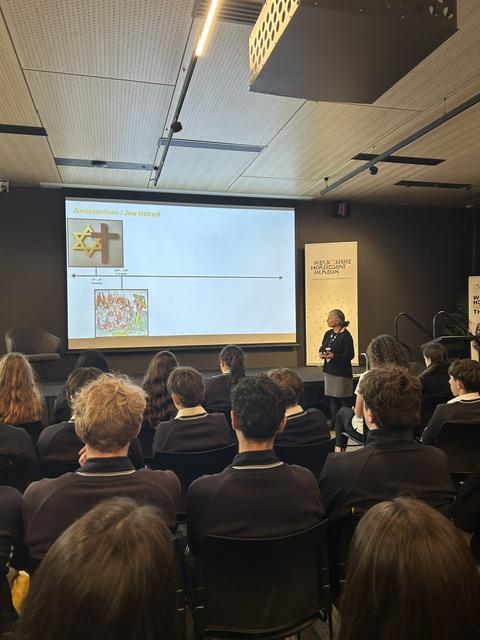
On the 27th and the 28th of July, the Year 10 cohort was split into two large groups over those two days to attend Melbourne Holocaust Museum. We headed there by bus, and were given an introduction to the Holocaust Museum shortly after entering. The Year 10s were then split into multiple groups, with some heading to the activities downstairs, and others to the museum upstairs. My group went upstairs first, and we saw artefacts, listened to voices from that time period, and watched videos taken prior to the war. It was really interesting to see the timelapse of before the war, during the Holocaust, and the aftermath of everything. Downstairs, we sat at different tables that had evidence inside clear bags. We were all instructed to look at the pieces in front of us, to try to decipher what they represented, and their relation to the other piece with it. The instructor then went over each one’s backstory, with some including fake identification, a poster for a camp, and food stamps.
After we had finished seeing the museum, and partaking in the activity, we were brought back into the auditorium to hear a Holocaust survivor, Joe Szwarcberg. He read his story about life before the Holocaust, to the horrible things that happened when he was moved to one of the many harsh labour camps, separated from his family. He remained with his father during his time there, but his siblings were elsewhere. He then told us about the day he was liberated, how he and his sisters reunited and moved to Australia to live a better life. We had the once-in-a-lifetime opportunity to ask him questions, and before he left, he made sure to tell us what his one message for our generation would always be: to never hate, because hate is what led to the tragedy of the Holocaust.
The Year 10s all came back by bus, and were dismissed from there. The day at the Holocaust Museum was eye-opening, and further supported our studying of our English text, Night, by Elie Wiesel.
Lara Haidar
Year 10 student