Faith and Mission
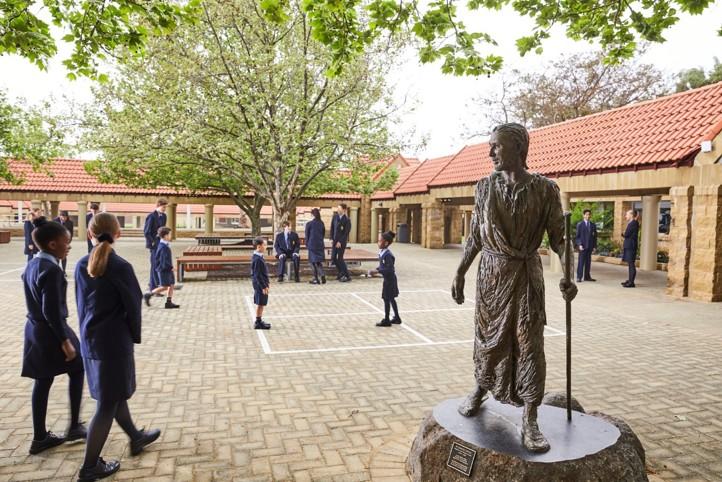
Today is the Feast of St Ignatius of Loyola, founder of the Society of Jesus and one of the founders of John XXIII College. More than 500 years after his conversion, Ignatius continues to offer wisdom that is remarkably relevant for the world we live in today.
Ignatius lived during a time of great change, uncertainty and division. While the challenges were different, our world today faces many of the same realities. Rapid technological advances, social division, global conflict, and growing concerns about wellbeing can leave people searching for meaning and direction. Ignatius' response was simple but powerful: pause, reflect and discern what truly matters.
His practice of reflection is especially important in an age of constant noise and distraction. Rather than reacting quickly, Ignatius encouraged people to be attentive to their thoughts, feelings and experiences so they could make wise decisions grounded in their deepest values.
Ignatius also challenged people to 'find God in all things'. He believed that learning, relationships, service and everyday experiences could all be places of encounter with God. This vision continues to shape life at John XXIII College, where faith, learning and personal growth are woven together.
Perhaps most importantly, Ignatius inspired people to become 'men and women for others'. In a culture that can often focus on individual success, he reminds us that our gifts are best used in the service of others. His call to compassion, justice and generosity reflects the very values we seek to nurture in our students each day.
As we celebrate his feast day, we give thanks for the legacy of St Ignatius. His message remains as relevant as ever: be reflective, seek purpose, care for others and strive to make the world a little better than you found it. In doing so, we continue the mission that has shaped our College community.

Janeen Murphy
Deputy Principal Faith and Mission
Community Mass
Friday, 14 August, is the date of our next Community Mass, which will be prepared by students in Ward House. All are welcome!
Thank you to Loyola House for their preparation of this week’s liturgy in honour of St Ignatius of Loyola. Thank you also to Fr Huy for his insights into the conversion of St Ignatius.
Ignatius lived a full life. In his reflection (see below), Jesuit priest Fr Andrew Hamilton has chosen to portray a 1526 ‘snapshot’ of Ignatius and his milieu.
Community Mass details
- College Chapel
- All welcome!
- Fridays in term time
Starts at 8:00am; concludes at 8:30am.
EXCEPTION: Week 3 – no Community Mass, due to the whole College Mass for John XXIII Day.
500 years ago - a snapshot of Ignatius of Loyola
Reflection from Jesuit, Fr Andrew Hamilton, SJ.
Like St Paul before him, St Ignatius is a saint for all seasons. By the time that he was chosen to be the first Superior of the group that would become the Jesuits, Ignatius had ‘been there and done that’. But he was still searching for his calling, still gathering insight into his complex and changing world. His feast day (31 July) invites us to take a snapshot of his life in 1526 and ask what experience he had gathered on the way.
This was extraordinarily rich. It included first-hand experience of war and of the new dangers that gunpowder provided. He had also been a courtier with the knightly ideals of winning battles and women, had experienced an extraordinary religious conversion, lived as a beggar and itinerant spiritual guide, had travelled as a pilgrim to the Holy Land and been politely expelled, and had gone back to primary school to study Latin and theology. And he was still seeking to know what God asked of him!
In 2026 Ignatius arrived in Alcala for further study that would better equip him for his work with people. There he found himself caught in the coils of the Reformation and anxieties of Church leaders and kings about its implications. It was a confusing time of redefining boundaries and changing alignments. In Alcala a charismatic and unconventional mother with her beautiful daughter sought him out. This contact brought him to the notice of the Inquisition for possible heresy, with its death penalty that would follow conviction. By this time Ignatius had attracted a number of devout companions, and much of the next two years were spent under examination. Throughout this time he prayed, observed, dealt with crises as they came, and found a way. In the following year he travelled to study in Paris. There he met the gifted and passionate companions who would form the nucleus of the Society of Jesus.
We normally think of Ignatius as the finished deal, always destined to lead the Jesuits in a world marked by the division between Protestant and Catholic and by the victory of Christians over Muslims in southern Europe. In reality, Ignatius was confronted with a world still being moulded, still hoping to return to Palestine, and intent on finding a way to serve God best. His world was very like our own, with its wars and rumours of war, with a Church in ferment, with new wheat and new thorns seeding, and the challenges to living faithfully within it.
Ignatius’ way was to focus on prayer, on engaging with people from every level of society about how to live faithfully, on weighing God’s call to him in his own life, in those of the people whom he met, and in the mood of the times. He entered his world from the bottom and not from the top. That was his way. Perhaps he also speaks to our world which is similarly divided, is similarly experiencing a period of great change that will touch institutions in ways that we cannot predict, and similarly calling for attention to God’s presence and call.