School Wide Positive Behaviour Support

School Breakfast Club
Days: Monday, Tuesday Friday. Times: 08:25 - 08:45. Room: SAKG Kitchen
Positive Reinforcement at Home
At our school, we use School-Wide Positive Behaviour Support (SWPBS) to help children understand what positive behaviour looks like and recognise them when they demonstrate it. Just like academic skills, positive behaviours need to be taught, modelled, practised and acknowledged and the same approach can be used at home.
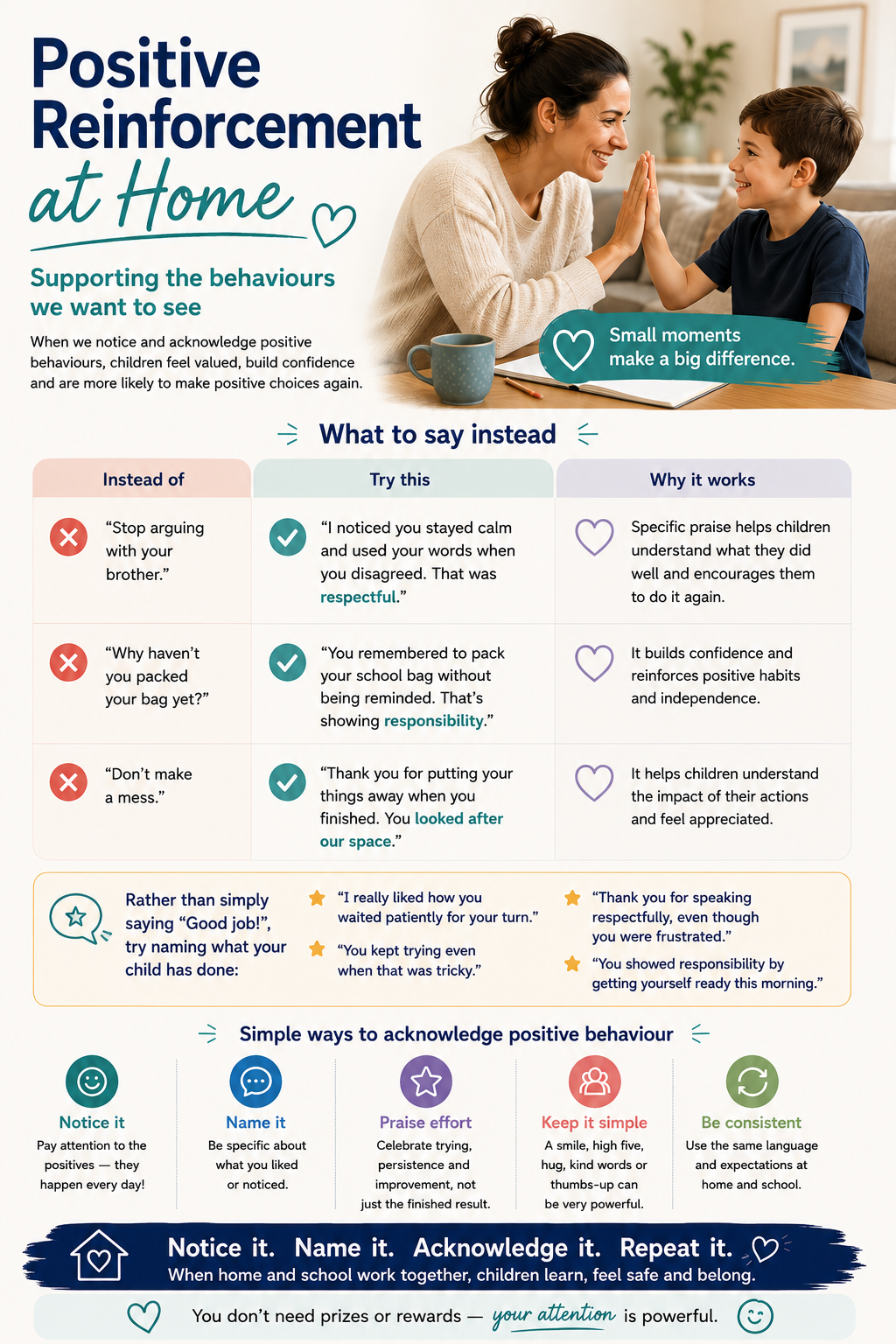
Positive reinforcement doesn’t mean constantly giving children rewards. Often, the most powerful reinforcement is simply our attention and genuine acknowledgement. When we notice and name what a child has done well, we help them understand the behaviour or strategy that was successful and encourage them to use it again.
At school, our expectations are Be Kind, Be Safe and Be a Learner, and families can reinforce these same ideas at home.
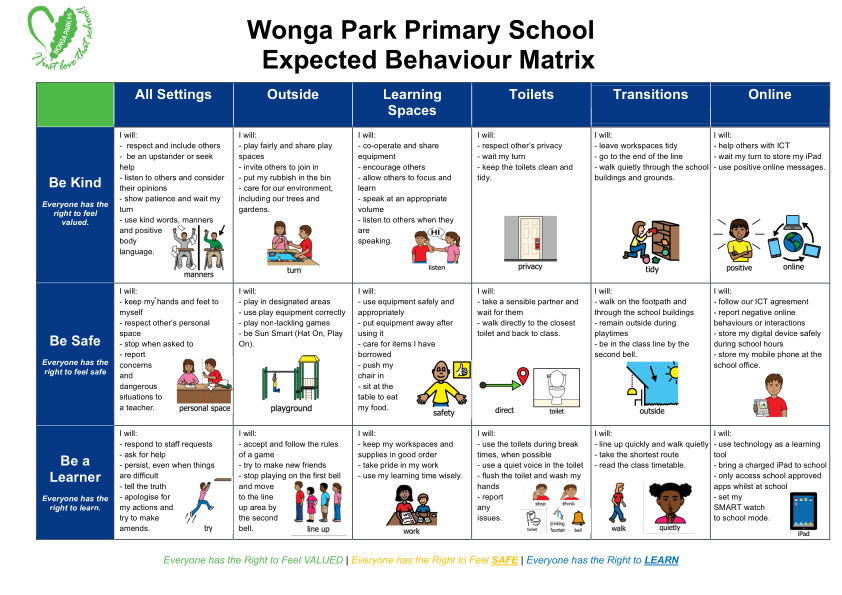
Positive reinforcement can be as simple as a smile, thumbs up, high five or an “I noticed…” statement:
“You showed kindness when you helped your sister.”
“You were disappointed, but you handled it calmly.”
“That didn’t work the first time, but you kept trying, that’s being a learner.”
“I noticed you helped without being asked.”
“You got ready the first time I asked, thank you.”
These small moments of acknowledgement can help children build confidence, independence, responsibility and self-regulation, while consistent language between home and school helps reinforce the positive behaviours we want to see.
Try the 3:1 Challenge:
For one week, try to notice three positive behaviours for every correction. This doesn’t mean ignoring challenging behaviour — children still need clear boundaries and calm, consistent responses. It simply helps us notice the positive behaviours that can sometimes go unseen.
When things don’t go to plan, use the moment to teach and practise:
“I can see you’re frustrated. Let’s try that again using respectful words.”
When your child tries again, acknowledge it:
“That’s it. You were frustrated, but you used calm words that time.”
Start small by choosing one behaviour to encourage, such as independence, respectful language, helping others or managing frustration.
Notice it. Name it. Acknowledge it. Repeat it.
When home and school work together, children receive a consistent message about the behaviours that help themlearn, feel safe and belong.
Have a great week,
Wellbeing Team
Helpful Rescource: