Level 1 & 2
REMINDERS & UPDATES
Gymnastics - We are full swing with our gymnastics sessions and the students are loving the experience. A reminder to ensure your child is in appropriate clothing i.e no skirts or stockings.
iPad Reminders
- Our iPad program works best when all students who have their own iPad bring it to school each day. Please remind your child to pack their iPad in their school bag every morning.
Holidays
If you are intending on taking a holiday during the school term, please make sure you inform your classroom teacher and discuss an absence plan.
Term Three Dates
August 26th - 9am (Book Week Parade) - You might like to begin planning your child's costume and book combination in preparation for our annual 'Book Week Parade'.
CURRICULUM
Literacy
Thank you for your continued support with home reading. Reading together each night, even for just 10–15 minutes, is one of the most valuable ways you can support your child's learning. Regular reading helps build confidence, fluency, vocabulary and comprehension, while also fostering a lifelong love of books. We encourage students to continue recording their reading in their log books each evening, as this helps us celebrate their efforts and monitor their progress. Thank you for partnering with us to make reading a positive and enjoyable part of your child's daily routine.
Grade 1 Students Grade 1 students will be exploring r-controlled vowels, beginning with 'ar' as heard in words such as car, park and spark. They will then learn about the 'or' and 'ore' spelling patterns, discovering how these letter combinations represent the same sound in words like corn and shore.
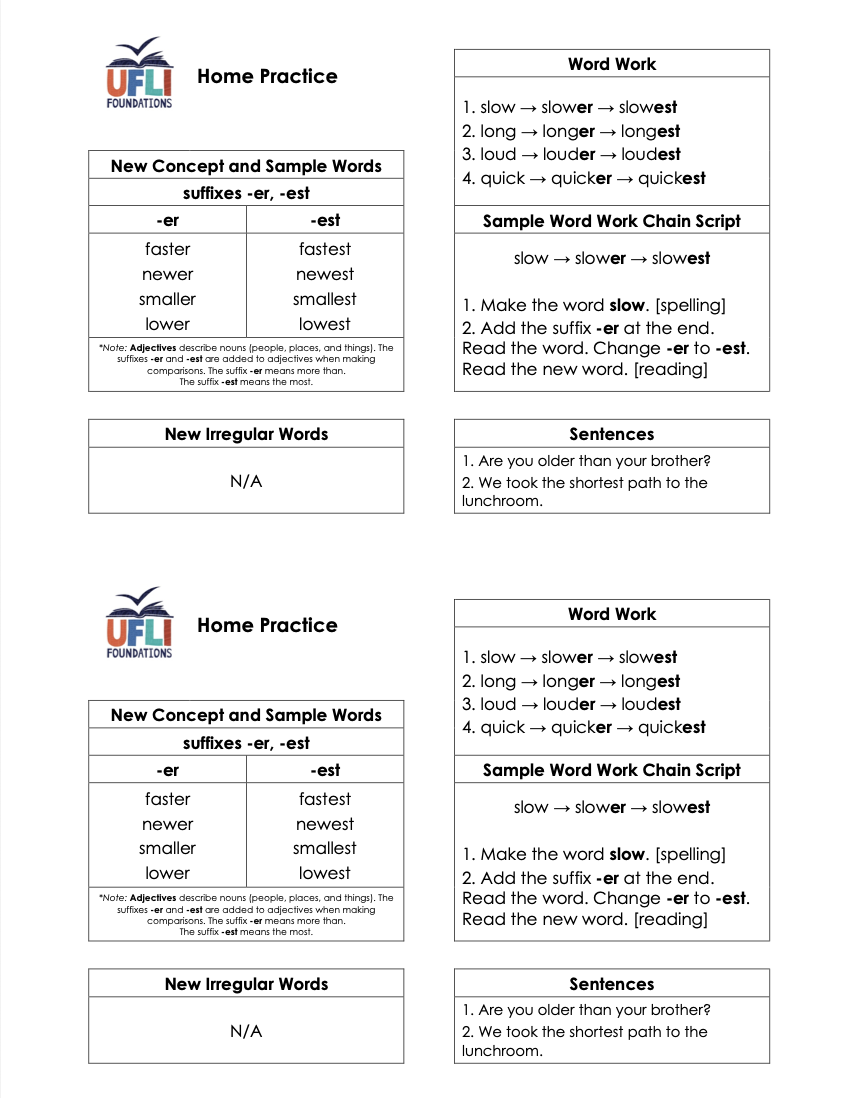
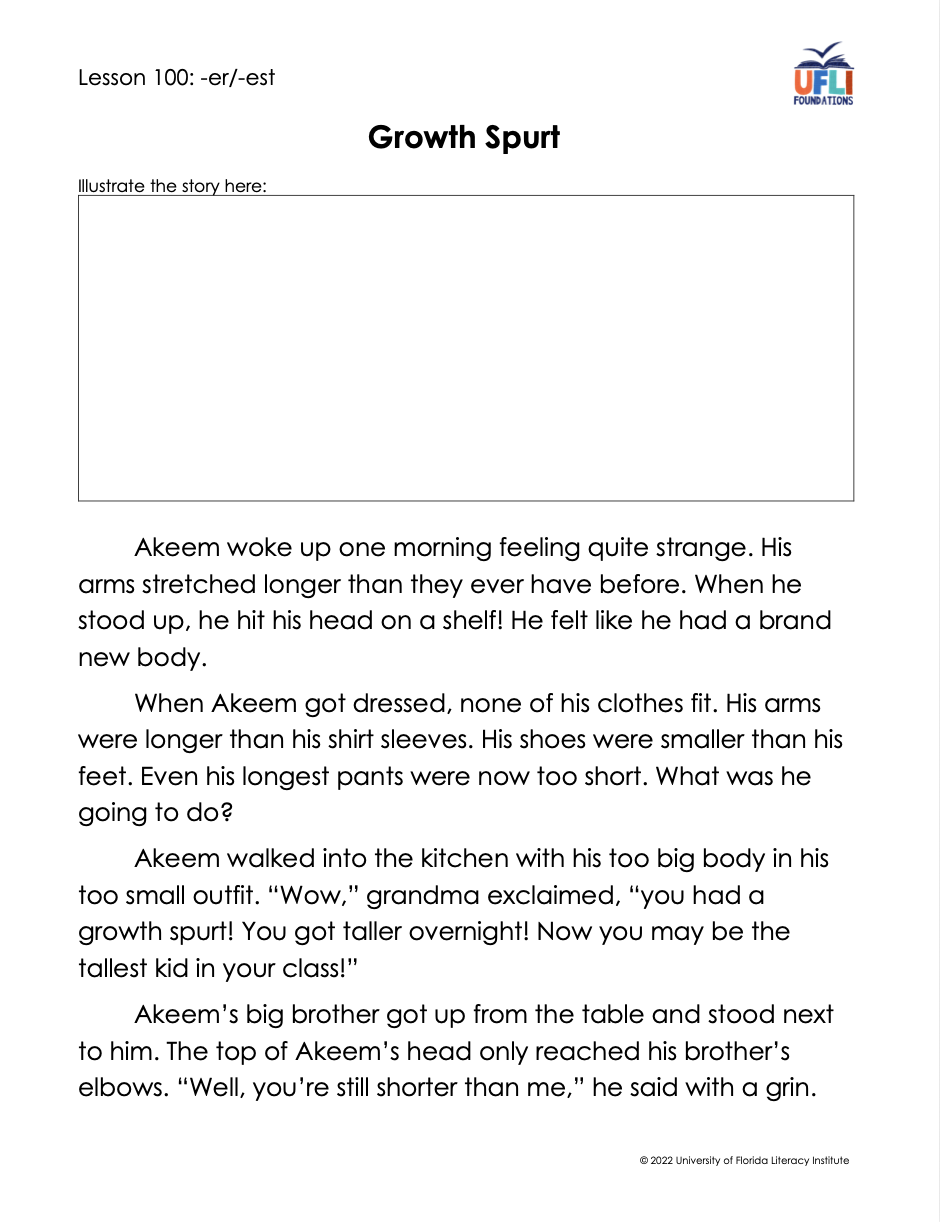
Grade 2 Students Grade 2 students will continue building their understanding of morphemes by exploring suffixes such as -less and -ful, learning how these word parts change the meaning of a base word. They will then investigate the prefix un-, discovering how adding it can create the opposite meaning of many familiar words.
What can you do at home?
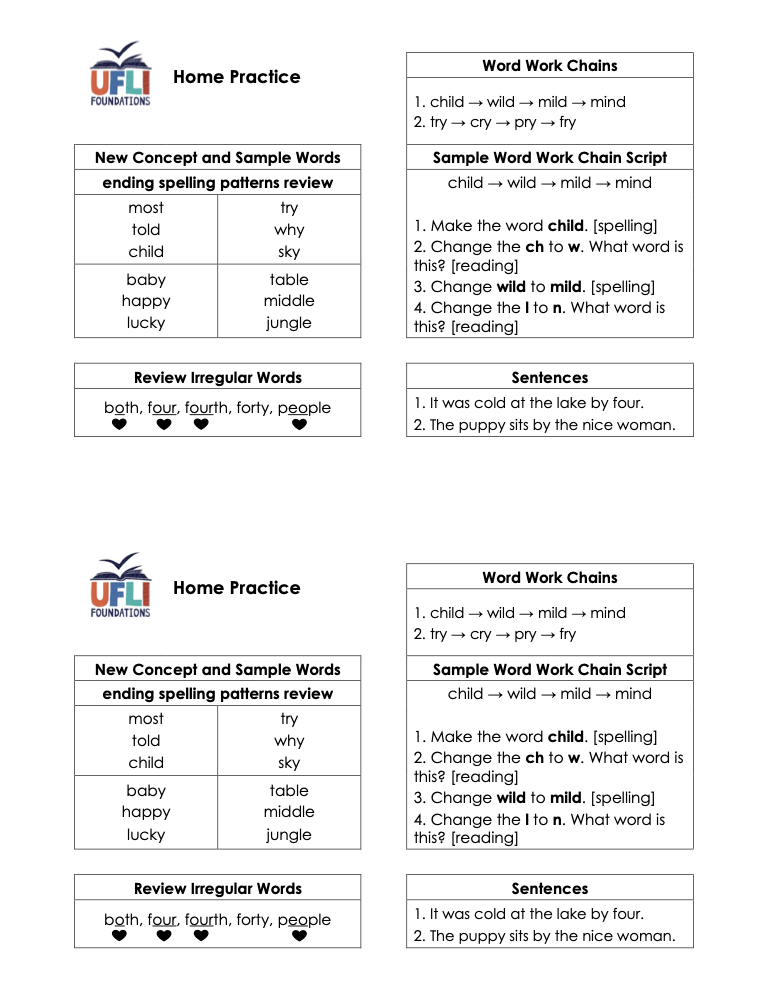
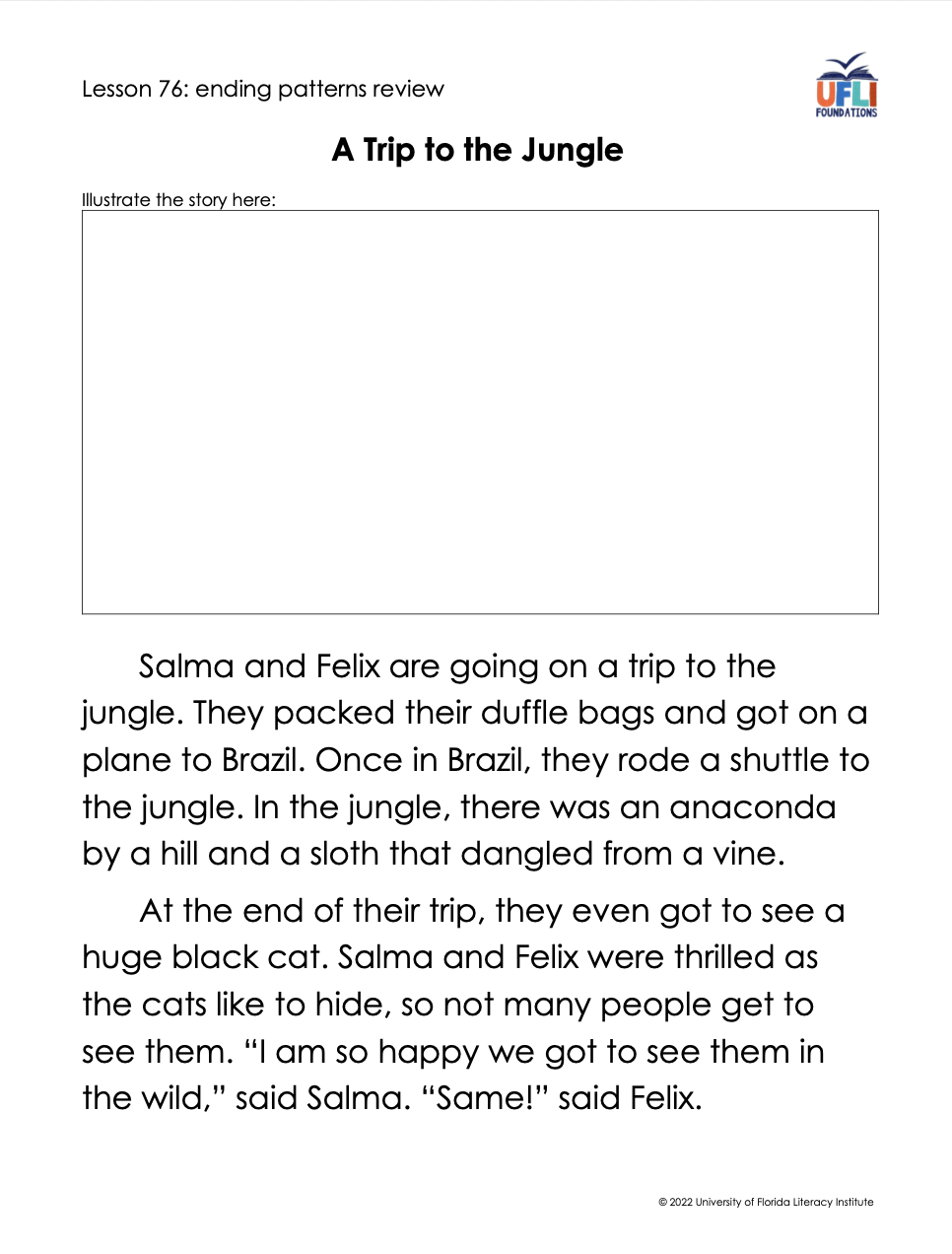
- Optional UFLI Home Practice pages found in their home learning book.
Writing:
Over the coming weeks, our Grade 1 and 2 students will begin exploring a range of wonderful books shortlisted for this year's CBCA Book Week. Through these engaging stories, students will strengthen their comprehension skills by making inferences, identifying connections, exploring similes and other figurative language, expanding their vocabulary, and responding thoughtfully to a variety of texts. We look forward to celebrating the joy of reading together as we discover this year's outstanding Australian children's literature. You can view the full list of the 2026 CBCA Book Week shortlisted books here: https://cbca.org.au/2026-shortlist/
Maths
Grade One Students
This week, our Grade 1 students have continued exploring skip counting by 2s, 5s and 10s through engaging games, songs, hands-on activities and number investigations. Students are learning to recognise patterns in number sequences, identify what comes next and explain the patterns they notice. Developing confidence with skip counting strengthens number sense and provides an important foundation for future learning in multiplication, division and place value.
What can you do at home?
You can support your child's learning by practising skip counting during everyday activities. Count by 2s while pairing socks, by 5s when counting fingers, or by 10s as you count coins or objects in groups. Encourage your child to notice the patterns in the numbers and ask questions such as, "What number comes next?" or "How do you know?" Singing skip-counting songs, playing number games and looking for patterns together are fun ways to build confidence and strengthen your child's number knowledge.
Grade Two Students
This week, our Grade 2 students have continued exploring division by investigating how collections can be shared and grouped equally. Through hands-on activities using counters, blocks and everyday materials, students are learning that division is about making equal groups and recognising when groups are fair. They are using practical materials, drawings and mathematical language to explain their thinking and solve real-world sharing problems. These experiences build a strong foundation for future learning in multiplication and division while developing students' confidence in reasoning, problem-solving and communicating their mathematical ideas.
What can you do at home?
You can help your child build their understanding of division through everyday activities at home. Encourage them to share objects equally between people or groups, such as dividing grapes between family members, sharing biscuits onto plates or sorting toys into equal groups. Ask questions like, "Can everyone have the same amount?", "How many are in each group?" or "Are there any left over?" These simple, hands-on experiences help children understand that division is about sharing and grouping equally, while building confidence with mathematical thinking in meaningful, real-life situations.
WELLBEING
School-Wide Positive Behaviour Focus
Be Kind (Online)
Over the week, our Grade 1 and 2 students will be learning how to Be Kind (Online) by practising responsible and respectful use of their iPads. A key focus will be waiting patiently for their turn to store their iPad, helping to keep our classroom calm, safe and organised.
As part of our Tell, Show, Practise lessons, students will also participate in Respectful Relationships (RR) Education – Topic 6: Help Seeking. Through discussions, role-plays and classroom activities, students will learn when they need help, who they can ask for support, and how seeking help is a positive and important skill both at school and online.
What can you do at home?
Continue the Conversation at Home...
Here are some questions you might like to ask your child to reinforce our wellbeing learning:
- What was something that made you feel happy today?
- Did anything feel tricky today? What helped you get through it?
- What helps your brain and body feel calm when you're upset or worried?
- Can you show me one of the calming strategies you've been learning at school?
- Who is someone you can talk to when you need help?
- What is one thing you're proud of yourself for today?
- When you notice a friend having a hard day, how could you help them?
- What is one strategy you could use next time you feel frustrated or overwhelmed?
What are three things that made you smile today?
Taking just a few minutes each day to talk about emotions, challenges and successes helps children build confidence, resilience and a strong understanding of the strategies they can use to support their wellbeing both at school and at home.
CBL
Students will explore different habitats and investigate what the terms endangered, threatened, and vulnerable mean, discovering how some living things come to be at risk. Through stories, discussions and hands-on learning, students will consider the concept of power and reflect on questions such as: What is power? What responsibilities come with having power? How does our power impact living things? Throughout the term, students will be encouraged to think deeply about our essential question: How does our power influence our choices? As they build their understanding, students will explore how the choices we make can help protect and care for the environments and living things around us.
Guiding Questions
What is power?
What responsibilities come with having power?
How does our power impact living things?
How do living things become endangered?
Essential Question
How does our power influence our choices?
Challenge
Prep – 2s Pledge to Do!
Educate the community about how they can use their power to support endangered animals.