Art
Welcome to Term Four! I hope you enjoyed a wonderful holiday break and had plenty of time to relax and enjoy special moments with family and friends. As we begin our final term, we’re excited for another creative journey in Visual Arts. Students will continue to experiment with a variety of materials, explore new ideas and build their artistic skills through engaging hands-on projects. We’re also excited to announce an external art competition, giving students the opportunity to share their creativity and be in the running to win a $75 gift card!
Prep
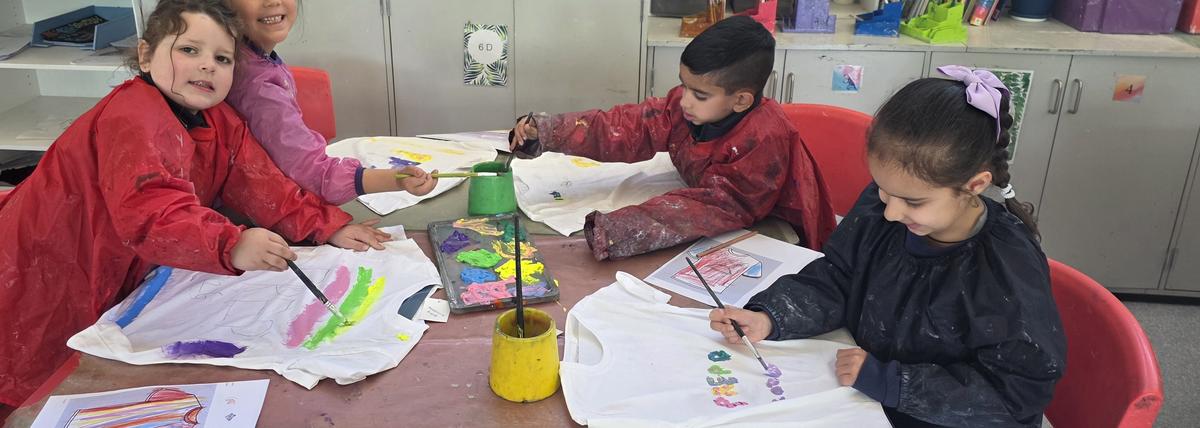
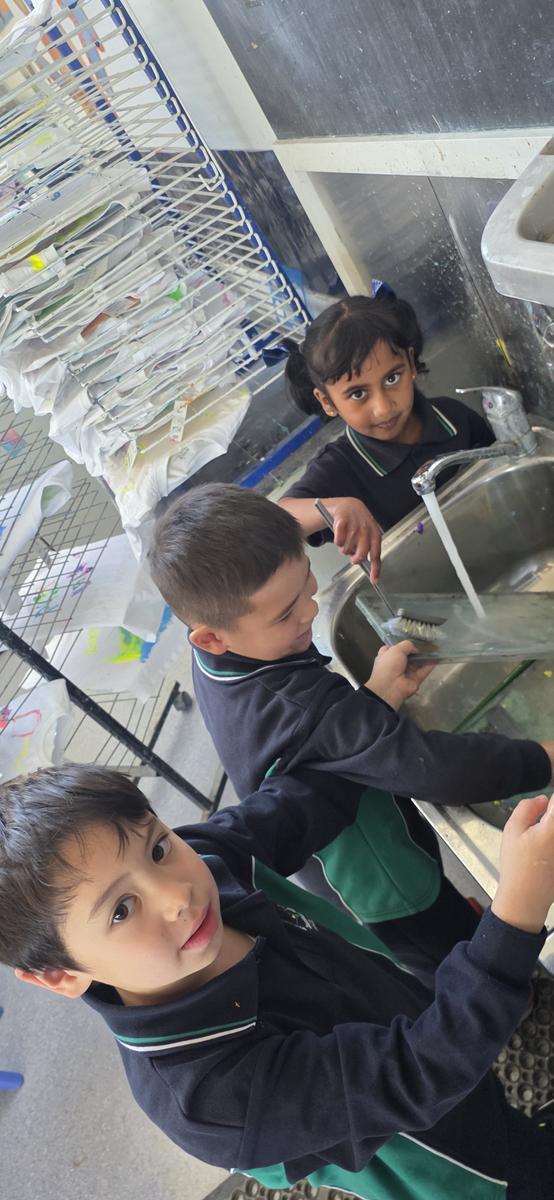
In Term 4, Prep students will celebrate their Prep journey by designing and painting their own Prep Prom T-shirts. Students will use acrylic fabric paints and experiment with a variety of painting techniques, including brushstrokes, outlining and stippling. During the second half of the term, students will explore the picture storybook Arlo Needs Glasses by Barney Saltzberg. Through this text, they will learn about celebrating and accepting differences, and will express these ideas in their own artworks using a range of mixed media materials.
Curriculum Links:
- Explore how and why the visual arts are important for people and communities VC2AVAFE01
- Explore ideas for artworks through play and visual arts processes VC2AVAFE02
- Create artworks that communicate experiences, ideas and observations and explore meaning VC2AVAFC01
Key Vocabulary: techniques, brushstrokes, fabric paint, mixed-media
Year 1
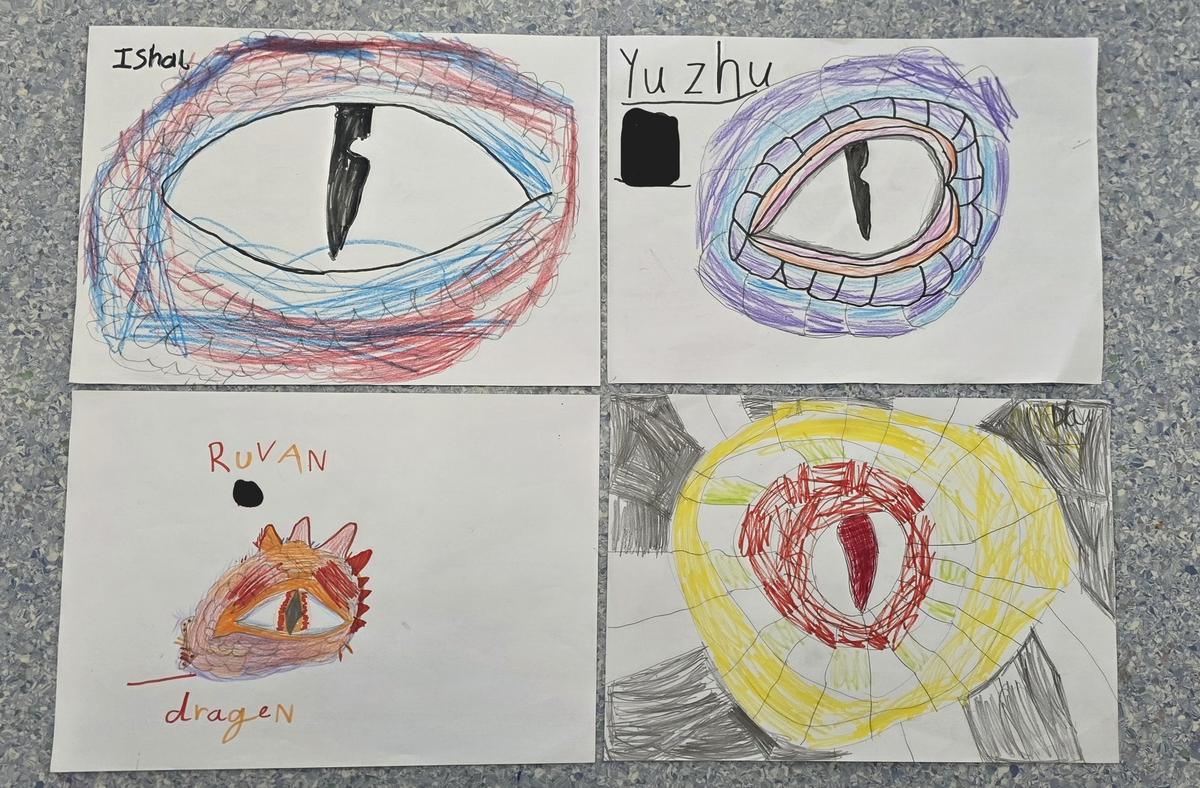
This term, students will shift their focus to sculpture, creating a dragon eye using hand-building techniques with polymer clay. They will develop their practical skills by learning to roll, press, coil and create patterns and textures in the clay. Students will also learn how to draw a dragon eye, focusing on colour, shading and tonal changes to create depth and a sense of realism. They will explore the significance of dragons and the symbolism they hold in Chinese culture, making connections between their developing sculptural skills and cultural understanding.
Curriculum Links:
- Explore where, when, why and how people across cultures, communities, times, places and/or other contexts experience visual arts, including artworks created by Aboriginal and Torres Strait Islander Peoples VC2AVA2E01
- Explore ways of using visual conventions, visual arts processes and materials VC2AVA2D01
- Use visual conventions, visual arts processes and materials to create artworks that communicate ideas, experiences and observations VC2AVA2C01
Key Vocabulary: hand building, polymer clay, shading, coil, texture
Year 2
In Term Four, students will advance their skills by creating self-portraits with various patterns. They will experiment with different mediums and techniques, including watercolour resist, oil pastels, watercolour layering, sgraffito, and acrylic paint layering. They will also explore patterns using optical illusions. For their final self-portrait, students will select their favourite background and apply colour to their facial features, clothing, and hair. They will consider different colour groups, such as complementary colours, warm and cool colours, and analogous colours, to enhance their artwork.
Curriculum Links:
- Explore where, when, why and how people across cultures, communities, times, places and/or other contexts experience visual arts, including artworks created by Aboriginal and Torres Strait Islander Peoples VC2AVA2E01
- Explore ways of using visual conventions, visual arts processes and materials VC2AVA2D01
- Use visual conventions, visual arts processes and materials to create artworks that communicate ideas, experiences and observations VC2AVA2C01
Key Vocabulary: watercolour, resist, water colour, acrylic, self-portrait, analogous colours
Year 3
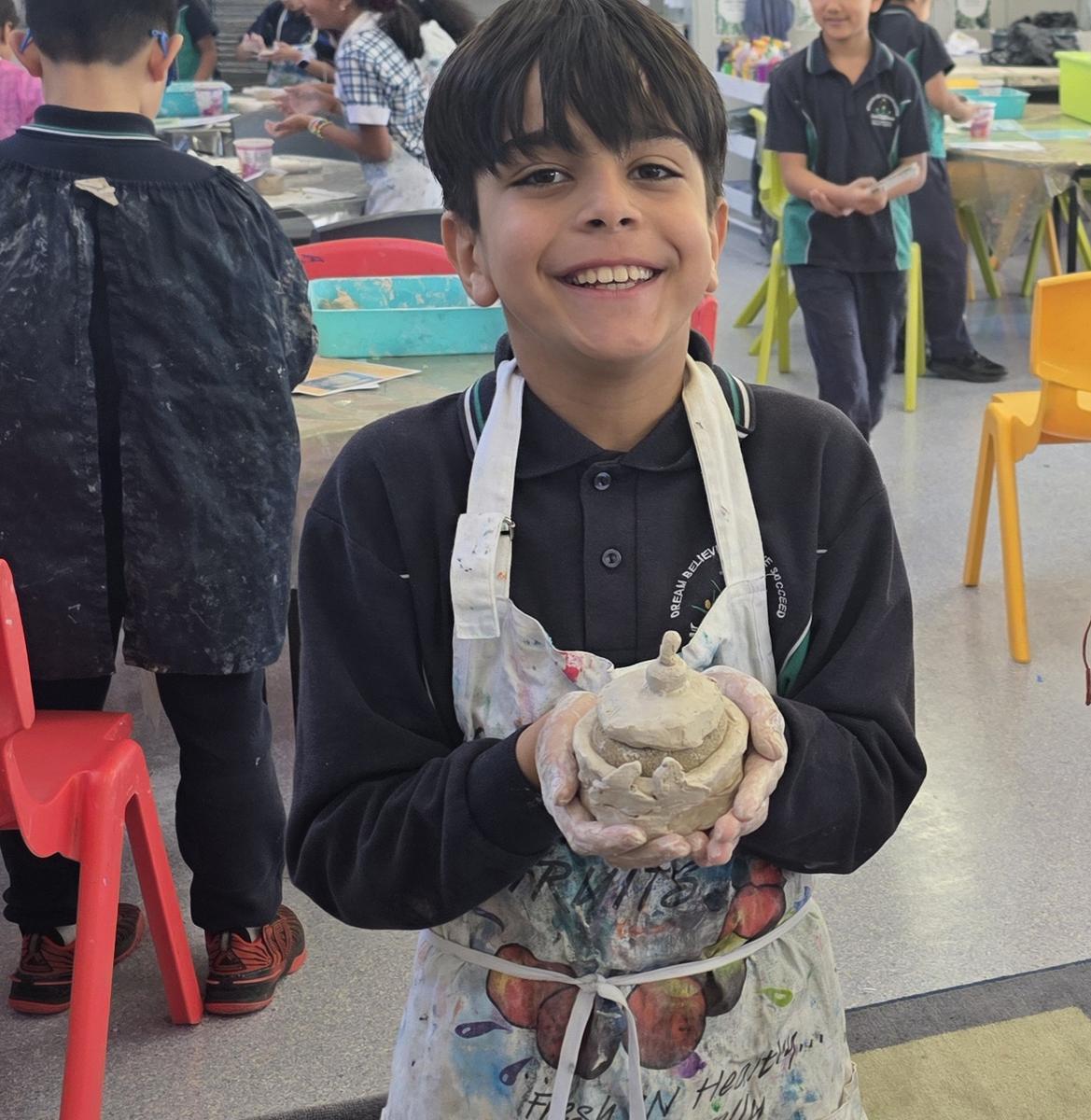
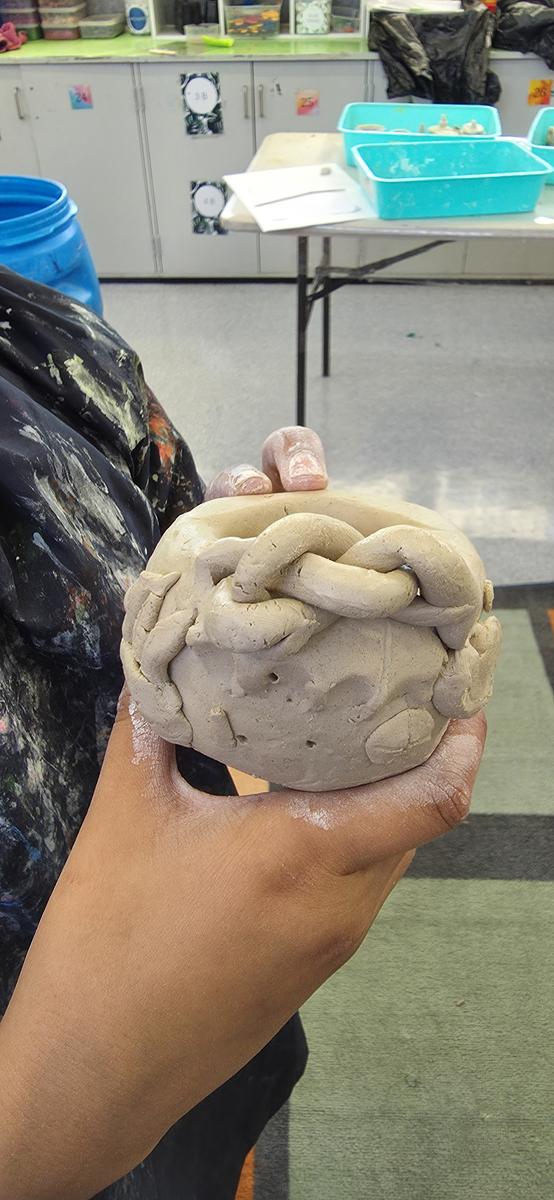
Students will continue developing their clay pinch pots, drawing inspiration from Torres Strait Islander Peoples and exploring patterns, designs and visual elements. They will refine their designs and strengthen their construction skills by using the ‘slip, score and blend’ method to securely attach pieces of clay. Once their pinch pots are complete, students will explore the art element of colour by experimenting with different painting materials, including watercolour and acrylic paints. Through this process, students will develop their understanding of colour application and make purposeful choices to enhance their details and patterns from their designs.
Curriculum Links:
- Explore how Aboriginal and Torres Strait Islander Peoples use visual arts to communicate their connection to and responsibility for Country and Place VC2AVA4E02
- Use visual conventions, visual arts processes and materials to create artworks that communicate ideas, perspectives and meaning VC2AVA4C01
Key Vocabulary: pinch pot, slip-score-blend, smooth, texture, colour, line, shape
Year 4
This term, students will be exploring the art movement Surrealism. They will investigate the meaning and key ideas of this style, study the work of artists such as Salvador Dalí and René Magritte, and examine how Surrealism continues to influence modern art, television, and film. Drawing on this knowledge, students will then create their own surrealist-inspired artwork. They will learn how to use watercolour pencils by experimenting with layering, blending, colour application and the use of water to create different effects.
Curriculum Links:
- Explore and describe artworks, and why, when and how visual arts are created and/or presented across cultures, times, places and other contexts VC2AVA4E01
- Develop visual arts practices by exploring and experimenting with visual conventions, visual arts processes and materials to create artworks VC2AVA4D01
- Use visual conventions, visual arts processes and materials to create artworks that communicate ideas, perspectives and meaning VC2AVA4C01
Key Vocabulary: Surrealism, Salvador Dali, René Magritte, modern art
Year 5
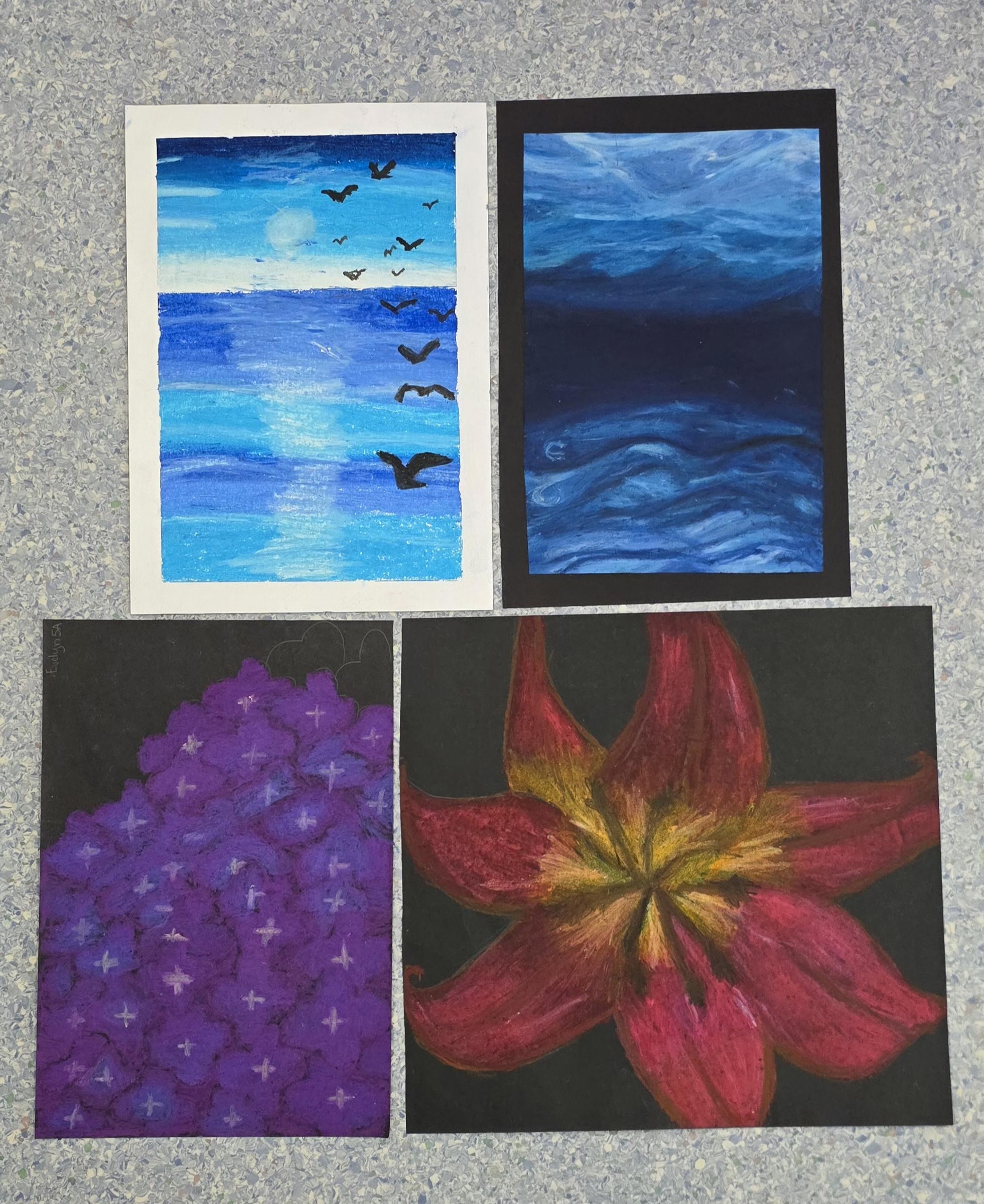
In Year Five, students will continue developing their oil pastel skills by finalising their current artworks, with a particular focus on the technique of layering to build colour, depth and detail. They will then create a second oil pastel artwork, where they will explore and apply the scumbling technique. Once both artworks are complete, students will select their favourite piece and learn how to write an artistic statement that explains their creative choices, with a focus on identifying and describing the art elements used in their artwork. Students will also reflect on their finished work, recognising what they are proud of, identifying areas for improvement and considering how they can continue to develop their artistic skills.
Curriculum Links:
- Develop visual arts skills by experimenting with visual conventions, visual arts processes and materials VC2AVA6D01
- Plan and create artworks using visual conventions, visual arts processes and materials to communicate ideas, perspectives and meaning VC2AVA6C01
Key Vocabulary: blending, scumbling, modern art, artistic statement
Year 6
This term, students will create an artwork of their choice on the theme of graduation. They may produce a technical drawing with a focus on shading (e.g., Year 6 graduation cap, scroll, or a self-portrait), create a graduation hat or choose another medium that suits their idea. Each piece will reflect the student’s personal journey, capturing emotions, gratitude, lessons learned, and memorable moments from Prep to Year 6. Students will use symbolism and the elements of art to communicate their ideas with clarity and impact.
Curriculum Links:
- Explore ways that visual conventions, visual arts processes and materials are used to communicate ideas, perspectives and meaning in visual arts practices across cultures, times, places and other contexts, including from Aboriginal and Torres Strait Islander Peoples VC2AVA6E01
- Develop visual arts skills by experimenting with visual conventions, visual arts processes and materials VC2AVA6D01
- Plan and create artworks using visual conventions, visual arts processes and materials to communicate ideas, perspectives and meaning VC2AVA6C01
Key Vocabulary: self-identity, artistic symbolism, technical drawing, art elements
How can you support your child’s art learning at home?
- Explore different themes: Introduce your child to a wide range of art styles, artists, and cultural art forms from around the world. This broadens their artistic horizons and fosters cultural appreciation.
- Experiment with a range of materials to develop different techniques from different mediums. Providing them with diverse materials will help foster their creativity and expand their artistic skill set.
- Ask Open-Ended Questions: Engage your child in discussions about their artwork. Ask open-ended questions like, "What inspired this piece?" or "Tell me about your creative process." This helps them articulate their thoughts and ideas.