
Wellbeing


Michael Grose
25 Aug, 2026
A Brilliant, New Tool that Builds Your Child's Calm Authority
This calm, proactive approach builds your child’s emotional intelligence and breaks the cycle of dysregulation.
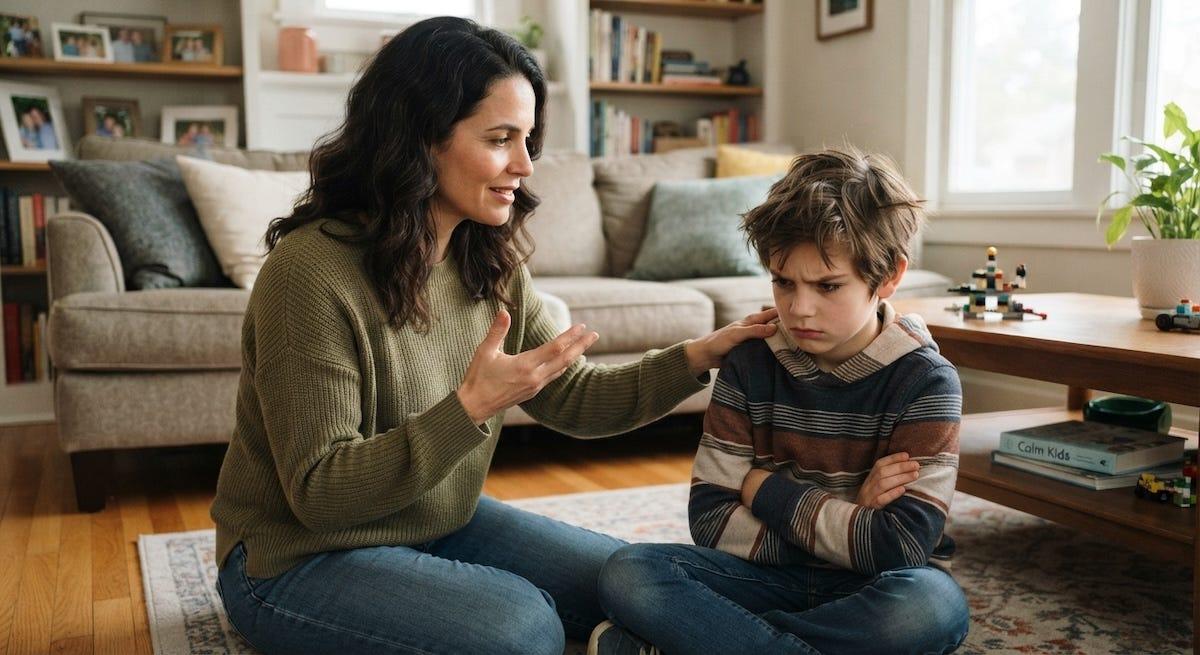
You probably know the horrible feeling of watching your child unravel, whether it’s the heat of a sibling squabble, the nervous tension before a school presentation, or the shaky voice when trying to speak with a stranger.
You want to rush in and fix the problem your child is facing.
You can do it in a flash.
But you also know that, in doing so, you rob your child of the chance to develop the problem-solving skills and agency to manage any situation.
It’s better to give your child the tools they need to navigate challenges with confidence rather than solve them yourself.
The tool they need is the Self-Anchor.
Teach Your Child to Self-Anchor
This tool is not designed to help your child avoid conflict, but to regulate their physiology and emotions so they can face up to challenging or new situations.
Here’s how to teach a child this three-step self-anchoring process:
1. Stop and Breathe
When faced with a stressful situation, encourage your child to stop, plant their feet firmly on the ground, and slow their breathing.
This action signals safety to their nervous system, a necessary precursor to rational, confident thought.
It grounds them in the present moment and turns off their lizard brain, which is responsible for the fight-or-flight response.
Practise this step with them in no- or low-stress situations.
Role-play it.
Behaviour rehearsal is a powerful tool that enables kids to learn new skills they can use in all sorts of situations.
Create a prompt - “Take a breath” - to cue them to anchor themselves when they need reminding.
Expert Tip: Model this by taking a visible, slow breath before responding to your child when they are upset, showing them that you are also using your own anchor.

2. Observe What’s Happening
Also known as metacognition, this high-level skill involves the ability to step back and observe their thinking and, if necessary, change the internal script driving their emotions.
Encourage them to think about the story they are telling themselves about the situation they’re faced with.
This helps them move from being in the emotion to observing it, transforming them into a detached, clear-headed problem solver.
For instance, a child may be angry at a sibling for breaking a favourite toy. The story they tell themselves may go something like this: "He always takes my things without asking. He’d done it again. He’s broken it on purpose. I know it.”
This child has told the Selfish Sibling Story to himself many times. By tapping into old grievances, this narrative drives an unhelpful emotional response.
By recognising the familiar story, he can change the narrative into something more reasonable, such as, “What’s happened to my toy? I need to find out.”
Expert Tip: Avoid jumping in with your own interpretation of events; allowing them to narrate the experience builds their internal capacity for perspective.
3. Take a Small Step
This is where composure and calmness win the day.
Guide them to identify a specific low-stakes action.
If it’s sibling conflict, the action may be as simple as saying, “I’m going to the kitchen now. Let’s talk in ten minutes.”
By taking a small, deliberate step, they activate the problem-solving part of their brain, which is vital for their sense of control.
Expert Tip: Keep the action steps extremely small, because success with a micro-step builds the positive momentum needed to tackle larger challenges later.
Finally……..
When you teach a child to self-anchor, you let them know that composure is their greatest asset.
Importantly, they learn that they do not need to be the loudest or most aggressive person in the room to hold authority.
That, in fact, soft power rather than hard power usually wins the day.
They also learn that true leadership and the ability to negotiate the world comes from the quiet, unshakeable confidence of someone who knows how to hold their own ground.
And that’s a template that hopefully they’ll retain for life.
Michael Grose
1 Sept, 2026
Here’s What to Do When Your Child Struggles With Friendships
Help your child navigate the social world at their own pace.
As parents, it’s natural to worry when you see your child standing on the periphery of the playground.
We live in a culture that often equates social success with popularity—the more birthday invitations on the fridge, the “better” your child must be doing.
That makes life tough for you and your child.
Not every child is a social butterfly.
For many children, a small social circle isn’t a sign of failure; it’s a sign of their temperament.
They may be slow to warm up in social situations, so they need time to feel comfortable.
They may be more down the introvert end of the introversion-extraversion scale.
Conversely, your child may rush into new social situations, saying and doing things that don’t help them make friends.
These children can use a little social coaching to help them along.
Whatever your child’s struggles, don’t panic. Use these four strategies to tackle your concerns (that may not really be struggles at all):
1. Reframe the Friendship Story (we tell ourselves)
Before you try to resolve the problem, ask yourself if there is a problem at all.
Some children are onlookers—they like to observe the landscape before diving in.
Others simply prefer a small group of friends. They find large groups draining.
More commonly known as introverts, this latter group find groups of one or two easier to manage and negotiate, especially if they come from a small family.
Keep in mind:
- The One Good Friend Rule: Research consistently shows that having one solid, supportive friend is a significant protector against bullying and loneliness. If your child has one person they trust, they are doing well.
- Avoid Labels: Be careful not to describe your child as shy or lonely within their earshot. This becomes a self-fulfilling prophecy. Instead, describe them as observant or someone who chooses their friends carefully.
2. Coach them in Skills (not their personality)
Socialising is a set of skills, much like riding a bike or learning a language.
If your child is struggling, they don’t need a lecture; they need some coaching about how to make and keep friends. They also may need help managing the anxiety of social entry.
Start with:
- The Low-Stakes Entry: Many kids simply don’t know how to join in a game. Give them a short social script that they can use. Instead of asking, “Can I play?”, coach them to look for a game in progress, stand nearby, and offer a helpful comment: “Who’s winning? Do you guys need another player?"
- Practice the Social Reconnaissance Technique: Often, kids who struggle to make friends charge in too quickly or hover too far away. Teach them to read the room before making a move. Encourage them to watch a group for 30 seconds to identify what game is being played, what the vibe is and who the best person to approach may be.
3. Provide Plenty of Scaffolding (parental assistance)
If your child’s social circle is small because they struggle with sharing, following others or bossy behaviour, use those moments as teaching opportunities.
Try these two strategies:
- The Home Turf Advantage: Organise short, structured playdates (90 minutes is often plenty) at your house. Having their own toys and space provides a sense of security.
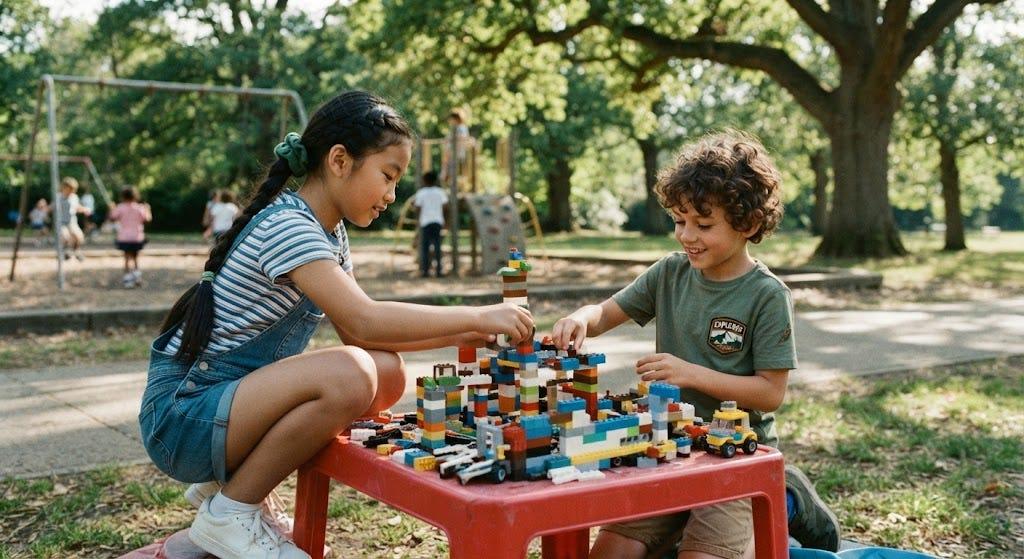
- Activity-Based Socialising: For children who find small talk difficult, steer them toward side-by-side or activity-based socialising. Think LEGO clubs, coding classes, or sports. When the focus is on a task, the pressure to be socially skilled evaporates. Also, shared interest is a great socialising agent.
4. Build their Inner Strength (the key to real happiness)
Ultimately, you want your child to be comfortable in their own company. Acknowledge their ability to manage boredom and keep themselves occupied without needing constant validation by others.
Spending time on your own is a gift, particularly for always-on-the-go boys.
Here are two ideas to try:
- Celebrate Solitude: Distinguish between loneliness (a pained state) and solitude (a productive, peaceful state). If your child is happily reading or drawing alone, don’t force them to “go find a friend.”
- Validate their Discomfort: If they feel left out, acknowledge it. “It feels a bit heavy in your chest when you see them playing without you, doesn’t it?” This validates their feelings without making them victims.
Finally…..
Parenting a child who marches to a different social drum requires patience, perspective, and a shift in our own expectations.
True social success isn’t measured by a packed social calendar or the loudest voice in the playground.
It’s measured by a child’s confidence in who they are, knowing they have the resilience to navigate their world at their own pace.
And that includes the world of relationships.