
Wellbeing
Fiona Dandie & Robert Pain
Wellbeing
Fiona Dandie & Robert Pain
House Tokens are a part of Whittlesea Primary School’s Tier 1 positive reinforcement systems. Staff give house tokens to students who demonstrate positive school behaviour.
The idea is that house tokens are handed out ‘free and frequent’ for all positive behaviours that don’t require a Golden Ticket, e.g. lining up safely, following teacher instructions, picking up rubbish off the floor or speaking respectfully to your peers.
House tokens are collated each week by our House Captains and recorded on an ongoing sheet. At the end of each Term, the house with the most tokens is part of a ‘House Reward’ to be decided by House Captains and the Wellbeing Team.
Here is the current total for House Points at the end of Week 9, Term 3:
Dugat | Korangorangeet | Dhulin | Bunjil |
|---|---|---|---|
2038 | 1993 | 1817 | 1826 |




Children experience and respond to the world around them in different ways. Most of us notice sensory information—such as sounds, sights, smells, textures and movement—without giving it much thought. For some children, however, sensory information can feel much stronger, weaker or more difficult to organise. These differences are often referred to as sensory processing difficulties.
You may also hear the term Sensory Processing Disorder (SPD) used to describe significant difficulties with processing sensory information. Sensory processing differences can occur on their own or alongside other developmental differences. Every child's sensory profile is unique.
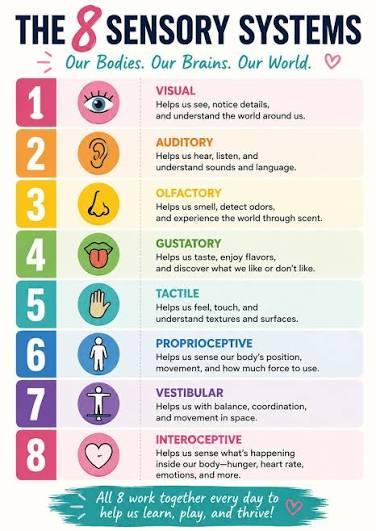
Sensory processing is the way our brain receives, interprets and responds to information from our senses. This includes the senses we are familiar with, such as:
It also includes senses that help us understand:
For some children, the brain may have difficulty organising or responding to this sensory information. This can affect how they feel, behave, participate and cope with everyday activities.
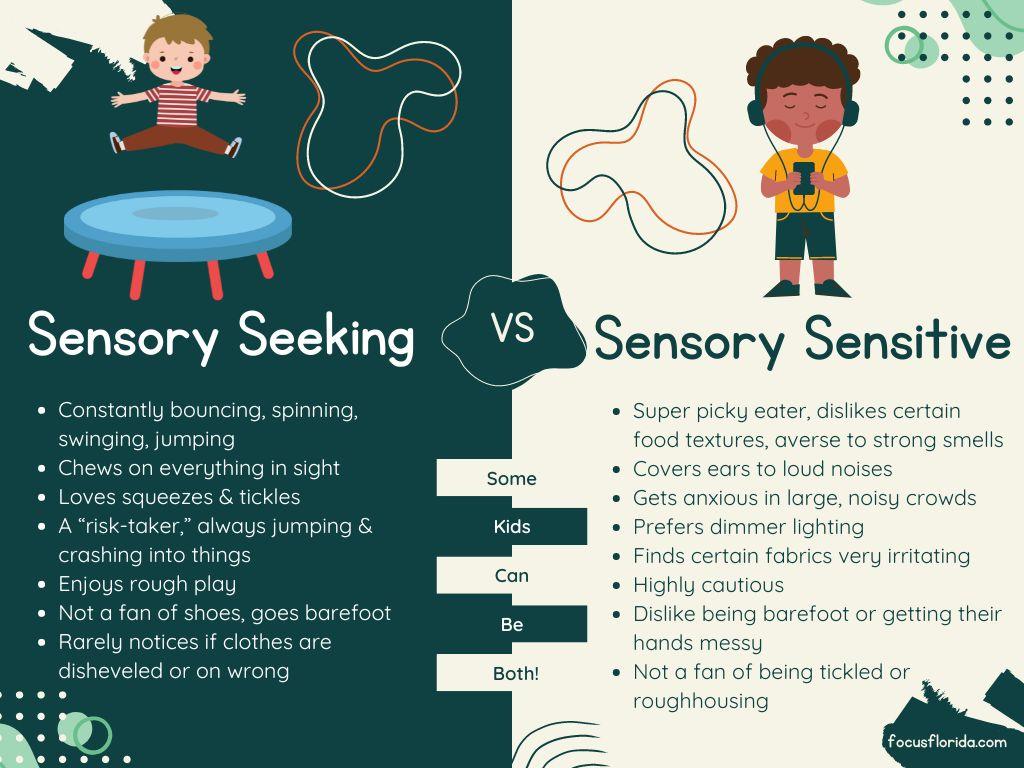
Some children may be particularly sensitive to sensory input. They may find certain sounds, textures, smells or environments overwhelming. For example, a child might:
Other children may appear to seek out sensory experiences. They may:
Some children may also have difficulty noticing sensory information. For example, they may not notice when they are hungry, cold, hurt or need to use the toilet, or they may seek very intense sensory experiences.
Sensory processing difficulties can look different from one child to another and can also change depending on the environment. Some signs that a child may benefit from further support include:
It is important to remember that many children have sensory preferences. Having a strong preference or dislike does not necessarily mean that a child has a sensory processing difficulty. Concerns are more significant when sensory differences consistently affect a child's daily life, learning, relationships or ability to participate in everyday activities.
If you have concerns about your child's sensory needs, a good first step is to speak with their classroom teacher. Teachers can share observations about how your child responds to different environments and activities at school.
Depending on your child's needs, further advice may be provided by professionals such as:
An assessment can help build a clearer picture of a child's sensory profile and identify strategies that may support them.
There is no single approach that works for every child. Support is most effective when it is based on an individual child's sensory needs and the situations they find challenging.
Helpful strategies may include:
Most importantly, children benefit when adults are curious about the reasons behind their behaviour. What may look like avoidance, inattention or challenging behaviour can sometimes be a child's way of communicating that an environment or experience feels overwhelming or difficult to manage.
With understanding, appropriate adjustments and the right support, children can learn to recognise their sensory needs and develop strategies that help them feel comfortable, regulated and ready to participate.
If you have concerns about your child, please don't hesitate to speak with their classroom teacher or a member of the school's wellbeing or diverse learners team.