Writing
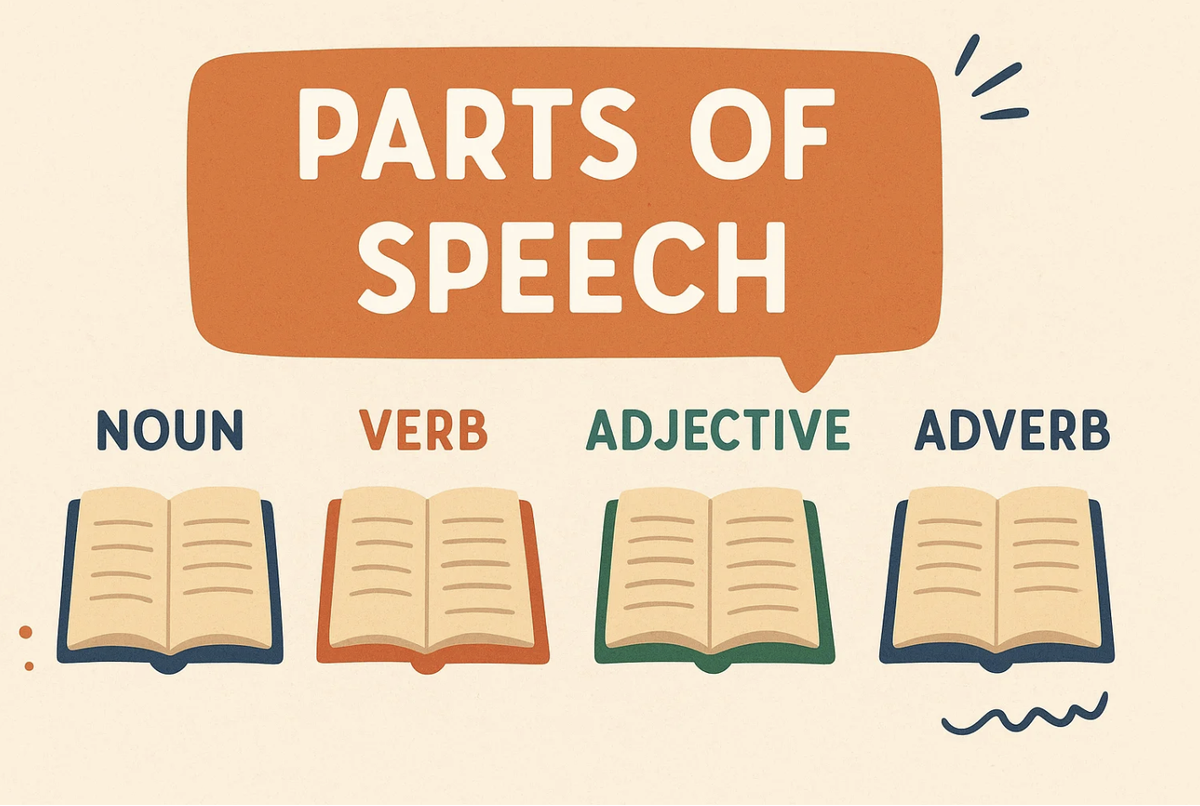
Each Monday, we have a dedicated grammar session, where we are focusing on the building blocks of great sentences.
Here is what we’re covering:
- The Basics of Nouns & Verbs: We are learning to identify Nouns (naming words for people, places and things) and Verbs (action words).
- A vs. An: We’re mastering the rule of when to use "a" (before consonant sounds) and "an" (before vowel sounds), like a book vs. an apple.
- Plurals (More than one): We are looking at regular plurals (just adding 's' or 'es') and those tricky irregular ones where the whole word changes (like child becoming children or mouse becoming mice).
- The "Perfect Sentence": We are deconstructing what makes a sentence a good one. This includes using the correct punctuation (capitals, periods, and commas) and ensuring every sentence has a clear subject and action.
- Sentence Completion: To boost their vocabulary, students are practicing "filling in the blanks" by choosing the most descriptive or appropriate words to make a sentence make sense.
Each week, we have two handwriting sessions with the goal to help students develop a fluent and legible style:
- Formation: We are going back to basics to ensure every letter is formed correctly. This includes focusing on where letters start, how they sit on the line and ensuring they are the correct size compared to one another.
- Flow: Once we have the shapes down, we focus on the "flow." This helps students move from thinking about every single stroke to writing with enough ease and speed to keep up with their big ideas during story writing!
With NAPLAN approaching, we are explicitly teaching the students how to plan and write with confidence. We are breaking down the two main types of writing they may encounter:
Narrative Writing
We are learning that a great story isn't just a series of events; it needs a solid structure. Students are practicing how to write:
- The Orientation (The Setup): This is where students introduce their characters and the setting. We’re moving to creating a vivid picture of who is in the story and where they are.
- The Action & Complication: Every good story needs a "spark." Students are learning to write action paragraphs that lead their characters toward a problem or complication—the moment where things start to go wrong!
- The Climax (The Big Hurdle): This is the heart of the story. Students are developing a clear sequence of events where their characters must use their skills or bravery to overcome the problem.
- The Resolution (The Ending): We are practicing how to wrap up a story effectively, showing how the problem was solved and giving the reader a satisfying conclusion.
- Painting with Words: Instead of just saying a character was "sad" or "ran fast," we are teaching students to choose "sparkle words" that vividly express emotions and actions (like devastated instead of sad, or sprinted instead of ran).
Persuasive Writing
We are learning that a convincing piece of writing is like a sturdy building—it needs a strong foundation and a clear structure. We are focusing on these four key pillars:
- The Catchy Title: Crafting a headline that immediately tells the reader what the topic is and hints at the writer’s point of view.
- The Opening Statement: This is the "hook." Students are practicing how to clearly state their opinion (their thesis) right at the start to let the reader know exactly where they stand.
- The Series of Arguments: This is the "meat" of the essay. We are teaching students to organise their ideas into logical paragraphs, with each paragraph focusing on one strong reason supported by evidence or examples.
- The Concluding Statement: To finish strong, students are learning how to summarise their main points and leave the reader with a final, lingering thought or a "call to action."
Touch Typing
Each week students have time and opportunity to engage in a 20-minute touch typing skill session through Typing Club. All students have access to their own computer and, through this web-based educational platform, are learning about proper finger positioning and improving their typing speed and accuracy.