
Year Four Newsletter
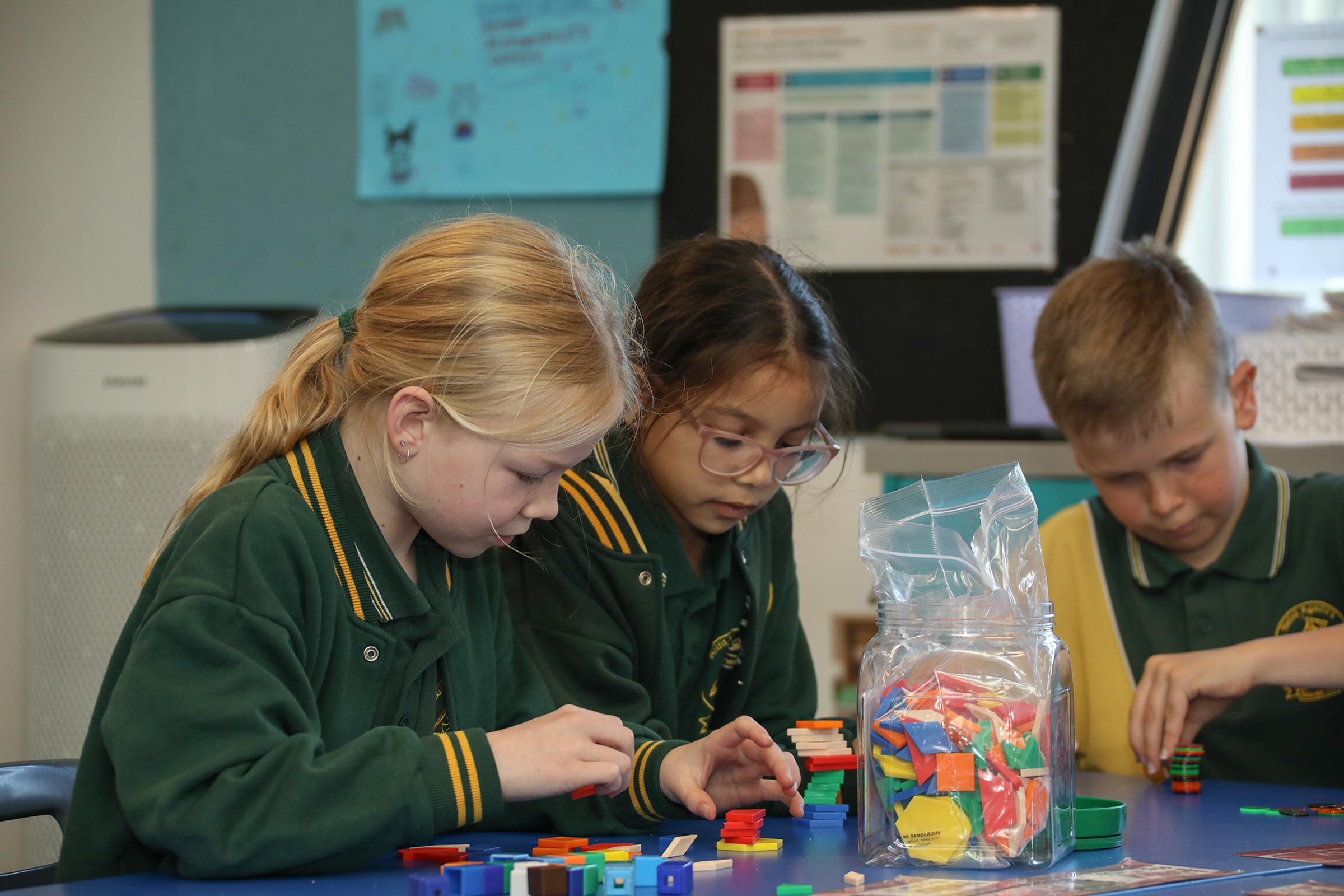
Welcome to Term 3. After a well‐earned mid‐year break, students have returned with calm energy and a readiness to learn. This term offers opportunities to consolidate key skills while exploring new concepts that extend their thinking. It has been lovely watching the children reconnect and re‐establish classroom routines with confidence. We look forward to working together throughout the term.
Religion
This term in Religion, Year 4 students will learn about the different ways people celebrate and express their faith. They will explore the Jewish celebration of Passover and why it is important to Jewish families. Students will also learn about Mary and her special role in the Catholic Church, as well as the Sacraments of Initiation and Healing, including Baptism, Eucharist, Confirmation, Reconciliation and Anointing of the Sick.
English
Reading
We will begin Term 3 by reading ‘James and the Giant Peach’ by Roald Dahl, using the novel to spark rich discussions, explore character motivations, and deepen comprehension. Students will continue strengthening their close‐reading strategies, with a strong focus on answering inferential and evaluative questions to help them read beyond the literal meaning. We will also use colourful semantics to support students in identifying key parts of a sentence and improving the clarity of their written and oral responses. Regular read‐aloud opportunities will continue to build confidence, fluency, and expression. Throughout the term, students will engage with a range of fiction and non‐fiction texts to broaden vocabulary and develop a deeper understanding of how different text types work.
Writing
In Writing, students will begin by revisiting the structure of a recount, strengthening their ability to organise events clearly and sequentially. They will then move into information reports, learning how to present factual information in a well‐structured and purposeful way. A key focus this term will be developing a stronger understanding of paragraph structure. Students will practise grouping related ideas, using topic sentences, and organising information logically—skills that are also essential for the narrative writing we work on throughout the entire year.
Mathematics
In Term 3, students will focus on building confidence with multiplication and division. They’ll develop efficient mental and written strategies for problems without remainders and use mathematical modelling to solve practical multiplicative problems, including financial ones.
Later in the term, students will extend their measurement skills by estimating and comparing angles — acute, obtuse, straight, reflex and revolution — and linking these to right angles. Students will explore the properties of 2D shapes and 3D objects, work with composite shapes, use grid references to describe locations, and investigate symmetry through patterns and digital tools.
Humanities
This term in Humanities, students will explore different places and environments and learn to describe their key features. They will look at locations at different scales, including Australia’s neighbouring countries as well as places in Africa and South America. Students will investigate how places are connected and how people respond to geographical challenges. They will collect and record geographical information and practise showing their findings in tables, simple graphs and maps that follow cartographic rules. Students will also learn to interpret this information and use clear geographical language to explain what they have discovered.
Personal and Social Capabilities
Students will continue developing their Personal and Social Capability by building self‐awareness, managing their emotions, and recognising how their behaviour affects others. They will practise showing empathy, considering different perspectives, and forming positive relationships. Throughout the term, students will work collaboratively, communicate respectfully, and make responsible decisions within the classroom and wider school community. This term in Humanities, students will explore different places and environments and learn to describe their key features. They will look at locations at different scales, including Australia’s neighbouring countries as well as places in Africa and South America. Students will investigate how places are connected and how people respond to geographical challenges. They will collect and record geographical information and practise showing their findings in tables, simple graphs and maps that follow cartographic rules. Students will also learn to interpret this information and use clear geographical language to explain what they have discovered.
Important Dates
- Friday 31 July - Year 2, 3, 4 Level Mass at 9:30
- 7th August - Whole School Mass
- 24th - 28th August Book Week "Symphony of Stories"
Wednesday 26th Book Week Dress up, Grandparent’s Day
& Symphony of Stories Event
- Thursday 27th August Dress Rehearsal for Symphony of Stories
- Thursday 3rd September Family Performance of Symphony of Stories
- 1st September - Father’s Day Stall
- 4th September - Father’s Day Breakfast
- 11th September - Pupil Free Day
- 18th September - Last Day of Term 3 and Footy Colours Day
- 5th October - Term 4 Begins
Reminders
Communication
Please make sure you have downloaded the school app, PAM, for all important school information.
We value open and clear communication with families to support your child’s learning journey. To stay connected, we encourage you to:
Regularly check your emails and SeeSaw for important updates, event details, and messages from teachers.
For specific inquiries: To report an absence or for general inquiries, please contact the school office on 03 5996 2724.
To reach your child’s teacher directly, you can use the email addresses listed below. Please note: SeeSaw is an informal communication platform intended for sharing learning activities and updates. For all inquiries, please use email to ensure they are received and addressed efficiently:
Valerie Quessy (4V)- vquessy@stacbourne.catholic.edu.au
Gabby Corrone (4C) - gcorrone@stacbourne.catholic.edu.au
Brendan Browne (4B) - bbrowne@stacbourne.catholic.edu.au
We’re here to help - please don’t hesitate to reach out if you have any questions!
Homework
Studentsare encouraged to practise timetables for 5-10 minutes and read for approximately 15 to 20 minutes, at least 3 times a week, noting these in their diary. We encourage parents/carers to regularly listen to their children read, so that you can ask questions to assist with comprehension skills.