









Deputy Principal – Teaching and Learning
Ms Lisa Hanlon
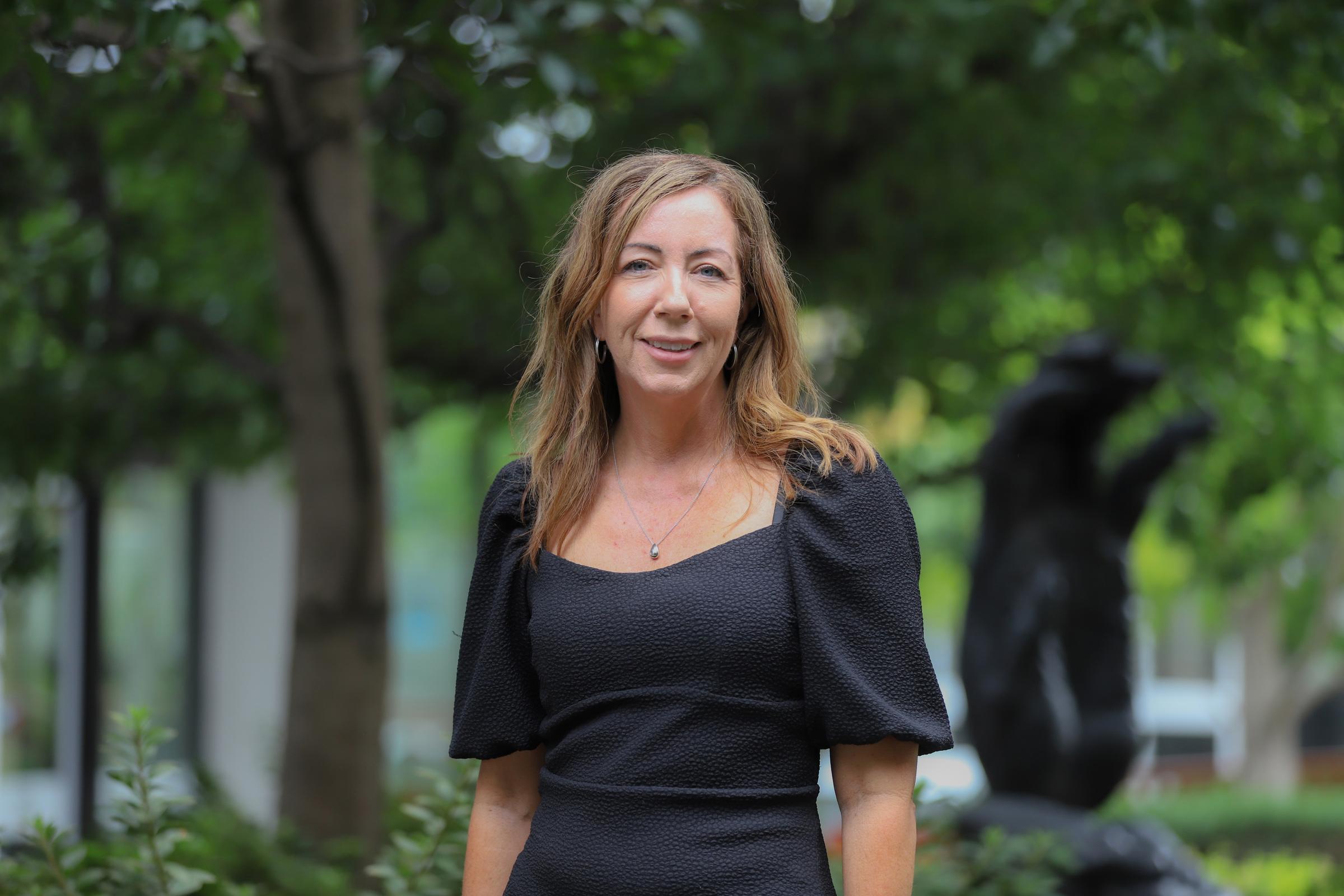
Deputy Principal – Teaching and Learning
Ms Lisa Hanlon
Last Friday, 30 October, Australian schools celebrated World Teachers' Day. This year the Australian Institute for Teaching and School Leadership invited communities to ‘Shine a light on teachers,’ recognising the ‘lightbulb moments’ teachers create and the way they help young people find their path (AITSL, 2026).
World Teachers’ Day was initiated in 1966 in an attempt to raise the status of teachers and address a decline in the profession worldwide. And there is still work to do with UNESCO data showing that the world faces a projected shortfall of 44 million teachers by 2030 (UNESCO, 2024).
Much has been said about the teacher ‘drought’ but what is as valuable, yet attracts fewer headlines, is why teachers stay. The 2026 Harvard Graduate School of Education’s study Why Teachers Stay: What Research Reveals About Retention reveals that educators stay in the profession due to the school culture, collaborative environments, supportive leadership, and professional agency. (HGSE, 2026).
Thankfully, St Catherine’s is fortunate to have more than our share of dedicated, long serving teachers, some of whom have taught two generations of St Catherine’s girls.
Most teachers will tell you that they were profoundly impacted by one of their own teachers. My Year 11 and 12 Literature teacher, Ms Cath Sassella, was a brilliant woman, wise and worldly and forthright. While I was an avid reader and came from a home where reading was encouraged, she exposed me to the beauty of a perfectly crafted sentence, the joy to be found in psychoanalysing your favourite characters, the art of listening to others and considering their perspectives. I know I am not alone, for I was moved to tears by the footage of our Education Minister, Jason Clare MP visiting his old primary school in 2025 and being reunited with one of his teachers. His teacher remembered him and had been quietly celebrating his career for many years. Similarly, the viral video of former Arsenal and England football star Ian Wright was famously reunited with his childhood primary school and PE teacher, Sydney Pigden, in 2005. Wright was overcome with emotion at this surprise reunion and spoke with great love and affection for his former teacher and WWII veteran who he remembers as his first positive male role model; teaching him how to read and write, buying his first football boots and giving him ongoing guidance and mentoring throughout his schooling. Pigden later shared that he was prouder of Wright playing for England than he was of his own WWII service (which included a victory fly-over of Buckingham Palace). Pigden passed away in 2017 at the age of 95, and it was Wright who was chosen to speak at his memorial.
This year, to mark World Teachers' Day, the University of Melbourne's Faculty of Education shared highlights from its 2026 Research Conference and Graduate Researcher Symposium. The theme was Hope as a radical act: Resilience, relationships and reciprocity through educational research and the presenters focused on the work that teachers do. One presentation was on the findings of a pilot project between the University of Melbourne and RMIT whereby researchers used head-mounted cameras and follow-up interviews to capture the cues expert teachers read mid-lesson, such as students' expressions and body language. Machine learning was then used to model those cues. Tellingly, the researchers were careful to separate what technology could measure from what still depends on a teacher's deep knowledge of the room.
This study brings to mind the oft quoted 1966 study that claimed that teachers make 1500 decisions a day. While that study is criticised as inaccurate, research using teacher recall suggests conscious interactive decisions every couple of minutes (Clark & Peterson, 1986), and many more if automatic in-the-moment judgements are counted. What we know to be true is that good teaching is highly relational, a constant cycle of noticing, interpreting and responding, much of it happening in seconds. This is what the science of learning proponents would call ‘checking for understanding’ but what practitioners know to be so much more – reading the mood of each student, interpreting facial expressions for signs of confusion or disinterest, or even better, individual lightbulb moments, the carrot that keeps us going.
World Teachers’ Day may be behind us, but the reasons for honouring teachers are not. Their daily work with young people has never mattered more, and acknowledging it is, in its own way, an act of hope.
Ms Lisa Hanlon
Deputy Principal, Teaching and Learning