
Wellbeing

The last couple of weeks has seen our school community come together to participate in Bullying No Way Week. It has been a powerful week of learning, reflection, and discussion across all year levels as we work together to ensure our school remains a safe, inclusive, and happy place for every student.
Our focus this year centered on understanding the different roles people play in social dynamics, and how our individual choices can shape the environment around us.
In our senior and middle school classes, students focused on bullying and unkind behavior. We explored three key concepts:
- The Follower: Someone who joins in on the behavior or encourages the person doing the bullying.
- The Bystander: Someone who sees what is happening but stays silent, watches, or walks away.
- The Upstander: Someone who recognizes that something is wrong and takes safe, positive action to support the person being left out or treated unkindly.
Through class discussions and role-play, students looked at how easy it is to accidentally become a bystander, and why it takes courage to be an upstander. We emphasized that being an upstander doesn't mean confronting someone aggressively; it can be as simple as walking over to someone who is upset, asking if they are okay, or reporting the behavior to a teacher.
We are empowering our students to move away from being passive bystanders and to step up as supportive upstanders.
Our prep and year 1 students have been focusing on the message that Small acts can have a big impact.
Our younger students brainstormed all the tiny things they can do each day to make a massive difference in someone else's world. They learned that a safe and happy school isn't built overnight—it is built by all of us contributing small acts of kindness every single day.
Some of their wonderful ideas included:
- Inviting someone who is sitting alone to join in a game.
- Sharing a smile or saying hello to someone
- Helping a classmate pick up dropped pencils.
- Saying "thank you" and using encouraging words.
How You Can Help at Home
Conversations about bullying and kindness are most effective when they are reinforced at home. Here are a few quick questions you might want to ask your child over the dinner table this week.
“What does it mean to be an 'upstander?'
“What is one small act of kindness you saw or did at school today?”
Thank you for your continued partnership in making our school a thriving, kind, and safe community for all our children. Together, our small acts truly do make a big difference!
Bern Bradley

Michael Grose
4 Aug, 2026
Simplify Your Child's Life With Fewer Choices
Why giving your child endless options fuels anxiety and how the Power of Two brings calm to family life.
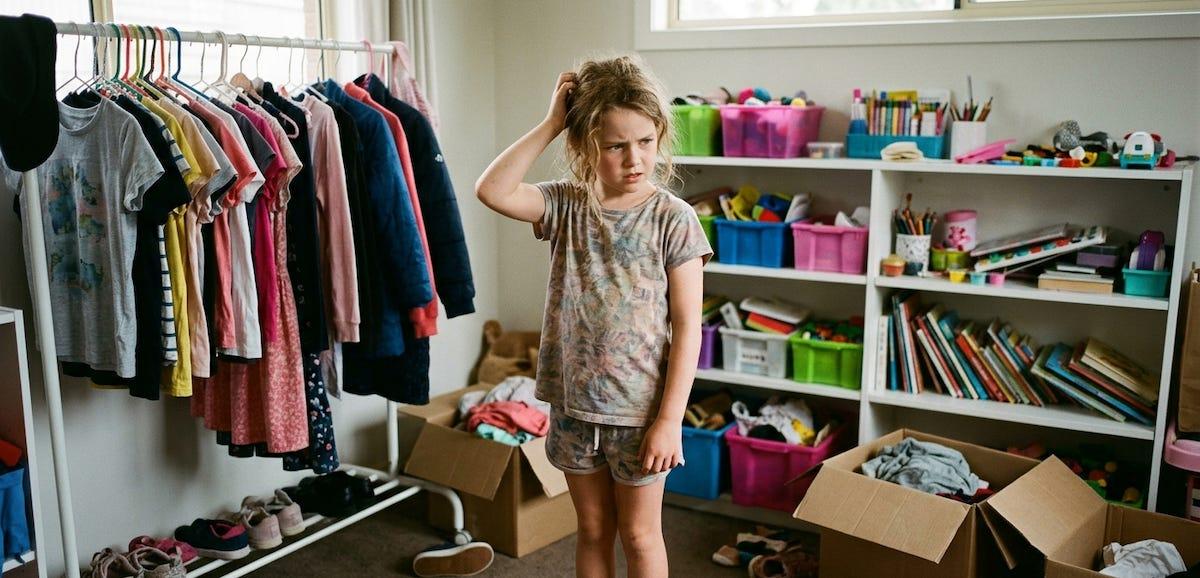
You want to be an empowering parent, so you try to give your child a say in their own life.
You stand in the bedroom and generously ask: "What do you want to wear today?" It feels like you are giving them independence, but often, they look paralysed.
While offering autonomy sounds great, choice overload is a parenting trap.
Flooding your child with options is a fast track to child anxiety, decision fatigue, and deep dissatisfaction.
By constantly letting children choose, you unwittingly compromise their emotional wellbeing.
If you want to protect your child from this stress, you need to a change of parenting strategy.
Narrow their decisions to two options. This simple measure prevents tantrums, reduces household chaos, and helps your child feel secure.
The Hidden Stress of The Infinite Menu
Children’s brains are still developing, particularly the prefrontal cortex, which handles executive functions like decision-making and weighing consequences.
When you hand your child an open-ended choice, you are asking a developing brain to do a heavy cognitive lift.
When you offer too many options, three things happen to your child:
- Immediate FOMO (Fear of Missing Out): If you let your child choose among five weekend activities, they will spend the entire time at their chosen activity wondering whether one of the other four would have been more fun. The unchosen options spoil the current experience.
- The Burden of Regret: When there is only one option available, and it isn’t perfect, your child can blame the world. But when they choose from a buffet of options and it doesn’t meet their expectations, they blame themselves. That is a heavy, anxiety-inducing burden for a young child to carry.
- Severe Decision Fatigue: Making choices burns mental energy. A day spent navigating constant micro-decisions leaves your child cognitively exhausted, fragile, and primed for a major meltdown by late afternoon.
Your Practical Tool: The Power of Two
The antidote to choice overload isn’t to become a dictator; it is to offer bounded autonomy.
Giving your child a choice between exactly two options is the parenting sweet spot.
It provides them with a healthy sense of control and fosters independent thinking while keeping the guardrails firmly in place so they feel secure.
By narrowing the field to two acceptable options, you eliminate the exhausting mental sorting process.
Your child makes a quick decision, feels a sense of personal agency, and moves on with their day completely satisfied.
The Surprising Relief of Not Choosing
As a parent, you shouldn’t be afraid of the phrase “no choice.” In fact, sometimes children are at their absolute happiest when you take the steering wheel completely.
Structure, predictable routines, and firm boundaries provide psychological safety. When you say, “It’s time to put your shoes on, we are leaving for the shops now,” you aren’t being unkind. You’re removing the burden of decision-making from their shoulders.
While no-choice scenarios might occasionally trigger a brief protest, they lower your child’s long-term stress levels. It allows them to relax into your leadership, trusting that the big decisions are being handled by the adults. This frees up their mental energy for what they should be doing: playing, exploring, and just being a kid.
Put it into Practice: Your Action Plan
To bring more satisfaction and less anxiety into your home this week, try these three practical adjustments:
1. Audit your questions
Notice how many open-ended questions you ask your child in the morning. Catch yourself and reframe them into “this or that” options.
2. Pre-select the options
Never offer a choice where you don’t like one of the outcomes. If you don’t want them to wear a superhero costume to a family dinner, don’t let it be an option. Only present two choices that you are 100% happy with.
3. Lean into routines
Make daily anchors (like bedtime, homework time, or morning routines) non-negotiable. When the routine is set, there is no choice to make, and therefore no energy is wasted on arguments.
Finally…
True satisfaction for a child doesn’t come from an infinite menu of options; it comes from:
- simplicity,
- predictability,
- and the freedom to grow within safe, loving boundaries.
Simplicity is not just an art form, but the shortcut to a stress-free life. Something that benefits us all.