Wellbeing















 Edenhope College


How can you help your child learn to self-regulate?
Throughout our lives, we need to be able to manage our thoughts and behaviour. We need to do this to reach various goals and to get along with others – even if other distractions and impulses get in the way.
This is our ability to self-regulate, and it starts to develop between the ages of three and five.
What are the dos and don’ts for empowering students in self-regulation?

Why is self-regulation important?
A child’s ability to self-regulate has a huge impact on shorter-term outcomes such as making and keeping friends, engaging in school and making academic progress.
Self-regulation allows children to keep going with a task or situation when things are tough, and to keep their emotions and behaviour focused on reaching the goal.
For example, when playing a game with friends, a child who can self-regulate can wait their turn, stay within the rules, and keep playing even when they are losing. A child with low levels of self-regulation may become easily upset and show frustration, and in some cases be dysregulated. This can include meltdowns.
But there can also be impacts later in life. Low levels of self-regulation at preschool age have been associated with a range of problems in adulthood, such as gambling, substance abuse, poor health, poor sleep and weight issues.
The capacity to self-regulate emerges from around three years of age, when the brain undergoes rapid physical growth. The period of peak growth is typically between three to five.
The capacity to self-regulate is not only influenced by genetics, but also by children’s environment and their experiences. This is where parents come in.
Self-regulation is important for children’s short and long-term development.
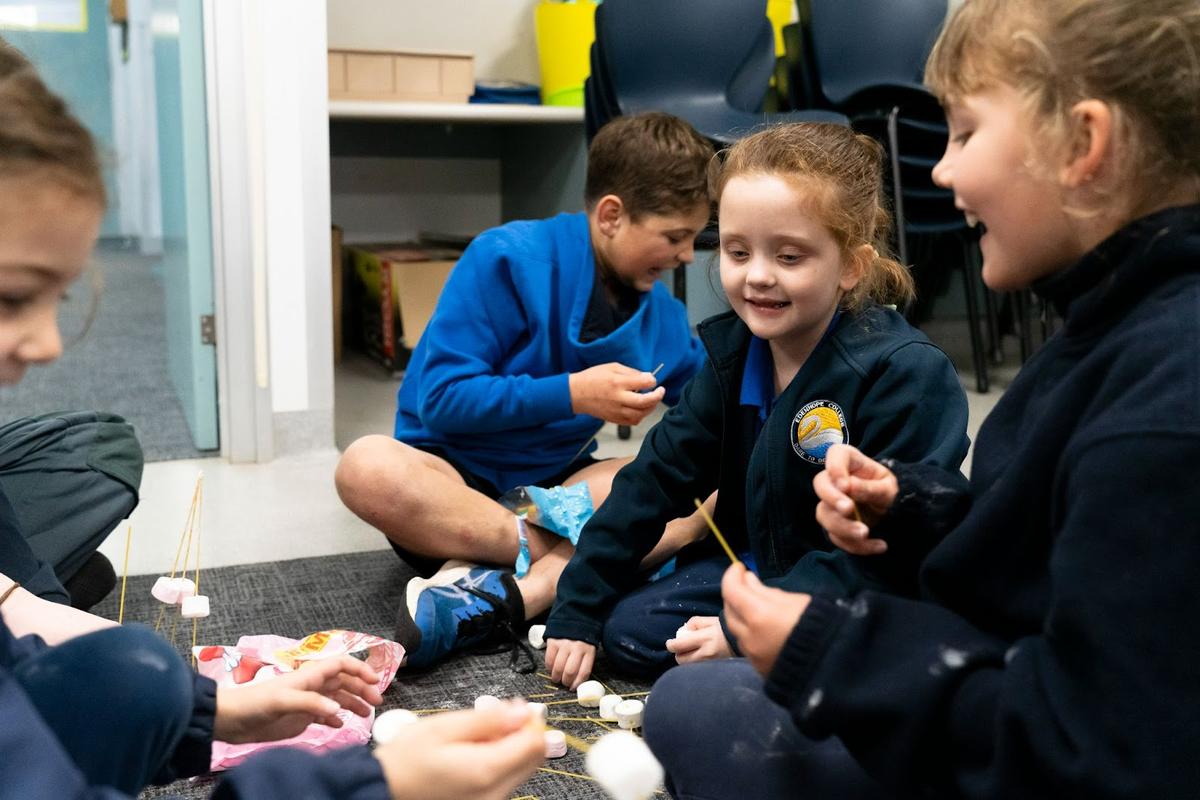
Jumping in to ‘help’
Naturally, parents want to protect their children from difficulty. But sometimes this desire to protect and “help” kids can hamper their development.
Children experience challenges all the time – this may be opening a water bottle, trying to find a certain toy in their bedroom, or tying their shoelaces. As parents, we can often rush to fix the problem straight away.
But it is important for children’s brain development to experience and cope with challenges. When parents let children face a tricky task, they can learn to think flexibly, create solutions and persist toward the goal. It also teaches them they can handle things themselves.
Persistence when playing a game can translate to persistence when tying their shoelaces, and in time, fewer meltdowns.
What should parents do instead?
This is not to say you should ignore your child if they are very distressed and stuck up a tree, or have fallen and seriously hurt themselves.
But there are many other occasions when you can wait, or help in less obvious ways.
For example, if a child is struggling to find the right puzzle piece, parents should wait for the child to either ask for help or show visible signs of frustration.
If possible, start just by using guiding words to help, rather than taking a hands-on approach. You could try encouragement, questions, hints and suggestions to lead your child to a solution. For example, “have you tried all the pieces yet?”
Or if they are playing with Lego, parents may remind the child of their last success or ask them “what does the diagram show?”, they might give a hint such as “I sometimes need to go back some steps to find where I went wrong”, or maybe more directly, “how about we look through the steps together?”.
This type of guidance means the child is still the one solving the problem.
Parents start by just using verbal prompts or tips to their child.
Step up your approach
If the child is still stuck, parents can use their hands to offer more guidance.
When completing a section of a puzzle, a parent may move some pieces closer to the child to draw their attention to them.
If needed, a more direct approach would be to identify the piece the child is looking for, and hand it to the child so that they can put it in and remain active in completing the task.
The child may not have the piece the right way round, so the parent should revert to using verbal guidance for encouragement or suggest turning the piece to see if it fits.

Kids are still in charge
The key thing to remember is the child should be guiding your approach to helping them.
Don’t intervene without them asking you, and don’t offer full support straight away.
You can use encouragement, hints and suggestions, and then hands-on help. Keep offering your child the chance to work elements out for themselves. And know their way of solving the problem might be different from yours.

https://theconversation.com/how-can-you-help-your-child-learn-to-self-regulate-240454