From our Principal
Celebrating the Class of 2026
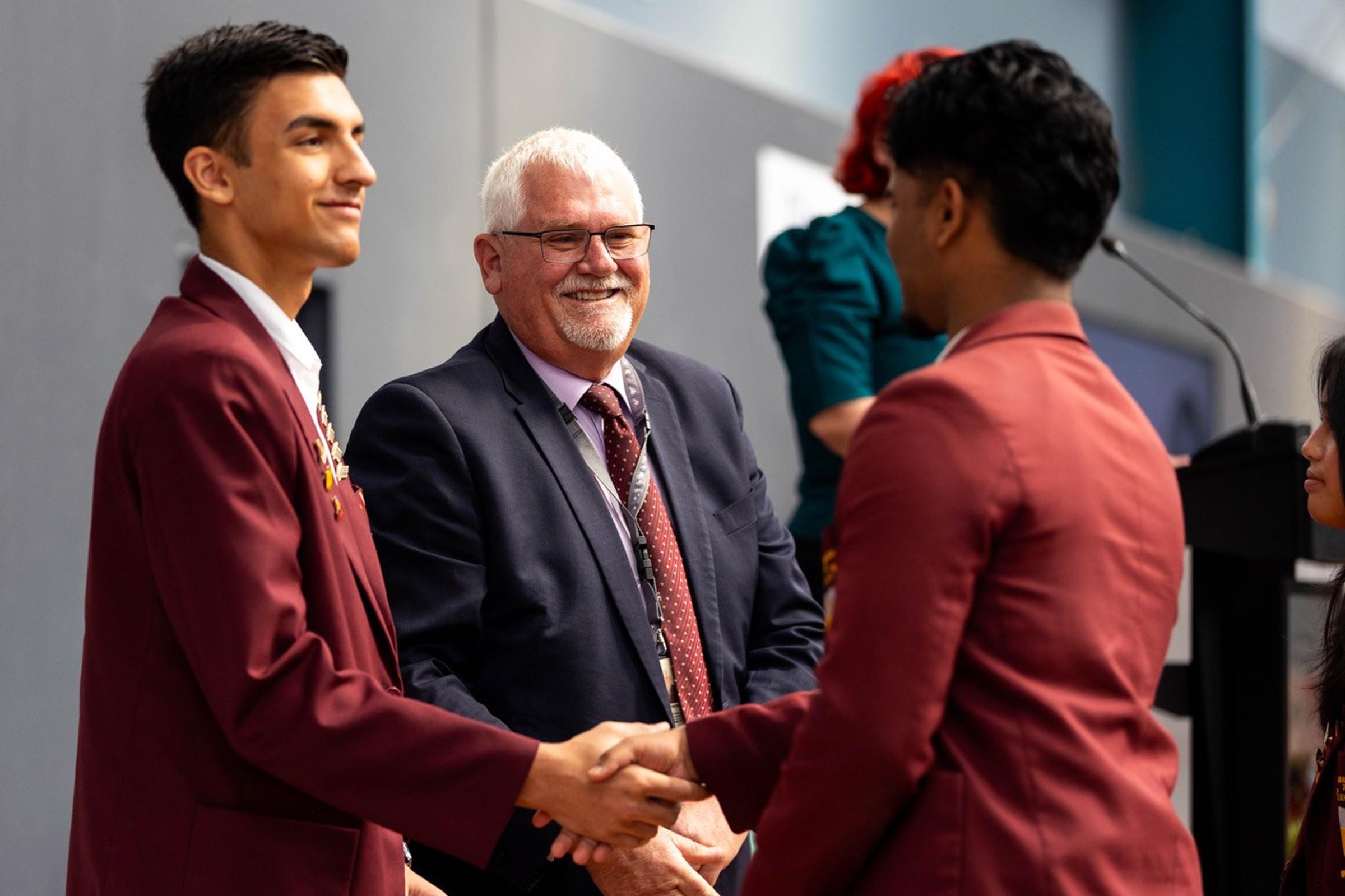
This week we had the great joy of celebrating our graduating Class of 2026, with Graduation celebrations at our Cranbourne Campus on Tuesday, 20 October and Clyde North Campus on Wednesday, 21 October. These were wonderful occasions that brought together students, families and staff to recognise the conclusion of six significant years at St Peter’s College.
In addressing parents and families, I acknowledged that long before these young people became our students, parents were their first teachers. I thanked families for entrusting their children to us and for the partnership that has allowed us to educate, challenge, encourage and support them throughout their secondary education. It has been our privilege to share in their journey and to watch them grow from Year 7 students into the remarkable young adults they are today.
My message to our graduates centred on three hopes that I have for every young person who leaves St Peter’s:
Know that you are loved, not because of your achievements, ATAR or future career, but simply because of who you are.
Know that you possess an inherent dignity, created and loved by God, a dignity that success cannot increase and failure cannot diminish.
Go and make a difference, using your gifts, standing up for what is right and making the world a little better because you are in it.
As our Year 12 students now turn their attention to their upcoming examinations, employment and the many different pathways that lie ahead, we wish them every success. More importantly, we hope they approach the next chapter of their lives with courage, generosity and confidence.
2026 Valedictorian Medal Recipients
An important part of our Valedictory celebrations is the presentation of the Valedictorian Medal, recognising a staff member who has made a significant contribution to our graduating students and to the wider life of St Peter’s College.
Cranbourne Campus: David Bardi
Congratulations to David Bardi, recipient of the 2026 Cranbourne Valedictorian Medal. David commenced at St Peter’s in January 1999 and has served as a Year Level Coordinator, House Leader and, currently, Pastoral Care Leader for Years 10–12. Across nearly three decades, he has demonstrated extraordinary loyalty, generosity and commitment to students, families, colleagues and the College. His willingness to consistently and reliably be there, help others and serve wherever needed has been a hallmark of his contribution.
Clyde North Campus: Chris O’Hara
Congratulations also to Chris O’Hara, recipient of the 2026 Clyde North Valedictorian Medal. Since commencing at St Peter’s in January 2004, Chris has contributed in numerous roles across both campuses, including Year 7 Coordinator, House Leader, VET and VCAL Coordinator and, more recently, through his work supporting VCE Vocational Major and Applied Learning. For more than two decades, he has brought commitment, genuine care and plenty of humour to College life, while particularly championing different pathways through which students can experience success.
We congratulate David and Chris on this well-deserved recognition and, most importantly, congratulate the Class of 2026 and their families on reaching this wonderful milestone.
Protecting Respectful Debate and Our Democracy
Like many Australians, I was deeply shocked by the alleged attack this week on the Independent Member for Indi, Dr Helen Haines. While the motivation for this incident is still to be determined, the renewed call for more measured and rational political discourse is both timely and welcome. An attack on one of our elected representatives is an attack on our democracy and the institutions that protect our shared freedoms.
One of Australia’s great strengths has been our capacity to disagree while remaining respectful and tolerant of others. This does not mean that we should be indifferent or silent about issues that matter deeply to us. Indeed, a healthy democracy depends upon people expressing their convictions, challenging ideas and holding governments to account. However, this must always occur peacefully, rationally and respectfully.
Within a community as culturally, ethnically and religiously diverse as ours, people will understandably hold different views. Recent public discussions about migration may cause anger, anxiety or hurt. Cost-of-living pressures and mortgage stress can also leave families feeling powerless and searching for someone to blame for the difficulties they are experiencing. It is precisely at such times that our votes, democratic institutions and commitment to civil discourse matter most. If we undermine these institutions, we risk losing the very means through which ordinary citizens can influence their society.
As the Victorian election approaches, one issue about which I feel strongly is the continuation of linkage funding for Catholic schools. This funding arrangement is important because it links Victorian Government recurrent funding for Catholic schools to funding for students in government schools. Its continuation directly affects our capacity to provide an accessible and affordable Catholic education for families.
I know this is important to many parents and may reasonably form part of their consideration when voting. However strongly we feel about this or any other issue, our debate must be robust without becoming hostile, personal or demeaning. Passion and respect are not opposites. We can argue firmly for what we believe while still recognising the dignity of those who hold a different view.
These events also remind us of the responsibility St Peter’s College has to teach Civics and Citizenship well. Our students need to understand how democracy works, how citizens can bring about change and why democratic institutions must be protected. They must also learn to debate, argue and discuss issues rationally, critically and respectfully.
This responsibility has become even more urgent because of the growing danger of online radicalisation and manipulation. In evidence to a parliamentary inquiry, Australian Federal Police Acting Deputy Commissioner Sandra Booth warned that young, vulnerable and impressionable people are being radicalised and manipulated online with alarming speed. She explained that sophisticated online networks can exploit young people’s grievances, vulnerabilities and desire for identity, purpose or belonging. Artificial intelligence, social media, online gaming and encrypted platforms can accelerate this process, sometimes reducing a pathway that once took months or years to only days. The AFP has described this as a whole-of-society challenge requiring earlier intervention, education and cooperation.
Schools cannot respond to this challenge alone. Parents and educators must work together to have honest, age-appropriate conversations with young people about what they are watching, reading and encountering online. This does not mean monitoring every interaction or reacting with alarm. It means remaining interested in the influencers, gaming communities, videos, podcasts and social media content shaping their thinking. It also means helping young people question what they see, check the reliability of claims, recognise manipulation and critically assess messages designed to provoke fear, resentment or hatred.
At St Peter’s College, we want our students to become informed, compassionate and responsible citizens who can think critically, disagree respectfully and participate constructively in our democracy. Achieving this will require a genuine partnership between families and the College. By keeping the conversation open, we can help our young people resist extremism, value the dignity of others and use their voices in ways that strengthen rather than divide our community.
Mr David Hansen
Principal